 Plant As Deco
Gardening & Planting Tips
Balcony Garden Ideas for Beginners in a Small Apartment
By Plant As Deco · Updated 29 October 2026
A balcony garden is mostly a light problem with a watering schedule attached. Before you buy a single pot, spend one morning watching the space: where the sun actually lands, how long it stays, and what the railing does to the wind. That hour decides what belongs there, and it is the difference between a balcony that fills out by midsummer and one that limps along with three empty pots and a bag of mix you never opened.
Weekend-ready: $25–$70, one weekend. Containers, potting mix and a starter plan — renter-safe, nothing drilled into the railing.
Read the light before you buy anything
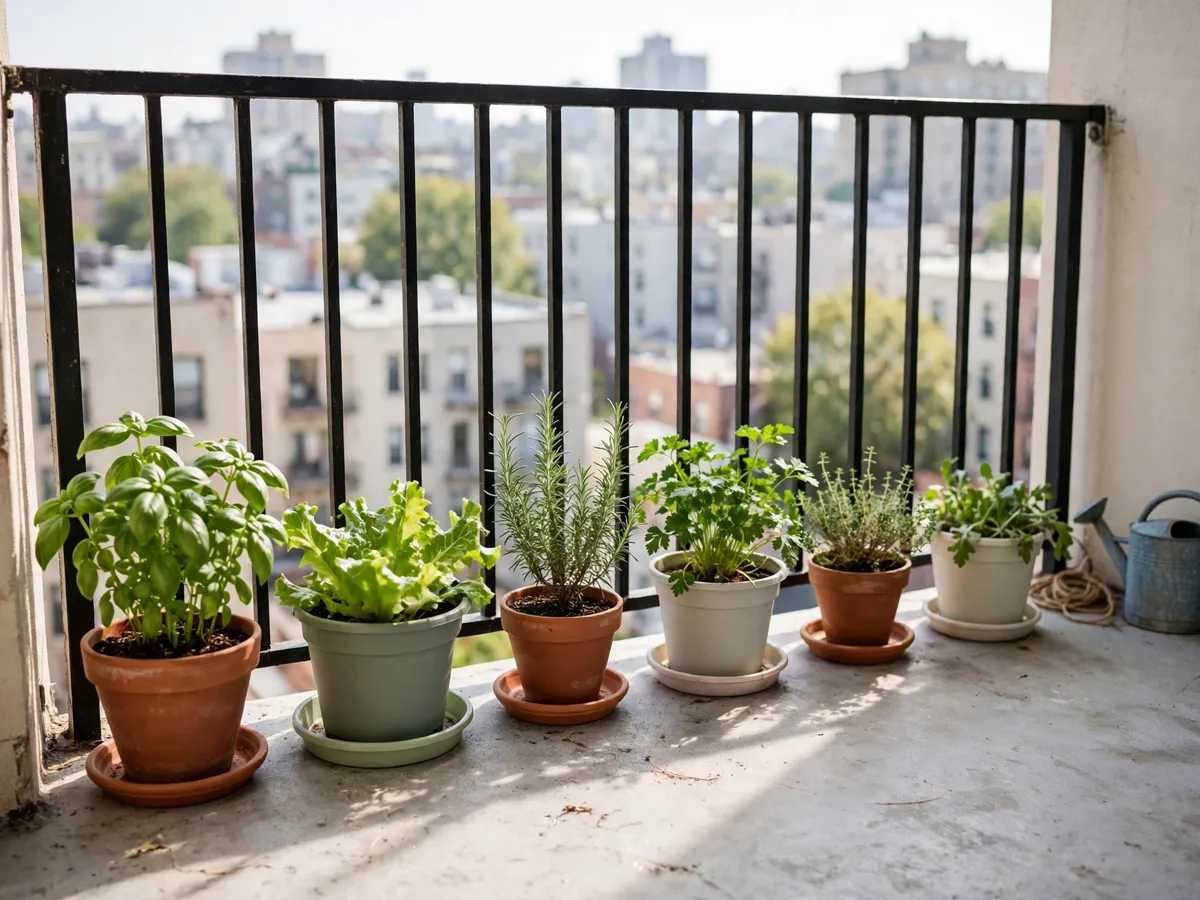
Most beginner balconies fail on light, not on effort. A plant that wants six hours of direct sun will stretch, pale, and stall in a shaded corner no matter how carefully you water it, and the fix is almost always moving the pot, not feeding it. So the first job is a one-day shadow check, not a shopping trip.
Step outside three times — mid-morning, midday, and mid-afternoon — and mark where the shadow line falls. If direct sun reaches the floor for most of those checks, you have a sun balcony and herbs, leafy greens, and a compact cherry tomato are all reasonable. If the sun only reaches the railing, or lands for an hour or two, treat the space as part shade and lean on lettuce, parsley, chives, and mint instead. Note which way the balcony faces and whether an overhang, wall, or neighboring building cuts the morning or evening light — an overhang can take a bright balcony down to four useful hours.
Time: about 20 minutes spread across one day. Write the three checks down — you will look back at them in August when a plant starts to look tired.
Container size and drainage come first
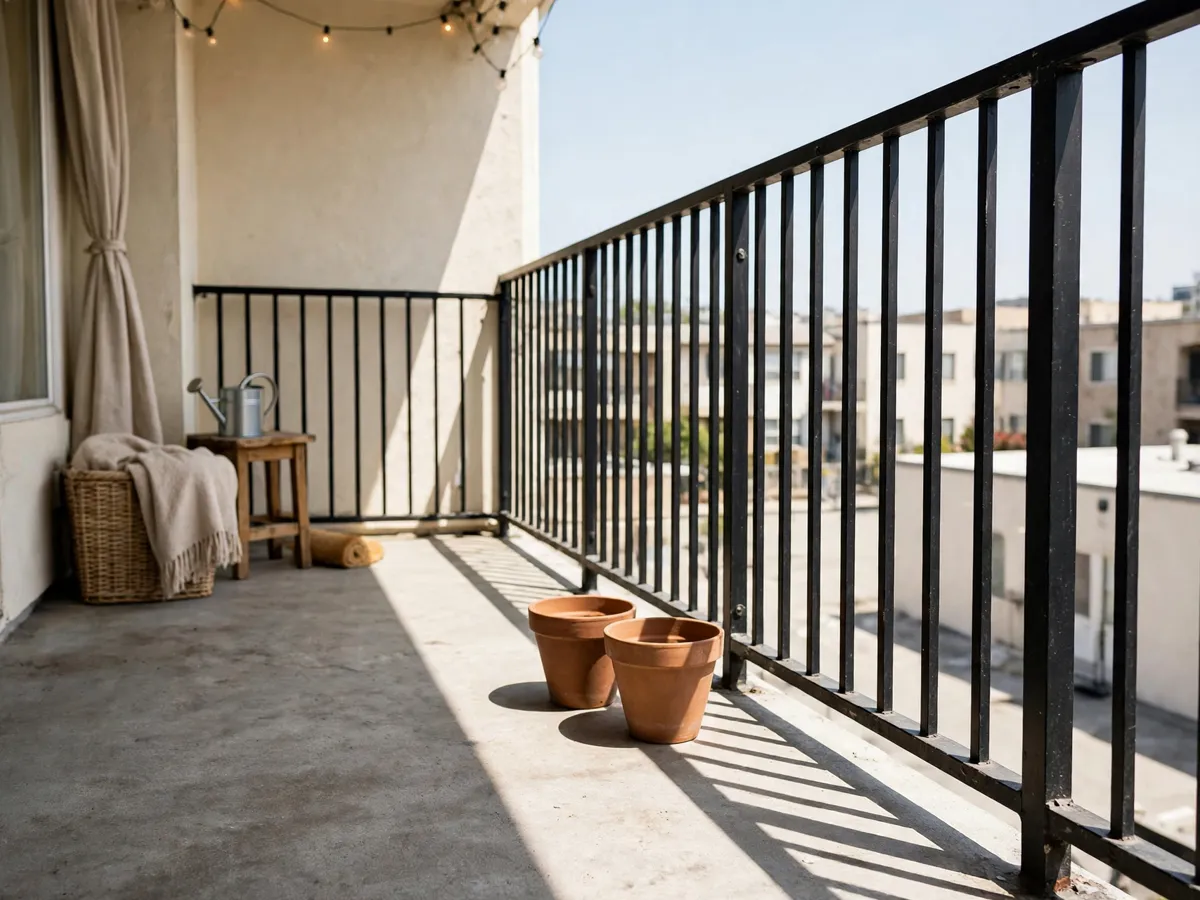
Pot diameter is the best predictor of whether a balcony plant holds up through a hot week. Small pots dry out in hours; a larger volume of mix holds moisture and buffers the temperature swings that come with a metal railing in full sun. As a rough guide, give herbs a pot at least 6 inches across, give leafy greens 8 inches, and give anything that fruits — a tomato, a pepper, a cucumber — 5 gallons or a pot 12 inches and up. One plant per pot is the beginner-friendly rule; two root systems sharing one container compete for the same water.
Drainage holes matter more than pot material. A pot with no hole is a bucket, and a bucket drowns roots in the first heavy rain. If a pot you love has no hole, drill one, or use it as a cachepot with the real pot dropped inside and lifted out to water. Skip the gravel layer in the bottom too — it does not improve drainage, it just raises the water table inside the pot. Put a saucer under each pot on an upstairs balcony so you are not watering the neighbor below, and empty saucers a few hours after watering so roots do not sit in them.
Cost: $6–$15 for a 6-inch pot, $15–$30 for a 12-inch one, $3–$5 for a saucer. Plastic holds water longer; terracotta breathes and dries faster, which suits an over-waterer.
What your balcony can actually take
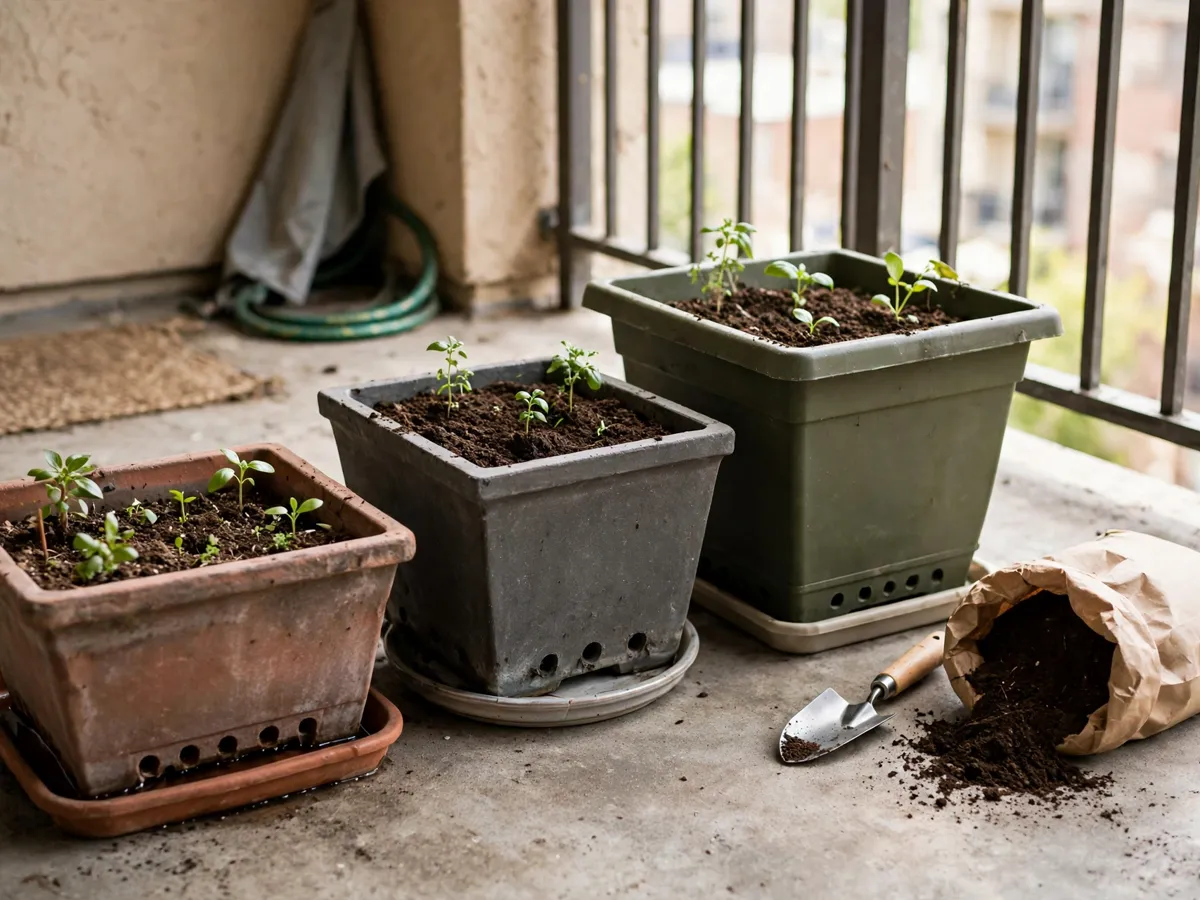
Wet potting mix is heavy. A 12-inch pot filled with moist mix can weigh 15–20 pounds before the plant goes in, and a 5-gallon bucket of it can pass 40. Four of those in a line is a real load, and balconies are generally built to carry it — but the load is meant to be spread, not stacked in one corner. Distribute the weight, keep the heaviest pots against the wall rather than on the outer edge, and if you are upstairs with any doubt, ask the landlord what the balcony is rated for before you build a container garden against the railing.
Wind is the other half. Balconies are wind tunnels, and a tall plant in a light pot is a sail that will tip. Choose low, wide pots over tall narrow ones, keep the tallest plants against the wall, and put a windbreak on the windward side — a length of balcony privacy screen, a panel of reed fencing, or even a row of the heavier pots. Wind also dries mix quickly, so a windy balcony needs a more frequent check than a sheltered one at the same temperature.
Cost: $20–$40 for a roll of balcony screening, or $0 if you build the windbreak out of the pots you already bought.
A herb-and-leaf starter plan
Start with five or six plants you will actually eat, not a full kitchen garden. Basil, mint, parsley, chives, and a loose-leaf lettuce are common picks that hold up in containers on a part-shade to sun balcony, and each gives you something to cut within a few weeks. A compact cherry tomato in a 5-gallon pot is the usual next step, and it needs the sunniest spot you have.
Two rules save the whole plan. First, mint gets its own pot, always — its runners take over any container it shares, and a shared pot turns into a mint monoculture by August. Second, cut herbs back rather than letting them flower; pinching the tips of basil and mint keeps them bushy and delays the stage where the leaves turn small and bitter. Lettuce and arugula are the opposite — they are cut-and-come-again, so take outer leaves and leave the center to keep producing.
Cost: $4–$6 per herb starter plant, or $2–$4 per seed packet if you are willing to wait three extra weeks. Six plants plus mix lands around $30–$45.
Watering that gets through a hot week
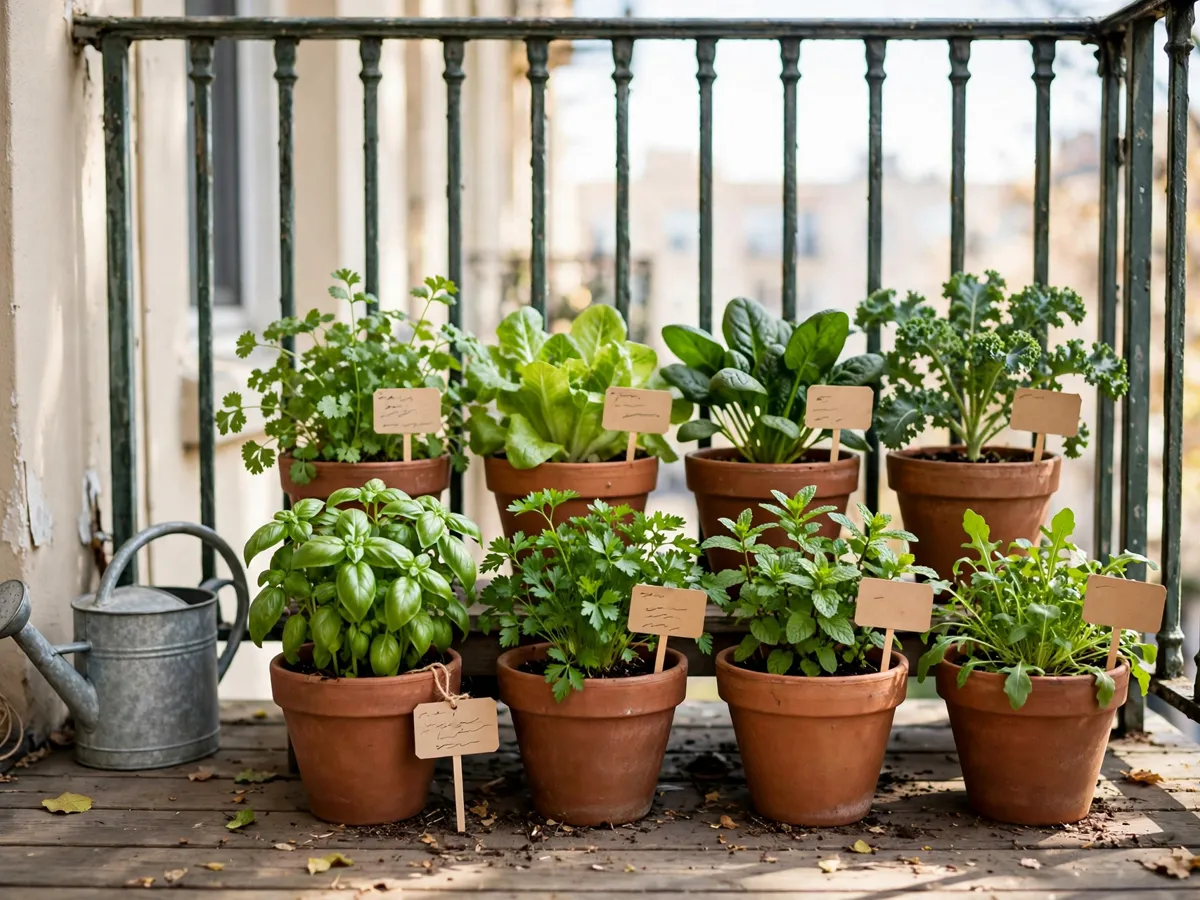
On a balcony, watering is a daily check, not a twice-a-week chore. Push a finger an inch into the mix — if it comes out clean and dry, water; if it comes out with cool damp mix on it, wait. Water in the morning when you can, so the foliage is dry going into the evening and the roots have water on board before the hottest part of the day. Water until it runs out of the drainage holes, then empty the saucer.
Three moves help in a hot week. Group the pots together so you only make one trip and the humidity between them slows evaporation. Move the small pots into the shade of the larger ones, or behind the windbreak. And if you will be away, a self-watering spike or a watered bottle inverted into the mix buys a few days — it is not a replacement for the finger test, but it is enough to bridge a long weekend. Mulch the surface of the bigger pots with an inch of shredded bark or straw; it cuts the evaporation off the top and keeps the mix cooler.
Cost: $0 for the finger test, $8–$15 for a set of self-watering spikes, $8 for a bag of mulch.
Honest costs and real time
A first balcony garden of six plants runs $25–$70. Containers are the biggest line: $15–$30 for two 6-inch herb pots, $20–$35 for an 8-inch lettuce pot, and $15–$30 for a 5-gallon tomato bucket. A bag of potting mix is $8–$15 and fills roughly three 8-inch pots. Plants are $4–$6 each as starters or $2–$4 as seed. Add $8–$15 for a small hand trowel, a watering can, and a saucer or two. The second year is close to free — mix, seeds, and one replacement plant.
Time: one afternoon to set up, then five minutes a day to check water. The setup is the slow part; the keeping is small.
Mistakes worth skipping
Four account for most dead balcony plants. Buying garden soil instead of potting mix — garden soil compacts in a pot and turns to cement, while potting mix stays loose and holds air. Using a pot with no drainage hole and then watering on a schedule anyway. Buying six of one plant instead of six different ones, so a single pest or a single heat wave takes the whole balcony. And starting with a full vegetable garden in month one, which is how beginners end up with twelve pots, no time, and nothing to harvest.
Start with five plants, get one harvest, then add. Skip the fertilizer for the first four to six weeks — fresh potting mix carries enough nutrients to get seedlings established.
Weekend checklist: set the balcony up in one afternoon
- Shadow check done at mid-morning, midday, and mid-afternoon
- Balcony facing and any overhang noted
- Containers chosen with drainage holes, at least 6 inches across
- Saucers under every pot on an upstairs balcony
- Weight spread along the wall, heaviest pots off the outer edge
- Windbreak on the windward side — screening or the heavy pots
- Potting mix, not garden soil — one bag fills three 8-inch pots
- Six plants chosen: basil, mint in its own pot, parsley, chives, lettuce, plus room to grow
- Finger test set as the daily watering check, morning when possible
- No fertilizer for the first four to six weeks
Where the balcony fits the rest of the apartment
A balcony is the cheapest square footage you have, and it works hardest when the plants tie into the room behind it. Use the same pots outside that you use on the sill inside so the balcony reads as part of the home, and pull a chair out to the corner that gets the evening light.
Skip the matching outdoor set. One chair, one small table, and the plants you already have read better on a balcony than a full furniture set squeezed into six feet.
Save these on Pinterest
Pin the shadow check — it is the page you will come back to before every new plant. The rest of the beginner planting plans live in the Gardening & Planting Tips collection for balcony gardens, low-light houseplants, and container basics you can start in a weekend.