 Plant As Deco
Small Room Decor
Gallery Wall Ideas for Small Spaces: Hang It Straight
By Plant As Deco · Updated 13 November 2026
A gallery wall in a small room fails the same way every time: the frames get hung one at a time, and the wall ends up as a staircase of uneven gaps instead of one line the eye can rest on. The fix is to plan the whole arrangement on the floor first, space the frames on a single gap, and keep it to two sizes. That is the whole wall, and it costs a tape measure, some painter's tape and four frames — no drill, no holes, and the arrangement moves with you when you move.
Weekend-ready: $20–$90, one afternoon. No-drill throughout — renter-safe.
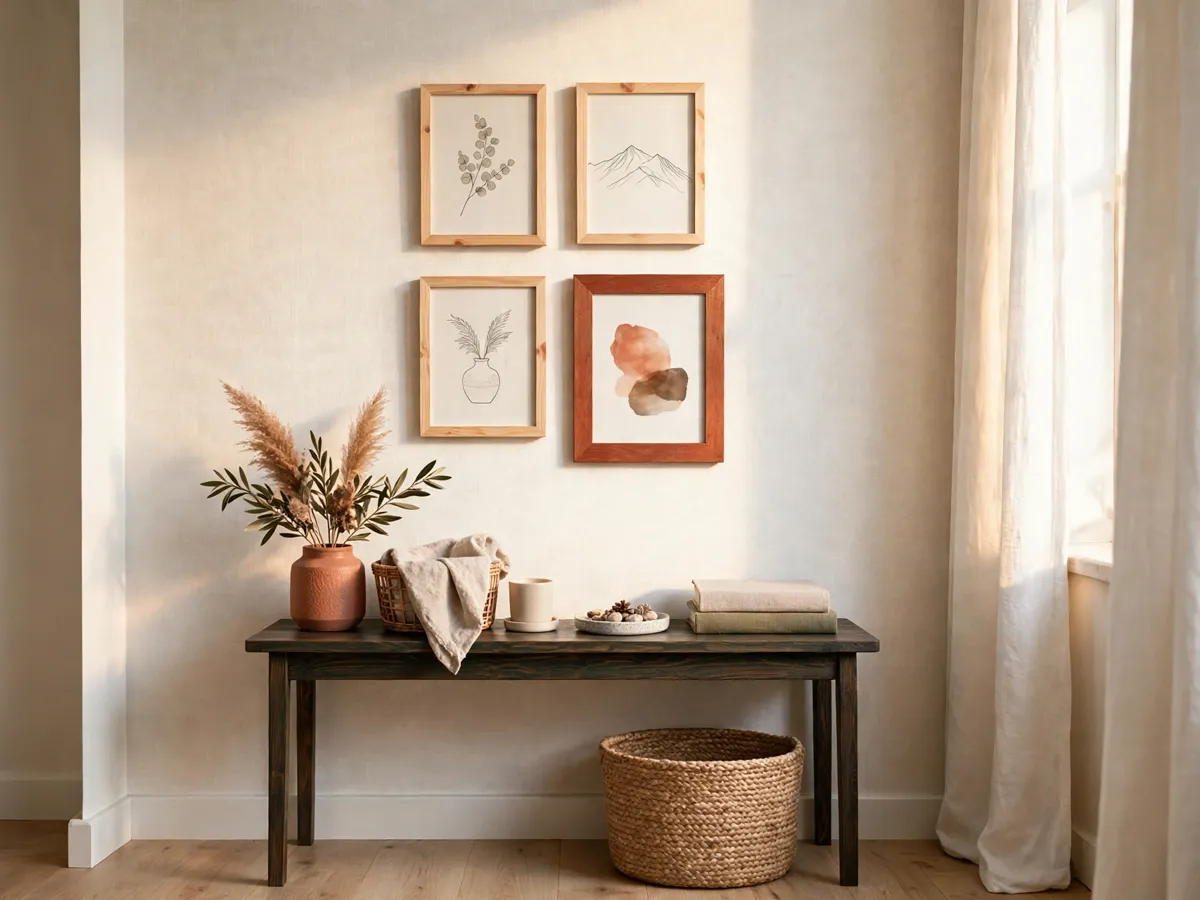
1. The wall is the one the eye already lands on
Pick the wall the room runs on: above the sofa in the living room, the head of the bed, or the slim console in the hallway. The wall under the window is the one to skip, because the light lands on it and the frames become shadows at noon. The rule for a small room is one wall, because the second arrangement starts to compete with the first, and two walls of frames in a small apartment reads as a wall of frames.
Then clear the wall first: the wall that holds the arrangement should hold nothing else. The one print above the toilet and the one frame by the mirror can stay, but the wall the gallery takes is its own, and the clearing is the move that makes the four frames read as one moment instead of a fifth thing on a busy wall.
Cost: $0 to choose. Time: ten minutes, and it is the decision the whole arrangement hangs on.
2. Two sizes, one gap — and the floor comes first
The arrangement that holds in a small room is two sizes: one larger frame that anchors the line and two or three smaller ones that carry it. A single big frame plus three small ones is the move, because the big one gives the eye a weight and the small ones give it rhythm. Four frames is the ceiling for most small walls — the fifth one is the one that turns the moment into a roomful of frames.
Lay them all on the floor in the order you want, with one gap between them — two inches is the number that reads tight without touching. Tape the positions to the wall with painter's tape, one strip per frame, and the whole arrangement is on the wall before a single hole is a thought. For the strips and the ratings that hold the frames, the renter wall decor guide covers what the wall can carry without a drill.
Cost: $20–$90 for two to four frames, or $0 when the frames are the ones already in the house and the wall is the one that needed the plan. Time: one afternoon, floor first.
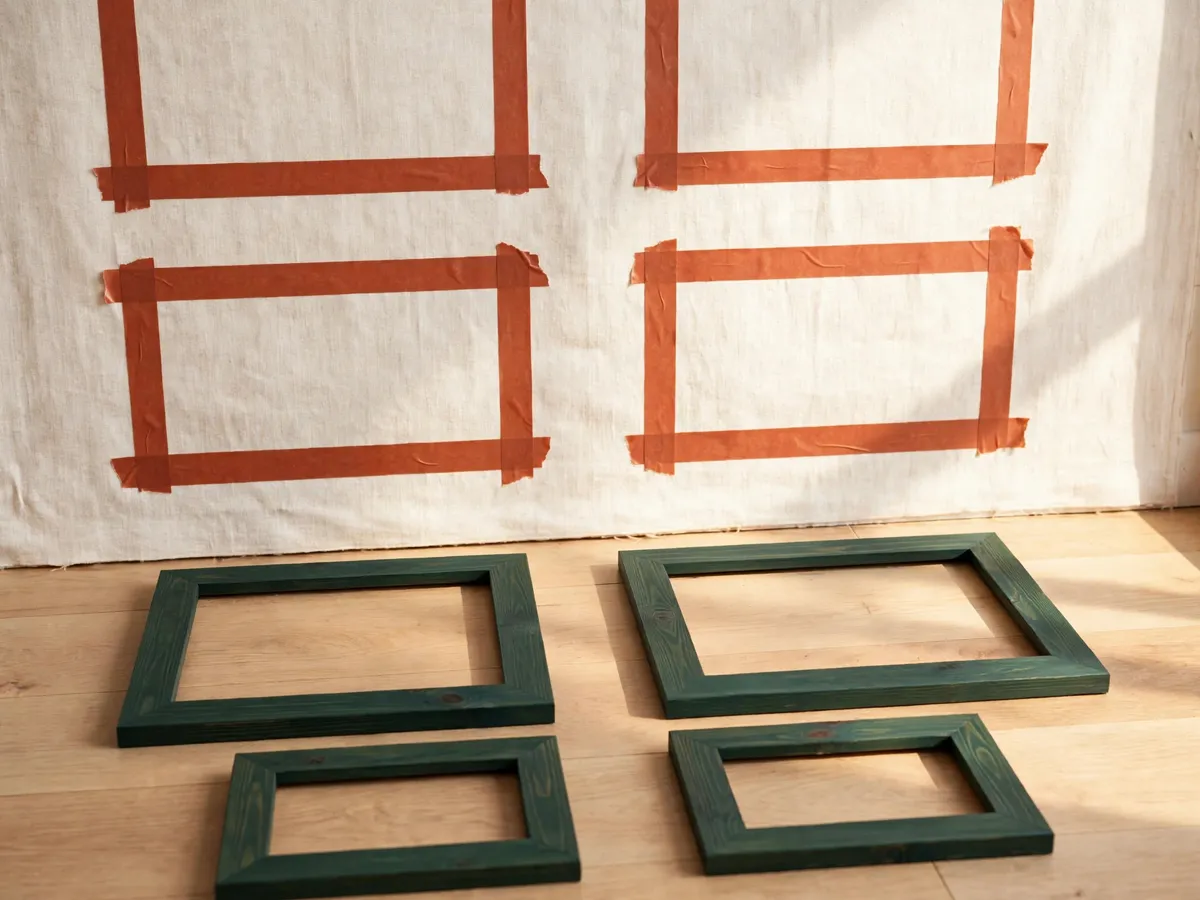
3. Hang the line at eye height, not at the top of the wall
The whole arrangement goes at the height the eye is when it is standing, not as high as the frames allow. The center of the line sits at roughly the height of the top of the console or the sofa back it faces, and the gap between the top of the furniture and the bottom of the frames is the number to check — two to three inches when the wall is clear, more when the sofa back is tall. A gallery hung high on a small wall reads as ceiling decoration, and the room below it reads as empty.
Cost: $0 to check. Time: five minutes with the tape measure from the top of the furniture up.
4. One story, not four separate pictures
The frames hold when they are one story: the four of them share one palette — warm paper, one accent color, one face of wood — so the wall reads as one moment instead of four unrelated pictures that happened to be hung together. The accent is the one frame in a different color of frame, and it goes in the middle of the line, because that is the spot the eye lands on first. If the four frames have nothing to say to each other, the wall is a collection, and the collection is the thing that reads as clutter in a small room.
Cost: $10–$30 for the one accent frame, if the four are not already the one story. Time: ten minutes to set the order.
What we would skip
Skip the five-frame staircase, because four is the ceiling for a small wall and the fifth is what tips the moment into a roomful of frames. Skip the drill, because the strips hold the arrangement and the wall comes clean when you move. Skip the matching set of frames, because the one accent in a different color reads as a plan instead of a package. The one thing worth the money is the anchor frame, because it is the weight the line hangs on.
Cost: $0. Time: the decisions that keep the wall at four.
Honest costs: where the money actually goes
Reuse-only route: $0, an afternoon, and the four frames in the house are the wall, because the plan is the arrangement, not the frames. Add one accent frame for $10–$25, one set of strips for $5–$10, and the whole wall is finished for about $15–$40 of new things on top of what is already yours. A secondhand frame is the one spend that quietly does the accent, and the tape is the one thing the wall needs that costs less than a bulb.
Cost: $20–$90 for the whole wall. Time: one afternoon, floor first, and the test is the line from the door.
Before you hang a frame: copy this
- The wall picked: the one the eye lands on, never the window wall
- Four frames in two sizes, one accent in the middle
- One gap — two inches — planned on the floor, taped to the wall
- The line at eye height, not at the top of the wall
- One story: a shared palette the four frames say to each other
Cost: $0 to check. Time: fifteen minutes, before the first strip.
Questions renters ask
How many frames is too many?
Five, on most small walls. Four is the ceiling that keeps the arrangement one moment, and the fifth frame is the one that turns it into a roomful of pictures. If the wall is genuinely large, two rows is the move, but the gap between the rows is the same as the gap between the frames.
Do I need to drill?
No, when the frames are the light kind: the strips hold the arrangement and the wall comes clean when you move. The drill is the move for one heavy frame, not for four small ones, and the renter wall guide has the ratings for what each strip carries.
What do I put in the frames?
One story, in any order: the place, the plant, the hand, the four that share a palette. The pictures are the content, but the wall is the plan, and the plan is what makes four prints read as a moment instead of a shelf of them.
Can I hang it over a couch in a small living room?
Yes, with the width rule: the line is about two-thirds of the sofa width, and the gap between the top of the sofa and the bottom of the frames is the number that keeps it reading as the sofa's wall instead of the ceiling. The living room layout guide has the same rule for the whole room.
Save these on Pinterest
Pin the floor-first step, because it is the move that keeps the wall one line instead of a staircase. The strips and their ratings are in the renter wall decor guide, and the room the wall sits in is in the small living room decor guide. Both sit in the Small Room Decor collection for the next wall you plan.