 Plant As Deco
Small Room Decor
Small Bedroom Layout Ideas: Fit It Right
By Plant As Deco · Updated 13 November 2026
A small bedroom does not need more space. It needs the bed in the right corner and a walkway that does not get eaten by the desk. Most small bedrooms fail for the same reason: the furniture was placed first and the path was whatever was left over. This plan works the other way around. Measure the room, pick the bed corner, leave the path, and fit the desk into what is actually there. That is the whole layout, and it costs a tape measure and one afternoon.
Weekend-ready: $0–$120, one afternoon. No walls, no drilling, no new furniture — renter-safe throughout.
1. Measure the room, not the furniture
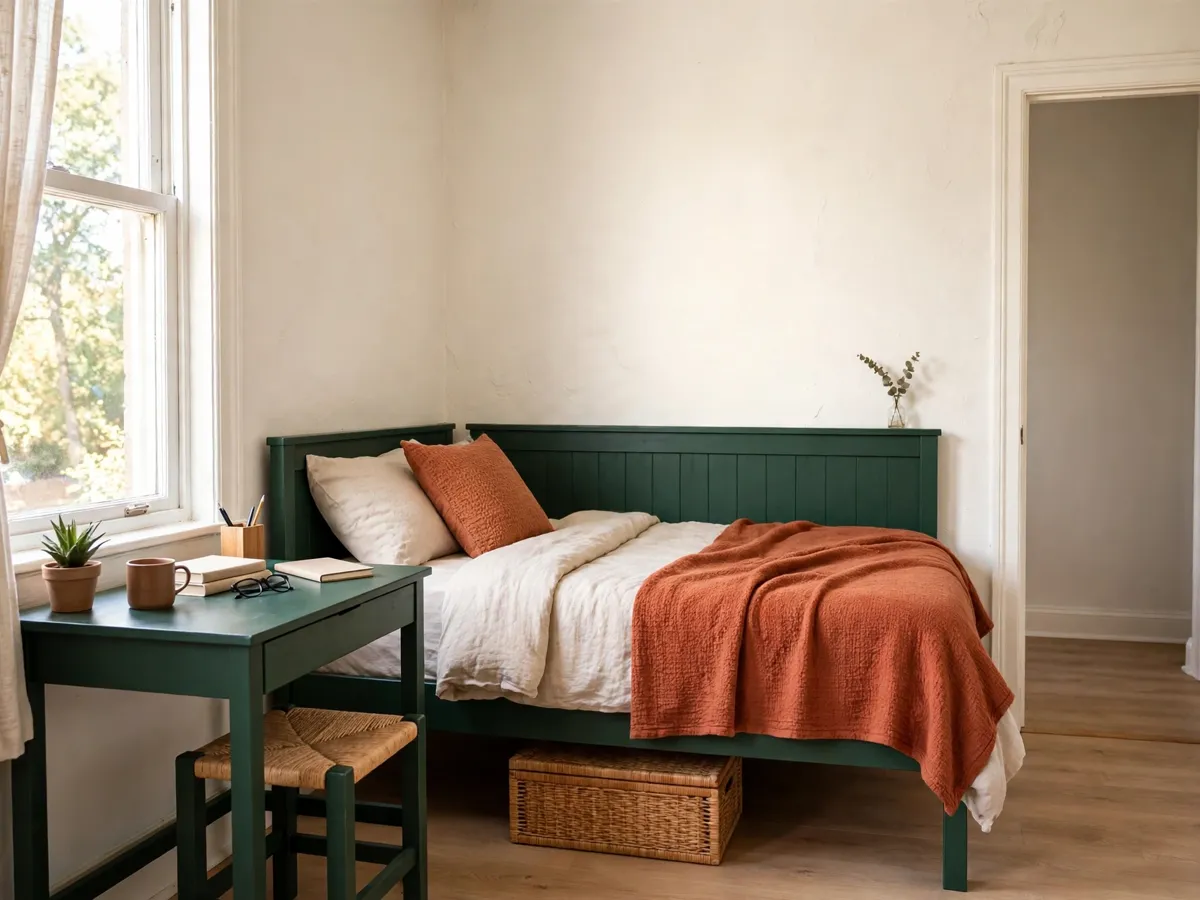
Write down the four walls in feet. The longest wall is where the bed goes; the shortest wall is where the desk lives. Measure the door swing and the window opening, because those two are the things you cannot move. A small bedroom is a room with two jobs — sleep and walk — and the layout only works when the walk keeps a lane.
For how wide that lane needs to be, the US Access Board guide to the ADA standards puts the minimum continuous clear width of an accessible route at 36 inches, reducing to 32 inches at points such as doorways.
That is a public-building figure, not a rule for your bedroom. It is a useful yardstick: keep the path from the door to the bed at that 32-to-36 band, and the room stays easy to cross at night.
Cost: $0. Time: 15 minutes with a tape measure and the floor cleared of the stuff that is not furniture.
2. Put the bed where it frames the wall
The bed goes against the longest wall, with the headboard centered on it. If the wall is wide enough, the bed sits in the middle and leaves a gap on each side — that is where the nightstand lives, and if there is not room for one, a wall shelf does the job at the height of your hand. A queen in a room under 10 feet wide is usually too big; a full fits the same corner with room for the desk.
The test is to walk to the bed in the dark without bumping anything. If the desk or the chair is in the path, move the desk first, not the bed. The bed is the anchor; the desk follows the space that is actually there.
Cost: $0 to rearrange. Time: an hour to set the bed and check the path.
3. Fit the desk into what is actually there
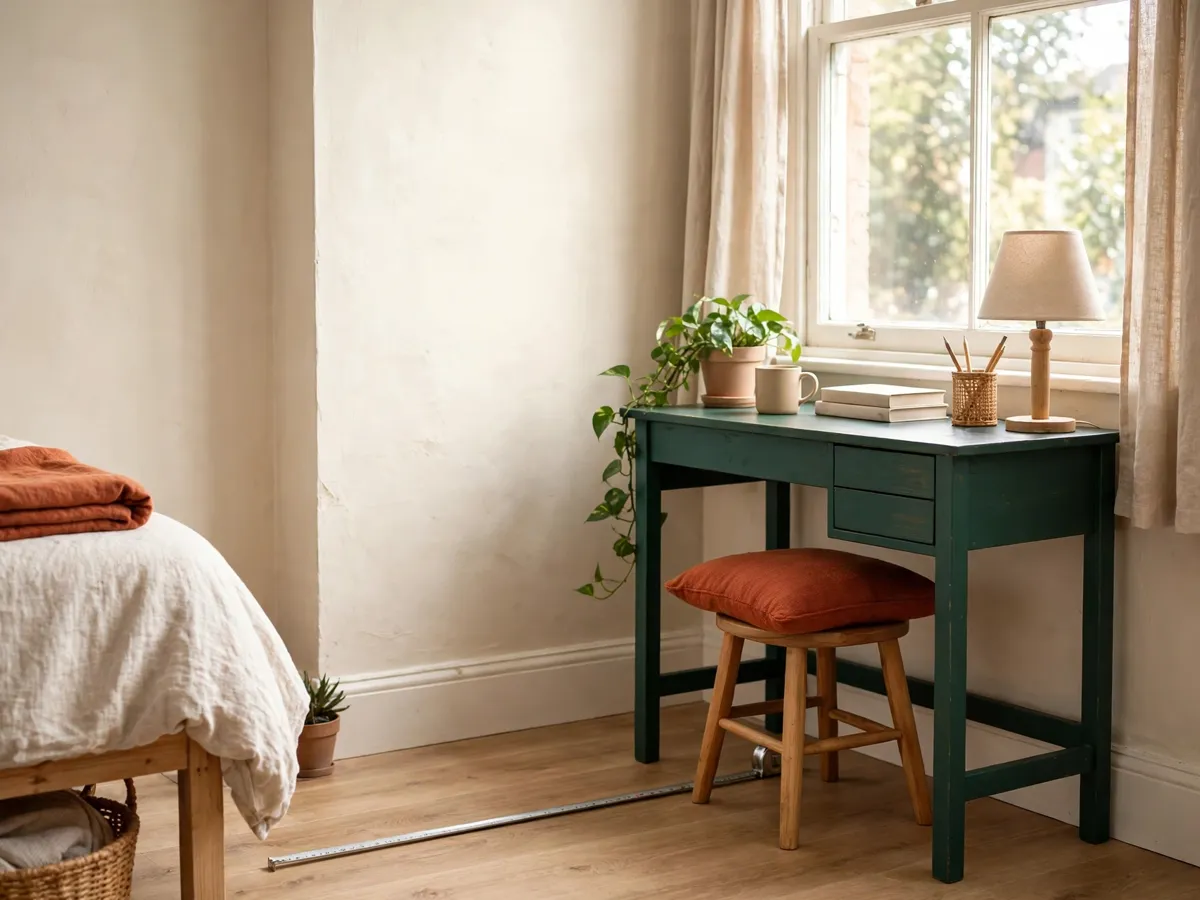
The desk goes where the window is, not where you would like it to be. If the window is on the wall the bed frames, the desk against that wall catches the light and the bed stays in its corner. If the window is on the short wall, the desk goes there and the bed shifts to the long wall. A wall-mounted drop-leaf does the job in a room where a floor desk eats the path, and a stool that tucks under it keeps the floor clear when you are done.
For the full sizing math, the home office guide covers the footprint number for a compact desk and chair. The rule is one: measure the wall first, buy the desk second.
Cost: $40–$120 for a wall-mounted or a compact desk. Time: an afternoon to measure and set it up.
4. Keep the storage off the floor
A small bedroom reads as cluttered when the floor holds the clothes, the bins and the laundry basket. Give the floor one job: standing and walking. Everything else goes up — a shelf above the desk, an adhesive pegboard on the wall the bed frames, and one closed box under the bed for the things you are not using this season. The under-bed box does more for the small room than any dresser, because it takes the floor out of the equation.
Cost: $10–$40 for one shelf and an under-bed storage box. Time: 30 minutes.
What we would skip
Skip the full-size dresser, because the under-bed box does the job with less floor. Skip the floor lamp, because a small shelf lamp above the desk does the same work at the price of one bulb. Skip the matching set, because the mix reads cozier than the set in a small room. The one thing worth the money is the wall shelf, because it takes the floor out of the equation for the price of two brackets.
Cost: $0. Time: the decisions that keep the path clear.
Honest costs: where the money actually goes
Rearrange-only route: $0, a tape measure and an afternoon, and the room already reads as a room instead of a storage box. Add the wall-mounted desk for $40–$80, a stool for $15, and the under-bed box for $20, and the whole corner is finished for about $75–$115. A full instead of a queen is the one spend that fixes the whole room, and a secondhand one for $100 earns its keep because it is the frame every other piece hangs off of.
Cost: $0–$215 for the whole layout. Time: one afternoon to set it, a week to live with it and fine-tune.
Before you move the bed: copy this
- Four walls measured, door swing and window noted
- Bed against the longest wall, headboard centered
- Desk where the window is, sized to the wall
- Path from door to bed held to 32–36 inches, nothing on it
- Storage off the floor: one shelf, one under-bed box, one closed bin for the season
Cost: $0 to check. Time: 15 minutes, before anything moves.
Questions renters ask
Where does the bed go in a small bedroom?
Against the longest wall, headboard centered on it. If the room is under 10 feet wide, a full instead of a queen keeps the desk corner open and the path clear.
How do I fit a desk without losing the walkway?
Put the desk where the window is, not where you would like it to be. A wall-mounted drop-leaf does the job in a room where a floor desk eats the path, and a stool that tucks under it keeps the floor clear.
Do I need a dresser in a small bedroom?
No. An under-bed storage box and one shelf above the desk do the job with less floor. The dresser is the one piece that makes a small room feel like a storage room, and the under-bed box is the one that does not.
What makes a small bedroom feel bigger?
A clear path through the room, a low bed frame that keeps the eye level, and light on the edges instead of one bright center. Clear the floor and the room does the rest.
Save these on Pinterest
Pin the path rule first, because it is the step that stops the furniture from eating the room. The no-drill storage the layout leaves open is in the renter wall decor guide, and the desk sizing math is in the home office guide. Both sit in the Small Room Decor collection for the next room you fit.