 Plant As Deco
Gardening & Planting Tips
Low-Light Indoor Plants: What Holds Up in a Dim Corner
By Plant As Deco · Updated 29 October 2026
“I have a window” is not a light reading. A north-facing window, a window shaded by a balcony above, and a window four feet from the corner where you want the plant are three completely different conditions, and the plant does not care which one you meant. The honest version of low-light indoor gardening is this: some common plants tolerate a dim corner for a long time, none of them grow fast there, and the biggest killer in a dark room is not darkness — it is watering a plant that is not using the water.
Weekend-ready: $20–$60, one weekend. Two or three plants, the right pots, and a placement you have actually checked — renter-safe, nothing mounted.
How to read the light you actually have
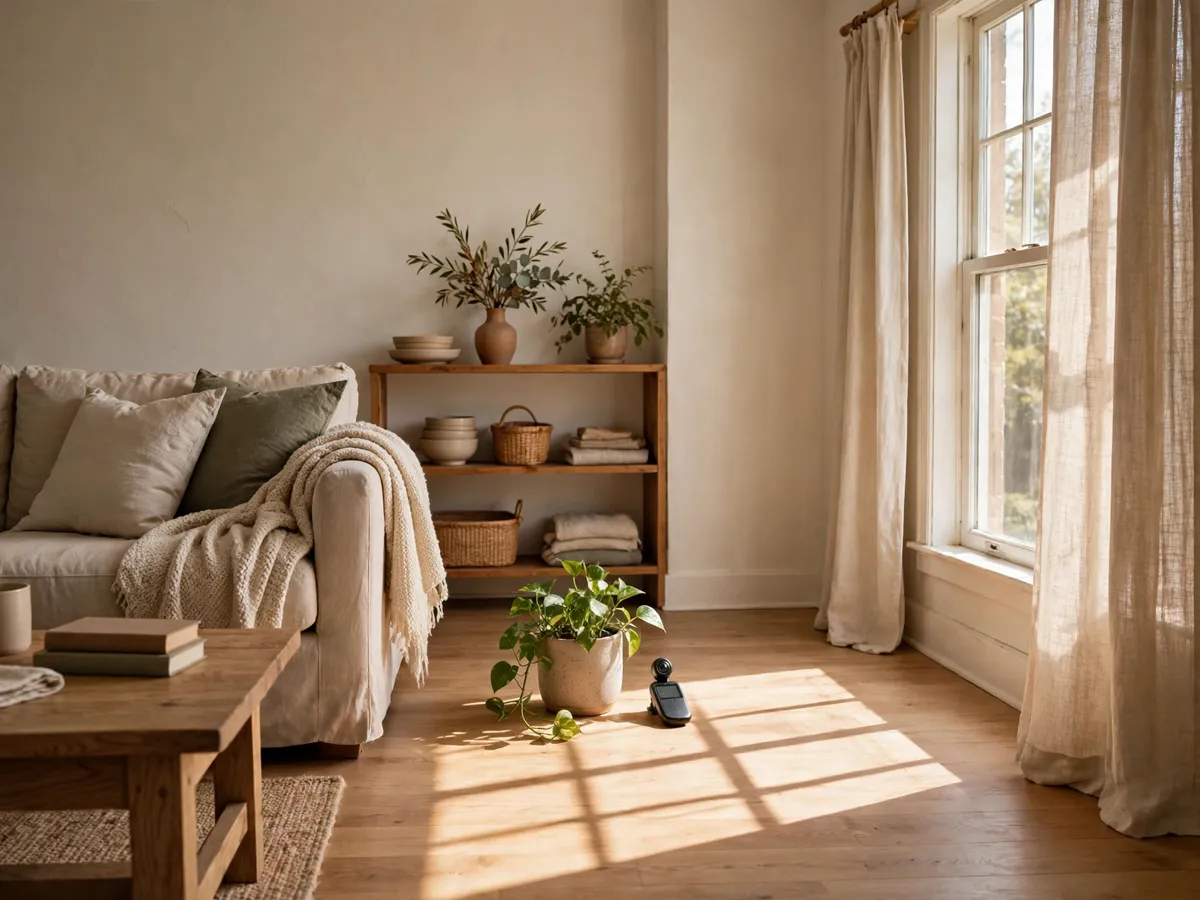
Stand where you want the plant to go, at the time of day you are usually awake, and look at what the light is doing. The hand test is the quickest version: hold your hand up about a foot from the wall and look at its shadow. A sharp, dark shadow with clear edges means bright light. A soft, fuzzy shadow with a gray edge means medium light. Barely any shadow at all means low light, and a room where you can read comfortably only with a lamp on is darker than most people think.
Then check the distance, because light falls off fast indoors. A plant two feet from a window gets a fraction of what a plant six inches from the same window gets, and that difference is the whole game. Note which direction the window faces too — in the northern hemisphere, a south-facing window is the brightest, a north window is the dimmest and most even, and east and west sit in between with a morning or afternoon peak.
Time: ten minutes, done once. Write down the spot — you will refer back to it when a plant starts to look tired in December.
Common picks that hold up in a dim corner
These are the ordinary, widely-grown houseplants that people keep alive in low light for years. None of them grow quickly in a dark room, and that is the honest trade — a pothos in a dim corner is a slow, steady plant, not a trailing jungle. Pick two or three that suit how much attention you actually want to give them.
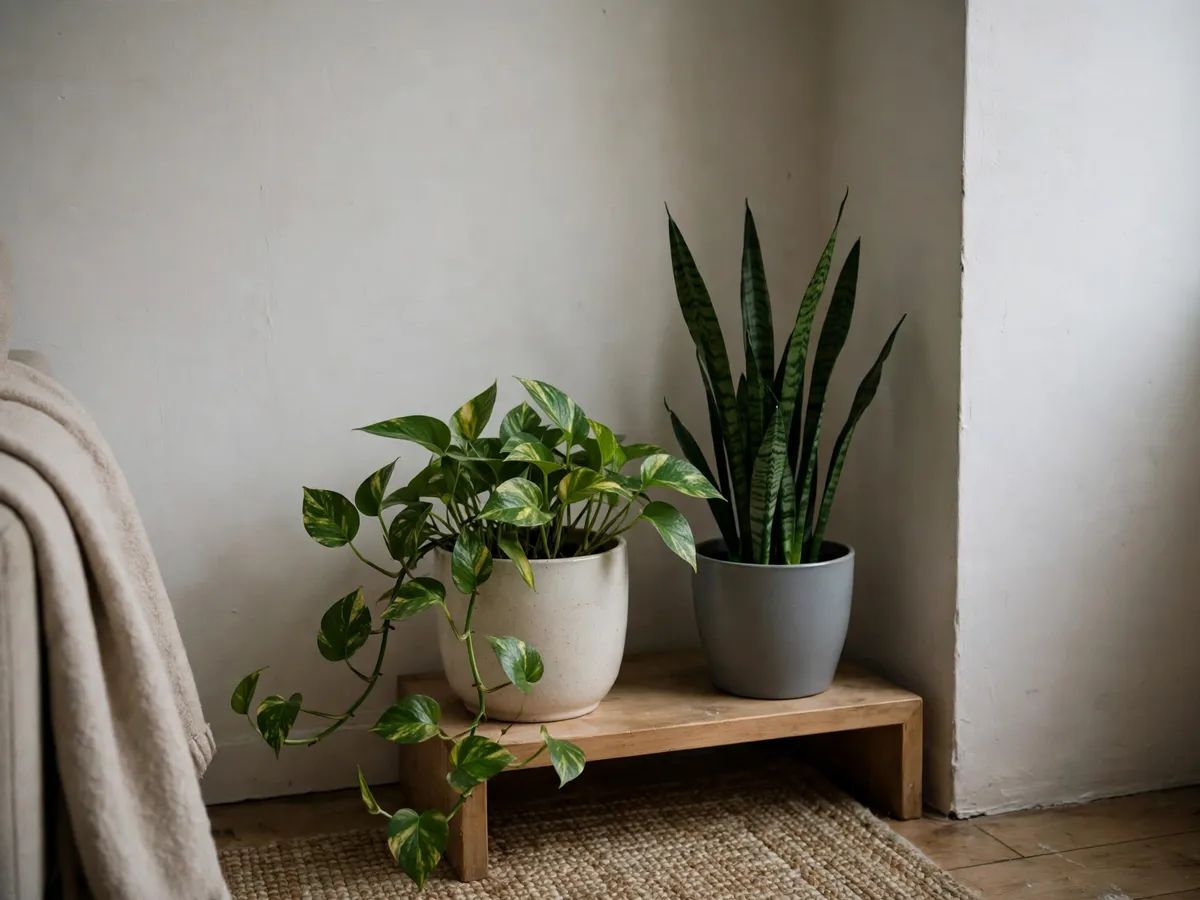
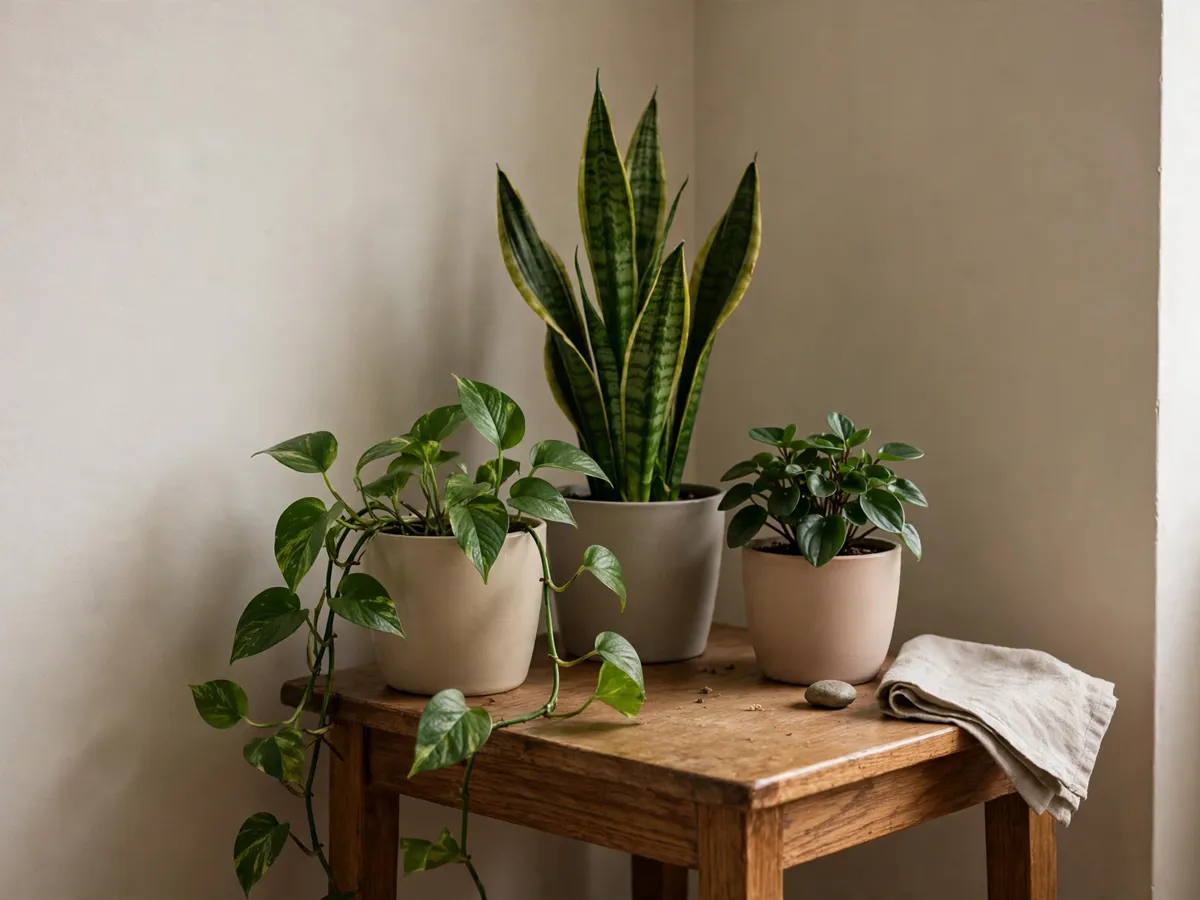
Pothos is the usual first plant: it trails, it forgives an inconsistent watering habit, and it keeps going in a corner a few feet from a window. The snake plant is the slowest and most architectural of the group — upright, structural, and happy to be left alone for weeks. The ZZ plant is similar in habit with thicker stems, and it tolerates a genuinely dim spot better than most. Philodendron has broader leaves and the same forgiving nature. For a leafier look, the Chinese evergreen and the cast iron plant both sit out a dim corner without much fuss.
Herbs are a different story and worth saying plainly. Basil, parsley, and mint want real sun — four to six hours of it — and they thin out and go leggy on a dim windowsill. If the kitchen window is the only option and it is a dim one, a pothos on the shelf is a better use of the space than a basil plant that never fills out.
Cost: $10–$25 for a mid-size pothos or philodendron, $20–$40 for a snake plant or ZZ plant in a 6-inch pot.
What low light does to watering
A plant in low light uses less water, because photosynthesis is slower and less moisture leaves through the leaves. That means the same pot that needed watering every five days on a bright sill can go two or three weeks in a dim corner. Watering on the old schedule in the new spot is the single most common way a low-light plant dies — the roots sit in wet mix and rot before the plant ever looks thirsty.
So check rather than count. Push a finger two inches into the mix before every watering; if it comes out with cool, damp mix on it, wait. Weight is the other cue — lift the pot before and after a thorough watering and you will learn what a dry pot feels like within a week. In winter, when light drops and most houseplants slow down, stretch the interval further again.
If a plant is sitting in a dim spot and the mix is still wet after two weeks, move it somewhere brighter rather than waiting longer — that combination usually means the corner is too dark for that particular plant.
Honest placement fixes
The best fix is not a grow light — it is moving the plant closer to the window. Two feet makes an enormous difference, and it costs nothing. If the corner has to stay dim, work the room instead of fighting it: cluster the plants in the brightest two feet available rather than spreading them around the room, keep them off the floor and up on a shelf or table where the light reaches, and dust the leaves so the surface can actually use what light there is.
Rotation matters more in dim rooms than bright ones. Turn each pot a quarter turn every week or two so the whole plant gets a share of the light instead of leaning permanently toward the glass. And skip the fertilizer in winter — a plant in low light is not growing much, so feeding it pushes weak, stretched growth that then has to be cut back.
A grow light is a real option if the room has no usable window at all: a simple LED bulb in a desk lamp, a foot or two above the plant, on a timer for 10–12 hours a day. Cost: $15–$30 for a bulb and a lamp. It works — but it is a lamp to keep switched on, so only buy one if the corner is worth it.
What goes wrong in a dim room
The pattern is almost always over-watering, and it looks like yellowing lower leaves and soft stems at the base. The fix is fewer, more thorough waterings — soak the mix, let it drain fully, and empty the saucer. Small frequent watering keeps the surface damp while the middle of the pot stays dry, which is the worst of both worlds for roots.
Leggy, stretched growth reaching toward the window is a light problem, not a feeding problem, and the answer is moving the plant. Repotting into a bigger pot in a dim corner makes things worse, not better, because the extra mix stays wet longer — the same one-size-up logic in the repotting one size up guide applies doubly in low light.
One honest note: a truly dark room with no window is not a place for most plants. Two snake plants on a shelf near a lamp beat six plants spread around a room that cannot support them.
Weekend checklist: set up the dim corner
- Hand test done in the actual spot, at the hour you are awake
- Window direction and distance from the glass noted
- Two or three common picks chosen — pothos, snake plant, ZZ plant, philodendron
- Plants clustered in the brightest two feet of the room, not spread out
- Off the floor and onto a shelf or table where light reaches
- Pots with drainage holes, each with a saucer that gets emptied
- Finger test two inches into the mix before every watering
- Watering interval stretched — every 10 days to three weeks, not weekly
- Quarter-turn rotation every week or two
- No fertilizer through the winter months
Making the corner look intentional
A dim corner with three good plants in plain pots reads better than a bright corner with nine struggling ones. Group them at two different heights — a tall snake plant behind, a trailing pothos on a shelf above — and keep the pots in one material family so the group reads as a single object.
Skip the decorative cachepot with no drainage hole as a permanent home. Use it as an outer sleeve and lift the real pot out to water — that is the difference between a tidy corner and a slow root-rot problem you cannot see.
Save these on Pinterest
Pin the hand test — it is the page you will come back to before buying another plant. The rest of the beginner planting plans live in the Gardening & Planting Tips collection for low-light plants, balcony gardens, and container basics you can start in a weekend.