 Plant As Deco
Small Room Decor
Cozy Paint Colors for Small Rooms
By Plant As Deco · Updated 13 November 2026
A small room does not need a brighter color to feel bigger. It needs a warmer one. The instinct is to reach for white, and white is the color that makes a rental read as a hallway. Cozy comes from the wall that holds the room, and the room holds you when the paint is a step off the white. This plan picks the warm neutrals that do that, works out which wall takes the one accent color, and tests the swatch where it will actually live. That is the whole job, and it takes a weekend with a two-inch brush and no contractor.
Weekend-ready: $30–$90 for a small room, one wall at a time. Renter-safe where the lease allows it, and the test patch is the move that protects the deposit.
1. Start with the warm neutral, not the white
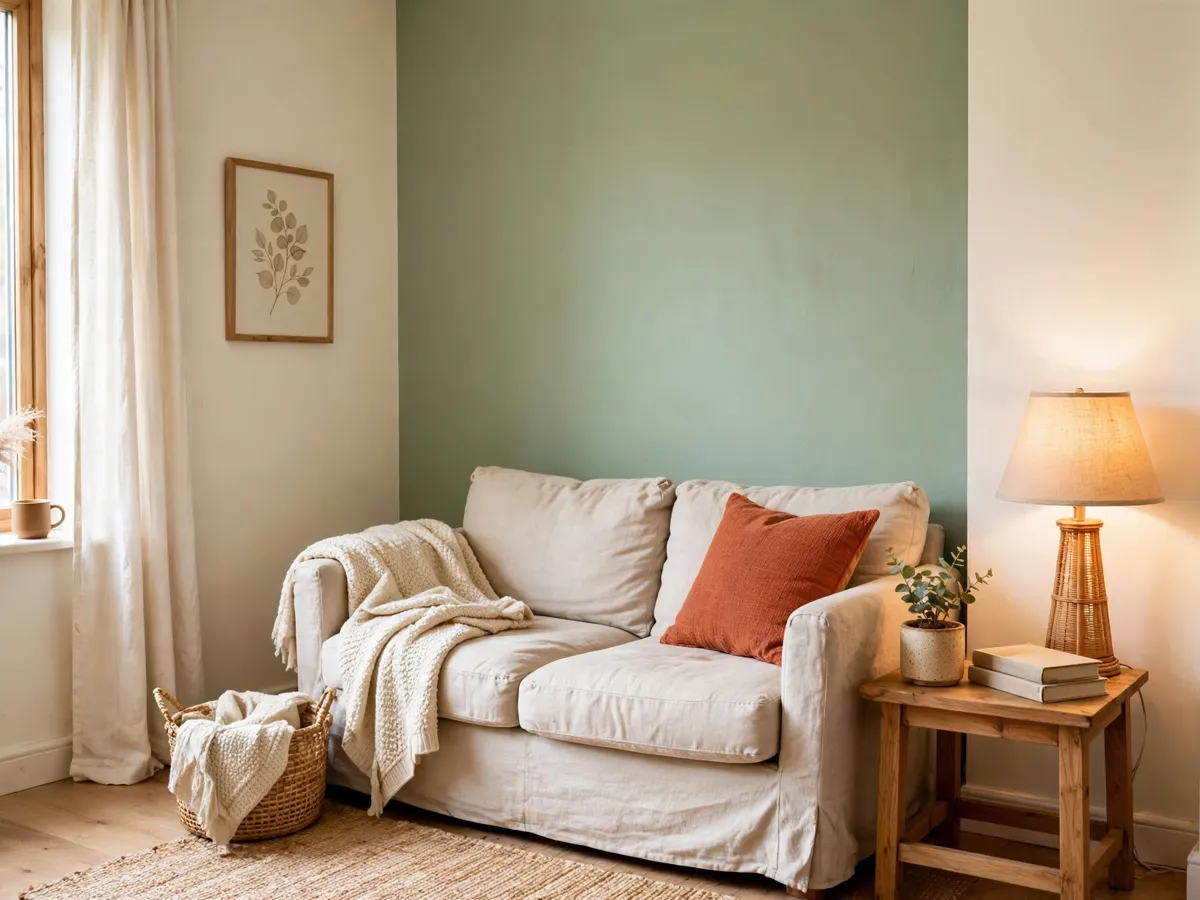
Pick the base color for three walls out of four, and the base is a warm cream, oat or soft beige, not a flat white. The white wall is the one that makes the room feel like a photo booth, and the warm neutral is the one that makes it feel like a room. If you are unsure which cream, look at the trim first: a warm floor and a white trim want a cream base, and a dark floor wants the same cream, not a gray.
For the family, the move is to name the color and skip the swatch card. The swatch card is a quarter-inch of paint in a store light, and the wall is a hundred square feet in your window light. A warm off-white or a soft greige is the base that works in both a north room and a south one, and it is the one that makes the accent color do its work.
Cost: $20–$40 for a gallon that covers the base of a small room. Time: an afternoon to paint, and a day for the smell to clear.
2. Put the accent where the eye already lands
The accent wall is the one the eye is already on: the wall the bed frames, the wall the sofa faces, or the wall above the desk. Not the wall you enter past, because the eye does not rest on the one it walks through. That one wall gets the soft sage, the muted terracotta, or the deep pine, and the other three stay in the cream base. One color, one wall, and the room reads as layered instead of painted.
The accent should be two or three steps off the base, not a different family. A soft sage next to a cream reads as the same room with a mood; a bright blue next to a cream reads as two rooms in one. For what to do with the wall the accent frames, the no-drill wall decor guide covers the strips and the ratings for the art that sits on it.
Cost: $20–$30 for a gallon of the accent. Time: an hour to paint the one wall, and a day for it to dry before you hang anything.
3. Test the swatch where it will live
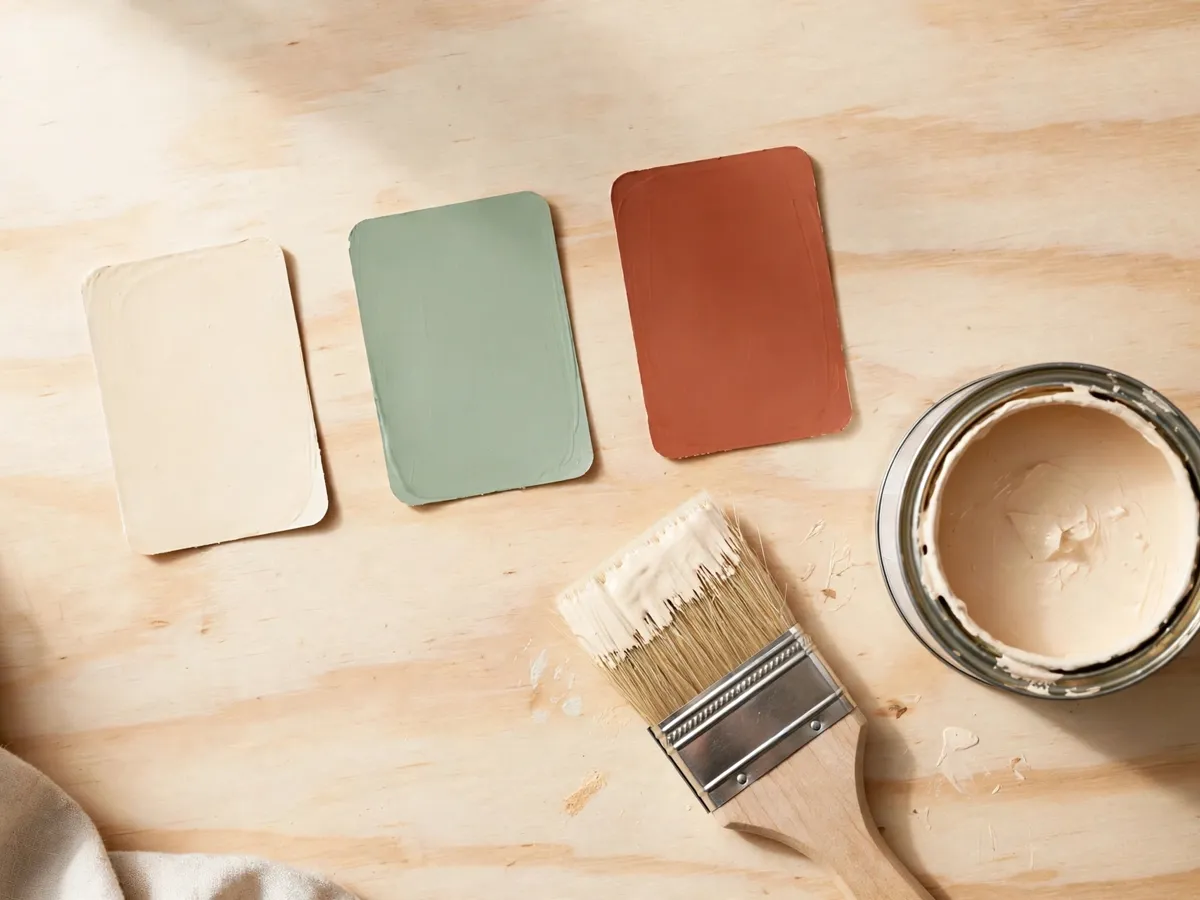
Before the gallon, paint a two-foot square on the wall, not a card on the floor. The card lies, because it is seen in store light and held at eye level, and the square is seen in your window light and at the height the room actually lives at. Paint the square, step back, and live with it for a day: in the morning light, at the window, at night with the lamp on. If the square reads as the room you want, buy the gallon. If it reads as the hallway, step the color up or down one shade and test again.
For the renter, the test patch is the move that protects the deposit. One two-foot square in a color the lease allows is the proof that the wall was not a problem, and it is the thing the landlord cannot argue with when you move out. If the lease does not allow paint at all, the cream base and the accent are the colors you bring back as the wall art and the textile instead.
Cost: $10 for the test square. Time: a day to live with it, and an afternoon to paint the real wall.
4. Let the trim and the floor set the temperature
The paint is only half the color. The other half is the trim and the floor, and the room reads as warm when the two agree. A white trim and a warm floor want a cream base; a white trim and a gray floor want the same cream, not a gray. The move is to match the trim to the base and let the floor be the one cool thing in the room. A small room with a warm wall and a cool floor reads as a home; a small room with a cool wall and a cool floor reads as a storage box.
Cost: $0 to read the room. Time: 15 minutes, and it is the decision that picks the whole palette.
What we would skip
Skip the trend color, because the trend is the one that reads as a photo on the wall in two years. Skip the two-tone wall, because the small room cannot hold two colors at once. Skip the bright accent, because the eye needs the room to hold still. The one thing worth the money is the base coat, because the warm cream on three walls is the move that makes the whole room read as cozy, and it is the color you will not regret in five years.
Cost: $0. Time: the decisions that keep the room warm.
Honest costs: where the money actually goes
One-wall accent route: $30 for the accent gallon, $10 for the test square, and a two-inch brush you already have, about $40 for the whole move. Three-wall base plus one accent: $60 for the base gallon and $30 for the accent, about $90, and the room reads as a home instead of a hallway. The one spend that earns its keep is the base coat, because the warm cream is the color the whole room hangs off of, and the accent is the one that can wait for a second weekend.
Cost: $40–$90 for the whole room. Time: one weekend for the base, one afternoon for the accent, and a day between for the smell to clear.
Before you open the can: copy this
- Base picked: a warm cream, oat or soft beige, not a white
- Accent wall chosen: the one the eye already lands on, not the one you enter past
- The accent is two to three steps off the base, same family
- Trim read: the base matches the trim, the floor is the cool one
- Test square painted on the wall, lived with for a day in the window light
Cost: $0 to check. Time: 15 minutes, before you open the can.
Questions renters ask
What paint color makes a small room feel cozy?
A warm cream or oat on the three base walls, and a soft sage or muted terracotta on the one accent wall. The move is the warm base, not the white, because the white is the color that makes the room read as a hallway.
Which wall gets the accent color?
The one the eye already lands on: the wall the bed frames, the wall the sofa faces, or the wall above the desk. Not the one you enter past, because the eye does not rest on the wall it walks through.
Can I paint in a rental?
Where the lease allows it, and the test square is the proof that protects the deposit. One two-foot square in a color the lease allows is the move the landlord cannot argue with when you move out. Where it does not, the colors come back as the art and the textile instead.
How do I test a color before I commit?
Paint a two-foot square on the wall, not a card on the floor, and live with it for a day: morning light, window light, lamp light at night. If the square reads as the room you want, buy the gallon; if it reads as the hallway, step the shade and test again.
Save these on Pinterest
Pin the test-square step first, because it is the move that stops you opening a gallon you will not live with. The art that sits on the accent wall is in the renter wall decor guide, and the warm light that finishes the room is the cozy living room guide. Both sit in the Small Room Decor collection for the next wall you warm.