 Plant As Deco
Small Room Decor
Renter-Friendly Flooring Ideas: Cover the Floor, Keep the Deposit
By Plant As Deco · Updated 14 November 2026
The floor is the largest surface in a rental and the one most people decorate around instead of on. Old vinyl, a patch of worn varnish, a tile that dates the whole apartment — none of it has to be lived with, and none of it needs a landlord. There are two honest routes: cover the room with one rug big enough to actually cover it, or lay a floating floor that lifts back up in an afternoon. That is the whole choice, and the wrong one costs a deposit.
Weekend-ready: $80–$400, one weekend. Nothing glued, nothing fixed — renter-safe throughout.
1. One rug big enough to cover the room, not to decorate it
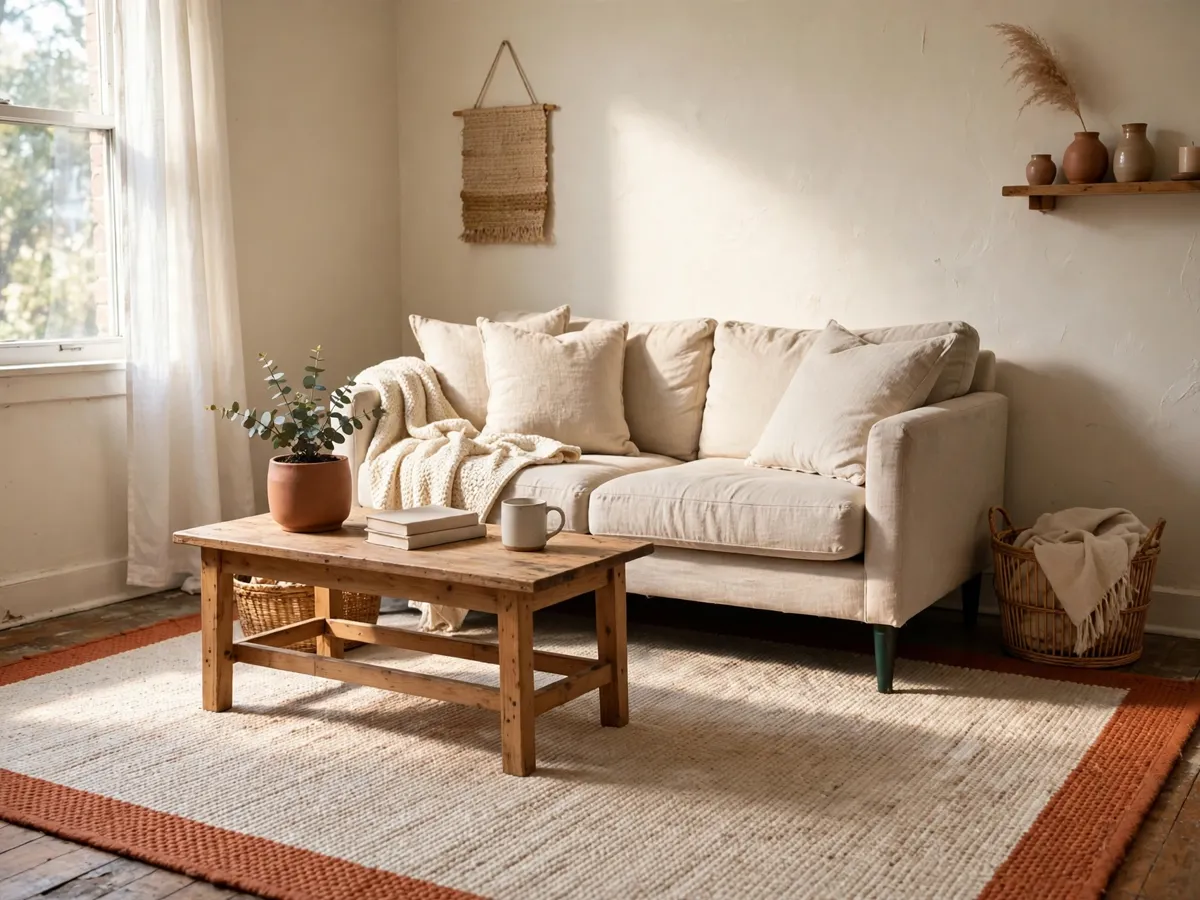
A small rug in a small room reads as a mat and leaves the floor it was bought to hide still visible at the edges. The rug that changes a room is the one that leaves a border of floor around the edge — a foot or less — and disappears under the furniture. In a rental that means an eight-by-ten in a normal living room and a five-by-eight in a bedroom, which is bigger than the instinct and smaller than the room. The material matters as much as the size: a flatweave or a low-pile wool takes a chair leg without a dent, and the high-pile shag is the one that shows every footprint. The size rule and the under-the-front-legs rule are in the fabric layers guide, and this is the version that covers a floor you do not like.
Cost: $80–$250 for a room-size flatweave. Time: twenty minutes to lay it and check the border from the door.
2. The floating floor that lifts back up
A click-together floating floor needs no adhesive, no underlay glue and no tools beyond a tapping block and a knife, and it comes up in the same afternoon it went down. That is the honest renter version of new flooring, and the reason it is worth knowing: it is the only route that changes the actual floor rather than covering it. The limit is the subfloor — it has to be flat and dry, and it has to be a surface you are allowed to lay on, which is a lease question, not a design one. Ask first, keep every offcut, and photograph the floor before the first plank goes down. The other honest note is the door: a floating floor adds height, and the door that does not clear it is the last ten minutes of the job.
Cost: $150–$400 for one room in a budget click product. Time: one weekend, and one afternoon to lift it back up.
3. Peel-and-stick tile: kitchen and bathroom only, and never on grout
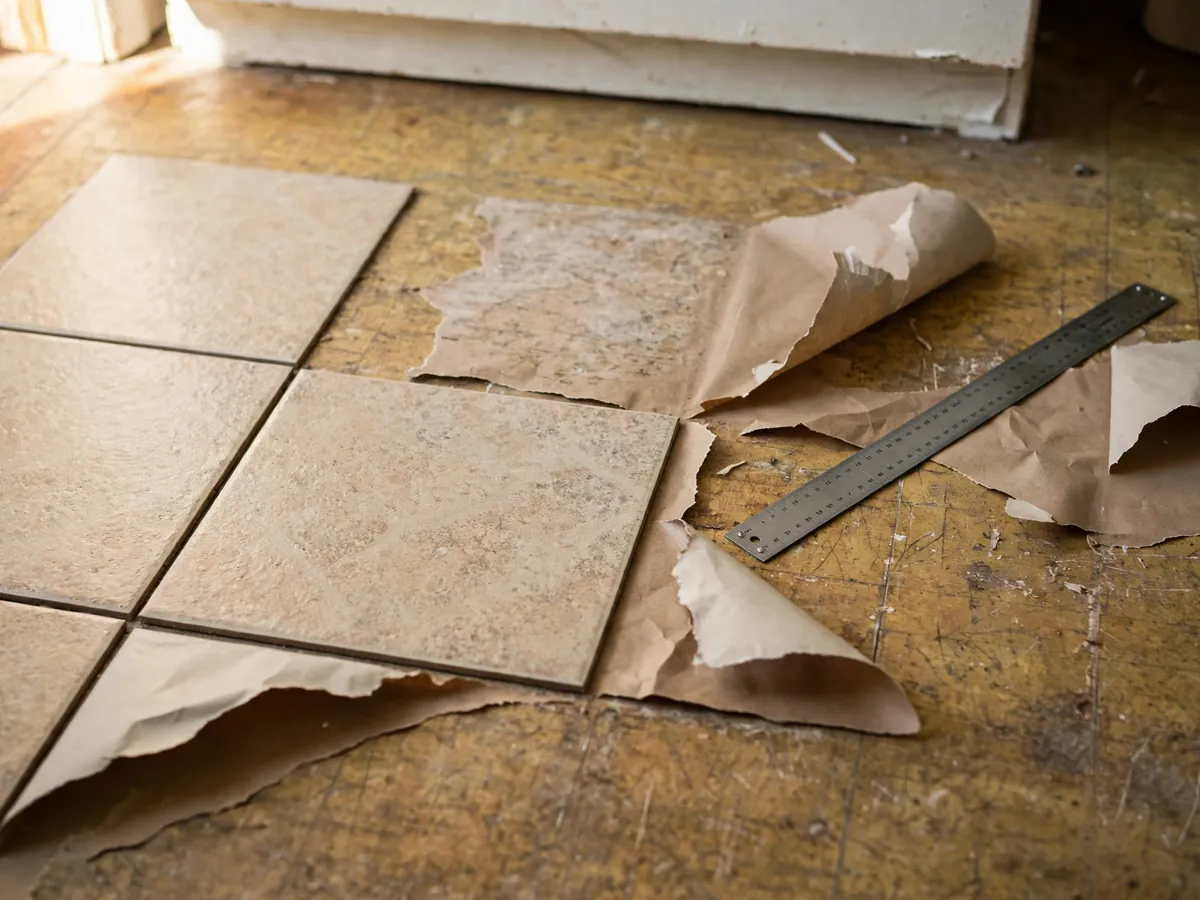
The peel-and-stick vinyl tile is the cheapest way to change a kitchen or bathroom floor, and it is the one most likely to fail. It fails on three surfaces: grout lines, because the adhesive bridges the gap and the tile cracks along it; damp concrete, because the moisture lifts the edges within weeks; and any floor that was not cleaned of grease first, which is most kitchen floors. Done right — a skim coat or a plywood underlayment over the grout, a clean dry surface, a straight-edge line to start from — it lasts years and it lifts with a heat gun. Done wrong it is the reason people say peel-and-stick does not work. The kitchen version of the same project is in the small kitchen guide, where the counter is the priority and the floor is second.
Cost: $1–$3 per square foot, plus $20 for the underlayment. Time: one weekend for a small kitchen.
4. What to leave alone, and the two photos to take first
Some floors should be left: the original hardwood with a finish worn thin, because a rug over it is kinder than anything you can lay; the tile that is set in a thick mortar bed, because nothing sticks to it evenly; and any floor the lease names. Before anything goes down, take two photographs — one of the whole floor, one of the worst patch — and keep them with the lease. That pair is the difference between a deposit conversation and an argument. And the last honest note: the rug is the route with no risk at all, which is why it is first in this plan even though it is the one that changes the least. The wall treatments that come off the same way are in the renter wall guide.
Cost: $0. Time: ten minutes for the photos, and they are the cheapest insurance in the apartment.
What we would skip
Skip the small rug, because it is the one that leaves the floor you dislike still visible. Skip the peel-and-stick tile straight over grout, because it cracks along the lines within a season. Skip the carpet tile with the adhesive backing in a bedroom, because the residue is the thing the deposit is judged on. The one thing worth the money is the room-size flatweave, because it covers the floor, takes the furniture and comes with you.
Cost: $0. Time: the decisions that keep the deposit.
Honest costs: where the money actually goes
Rug route: $80–$250 for one room-size flatweave, twenty minutes, and the floor stops being the thing you notice. The tile route is $1–$3 a square foot plus the underlayment, and the click floor is $150–$400 for one room — both real money, both reversible, and both worth the lease conversation first. Add a rug pad for $20–$50, because the pad is what stops the rug from creeping and what makes a thin flatweave feel like a floor instead of a mat.
Cost: $80–$400 depending on the route. Time: one afternoon for the rug, one weekend for the floor.
Before you buy the rug: copy this
- The rug sized to leave a border of a foot or less, not a mat
- A flatweave or low pile, so the chair legs do not dent it
- A rug pad underneath, so it stays where it was laid
- Two photos of the original floor, kept with the lease
- Any peel-and-stick tile on a skim coat, never straight over grout
Cost: $0 to check. Time: fifteen minutes, before the first order.
Questions renters ask
What can I put over an ugly rental floor?
One room-size rug is the safest and the cheapest, and it covers most of the floor without touching it. A click floating floor is the route that changes the actual floor, and it lifts back up — but ask the landlord first, because it is a lease question.
Does peel-and-stick tile damage the floor?
It can lift the finish on a wood floor and it cracks over grout, but on a clean, flat, dry vinyl or concrete floor it comes up with a heat gun and a scraper. The damage usually comes from the surface, not the tile.
How big should a rug be in a small room?
Big enough to leave a border of a foot or less around the edge, with the furniture sitting on it. The small rug in the middle of the floor is the one that makes the room read smaller, because the eye sees the floor it was meant to cover.
Can I lay a floating floor in a rental?
Only with permission, and it is worth asking because it is the one route that changes the floor rather than covering it. It needs no glue and comes up in an afternoon, which is the argument to make — and the door clearance is the detail that decides whether it works.
Save these on Pinterest
Pin the room-size rug rule first, because it is the move that covers the floor without touching it. The size and the under-the-legs rule are in the fabric layers guide, and the kitchen floor project is in the small kitchen guide. Both sit in the Small Room Decor collection for the next floor you cover.