 Plant As Deco
Small Room Decor
How to Layer Curtains and Textiles in a Small Room
By Plant As Deco · Updated 14 November 2026
Textiles are the cheapest way to make a small room read as cozy and the fastest way to make it read as cluttered. The difference is a count, not a taste: one curtain treatment hung at the height that steals inches, a rug that sits under the front legs, and three textiles on the bed or the sofa — and three is the ceiling. That is the whole layer, and it costs curtains and a throw, not a reupholster. The order matters too, because the fabric that touches the wall changes the room more than the fabric that touches the sofa.
Weekend-ready: $50–$220, one afternoon. Tension rods and clip rings — renter-safe, no drilling required.
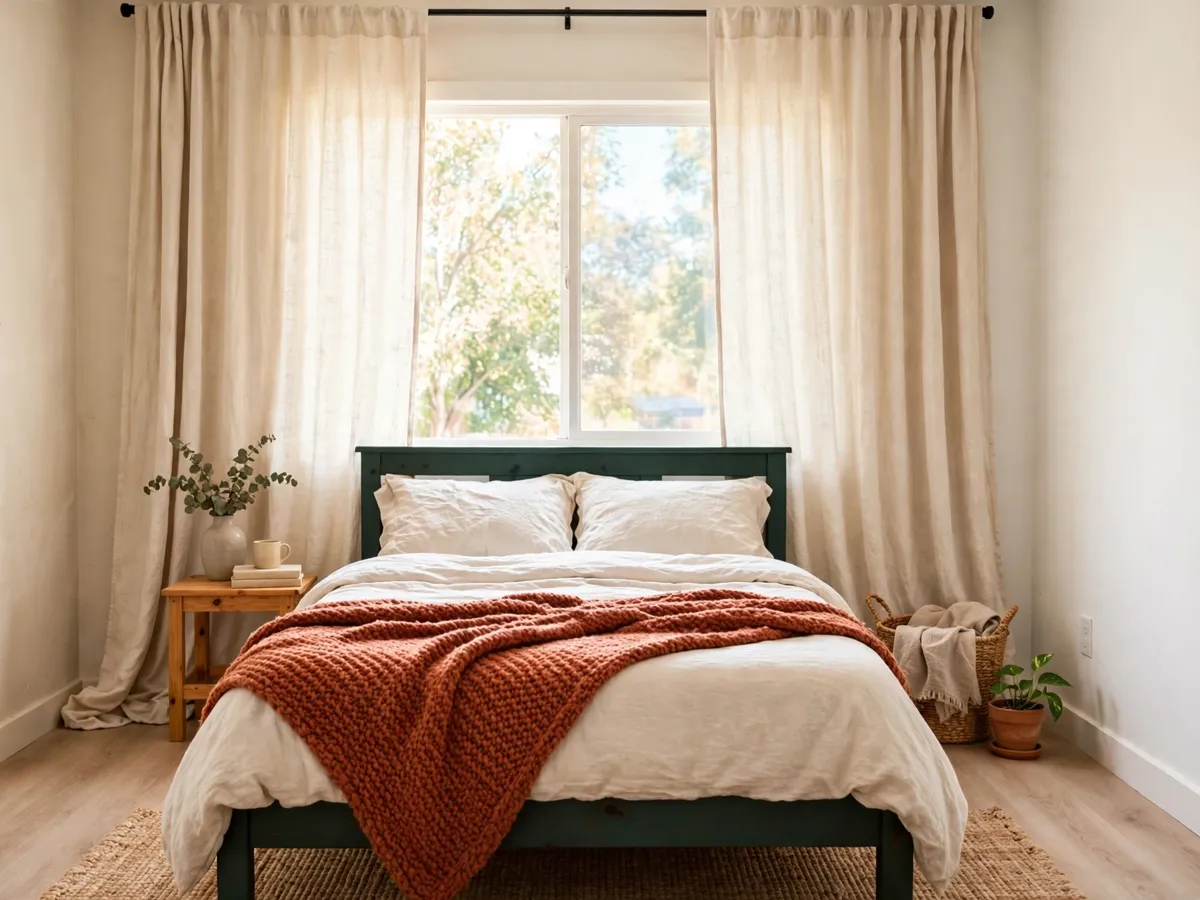
1. Hang the curtain high and wide, and let it touch the floor
The curtain rail is the one line in the room that can make the window look tall, and the two numbers that do it are outside the window, not on it. The rail goes as close to the ceiling as the room allows — a hand width above the window frame is the minimum — and the panels hang wide enough to clear the glass when they are open, so the window reads full instead of framed. Then the fabric touches the floor. A curtain that stops at the sill cuts the wall into a low block, and a curtain that breaks an inch on the floor is the one that gives the room its height back. For the no-drill rail that does all of it, the renter wall guide covers the tension rods and their honest ratings.
Cost: $0 to move a rail that is already up. Time: twenty minutes with a step stool, and the wall reads taller before the panels are even hung.
2. Two panels, one color, and the honest blackout question
A small window needs two panels, and a small room needs them in one color, because the striped and the patterned curtain are the pieces that turn the window into the loudest wall. The color is the light one — the warm neutral the room already runs on — and the texture is the woven one, because texture does the cozy without the visual weight of a print. The blackout question is the honest one: a lined panel in the same warm neutral does the dark for sleep and still reads as the room's curtain, and the blackout liner behind a light panel is the two-layer version for the window that faces a streetlight. The room that already runs on the layer is the cozy bedroom guide, where the window is the one wall the bed does not take.
Cost: $25–$90 for two panels, $10–$20 for the liner. Time: fifteen minutes to hang and check them open and closed.

3. The rug goes under the front legs, and it is the biggest textile in the room
The rug is the layer that names the floor, and the rule for a small room is the front legs on, the back legs off: the rug slides under the front feet of the sofa or the bed and the rest of the floor stays visible. A rug that floats in the middle of the room is the one that reads as a mat, and a rug that disappears under all four legs is the one that eats the floor. The size that works is bigger than the instinct — the small rug is the most common mistake in a small room, because the point of the rug is to hold the seating, not the coffee table. The living room version of the same rule is in the cozy living room guide, where the rug is the first of the two buys that change the room.
Cost: $30–$120 for the right-size rug. Time: fifteen minutes to place it and check it from the door.
4. Three textiles on the bed, three on the sofa, and stop
The count that keeps a small room cozy instead of busy is three. On the bed: the bedding, the throw at the foot and the pillow the hand reaches for — the duvet and the sheet count as one. On the sofa: the throw over the arm and two cushions, one cream and one from the accent color the room already owns. The fourth textile is the one that tips the room into a display, and the five-pillow bed is the version of the same mistake. Every piece shares the room's base color, and one piece carries the accent, because the layer reads as a plan when the count is held and as a collection when it is not. The winter version of the same count, one weight heavier, is in the winter cozy guide.
Cost: $20–$60 for one throw and one cushion, on top of what the room already owns. Time: ten minutes to set the count and take the fourth piece off.
What we would skip
Skip the valance and the scarf, because they are the pieces that cut the window in half and the room does not need the extra line. Skip the patterned curtain, because the window is the light wall and the print is the thing that makes it the loud one. Skip the fourth cushion, because three is the count that reads as a plan. The one thing worth the money is the lined curtain panel, because it is the piece that does the sleep and the cozy in one buy.
Cost: $0. Time: the decisions that keep the layer at three.
Honest costs: where the money actually goes
Reuse-only route: $0, one afternoon, and the curtains the apartment came with move higher and wider, because the height is the free upgrade the rail already allows. Add the tension rail for $10–$25, two lined panels for $25–$90, the right-size rug for $30–$120 and the throw and cushion for $20–$60, and the whole fabric layer is finished for about $85–$295. The secondhand throw is the one spend that quietly does the sofa, and the liner is the $15 piece that fixes the streetlight.
Cost: $50–$220 for the layer, with the curtain the first buy and the rug the second. Time: one afternoon, and the test is the room at 9 p.m. with the lamps on.
Before you buy a panel: copy this
- The rail a hand width above the frame, as close to the ceiling as it allows
- The panels hung wide, clearing the glass when open
- The fabric touching the floor, breaking an inch, never stopping at the sill
- Two panels, one warm neutral color, lined for the streetlight window
- The rug under the front legs, and three textiles on the bed or the sofa
Cost: $0 to check. Time: fifteen minutes, before the first order.
Questions renters ask
How high should curtains hang in a small room?
As close to the ceiling as the rail allows, and never below a hand width above the window frame. The rail is the line that tells the eye where the wall ends, and the higher line is the free inches the room reads by.
Can I hang curtains without drilling?
Yes: a tension rail inside the frame for the light panel, and the no-drill brackets that hook the rail above the trim for the floor-length version. The honest limit is the weight — the lined panel is the heaviest thing the renter hardware holds, and the ratings are in the renter wall guide.
How many throw pillows is too many?
Four is too many on a small sofa and two is the count that reads as a plan. The test is the evening one: if the pillows have to go somewhere before anyone sits down, the sofa is holding a display, not a seat.
Do I need blackout curtains in a small bedroom?
Only when the window faces a streetlight or an early sun, and the liner is the honest version: the warm light panel the room reads by day, and the dark layer behind it the room sleeps by. The blackout panel in the same neutral does both in one buy.
Save these on Pinterest
Pin the height step first, because it is the move that makes the wall read taller for free. The no-drill rails are in the renter wall guide, and the room the layer sits in is in the cozy bedroom guide. Both sit in the Small Room Decor collection for the next room you layer.