 Plant As Deco
Small Room Decor
Small Bedroom Desk Ideas: Fit a Work Corner
By Plant As Deco · Updated 13 November 2026
A bedroom desk fails for one reason: the desk was bought first and the corner was whatever was left over. So the desk is too big for the wall, the chair will not tuck in, and the work spot ends up stealing the walkway to the door. The fix is the other way around. Measure the wall, pick the corner, buy the desk to fit, and let the chair tuck under. That is the whole corner, and it costs a compact desk and a stool, not a new piece of furniture the room cannot hold.
Weekend-ready: $40–$120, one afternoon. No walls, no drilling — renter-safe throughout.
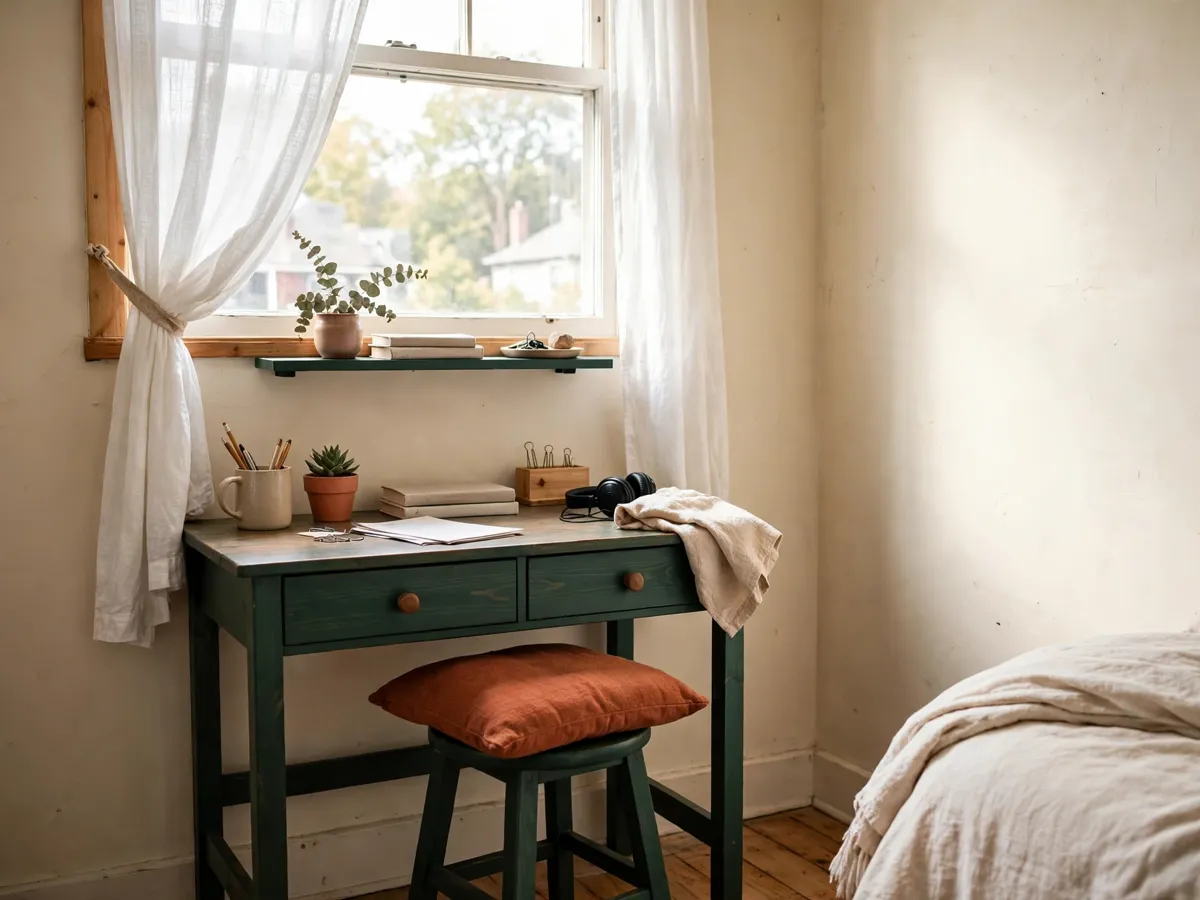
1. Pick the corner, then measure the wall
The desk goes where the light is, not where you would like it to be. In most bedrooms that is the window, so the corner under the window is the one, and the desk against that wall catches the light without the screen catching glare. If the window is on the short wall, the desk goes there and the bed shifts to the long wall. Write down the wall in feet first, because the wall is the number the desk has to fit, and the desk is the one that has to fit the wall, not the other way round.
Then measure the corner, not just the wall: the space the chair pulls out and the walkway beside the desk both have to fit in the same corner, and the corner is the square foot that has to hold all three. For the full footprint math, the home office guide covers the number for a compact desk and chair that tucks in.
Cost: $0 to measure. Time: 15 minutes with a tape measure, before anything is bought.
2. Buy the desk to the wall, not the wall to the desk
A small bedroom wants a desk under about 36 inches wide, and the two that do the job are a slim single desk and a wall-mounted drop-leaf. The single desk is the move when the wall can hold it; the drop-leaf is the move when the floor is the problem, because it lifts off the floor entirely and the corner is clear the moment you are done. A desk wider than the wall is the one that eats the walkway, and it is the one the room cannot grow back from.
The test is the pull-out: sit in the chair, open the laptop, and check the chair does not have to slide off the path to the door. If it does, the desk is a foot too wide, and the smaller one is the answer, not the bigger wall. For how the desk and chair fit together, the home office guide has the sizing that keeps the corner usable.
Cost: $40–$120 for a slim desk or a wall-mounted drop-leaf. Time: an afternoon to set it up and check the pull-out.
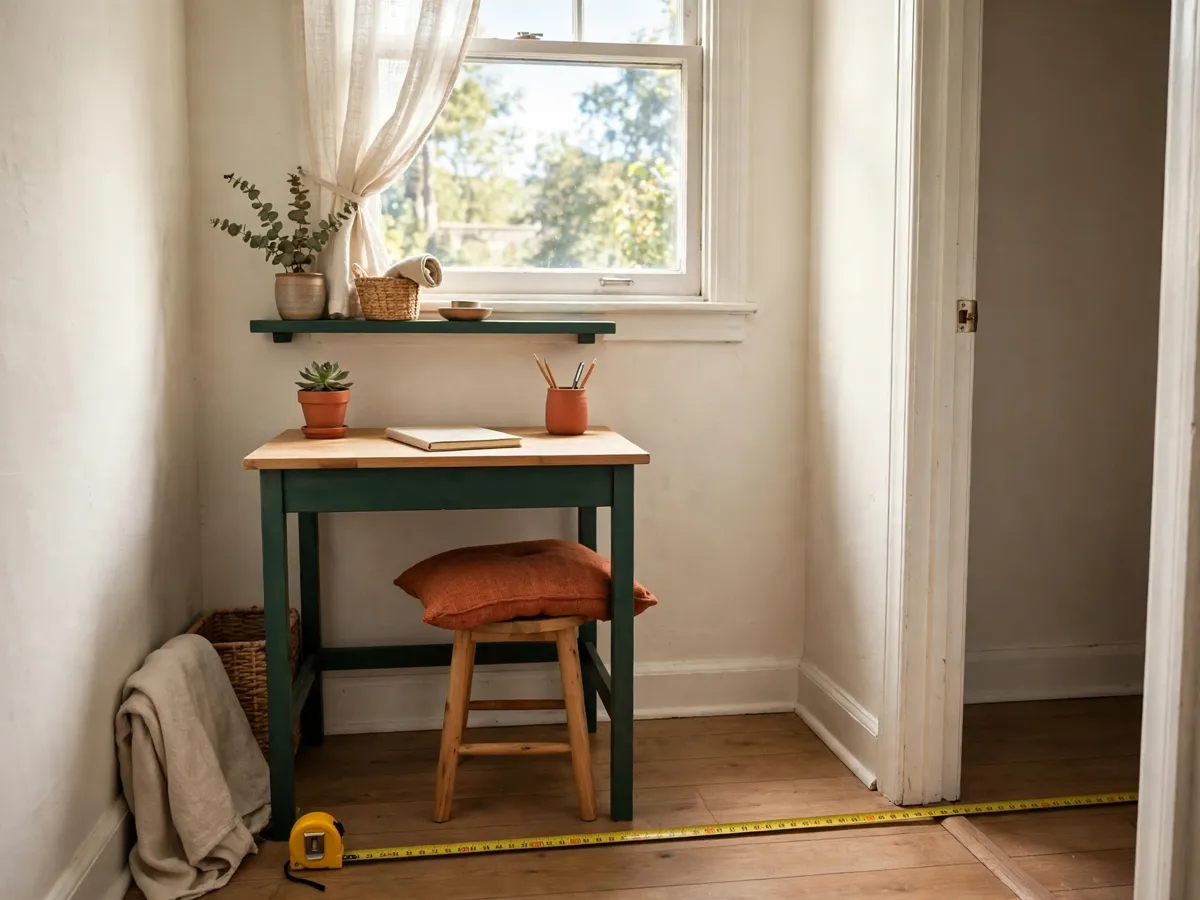
3. The chair tucks in, or the floor stays full
A desk in a small bedroom is only worth it if the chair goes somewhere, and the somewhere is under the desk, half tucked, so the floor is clear the moment you stand up. A stool that tucks under a 36-inch desk is the move, because a full office chair is the one that leaves a chair-sized hole in the floor all day. If the desk is a drop-leaf, the stool tucks under the wall instead, and the corner is the same size as before you sat down.
For a room where even the stool is too much, a small stool that stacks or a chair that folds does the job, and the work corner disappears when it is not in use. The corner is the point: the desk, the chair and the path have to fit in the same square foot, and the one that keeps fitting is the smaller chair.
Cost: $15–$30 for a tuck-under stool. Time: 10 minutes to check it tucks in and the floor is clear.
4. The storage goes above, not on the floor
The stuff the desk needs — the notebook, the pens, the thing you keep reaching for — goes on one shelf above the desk, because the desk top is the one surface that has to stay clear for the work. A slim adhesive shelf at hand height does the storage without a single nail, and the desk top is the size it needs to be, not bigger to hold the shelf's job. For the strips that keep the wall clean, the renter wall decor guide covers the ratings for the shelf's weight.
Cost: $10–$20 for one slim shelf and the strips. Time: 20 minutes, including where the light lands on it.
What we would skip
Skip the big L-shaped desk, because it is the piece the bedroom cannot hold and the one that eats the walkway. Skip the full office chair, which leaves a chair-sized hole in the floor all day. Skip the matching desk and hutch set, because one slim shelf does the storage with less wall. The one thing worth the money is the desk that fits the wall, because it is the piece the whole corner hangs off of.
Cost: $0. Time: the decisions that keep the corner small.
Honest costs: where the money actually goes
Measure-only route: $0, an afternoon, and the corner already knows what it can hold. Add a slim desk for $40–$80, a tuck-under stool for $15–$30, and one shelf for $10–$20, and the whole work corner is finished for about $65–$130. A wall-mounted drop-leaf is the one spend that does the floor and the desk at once, and the shelf above is the one that keeps the desk top clear for the work.
Cost: $40–$120 for the whole corner. Time: one afternoon to set it, and a week to find the one thing the shelf should hold.
Before you buy the desk: copy this
- Corner picked: under the window, where the light falls without the screen glare
- Wall measured in feet, and the desk is under it, not the other way round
- Desk under 36 inches, or a drop-leaf that lifts off the floor
- Chair tucks under the desk, so the floor is clear when you stand
- One shelf above for the storage, and the desk top stays clear
Cost: $0 to check. Time: 15 minutes, before the first order.
Questions renters ask
Where does a desk go in a small bedroom?
Under the window, where the light falls and the screen does not catch glare. If the window is on the short wall, the desk goes there and the bed moves to the long wall. The light is the corner, and the desk follows it.
How big can the desk be?
Under about 36 inches, or a wall-mounted drop-leaf when the floor is the problem. The wall is the number the desk has to fit, and a desk wider than the wall is the one that eats the walkway the room cannot grow back.
Can the desk double as a nightstand?
A narrow desk at the head of the bed can, when the room is tight, but the desk wants the window and the nightstand wants the bed, so the two are usually two pieces. A slim desk that fits the wall between the bed and the door does both, and that is the one to look for.
What do I do with the stuff the desk needs?
One shelf above, at hand height, with no drill. The desk top is the surface that has to stay clear for the work, and the shelf is where the notebook and the pens live, so the corner holds the work without holding the clutter.
Save these on Pinterest
Pin the measure-the-wall step first, because it is the move that stops you buying a desk the room cannot hold. The full corner math is in the home office guide, and the layout the desk sits in is in the small bedroom layout guide. Both sit in the Small Room Decor collection for the next corner you fit.