 Plant As Deco
Small Room Decor
Small Bedroom Ideas for Couples: Fit It Together
By Plant As Deco · Updated 13 November 2026
A small bedroom for two is not a room with double the stuff. It is a room where two people share the walkway, the wall and the two corners, so the layout has to work for both of you at once. The fix is to give the bed its corner, keep one clear path to the door for the person getting up at night, and split the walls so neither side ends up with a wall of stuff. That is the whole plan, and it fits a weekend with no wall and no new bed.
Weekend-ready: $40–$180, one weekend. No walls, no plumbing, no new bed — renter-safe throughout.
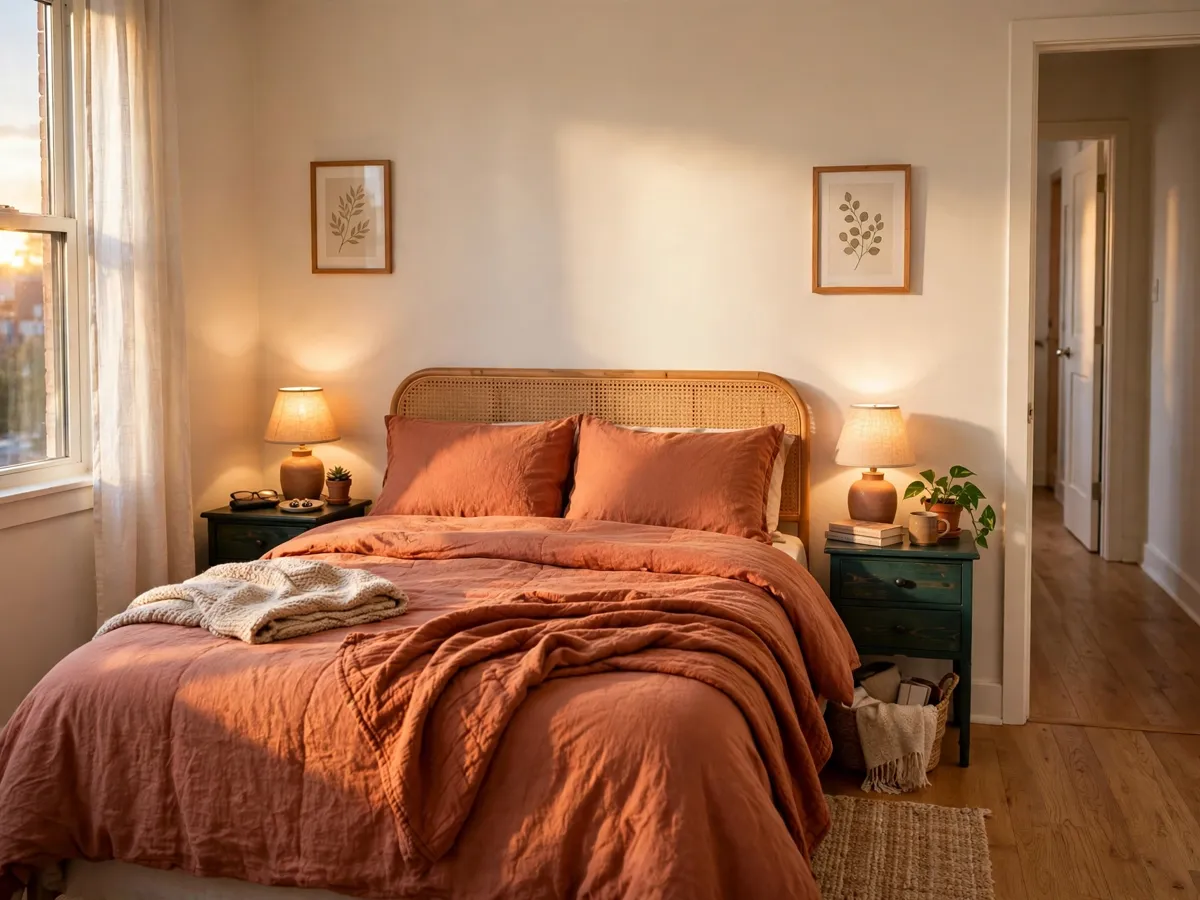
1. Give the bed its corner, not the middle
The bed goes against the longest wall with the headboard on it, and the wall it frames is the one that keeps the room from feeling like a single square. In a room for two, the queen is usually the ceiling — a king in a small bedroom eats the walkway the second person needs, and the room reads as a single bed with less room around it. A queen against the long wall leaves the corners free, and that is where the rest of the layout lives.
The test is whether both of you can get out of the bed without climbing over the other. If the room is tight, the queen is the answer, not the king, and the space it leaves is where the two nightstands and the path go.
Cost: $0 to rearrange, or a secondhand queen for $100 if the current bed is the problem. Time: an hour to set it and check the path.
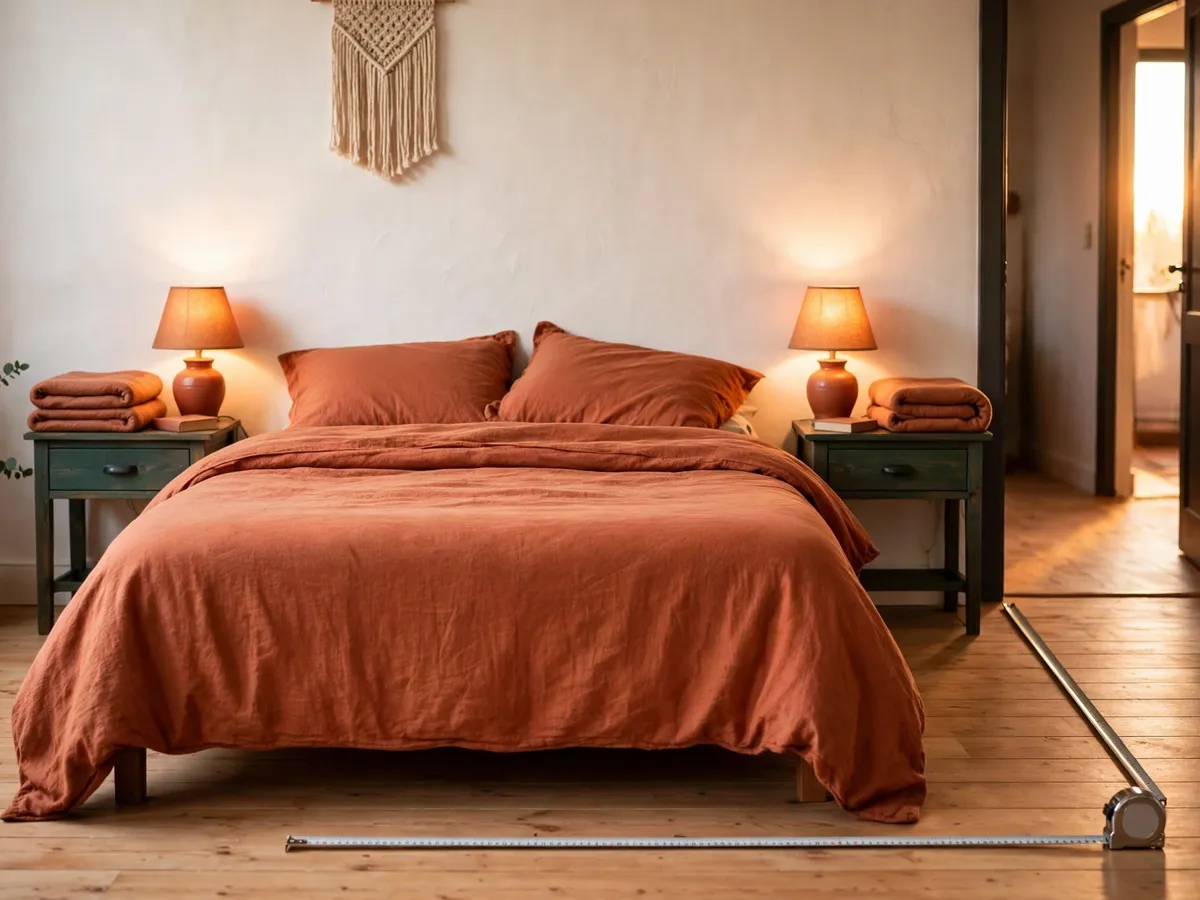
2. Keep one path clear for the night
The walkway is the one thing two people share, and the one that gets sacrificed last, which is why it fails. Keep one unbroken route from the bed to the door that nothing sits on, so the person getting up at 3 a.m. can cross the room without moving the other. When the room feels tight, it is almost always because the path is the part that got filled, and the fix is to clear it, not to move the bed.
Cost: $0. Time: 10 minutes to tape the path and check it with the lights off, the way you would cross it at night.
3. Two nightstands, not one
The instinct in a small room is to keep one nightstand and a floor lamp, because it is the cheaper move. For two people, that is the move that turns the bed into a fight, because one side gets the lamp and the storage and the other gets the wall. Two small nightstands — or two wall shelves at the height of your hand if the floor is full — give each side its own surface and its own light, and the room reads as two instead of one.
A slim shelf on each side does the job at the price of two brackets, and it keeps the floor clear for the path. The warm lamp on each side is the move that makes the shared room feel like two corners of the same home, and it is the cheapest way to make the room feel finished on both sides.
Cost: $20–$60 for two small nightstands or two wall shelves with two lamps. Time: an hour to set them and check the path.
4. Split the walls, not the room
A small bedroom for two needs two wall moments, one for each side, and the way to do that without a wall is to give each person the wall they sleep next to. One side gets the small gallery row above the headboard, the other gets the one framed print, and the two stay two sizes smaller than the wall, so the room does not read as a storage box. For the hardware that keeps a renter's wall clean, the no-drill wall decor guide covers the strip ratings.
Cost: $15–$40 for two small frames or one row and one print. Time: 30 minutes, including the adhesive-set time.
5. Give the floor one job, and split the rest
The floor holds two people's worth of laundry, and a small room cannot hold both. Give the floor one job — standing and walking — and move the rest up: one under-bed box each, one closed bin for the season's clothes, and a tension rod in the corner for the backup towels. The two under-bed boxes do more for the small room than any dresser, because they take the floor out of the equation for both of you.
Cost: $10–$30 for two under-bed boxes and one bin. Time: 20 minutes.
What we would skip
Skip the king bed, because it eats the walkway the second person needs and the room reads smaller for it. Skip the single nightstand, which turns the shared room into one person's. Skip the matching dresser set, because two under-bed boxes do the job with less floor. The one thing worth the money is the two small nightstands or shelves, because the two surfaces are the move that makes the room read as two instead of one.
Cost: $0. Time: the decisions that keep the path clear for both of you.
Honest costs: where the money actually goes
Rearrange-only route: $0, a tape measure and a weekend, and the room already reads as two instead of one. Add two small nightstands or two wall shelves with two warm lamps for $40–$60, two under-bed boxes for $20, and one small frame for each side for $30, and the whole room is finished for about $90–$110. A secondhand queen instead of a king is the one spend that fixes the walkway, and a warm bulb on each side is the one touch that makes the shared room feel like home on both sides.
Cost: $40–$180 for the whole room. Time: one weekend to set it, a week to live with it and fine-tune the two sides.
Before you move the bed: copy this
- Queen against the long wall, headboard centered, king ruled out
- One clear path from the bed to the door, taped and checked with the lights off
- Two small nightstands or two wall shelves, one warm lamp on each side
- Two wall moments, one each side, two sizes smaller than the wall
- Floor kept clear: two under-bed boxes, one bin, one tension rod
Cost: $0 to check. Time: 15 minutes, before anything moves.
Questions couples ask
Do we need a king bed in a small room?
No. A queen against the long wall is the ceiling for a small bedroom, because a king eats the walkway the second person needs. The room reads bigger with the queen and the space around it than with the king and none.
How do two people share one small wall?
Each side gets the wall they sleep next to: one a small gallery row, the other one framed print, and both two sizes smaller than the wall so the room does not read as a storage box. The split is by the bed, not by a line down the middle.
How do we keep the night path clear?
Tape one route from the bed to the door and keep nothing on it, then check it with the lights off. The moment the path is the thing that got filled is the moment the room feels tight, and the fix is to clear it, not to move the bed.
How do we keep two people's clothes off the floor?
One under-bed box each and one closed bin for the season. The two boxes do the job the dresser would, without the floor, and the bin is the one that keeps the room from filling up with last month's clothes.
Save these on Pinterest
Pin the two-nightstands step first, because it is the move that makes the room read as two instead of one. The no-drill wall each side needs is in the renter wall decor guide, and the layout math for the whole room is in the small bedroom layout guide. Both sit in the Small Room Decor collection for the next room you fit together.