 Plant As Deco
Small Room Decor
Small Living Room TV Wall Ideas: Make It Work
By Plant As Deco · Updated 13 November 2026
A small living room and a TV wall are two things that do not fit together, and the usual answer — the TV on a stand behind the sofa — is the one that steals the lane and turns the room into a viewing booth. The plan is to size the screen to the distance, put it at the height of the seat, give the shelf one job, and leave a corner of the room with no screen at all. That is the whole wall, and it costs a mount or a slim shelf and one cable run, not a media wall and a new sofa position. Renter-safe, and the room keeps its lane.
Weekend-ready: $30–$150, one afternoon. No wall damage beyond one mount or one shelf — renter-safe.
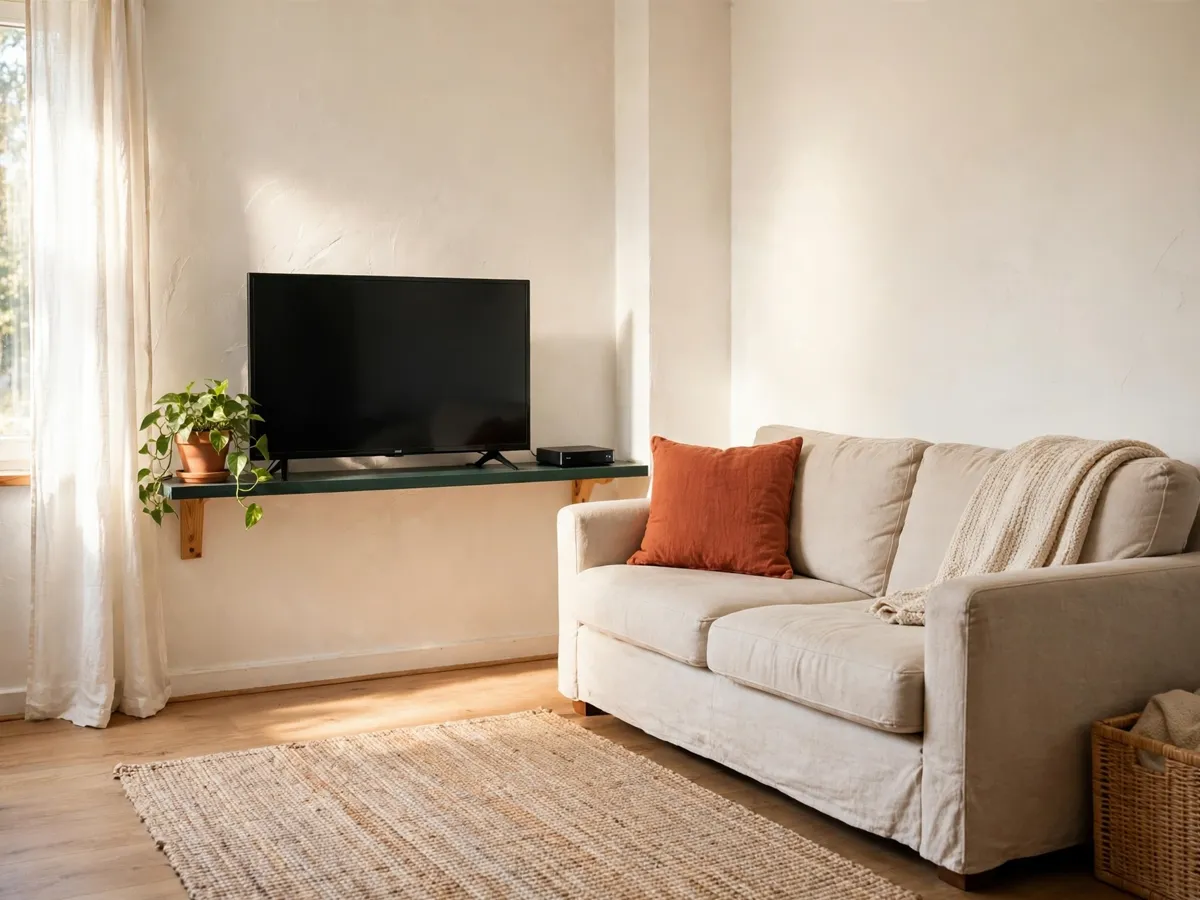
1. Size the screen to the distance, not to the room
The screen is the one piece of the wall that has to fit the distance to the seat, and the distance is the number the room sets. Sit where you actually sit, and the screen width is about the distance divided by three: a sofa two arms from the wall wants a smaller screen than a room where the seat is a body length away. A TV that is too big for the distance is the one that makes a small room read as a TV room, because the screen is the first thing the eye finds and the last thing it can ignore.
Cost: $0 to measure. Time: ten minutes from the seat, the number the whole wall hangs on.
2. The screen at seat height, not at the top of the wall
The screen goes where the eyes are when they are sitting, and the center of it is roughly at the height of the eyes from the sofa. A screen hung high reads as a poster on the wall, and the neck does the work the mount should. The move is lower: a low shelf, a slim stand, or a mount at the height of the seat. For the mount itself and what it leaves on the wall, the renter wall decor guide covers the no-drill hardware and its ratings.
Cost: $10–$60 for a low shelf or a mount plate. Time: fifteen minutes to set the height from the seat.
3. One shelf, one job — and stop at one
The shelf under the screen earns its inches with one job: the streaming box, the cable run and one small plant. That is the ceiling for the shelf in a small room, because the second row of boxes and remotes is what turns the TV wall into a storage rack and steals the floor. A slim shelf that holds the box and keeps the cables off the floor is the move, and the wall above it stays the wall the room runs on. For the layout the shelf sits in, the small living room layout guide keeps the lane clear on both sides.
Cost: $20–$50 for a slim low shelf. Time: twenty minutes to place it and run the one cable.
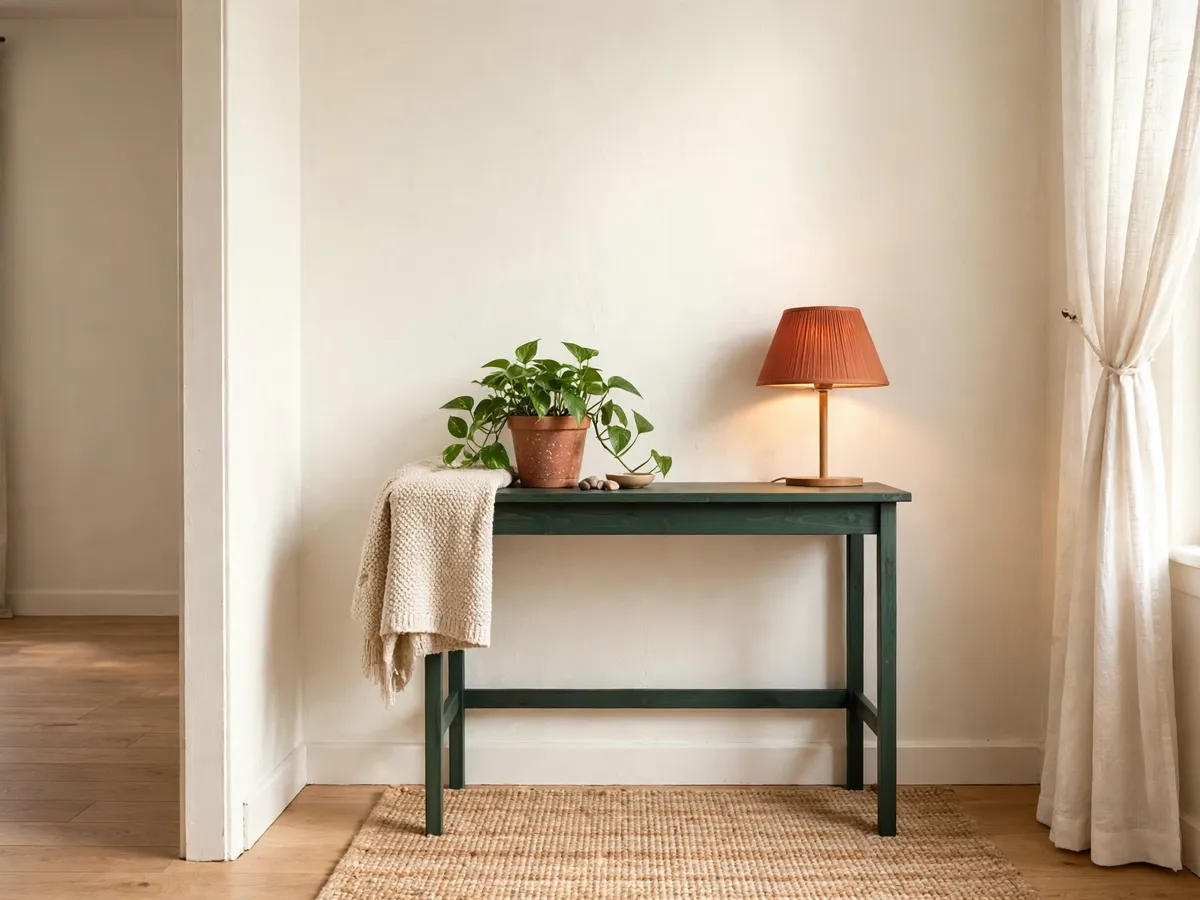
4. The no-TV corner is the move that frees the room
The last idea is the one that changes the room: the corner with no screen at all. One wall holds the TV and the shelf, and the opposite corner holds the lamp, the plant and the place you sit when you are not watching. The room is two pockets instead of one viewing booth, and the no-TV corner is the one that makes a small living room read as a room you live in, not a room you watch in. The corner is the move, and it costs nothing, because it is the space the TV was stealing.
Cost: $0 for the corner itself, $10–$30 for the lamp that finishes it. Time: fifteen minutes to clear the corner and set the pocket.
What we would skip
Skip the media wall, because it is the big-room move and the one that turns a small living room into a wall of storage. Skip the second shelf, because one row is the ceiling and the second is what steals the floor. Skip the TV behind the sofa, because it steals the lane and the room reads as a viewing booth. The one thing worth the money is the height, because the screen at the seat is the move that makes the whole wall read as planned.
Cost: $0. Time: the decisions that keep the lane clear.
Honest costs: where the money actually goes
Move-only route: $0, an afternoon, and the TV is already at the right height on the shelf it sits on, because the plan is the placement, not the hardware. Add a slim shelf for $20–$50, one mount plate for $10–$40, and the no-TV corner lamp for $10–$30, and the whole wall is finished for about $40–$120. A secondhand shelf is the one spend that quietly does the row, and the no-TV corner is the one spend the room does not need at all.
Cost: $30–$150 for the whole wall. Time: one afternoon to place it, and the test is the lane and the neck.
Before the mount: copy this
- The screen width about the distance to the seat divided by three
- The screen center at the height of the eyes from the sofa
- One slim shelf with one job: the box, the cable, the plant
- The no-TV corner on the opposite wall, with the lamp and the seat
- The lane kept clear on both sides of the shelf
Cost: $0 to check. Time: fifteen minutes, before the first hole or strip.
Questions renters ask
How far should the TV be from the sofa?
Far enough that the screen width is about the distance divided by three, and the center of the screen is at the height of the eyes from the seat. The number is the one that keeps the room from reading as a TV room, and it is measured from where you actually sit.
Do I need to drill for a small TV wall?
Only for the mount, and even that can be a low shelf the TV sits on instead of a plate on the wall. A slim shelf holds the screen for the price of one piece, and the wall above it stays clean, which is the move the small room needs.
What if I don't watch TV in the living room?
Then the no-TV corner is the whole plan: the wall holds the lamp, the plant and one leaning frame, and the room reads as a room you sit in. The screen is the optional piece, and the pocket is the one that makes it liveable.
Can the TV and the gallery wall share one wall?
No, because the two are two moments and the wall is one. The screen takes the wall it faces, and the frames go on the wall the eye lands on when it is not watching. Two moments on one small wall is what reads as a storage box, and the split is the move that keeps each one planned.
Save these on Pinterest
Pin the distance step first, because it is the move that keeps the screen from making the room a TV room. The layout the wall sits in is in the small living room layout guide, and the no-TV corner it frees is the same pocket as the small living room decor plan. Both sit in the Small Room Decor collection for the next room you plan.