 Plant As Deco
Small Room Decor
Thrift Flip Home Decor Ideas: One Piece, One Weekend
By Plant As Deco · Updated 13 November 2026
A thrift flip fails for one reason: the piece was chosen for its price instead of its bones. The price is the easy part, and the bones are the part that decides whether the weekend ends with a piece of furniture or a pile of sanded boards. The plan is to buy one piece with good lines, strip it to the wood, and run the sand-and-paint in the order that keeps each coat doing its job. One piece, one weekend, and the room gets the secondhand piece that matches nothing in it, which is the point of the whole thing.
Weekend-ready: $10–$60 for the piece and the supplies. One weekend with two coats of paint and a sander you already have. No tools you have to keep buying.
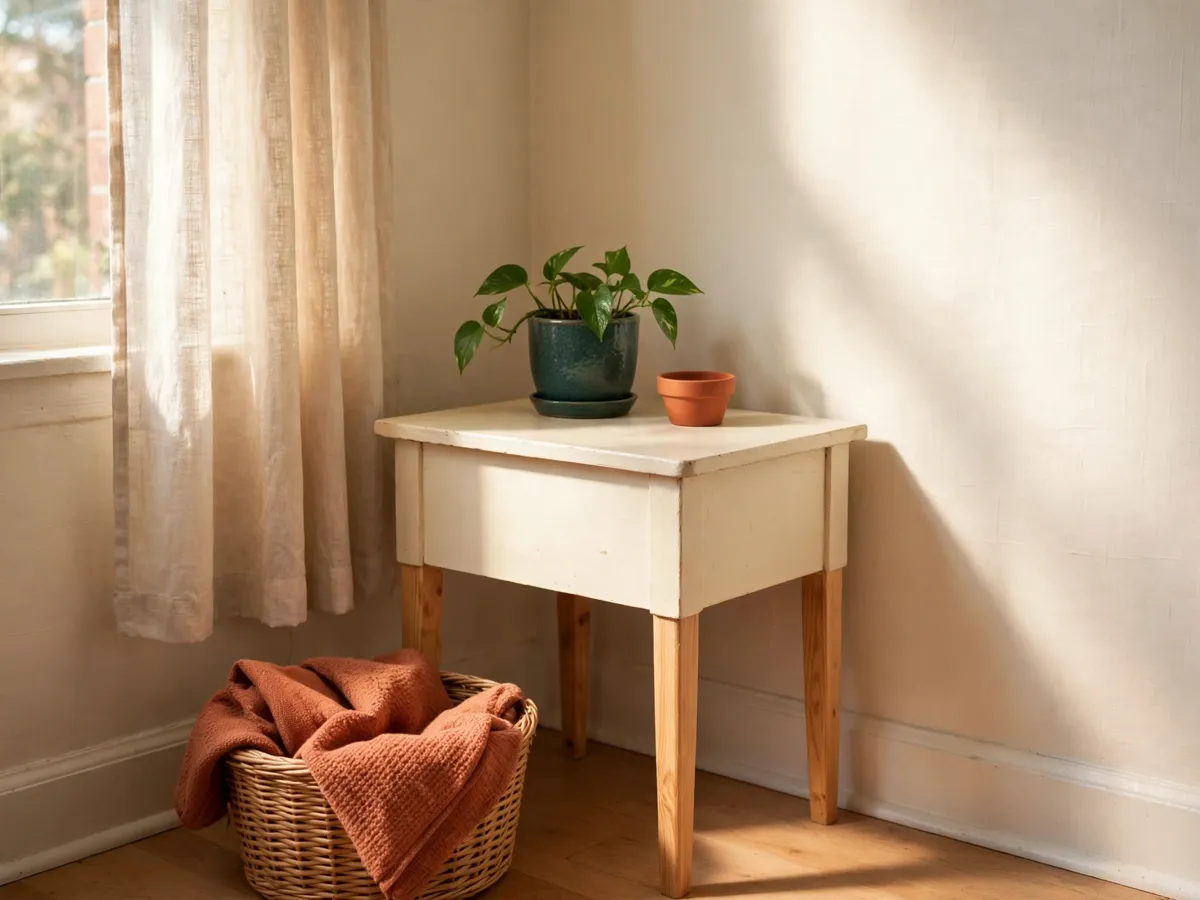
1. Buy the bones, not the paint job
The flip is the bones. Run the hand over the piece: solid wood or a solid top that sits on straight legs is the one to carry home, and the wobbly veneer that is already peeling is the one to leave. The finish you are stripping is the one the piece came with, and the finish you are adding is the one the room needs, so the wood in between is the part that has to be worth sanding. A side table, a nightstand, a bench: one piece with lines the room does not have is the move, and the price is the ceiling, not the point.
Cost: $5–$40 at the thrift store. Time: thirty minutes in the store, because the bones are the decision and the rest is the weekend.
2. Strip to the wood, and stop before the wood is hurt
The old finish comes off with the least effort you can give it: sandpaper on flat faces, the orbital sander on the top, and the corners by hand, because the sander does not fit where the piece already has an edge. You are removing the finish, not the wood, and the line is the one that stops when the surface reads as wood instead of paint. A chemical stripper is the move for the thick lacquer the paper does not move, and the paper is the move for everything else. The dust is the one part of the weekend that gets everywhere, so the piece sits where the room can hold it, not on the sofa.
Cost: $5–$15 for paper or stripper. Time: two hours, and the piece is bare before the first coat of the new finish.
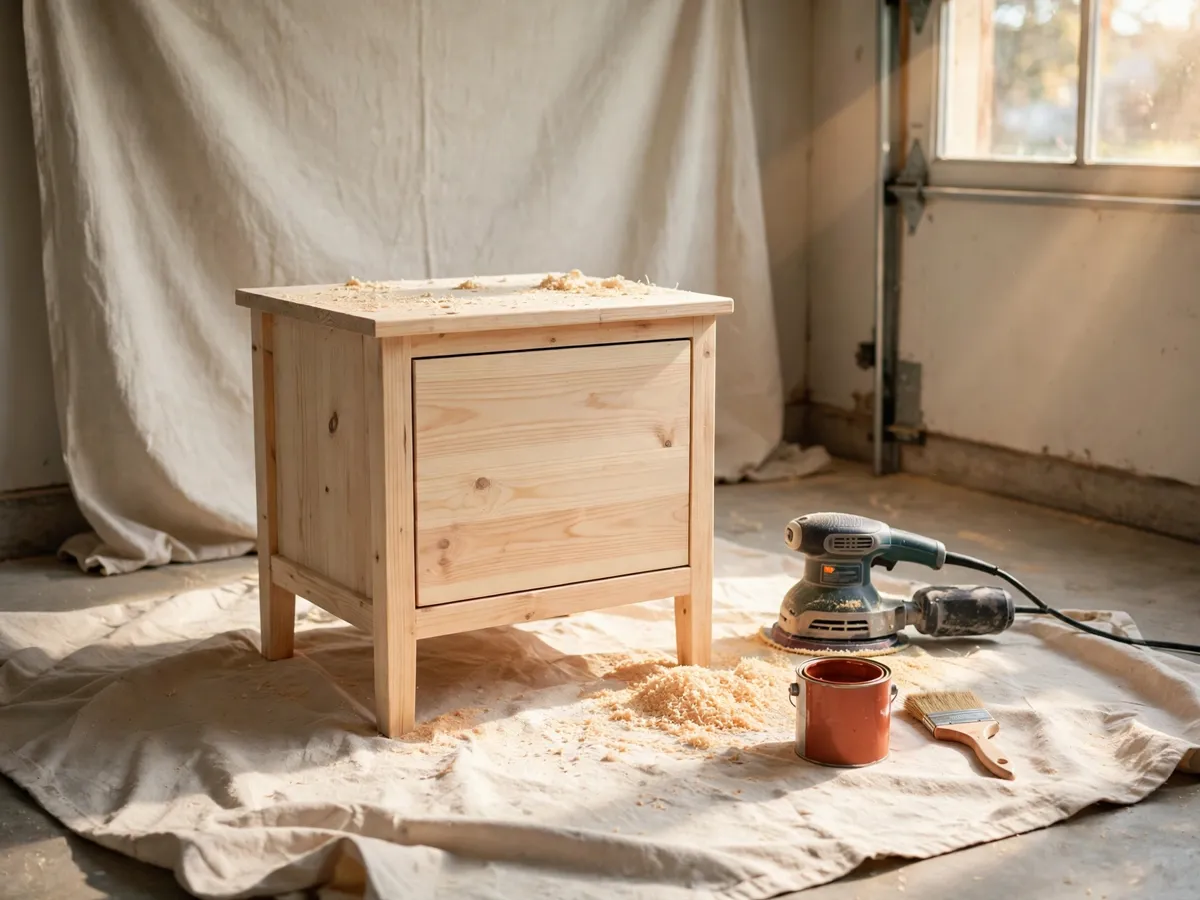
3. The paint order: seal, then two thin coats, then stop
Bare wood drinks the first coat, so the one that holds it is the seal coat under everything, and after that the rule is two thin coats, never one thick one. A thick coat sags into the grain and dries with the brush marks in it, and the thin coats level out for a finish that reads as the room, not the project. The color is the room's own: the warm neutrals the space already has, or one accent from the palette, because the flip is the piece that matches the room, not the one that starts a new one. The same logic picks the color under the brush: for the warm palette the room runs on, the cozy paint colors guide is the same two-color rule.
Cost: $15–$30 for the seal and two coats of paint. Time: two days of coats, because the piece cures between them, not because the work is long.
4. The honest before-and-after, and the piece that stays
The flip is done when the piece does one job in the room and stops: the nightstand holds the lamp, the bench holds the throw, the table holds the plant. The before-and-after is the two honest photos — the piece as it came in, and the piece where it lives now — and the between is the weekend, not the paint. The one that stays is the piece you would keep if it cost three times what it did, because that is the test the bones passed. For the room the piece goes into, the bedroom makeover plan is the same two-photo rule, and the secondhand piece is the spend that quietly finishes it.
Cost: $0 for the two photos. Time: the piece cures a day, and the room gets one piece that matches nothing, which is the point.
What we would skip
Skip the distressed finish, because the sanded-and-painted piece reads cleaner than the one with the fake edges and the same grain. Skip the third coat, because two thin ones level out and the third is the one that sags. Skip the big piece, because the nightstand and the bench are the flips that fit a small room, and the dresser is the flip that takes the whole weekend twice. The one thing worth the money is the seal coat, because it is the one the two finish coats do not hold without.
Cost: $0. Time: the decisions that keep the weekend to one piece.
Honest costs: where the money actually goes
The whole flip is the piece at $5–$40, the sanding at $5–$15, the paint at $15–$30, and the weekend is the time. About $25–$85 for a piece that reads as bought, not built, and the one spend that quietly does the most is the secondhand piece itself, because the bones are the flip and everything else is just the finish on them. The sander you already have is the one cost the plan does not add.
Cost: $10–$60 for supplies, on top of the piece. Time: one weekend with two days of curing, and the test is the piece in the room doing one job.
Before the weekend: copy this
- One piece with solid bones: straight legs, a top that is worth sanding
- Stripped to the wood, stopping when the surface reads as wood
- A seal coat first, then two thin coats, never one thick one
- The color from the room's palette, not a new one
- Two honest photos: the piece as it came in, the piece where it lives
Cost: $0 to check. Time: fifteen minutes, before the first coat.
Questions renters ask
Which piece is the first flip?
The nightstand, because it is the one with the simplest lines, the smallest surface and the most visible place in the room. The bench is the second, and the dresser is the one that waits for the second weekend, because it is the surface the first flip should not have to carry.
Do I need a sander for this?
No, when the piece is small: the paper does the flat faces and the corners, and the orbital is the time-saver for the top of a table. The strip is the weekend, and the sander is the one upgrade that keeps the dust to one corner instead of the whole room.
How long does the paint take to cure?
The coats dry to the touch in a day, and the piece holds the lamp overnight, but the finish keeps hardening for a week, so the heavy things wait their week. The weekend is the work, and the week after is the cure the finish was going to do anyway.
Where does the finished piece go?
Where the room is short one piece: the head of the bed for the nightstand, the entry for the bench, the corner that reads empty for the table. The flip is the piece, and the place it goes is the layout the room already runs on, so the spot is chosen before the first coat.
Save these on Pinterest
Pin the bones step first, because it is the move that keeps the weekend a flip instead of a rebuild. The color the piece should take is in the cozy paint colors guide, and the two-photo rule for the room it goes into is in the bedroom makeover plan. Both sit in the Small Room Decor collection for the next piece you carry home.