 Plant As Deco
Small Room Decor
Bookshelf Ideas for Small Spaces: Tall, Narrow, and Actually Styled
By Plant As Deco · Updated 14 November 2026
A bookshelf in a small room fails in one of two directions. Either it is a short, wide unit eating the only free wall, or it is a tall thin one with the books crammed spine to spine and nothing else on any shelf. Both waste the same thing: the height. Most small rooms have a band of wall nobody uses, from head height up to the ceiling, and a shelf that stands tall and narrow is the cheapest way to claim that space while paying almost nothing in floor area. This page covers the three decisions in order — which shelf, which wall, and what goes on the shelves — so the finished unit reads as styled decor rather than storage that lost control.
Weekend-ready: $50–$200, one afternoon to one weekend. A leaning ladder shelf carries the books without a hole in the wall — renter-safe throughout.
1. Tall and narrow is the shape a small room can afford
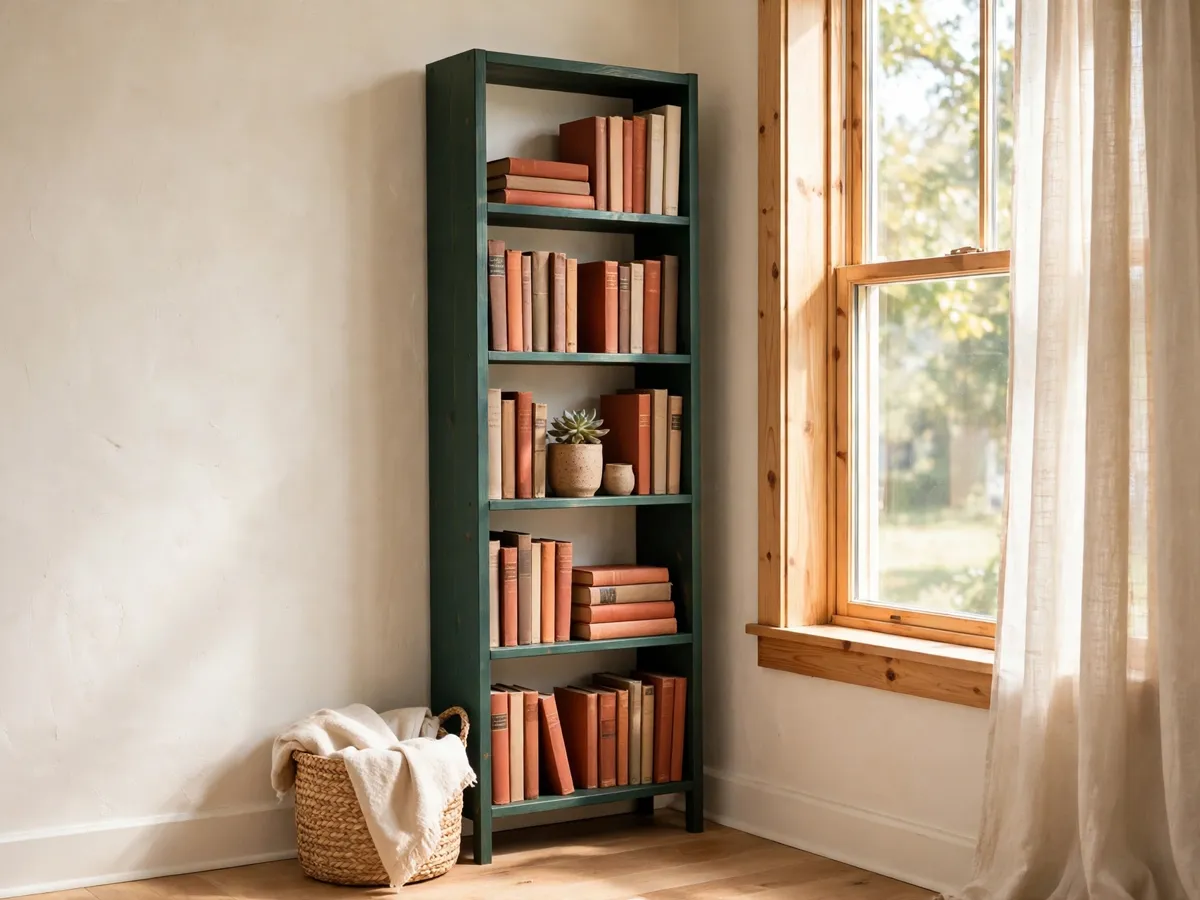
Look at the floor plan before the catalog, because the mistake is made there. A short, wide bookcase — three shelves, forty inches across — claims the same floor print as a reading chair and shows a third of the books. A shelf thirty to thirty-six inches wide that runs seventy inches or more up the wall stores more, casts a slimmer shadow, and uses the band of wall that no furniture in a small room ever touches. The comparison worth remembering is floor print: the tall unit pays in inches what the wide unit pays in feet. Before anything is bought, walk the delivery path with a tape measure — a narrow landing, a tight stair turn, or a door that swings inward has sent more than one tall bookcase back to the store than any style decision ever has. The placement spots repeat in almost every small apartment: beside a window where the light lands on the spines, the dead corner no chair fits into, and alongside the bed as a nightstand replacement, where the top shelf holds the lamp and the lowest one takes the phone and the glass of water. A shelf beside a window works best with the books facing the room rather than the glass, so the spines get the light without the paper baking in it every afternoon. Whatever the height, a tall shelf gets anchored at the top — with young children in the home or in an earthquake zone, the strap from the shelf frame to a wall stud is the part that matters most.
Cost: $0 to decide. Time: twenty minutes with a tape measure and an honest look at which wall is actually free.
2. Bookshelf types a renter can actually use
The renter test is not whether the shelf stands up — it is what the shelf asks of the wall. A leaning ladder shelf rests its top rail against the wall and carries its weight on its own feet, so nothing gets drilled and the wall keeps two small scuff marks at worst. A freestanding bookcase with a closed back is the workhorse: it can be anchored with one strap and a single small hole, or stood in a corner where it braces itself between two walls. A two-by-two cube unit works double duty, sitting low as a bedside stack or standing out from the wall as a light divider. The type to skip when the lease is strict is the long run of floating wall shelves: four or five drilled anchors per shelf, a level check on every one, and a row of holes to patch at move-out. If what you want is a single styled shelf on the wall rather than a bookcase of books, that is a separate project — the renter wall guide covers the no-drill hardware for it. On this page the books come first.
Cost: $0 to choose. Time: one evening of measuring doorways and stair turns before anything is bought.
3. Styling the books so the shelf does not become a pile
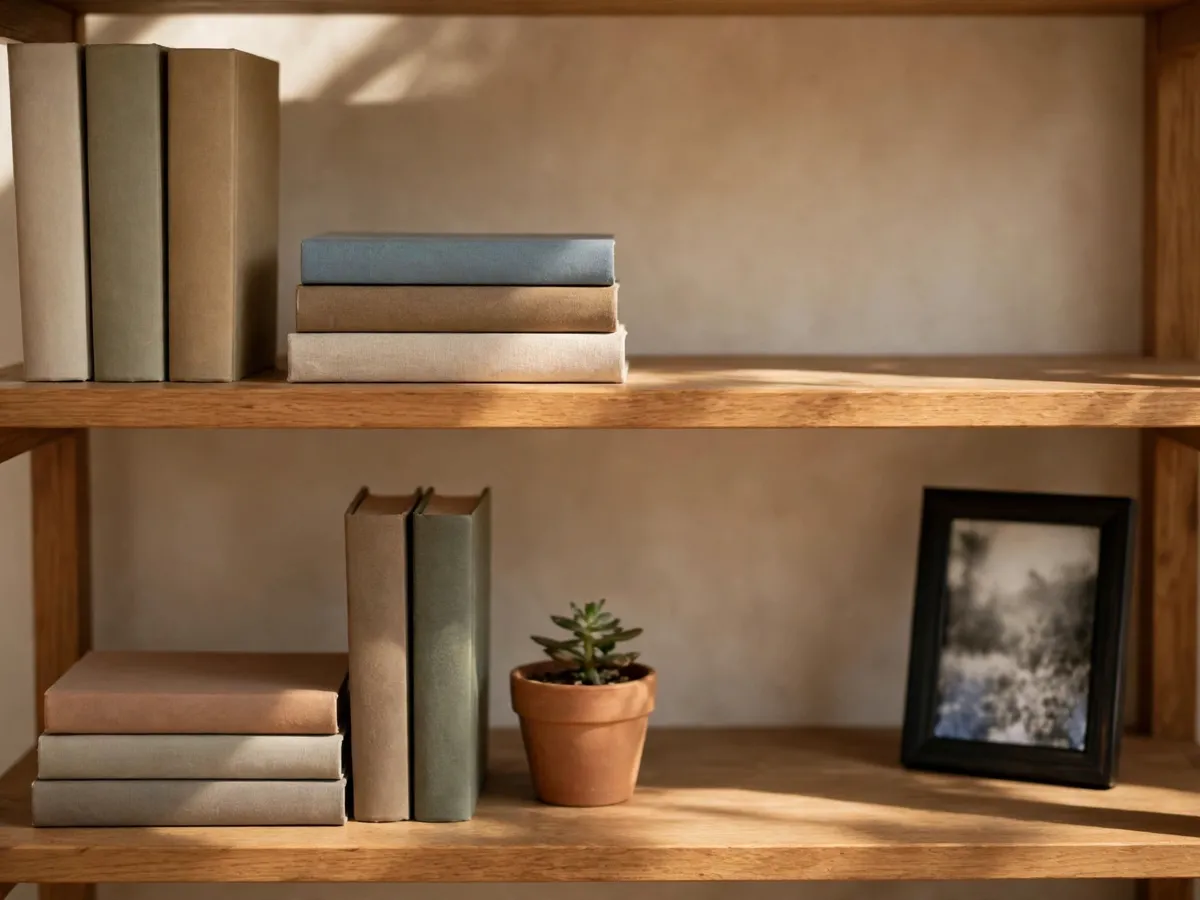
A shelf of standing books packed spine to spine reads as a library box; a shelf of objects reads as a shop display. The rule that lands between them is the mix: every shelf carries some books standing and one stack lying flat, and the stack becomes the step that an object sits on — a plant, a small frame, a candle. Work in proportions rather than filling: roughly sixty percent books and forty percent air and objects on each shelf, and the whole unit reads as styled rather than stuffed. The air is what lets each shelf breathe, and it is the part most people delete by accident. Objects stay at one or two per shelf — a terracotta pot, a small framed print, a woven basket — because three is where a shelf tips from styled into cluttered. Book covers are decor too: turn the warm-toned spines toward the same shelf group so the unit carries a palette instead of a random stripe of color. The heaviest books go on the lowest shelves, both because the unit stands steadier with its weight at the bottom and because a thick dictionary at eye level is the object most likely to make the whole shelf read as clutter. Style one shelf at a time, walk back to the doorway, and fix what you see from there, because the doorway is where the room is judged from.
Cost: $0. Time: one unhurried afternoon with the books you already own.
4. Books and storage in the same unit
A bookshelf in a small apartment should hold more than books, and the honest way to do that is by rows. The bottom two rows carry the things that get used and never admired: charging cables, the tool kit, the box of documents, the batteries, the things that would otherwise live on the counter or the floor. Two or three woven baskets slide onto those shelves, and the basket is what lets one unit be display at the top and storage at the bottom without the storage being visible. The baskets get labeled once, with a tag or a strip of tape and a pen, because a basket that hides its contents stops being storage the third time you empty it looking for the thing that was in it. In a studio, the same tall unit can stand out from the wall as a light divider between the bed and the living end — the planning for that move is its own topic in the room divider guide — with the baskets facing the bed side and the styled rows facing the sofa. Every few weeks the baskets get five minutes of resetting, and that is the whole maintenance this shelf asks for.
Cost: $10–$30 per basket. Time: one evening to sort the bottom rows into baskets by what they are.
What we would skip
Skip the five-tier shelf twelve inches deep standing in the middle of a wall — it eats the walkway and shows its back panel to half the room. Skip any shelf that stands over a bed without being anchored, because a top-heavy load of books is exactly the one worth strapping down. Skip the giant six-to-eight tier unit crammed full in a small room: past five tiers the shelf stops being decor and starts being wall-to-wall storage, and a wall of storage makes a small room read smaller. Skip the thin floating shelf designated for dictionaries too — a deep row of heavy reference books on a shallow shelf is a sag that shows up within a few months. The one thing worth the extra money is a strap anchor kit, because ten dollars at the top of the shelf is the difference between a bookshelf and a tip-over.
Cost: $0. Time: the decisions that keep the shelf slim and anchored.
Honest costs: the shelf, the baskets, and the strap
The budget route is a leaning ladder shelf at $60–$120, which carries a styled book collection in a small room and asks nothing of the wall. A solid freestanding bookcase runs $100–$200 and is the one worth buying if the shelf will carry baskets and daily-use storage. Baskets add $10–$30 each, and two or three are enough. A strap anchor kit is $8–$12 and goes on whatever the shelf ends up being. That is the whole range: $50–$200 from a bare wall to a styled shelf, and the styling costs nothing because the books are already owned. When the budget stops at one shelf, put it beside the bed and let it replace the nightstand — the desk that pairs with a shelf in the same corner is covered in the small bedroom desk guide, and the basket-first system for a whole studio is in the studio apartment storage guide.
Cost: $50–$200. Time: one afternoon to build and level, one to style.
Before the books go up: copy this
- A shelf 30–36 inches wide, seventy inches or taller
- The anchor strap from the top frame to a wall stud
- One of the golden spots: window edge, dead corner, beside the bed
- Standing books and one lying stack on every shelf
- Roughly 60 percent books and 40 percent air and objects, baskets at the bottom
Cost: $0 to check. Time: ten minutes with a tape measure, before the first box of books moves.
Questions renters ask
Are tall bookshelves safe in a small room?
Yes, with the anchor. A tall shelf carries its weight at the top once the books are in, and the strap from the shelf frame to a wall stud keeps it standing when the floor gets bumped or a child decides it is a ladder. If drilling one hole is off limits, a leaning ladder shelf gives the same height with its weight on its own feet.
How deep does a bookshelf need to be?
Ten to twelve inches holds books, media, and small baskets without wasting the room. Deeper shelves eat floor print a small room cannot spare, and anything shallower than eight inches turns the book row into a balancing act.
How do I style a bookshelf without redoing it every week?
The standing-and-stack mix with air left on every shelf stays looking done, because the arrangement works as a whole rather than as a set of individual decisions. Style it once from the doorway, then leave it alone except for the occasional swap of one object.
I rent and cannot drill — what are my options?
A leaning ladder shelf, a freestanding unit in a corner, or a low cube stack beside the bed. All three carry books without a hole in the wall; the trade is floor space, which is why the tall narrow shape matters even more when drilling is out.
Save these on Pinterest
Pin the placement rules first — tall and narrow, golden spot, anchor strap — because those three decisions are the difference between a shelf that helps the room and one that eats it. The corner that pairs a bookshelf with a desk is planned in the home office guide, the no-drill hardware for what hangs around the shelf is in the renter wall guide, and the studio divider plan that starts from this same shelf is in the room divider guide.