 Plant As Deco
Small Room Decor
Room Divider Ideas for a Small Apartment: Split Without a Wall
By Plant As Deco · Updated 14 November 2026
A studio apartment is one room pretending to be four, and the divider is the piece that makes the pretense work. The problem is that most dividers do one job — they split — and a small apartment needs the split to pay for itself in storage or light. The open shelf does both, the curtain does it for nothing, and the folding screen is the one that blocks the window. That is the whole decision, and it costs a shelf, not a builder.
Weekend-ready: $30–$220, one afternoon. Freestanding only — no fixing, renter-safe throughout.
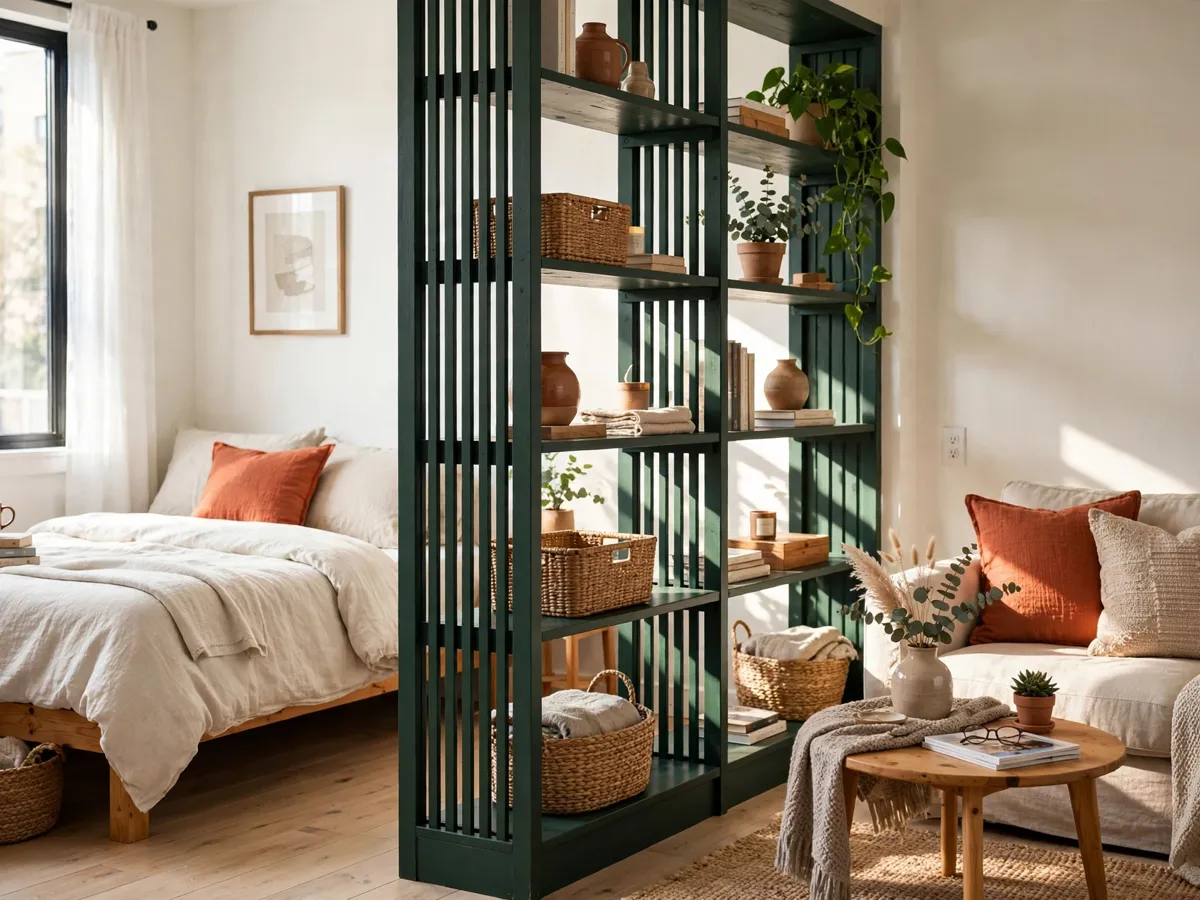
1. Split the bed from the door, and nothing else
The split that changes how a studio feels is the one between the bed and the entrance, because the bed is the thing you do not want to see from the doorway. Everything else — the desk, the sofa, the kitchen — reads as one space and does not need a divider. So the divider goes on the line between the sleep zone and the living zone, and it stops there. A divider that runs the length of the room is a wall the room did not ask for, and it turns a studio into a corridor. The zones themselves are in the studio layout guide; the divider is what marks one of the lines the tape already drew.
Cost: $0 to decide. Time: fifteen minutes standing at the front door, looking at what the eye lands on.
2. The open shelf is the divider that pays rent
An open shelving unit set perpendicular to the wall does three jobs at once: it splits the zones, it stores on both faces, and it lets the light through because it is mostly air. The back face takes the bed side — books, the lamp, the baskets — and the front face takes the living side, styled with the few things the room wants to show. The height is the number to get right: taller than the bed so the sleeper does not see the sofa, and open enough at the top that the ceiling still reads as one. A solid bookcase does the same job but blocks the light, and a wall of solid storage in a studio is the reason the far end feels like a closet. The storage math for the rest of the apartment is in the studio storage guide.
Cost: $80–$220 for an open unit with an open back. Time: one afternoon to assemble, place and fill both faces.

3. The ceiling curtain: the cheapest split that comes off clean
A curtain hung from the ceiling on a track or a tension rod is the divider that costs the least and does the most at night: it closes the bed off completely, it opens to nothing during the day, and it leaves no mark when it comes down. The fabric is the one decision — a mid-weight linen or cotton in the room's base color, wide enough to gather rather than stretch flat, and long enough to touch the floor. Two panels that meet in the middle read as a wall; one flat sheet reads as a sheet. The honest limit is the track: a ceiling track needs small anchors, and the tension version only works in a doorway-width gap. The no-drill options are in the renter wall guide, and the fabric rules are in the fabric layers guide.
Cost: $30–$90 for two panels and the rod or track. Time: one hour to hang and hem.
4. The divider has to let the light and the air through
A studio usually has one window, and the divider sits between that window and half the room. That makes two things non-negotiable: the divider cannot be taller than the window or wider than the gap it fills, and it cannot be solid all the way up. The folding screen is the classic divider and the one that fails most often, because it is solid, it is chest height and it goes where the light was going. If a screen is the only option, the cane or the slatted version is the one that lets light through. The other honest note is the heat: a solid divider in front of a radiator traps the warmth on one side, and the room that reads cold is usually the room with a bookcase against the radiator.
Cost: $0 to check the window line and the radiator. Time: ten minutes before anything is ordered.
What we would skip
Skip the solid bookcase divider, because it blocks the light the studio cannot spare. Skip the folding screen in front of the window, because it is the piece that turns a bright studio into a dim one. Skip the divider that runs the full length of the room, because that is a wall built by accident. The one thing worth the money is the open-backed shelf, because it splits the room and stores on both sides instead of only standing there.
Cost: $0. Time: the decisions that keep the light and the floor.
Honest costs: where the money actually goes
Curtain-only route: $30–$90, one hour, and the bed is closed off at night and open by day, because the split is what matters and the fabric is the cheapest way to make it. Add the open-backed shelf for $80–$220 and the two do different jobs: the shelf splits the day, the curtain splits the night. A secondhand shelving unit is the one spend that quietly does the whole studio, and the curtain is the piece that makes the sleeping side actually private.
Cost: $30–$220 for the split, curtain first. Time: one afternoon, and the test is the room from the front door.
Before you buy the divider: copy this
- The split only between the bed and the entrance
- The divider no taller than the window, and no wider than the gap
- Open-backed or slatted, so the light still crosses the room
- Nothing solid in front of the radiator
- The walkway to the kitchen and the door still clear
Cost: $0 to check. Time: fifteen minutes, before the first order.
Questions renters ask
What is the best room divider for a studio apartment?
An open-backed shelving unit set perpendicular to the wall: it splits the bed from the living area, stores on both faces, and lets the light through because it is mostly air. The ceiling curtain is the cheaper second, and the two work well together.
Does a room divider make a small apartment look smaller?
A solid one does, and an open one does the opposite. The test is the window: a divider that blocks the light shrinks the room, and one that lets it through gives the room a direction without taking the brightness.
Can I hang a room divider curtain without drilling?
In a doorway-width gap, yes, with a tension rod. Across a room the ceiling track needs small anchors, and the honest renter version is the tension rod plus two panels wide enough to gather — or the shelf, which needs no ceiling at all.
Where should the divider go in a studio?
On the line between the bed and the entrance, and nowhere else. That is the only split that changes how the apartment feels, because the bed is the thing you do not want to see from the front door — the desk and the sofa can share the rest.
Save these on Pinterest
Pin the split line first, because it is the decision that keeps a studio from becoming a corridor. The zones it marks are in the studio layout guide, and the storage the shelf carries is in the studio storage guide. Both sit in the Small Room Decor collection for the next room that has to be two.