 Plant As Deco
Small Room Decor
Hallway Decor Ideas for Narrow Spaces: A Renter's Guide
By Plant As Deco · Updated 29 October 2026
A narrow hallway is the hardest square footage in a rental — too small to decorate, too visible to ignore, and usually the darkest room you own. The good news is that hallways respond to a short list of moves. Size the runner to the walkway, hang art that needs no drill, place one mirror to catch the light you already have, give the drop zone a home, and fix the bulb. That is the whole job, and it fits in a weekend.
Weekend-ready: $60–$140, one weekend. No drill, no paint — renter-safe throughout.
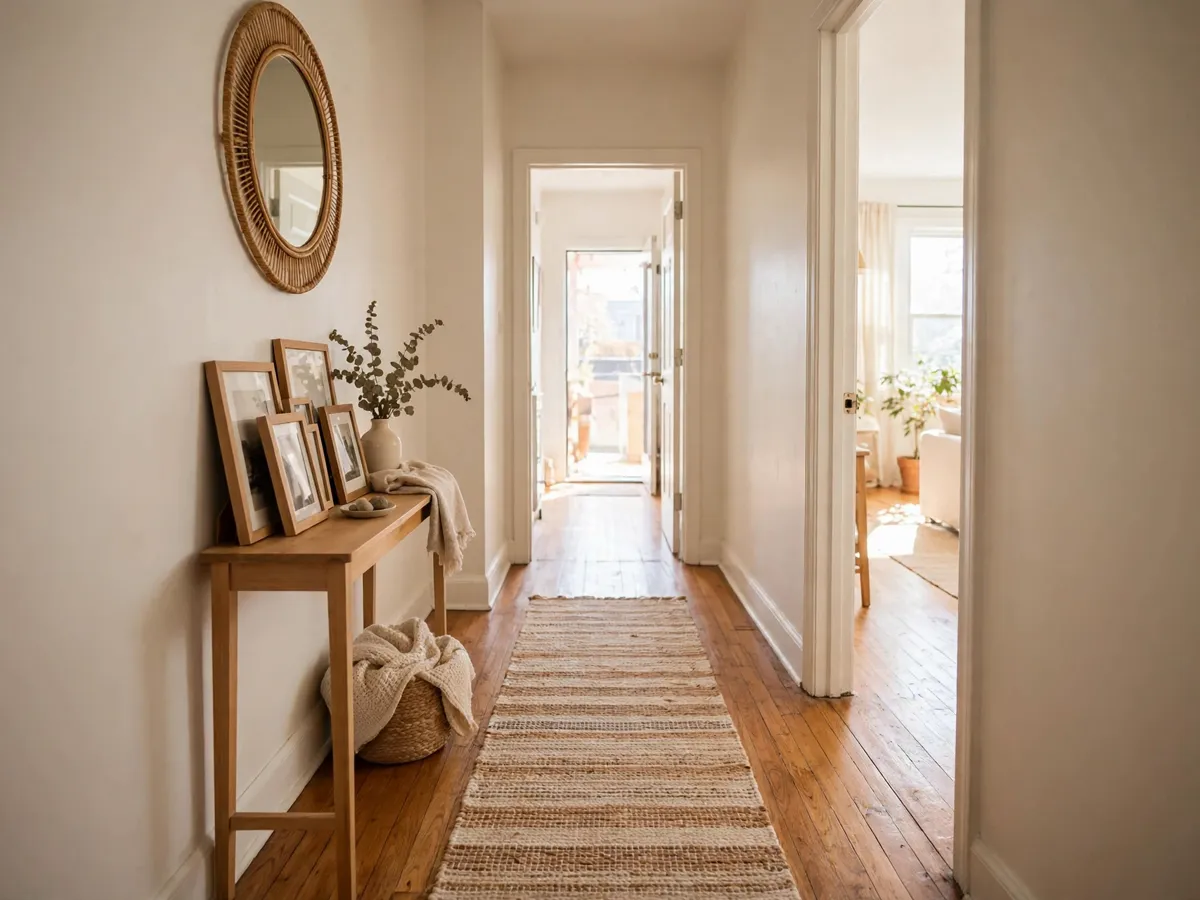
Start with what makes a hall feel narrow
Two things make a hallway read tight: a floor that runs edge to edge, and a wall that goes dark at the far end. A bare floor lets your eye travel to the end wall in one glance, and a dim end wall stops the eye dead. Fix the floor and the light first and the decor stops fighting the room. Everything below is ordered by impact — rug, then walls, then mirror, then the drop zone, then the bulb.
Cost: $0 to measure. Time: 15 minutes with a tape measure and the lights on at night, which is when a hallway shows you what it really looks like.
The runner rug: size it to the walkway, not the wall
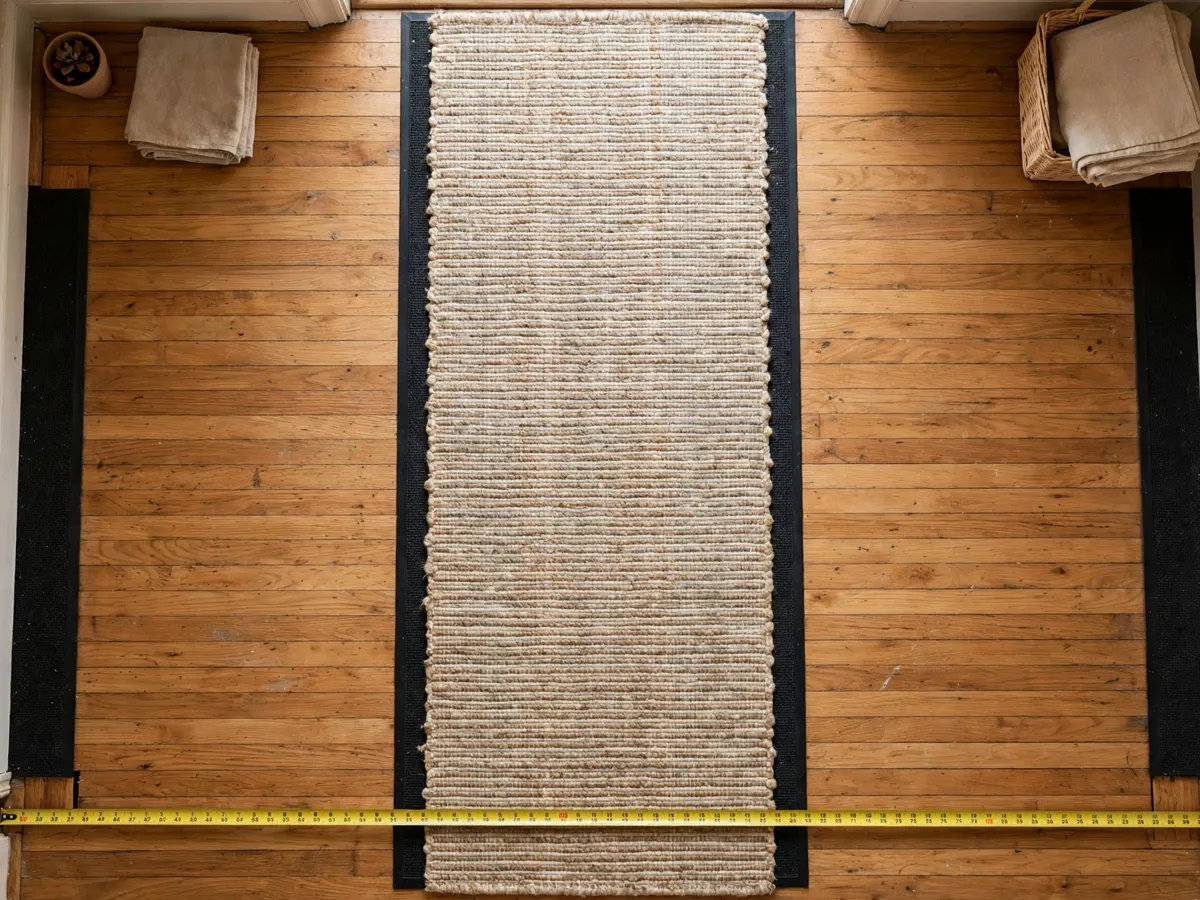
A runner is the fastest visible change in a hall, and the sizing rule is simple. Leave 4–6 inches of bare floor on each side so the walkway still reads as a path. In a hall narrower than 36 inches, skip the runner entirely and use a small washable mat at the door instead. For a standard 36–42 inch hall, a 2'3" x 8' or 2'6" x 10' runner fits with room to spare.
On length, stop the runner 4–6 inches short of the baseboard at each end rather than running it wall to wall — a rug that hits both end walls makes the hall look shorter, not cozier. Low pile beats plush in a corridor, because a thick pile drags on shoes and makes the hall harder to walk fast.
Non-slip pads are not optional in a hallway. A runner on hardwood or tile with no pad slides every time someone hurries through, and the corners curl — that curl is the trip hazard, not the rug itself. Buy a pad cut to the runner size, or a roll of thin rubber grip pad you trim with scissors. A pad also lifts the pile so the rug wears evenly.
Cost: $35–$90 for a 2'6" x 10' low-pile runner, $12–$25 for a grip pad. Time: 30 minutes to measure, trim and lay. Measure the hall at its narrowest point, not at the doors.
Wall decor that needs no drill
Long walls take a gallery; narrow walls take one good thing. In a hall, three or four small frames hung in a tight vertical column reads better than a wide row, because a horizontal line makes the hall feel shorter. Keep the whole grouping inside the middle third of the wall and leave 8–10 inches above the floor clear so vacuuming and shoe changes stay easy.
Adhesive strips rated for the frame weight are the renter answer, but the weight limit is real — a strip rated for five pounds holds five pounds, not a little more. Weigh the frame with the glass in it before you buy strips, then double the number you think you need. For anything heavier, lean it on a narrow console or a picture ledge instead of hanging it. The no-drill wall decor guide covers the strip ratings and the leaning options in detail.
Cost: $0–$45 depending on what you already own; $8–$15 for weight-rated strips, $10–$25 for a 24-inch picture ledge that rests on adhesive brackets. Time: 45 minutes for a three-frame column.
Mirror placement: widen a dim hall without a second window
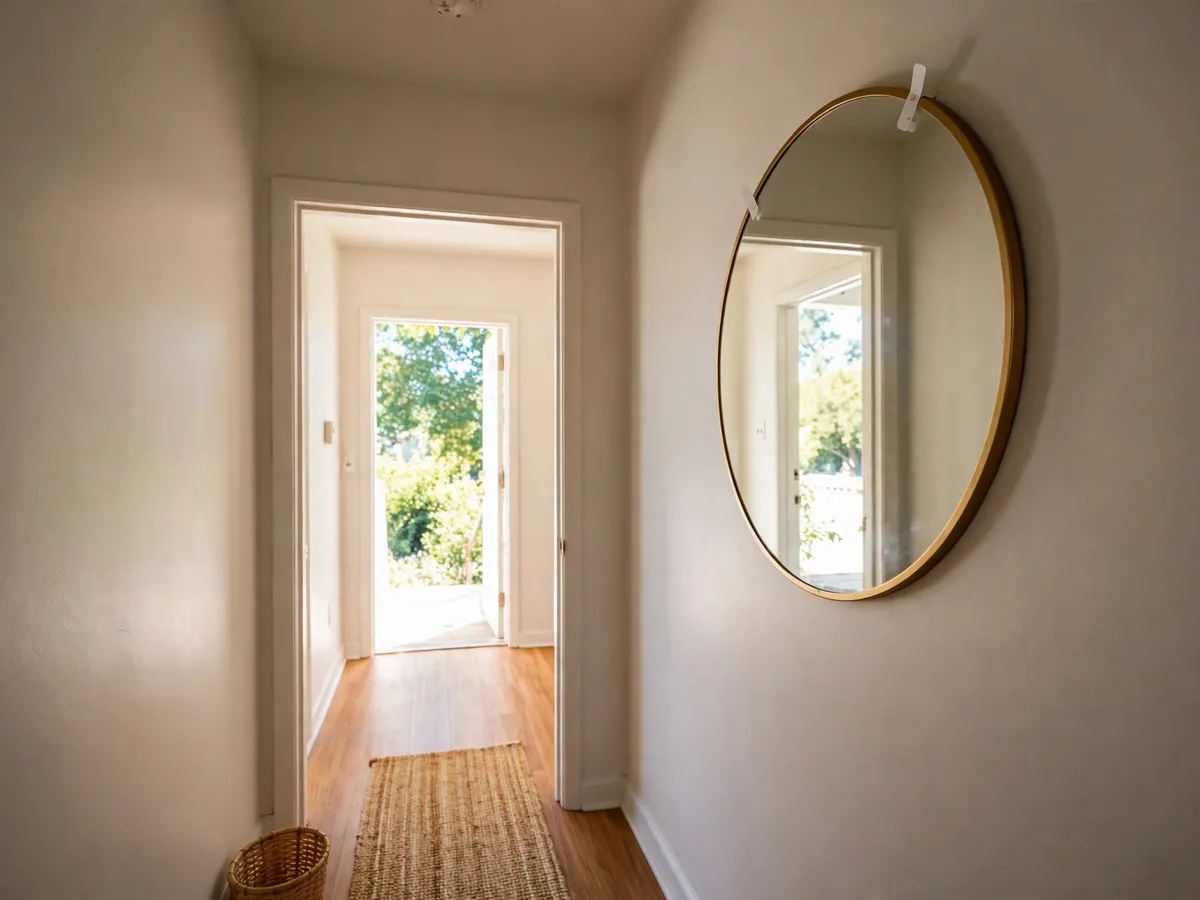
A mirror does two jobs in a hallway: it borrows light, and it breaks the wall plane, which is what actually makes a narrow space feel wider. Placement matters more than size. Hang the mirror on the wall perpendicular to your light source, or directly opposite a window or a lit room, so it reflects something bright. A mirror facing a closet door doubles the corridor and reads as a mistake.
If the hall has no window at all, put the mirror opposite the brightest room in the apartment and keep the hall light on at dusk — the reflection does the work the window cannot. Round or arched shapes soften a hard corridor, while one very large rectangle can read like a second door. Whatever you hang, keep the bottom edge at least 8 inches above the floor so it does not collect scuffs from bags and shoes.
Cost: $25–$80 for a 20–24 inch round or arched mirror. Time: 20 minutes with adhesive hooks rated for the mirror's weight — check the rating, mirrors are heavier than they look.
A slim console or floating shelf for the drop zone
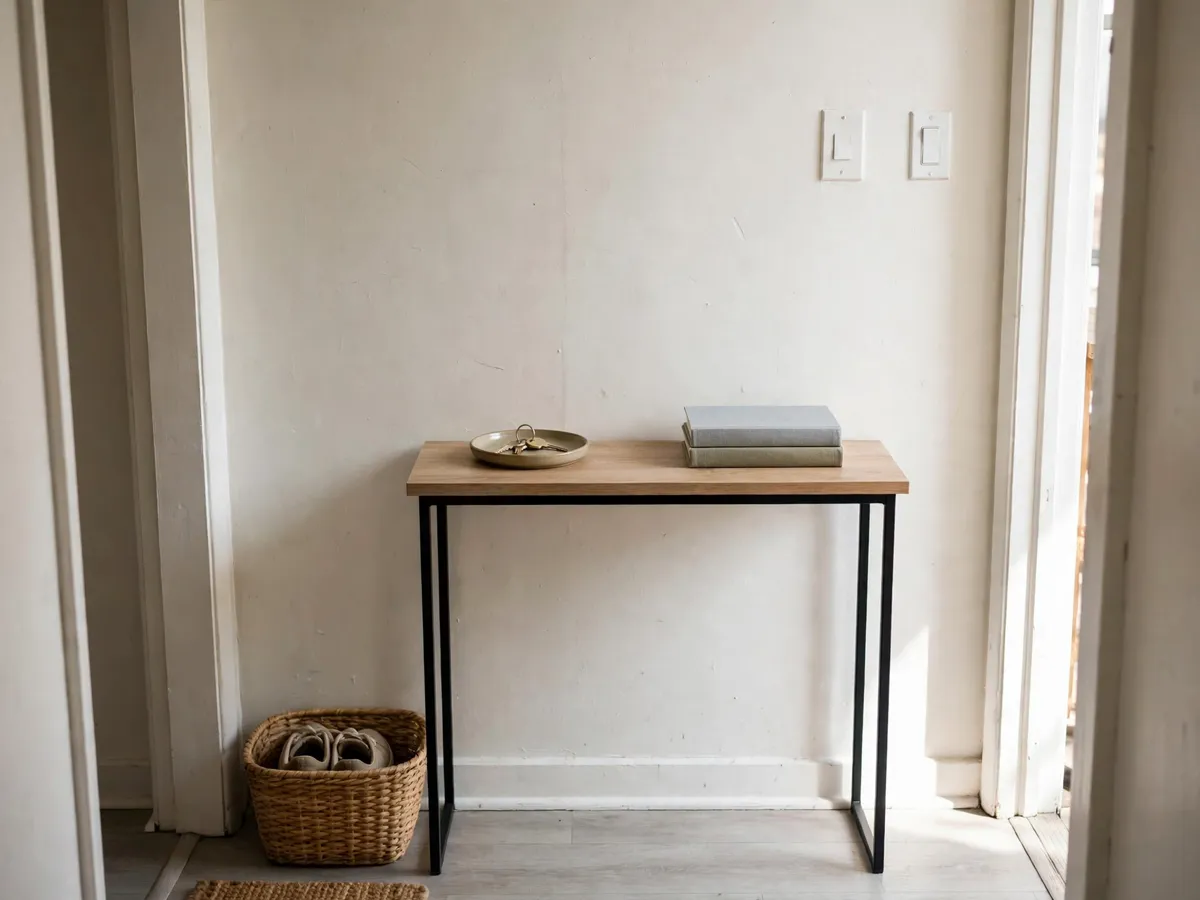
Hallways fill with keys, mail and bags because there is nowhere for them to land. A console under 12 inches deep solves it without eating the walkway; anything deeper and people will walk around it, which narrows the hall in practice. If a console will not fit, a 10-inch-deep floating shelf with a small tray on it does the same job for a fraction of the cost.
Two rules make a drop zone hold. One tray for keys and loose change, one hook or basket above for bags — and nothing else. The moment the surface becomes a shelf, it becomes clutter. Clear it in two minutes at night and the hall resets itself. The same idea at the front door lives in the entryway drop-zone guide.
Cost: $30–$90 for a slim secondhand console, $15–$40 for a floating shelf plus brackets rated for the load. Time: 1 hour including a trip for the tray and the hook.
Lighting that fixes a dark hallway
Most rental hallways have one ceiling fixture on a switch that is nowhere near the door you actually use. You do not need an electrician to fix this. Start with the bulb: a single 2700K warm LED at 800 lumens in the existing fixture changes the whole corridor for under $10. If the ceiling fixture is weak or ugly, a plug-in sconce or pendant with a cord cover runs along the baseboard to the nearest outlet.
Then layer it: one overhead source for the walk, one warm lamp on the console for the pause. Two soft sources beat one bright one in a narrow hall, because a single hard fixture throws sharp shadows down the walls and makes the corridor feel like a tunnel. If the far end still goes dark, a warm strip light behind the console or under the shelf finishes it.
Cost: $8–$15 for the bulb swap, $35–$90 for a plug-in sconce or pendant with a cord cover. Time: 1 hour. Plug-in only, so there is nothing to patch at move-out.
Honest costs: where the money actually goes
Here is the full weekend, priced at thrift and at new. Thrift route: runner $30, mirror $25, console $35, bulb $8 — about $100 and one Saturday. New route: runner $90, mirror $70, shelf and brackets $40, plug-in sconce $60 — about $260. The runner and the bulb do most of the visible work. If the budget is tight, buy those two first and lean art on the console until the rest lands.
Skip these: a gallery wall that spans the full length of the hall, because it shortens the room; a rug wider than the walkway, because it reads as a mistake and trips people; and anything hung at shoulder height right at the end of the corridor, where you will hit it with a laundry basket.
Cost: $100–$260 for the whole list. Time: one weekend, or two afternoons if you want the floor and the light settled before the decor goes up.
Weekend checklist: copy this before you start
- Hall measured at its narrowest point, runner sized with 4–6 inches of bare floor each side
- Non-slip pad trimmed and laid, corners flat
- Art hung in one vertical column, strips checked against the frame's real weight with glass in it
- Mirror placed opposite the brightest light, bottom edge 8 inches above the floor
- Drop zone set: one tray, one hook, nothing else on the surface
- Bulb swapped to 2700K warm at 800 lumens, plug-in light added if the far end stays dark
- Every adhesive piece rated for its load — renter-safe, nothing drilled
Save these on Pinterest
Pin the hallway shot that looks most like yours — the runner sizing one saves best. The rest of the no-drill wall moves live in the renter wall decor guide, and the warm-lighting half of a small space is in the cozy living room ideas. Both sit in the Small Room Decor collection for the next room on your list.