 Plant As Deco
Small Room Decor
Mirror Placement Ideas for Small Rooms: Borrow the Light
By Plant As Deco · Updated 14 November 2026
A mirror does not make a small room bigger — it makes it look bigger, and only when it is pointed at the right thing. Point it at the window and it doubles the daylight the room owns. Point it at the wall across from the window and it doubles a blank wall. The plan is one mirror, placed across from the light, at the height the eye actually stands, and that is the whole trick. It costs one mirror and the decision, not a wall of them, and the leaning version needs no drill at all.
Weekend-ready: $40–$180, one hour. One leaning mirror is drill-free — renter-safe throughout.
1. The wall across from the window is the one that works
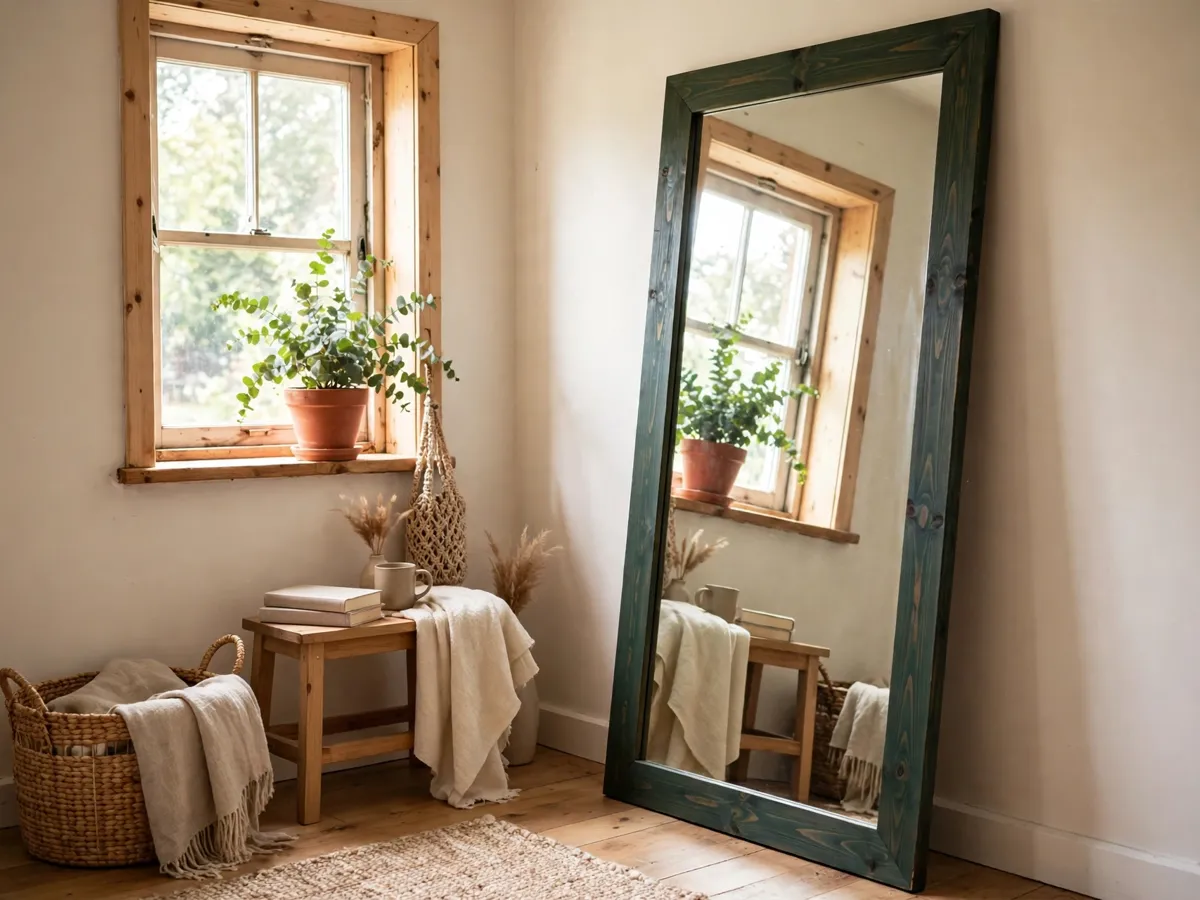
The rule is one sentence: the mirror goes where it can see the window. The wall directly across from the glass is the spot, because the mirror picks up the daylight and sends it back into the room from a second angle, and the room reads twice as bright without a new lamp. The wall beside the window is the second choice, angled slightly toward the glass. The wall that faces away from the window — the common choice, because it is the empty one — is the mirror that doubles the dark corner, and that is the placement that makes a small room feel smaller. Walk the room at the hour you are home and put the mirror where the window is visible in it; that is the whole decision.
Cost: $0 to decide. Time: ten minutes with the mirror leaned against each wall, checked from the doorway.
2. Hang it at the height the eye stands, not the ceiling
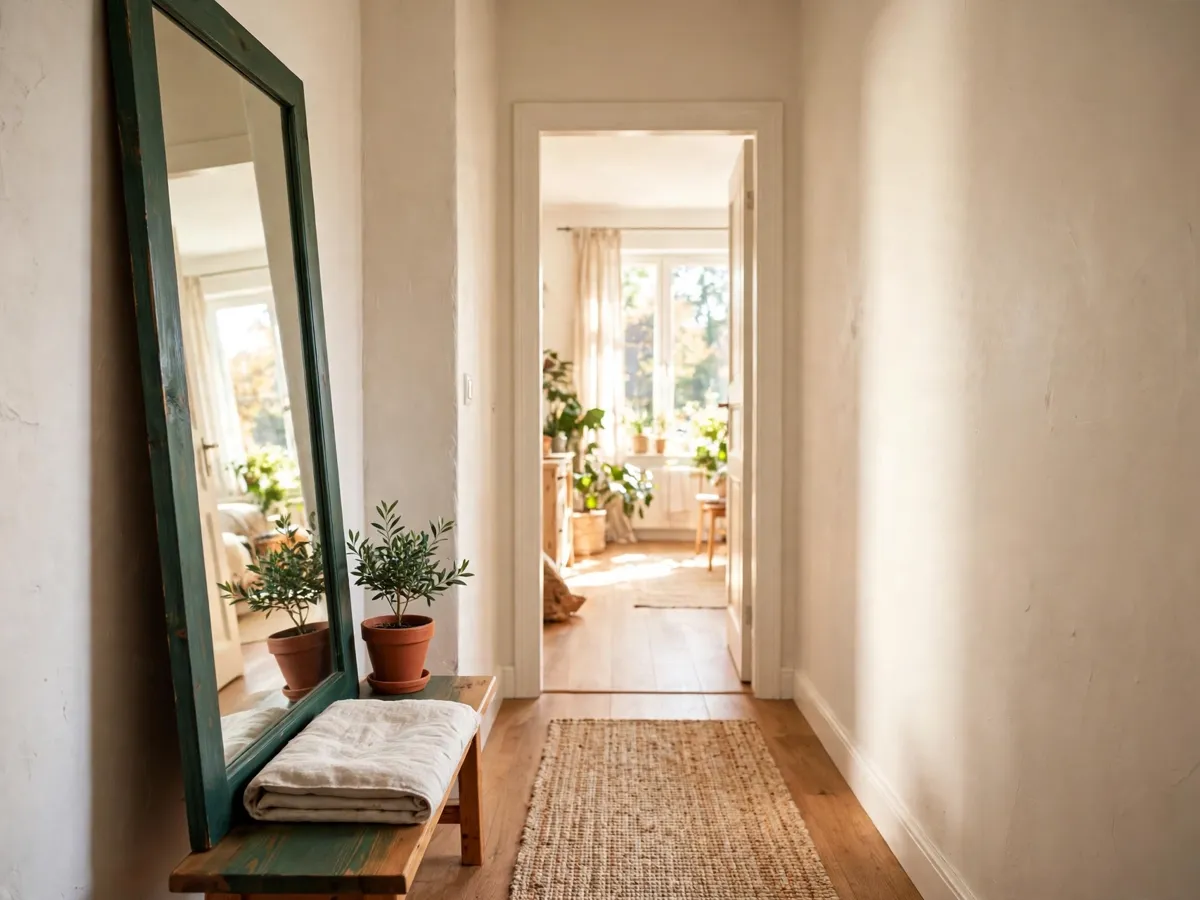
A mirror is a window that faces the wrong way, and it hangs at the height a window does. The center of the glass sits around eye height for the people who live in the room — roughly five feet from the floor — because the mirror that reflects the ceiling is the one that shows the room nothing. Tall mirrors lean, and a leaning floor mirror is the small-room move: it reads as a piece of furniture, it carries height up the wall the way the tall curtain does, and it needs nothing but the wall to lean on. The hallway version of the same rule is in the hallway guide, where the mirror is the one piece that makes a narrow space read as a room.
Cost: $0 to check the height. Time: five minutes, and the test is what the glass shows from the doorway.
3. One big mirror beats three small ones, every time
The cluster of small mirrors is the thing that reads as a display, and the one tall mirror is the thing that reads as a window. A single mirror with real size — tall enough to show a person, wide enough to show the corner behind them — does more for a small room than any number of the small round ones, because the reflection has to have something in it for the eye to read the room as bigger. One mirror, one wall, and the wall it goes on is the one across from the light. The two-mirror room exists only in the hallway and the entry, where the second mirror is the last thing you check on the way out. For the gallery wall that holds the frames instead, the gallery wall guide keeps the wall as one line and one story.
Cost: $40–$150 for one mirror with real size. Time: fifteen minutes to lean it and check it from the door.
4. Point it at the room, not at the clutter
The mirror doubles whatever it faces, and that includes the mess. The leaning mirror goes where it reflects the window, the plant or the corner the room is proud of — never the coat pile, the drying rack or the open closet. This is the honest limit of the trick: a mirror in a tidy corner makes the room read twice as finished, and the same mirror across from the laundry is the reason people say mirrors make rooms look cluttered. The mirror is the last piece the room gets, not the first, because it works by pointing at the room that is already right.
Cost: $0. Time: ten minutes of moving the mirror until the glass shows the room you want doubled.
What we would skip
Skip the mirrored wall, because it is the small-room move from another era and it doubles the wrong things. Skip the cluster of small rounds, because the display is what the wall becomes. Skip the mirror above the sofa facing the sofa, because it shows the room the seating it is already sitting in. The one thing worth the money is the tall leaning mirror, because it is the window the room does not have, and it moves with you.
Cost: $0. Time: the decisions that keep the room at one mirror.
Honest costs: where the money actually goes
Reuse-only route: $0, one hour, and the mirror the apartment already owns moves to the wall across from the window, because the placement is the whole trick and the mirror is just the glass it runs on. Add one tall leaning mirror for $40–$150, and the room is finished. A secondhand leaning mirror is the one spend that quietly does the whole room, and the anti-tip kit for $8 is the one piece the lease and the doorway both ask for. There is no second buy in this plan — the one mirror is the room.
Cost: $40–$180 for the whole move, most of it the mirror itself. Time: one hour, and the test is the room at the hour the sun is on the other side.
Before you buy the mirror: copy this
- The wall across from the window, never the wall that faces away
- The glass checked from the doorway: the window visible in it
- Center of the glass around eye height, five feet off the floor
- One tall mirror instead of three small ones
- The reflection pointing at the window, the plant or the corner — never the clutter
Cost: $0 to check. Time: fifteen minutes, before the first order.
Questions renters ask
Where should a mirror go in a small bedroom?
On the wall across from or diagonal from the window, so the glass picks up the daylight and the bed is not the thing it doubles. The full-length version leans on the wall beside the door, where the last check happens on the way out.
Is a leaning mirror renter-safe?
Yes, with the anti-tip kit: the strap at the top anchors to the wall with one small hole or the no-drill anchor, and the mirror stays where the doorway and the lease both want it. The lean is the whole renter move, and the kit is the eight-dollar part that makes it boring.
Do mirrors actually make a room look bigger?
They make it look bigger when the reflection has the room in it: the window, the light, the corner the room is proud of. The same mirror pointed at a blank wall or the clutter does nothing for the room, which is why the placement is the trick and the mirror is just the glass.
Can I put a mirror behind the sofa?
Only when the sofa faces the window, so the mirror behind it catches the light coming in. The mirror above the sofa that faces the sofa shows the room its own seating, and that is the placement that reads as nothing — the console-and-mirror version earns the wall only when the glass has the window in it.
Save these on Pinterest
Pin the across-from-the-window step first, because it is the move that makes the mirror work or waste the wall. The narrow-space version is in the hallway guide, and the wall the frames go on instead is in the gallery wall guide. Both sit in the Small Room Decor collection for the next wall you point at the light.