 Plant As Deco
Small Room Decor
Neutral Color Scheme Ideas for Small Rooms: Three Colors, Held
By Plant As Deco · Updated 14 November 2026
A neutral scheme in a small room is not the absence of a palette. It is three colors, held in proportion: one warm base that owns most of the room, one wood or mid tone that owns the furniture, and one accent that owns nothing more than a few inches. The reason the neutral scheme works in a small room is the proportion — the room reads as one thing instead of several, and one thing reads as bigger than several. The plan is three colors and a test, and it costs the swatches, not a repaint of the whole apartment.
Weekend-ready: $0–$60, one afternoon. Sample pots and the paint you already own — renter-safe throughout.
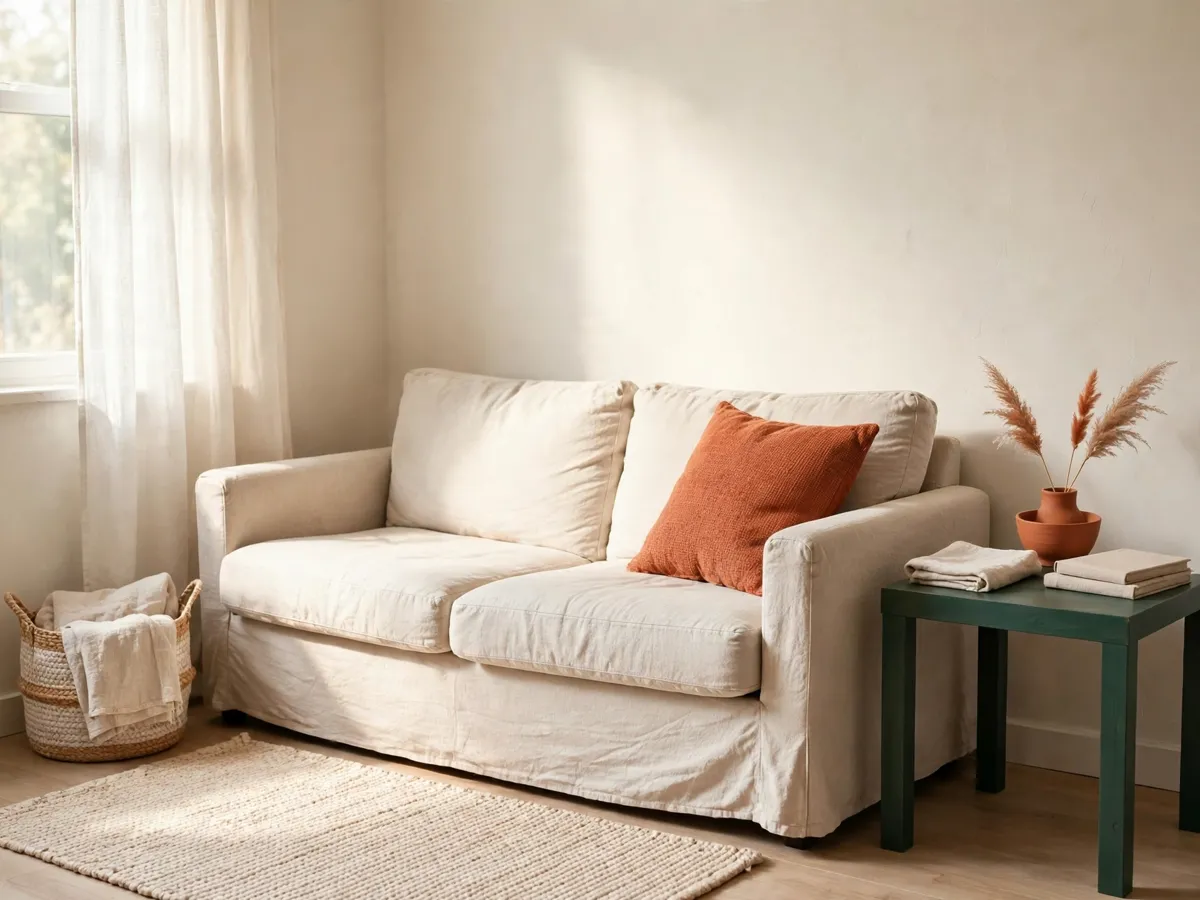
1. Three colors: the base, the wood, the accent
The scheme is three colors and no more, because the fourth is where the small room stops reading as one thing. The base is the warm off-white the room already owns — the walls, the rug, the bedding — and it is the one that holds the most space. The wood is the mid tone: the furniture, the frames, the floor, the one material that gives the neutral scheme its warmth. The accent is the color that owns a few inches and nothing else — the terracotta cushion, the one frame, the small pot. The palette that holds is the warm one, because the cool grey reads as an office and the warm off-white reads as a room someone lives in.
Cost: $0 to decide. Time: thirty minutes with the swatches in the room, at the hour you are home.
2. The proportion is the whole scheme
The three colors only work when the proportion holds, and the numbers are the honest version of the rule: about sixty percent base, thirty percent wood, ten percent accent. The base is the walls and the large textiles, the wood is the furniture and the floor, and the accent is the few inches the eye lands on. The small room is where the proportion matters most, because ten percent of a small room is one cushion, and the second accent is the one that tips the scheme into two schemes. Count it in the room: the accent items on one shelf, one cushion, one pot. When the count is honest, the scheme reads as a palette; when it is not, it reads as a collection.
Cost: $0 to check. Time: ten minutes counting the accent pieces in the room.
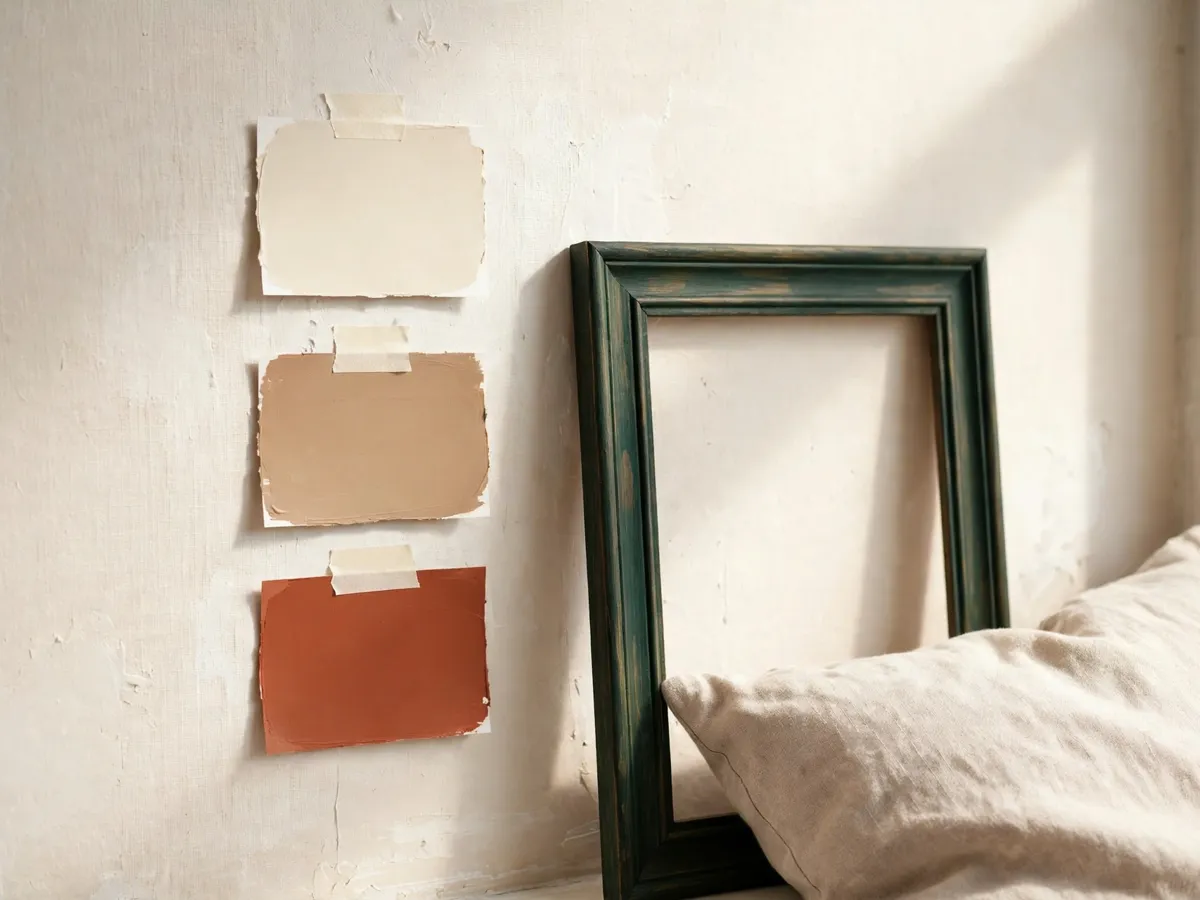
3. Test the palette before it goes on the wall
The paint that looks warm in the store is the paint that reads blue on a north wall, and the reason is the light the room gets, not the can. The test is three days: tape the big sample pot on the wall the room runs on, and live with it at morning, at noon and at the hour the lamps are on. The sample that survives all three is the one, and the one that reads blue at noon is the one that goes back. The same test runs on the fabrics, because the linen that matched the wall in the store is the linen that reads grey beside it at home. The warm neutrals that hold in this light are in the cozy paint colors guide, and this page is the scheme they go into.
Cost: $5–$10 for the sample pot. Time: three days of living with it, and it is the step that saves the whole wall.
4. Distribute the accent so the room reads as one scheme
The accent in one corner is the accent that reads as a decoration, and the accent in three corners is the one that reads as a scheme. The terracotta that appears in the cushion, the one frame and the small pot is the scheme; the same terracotta in the throw pillow alone is the decoration that has nothing to say to the rest of the room. The repetition is what makes the room read as planned, and the wood is the same: the same tone in the table, the shelf and the frames is the one that holds the middle of the scheme. For the room the scheme sits in, the cozy living room guide keeps the same three-color rule on the sofa and the wall.
Cost: $0 to distribute. Time: fifteen minutes moving the accent pieces until they repeat instead of cluster.
What we would skip
Skip the fourth color, because the small room stops reading as one thing the moment it has to be two. Skip the cool grey base, because it reads as an office in a room someone sleeps in, and the warm off-white is the one that reads as home. Skip the accent on the big pieces — the accent sofa is the one that dates the room in a season, and the accent cushion is the one that swaps. The one thing worth the money is the sample pot, because it is the three-day test that saves the wall.
Cost: $0. Time: the decisions that keep the scheme at three colors.
Honest costs: where the money actually goes
No-paint route: $0, one afternoon, and the scheme is already there in the furniture the room owns, because the three-color rule is a distribution and a proportion, not a shopping list. Add the sample pot for $5–$10, the accent cushion for $15–$35 and the one accent frame for $10–$25, and the whole scheme is finished for about $30–$70. A secondhand wood piece is the one spend that quietly does the middle of the palette, and the accent pot is the piece that finishes the tenth.
Cost: $0–$60 for the whole scheme. Time: one afternoon to distribute, three days to test, and the test is the room at noon and at 9 p.m.
Before you paint: copy this
- Three colors only: the warm base, the wood, the one accent
- The proportion held: about sixty base, thirty wood, ten accent
- The accent repeated in three corners, never clustered in one
- The sample pot tested at morning, noon and lamp light
- The same wood tone in the table, the shelf and the frames
Cost: $0 to check. Time: fifteen minutes, before the first can.
Questions renters ask
How many colors should a small room have?
Three, and the fourth is the one that breaks the scheme. The base, the wood and the accent is the palette that holds in a small room, because the room reads as one thing, and one thing reads as bigger than several.
What if my apartment walls are builder beige?
Then the base is the beige and the palette works around it: the warm off-white in the textiles, the wood in the furniture, the accent in the few inches. The builder beige is a warm neutral, and it reads as a scheme when the proportion holds — the repaint is the last step, not the first.
Which accent color works best in a small room?
The warm one — terracotta, rust, olive or deep blue against the cream base — because the warm accent holds the warmth the neutral scheme is built on. The accent is the few inches, not the wall, so the color is the one that repeats in the cushion, the frame and the pot.
Can I do a neutral scheme without painting?
Yes, and most of the time the scheme is already there: the furniture the room owns holds the wood, the textiles hold the base, and the accent is the piece that repeats. The paint is the last step and the sample pot is the test that decides whether it happens at all.
Save these on Pinterest
Pin the three-color step first, because it is the move that makes the scheme hold in a small room. The warm neutrals that go in the base are in the cozy paint colors guide, and the room the scheme sits in is in the cozy living room guide. Both sit in the Small Room Decor collection for the next room you hold to three colors.