 Plant As Deco
Small Room Decor
Small Bedroom Corner Seating Ideas: The Corner That Earns a Chair
By Plant As Deco · Updated 14 November 2026
A chair in a small bedroom is either the best square foot in the apartment or the piece you walk around for two years, and the difference is one measurement: the clear floor left in front of it. The corner that earns the chair is the one nobody walks through — usually the window corner or the corner beside the door, never the corner at the foot of the bed. The rest is picking the seat that fits that corner: the low armchair, the bench that doubles as storage, or the window seat that is really a chest.
Weekend-ready: $0–$180, one afternoon. Move the furniture first — renter-safe throughout.
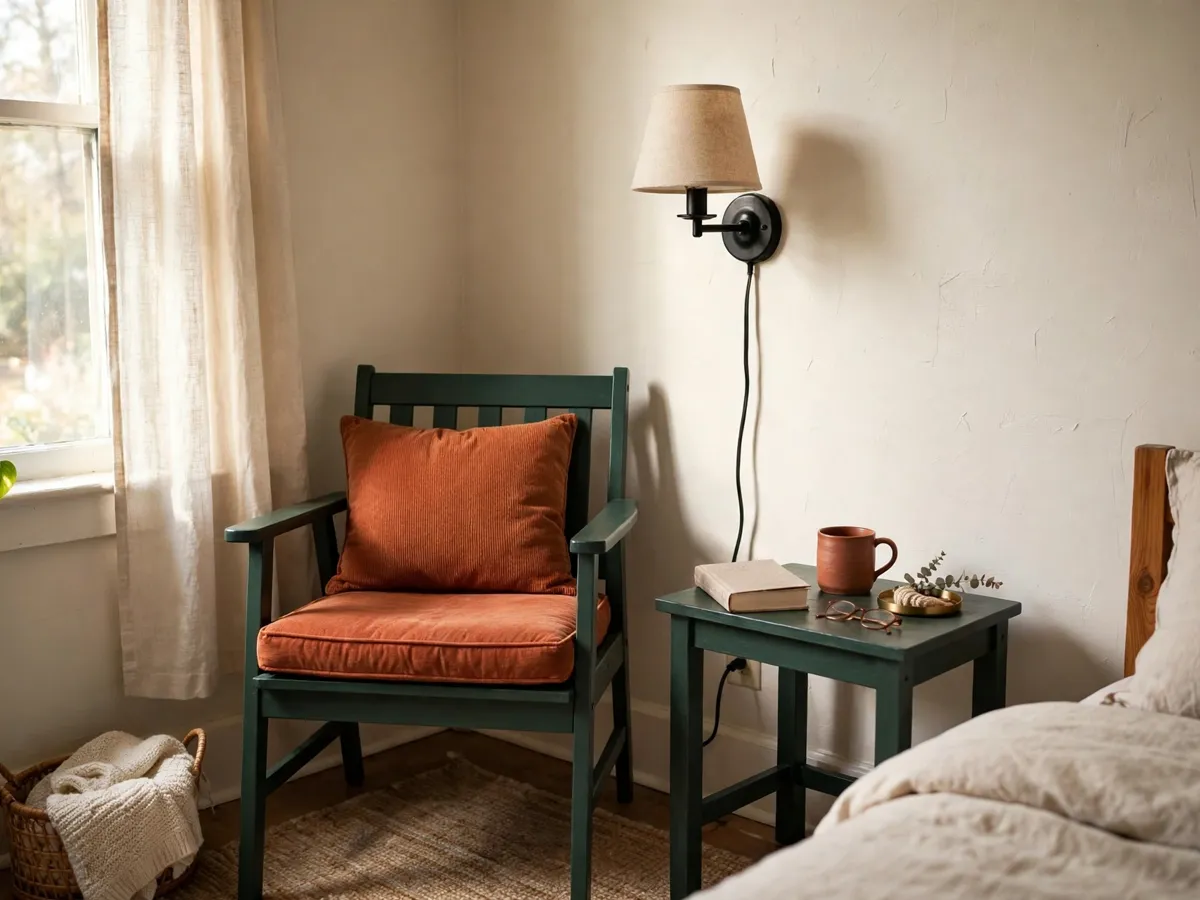
1. Find the corner nobody walks through
Before any chair, walk the room the way it is actually used: bed to door, bed to closet, bed to bathroom. The corners those paths pass through are not seating corners — they are corners where a chair becomes an obstacle. What is left is usually one: the corner on the far side of the bed, a corner under a window, or the corner beside the door on the wall the door swings away from. That corner gets the chair, and the chair goes into it at an angle rather than square, because the diagonal is what makes a corner feel used instead of filled. The same path logic runs the bedroom layout guide.
Cost: $0. Time: fifteen minutes walking the paths, and the corner is decided before anything is bought.
2. The seat has to be shallow, or the walkway goes
The number that kills the bedroom chair is depth, not width: a deep lounge chair takes twenty inches more floor than the room can spare, and the walkway it eats is the one beside the bed. The seat that works in a small bedroom is shallow and upright — a slipper chair, a small armchair with a straight back, a chair you sit in to put on shoes rather than to sink into. The width matters less, because the corner is narrow anyway. And the chair needs one small surface beside it for the book and the mug, which is the side table the room might already own — the reading nook guide has the same pair at a smaller scale.
Cost: $0 to measure the depth the corner can take. Time: ten minutes with the tape, before the first order.
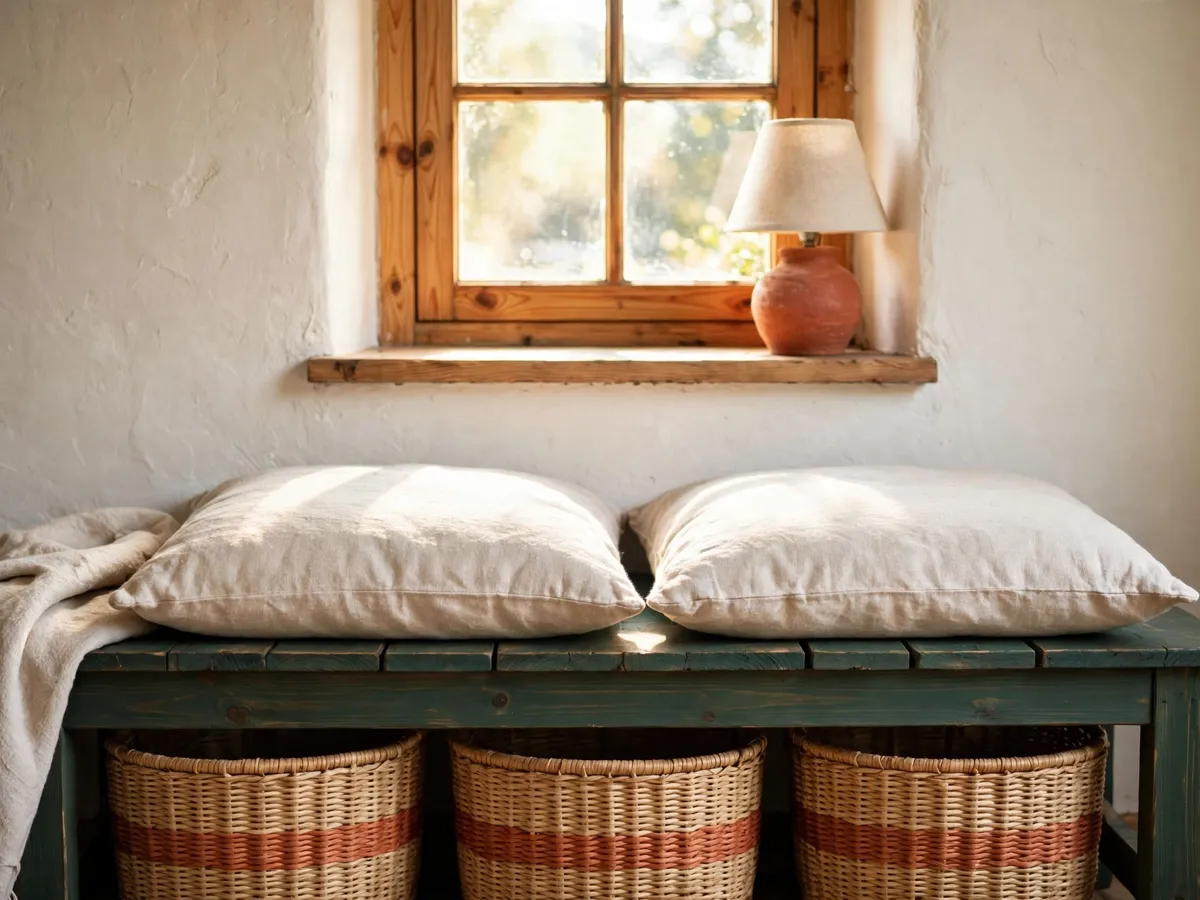
3. When the corner is too narrow, the bench is the seat
A chair needs floor in front of it. A bench does not, because you sit down onto it from the side and your feet land where you were standing. That is why the storage bench is the small-bedroom answer when the corner cannot spare the walkway: it sits flush against the wall under the window, it holds the out-of-season bedding inside, and it is the seat for the one job a bedroom seat actually does — shoes, socks, the five minutes before leaving. The bench with baskets underneath is the cheapest version, and the honest limit is comfort: it is a bench, not a reading chair, and pretending otherwise is how the room ends up with a seat nobody uses. The storage math is in the studio storage guide.
Cost: $40–$140 for a storage bench. Time: forty minutes to place and fill, and the room gains a seat and a closet.
4. Put a light there, or the corner stays a place for clothes
This is the step people skip, and it is the one that decides whether the corner is a seat or a laundry pile. A chair in a dark corner is where the sweater goes; the same chair with a warm light above it is where the person goes. The light is a wall sconce if the wall allows, a tall narrow floor lamp if it does not, or a plug-in wall light with the cord run along the baseboard — no ceiling work, no electrician. The pocket list is in the warm lighting guide, and in a bedroom the corner light is the one that matters most, because it is the last thing on before sleep.
Cost: $15–$60 for a plug-in sconce or a narrow floor lamp. Time: twenty minutes, and the corner stops collecting clothes.
What we would skip
Skip the loveseat, because two seats in a bedroom corner is a living room that got lost. Skip the deep lounge chair, because the depth is what eats the walkway. Skip the armchair at the foot of the bed, because it is the corner every path crosses and the chair that never gets sat in. The one thing worth the money is the light, because a lit corner is a used corner and an unlit one is a shelf for clothes.
Cost: $0. Time: the decisions that keep the floor clear.
Honest costs: where the money actually goes
Reuse-only route: $0, one afternoon, and the chair that is already in the apartment turns into the corner once the path is walked and the angle is set, because the placement is the whole job. Add one shallow armchair for $60–$180 or a storage bench for $40–$140, the side table for $0–$40, the light for $15–$60, and the corner is finished for about $55–$280. A secondhand slipper chair is the one spend that quietly does the seat, and the plug-in sconce is the piece that makes it a place.
Cost: $0–$180 for the corner. Time: one afternoon, and the test is whether the book is still there in a week.
Before you buy the chair: copy this
- The corner no path crosses: not the foot of the bed
- The chair at an angle into the corner, not square to the wall
- Seat depth measured against the walkway before ordering
- One small surface beside it, at knee height, for the book
- A warm light above the seat, even if it plugs into the wall
Cost: $0 to check. Time: fifteen minutes, before the first order.
Questions renters ask
Which corner of a small bedroom should the chair go in?
The corner no path crosses — usually the far side of the bed or the corner under the window. Never the foot of the bed, because that is the corner the walk to the door and the closet goes through, and a chair there is furniture people learn to walk around.
Can a small bedroom fit an accent chair?
Yes, when it is shallow and upright rather than deep: a slipper chair or a small straight-backed armchair. The depth is the number that decides it, because the deep lounge chair takes the walkway and the walkway cannot be given back without moving the bed.
What if there is no floor space for a chair?
Then the seat is a bench against the wall, sat down onto from the side, with storage underneath. It does the one job a bedroom seat really does — shoes and the five minutes before leaving — and it holds the bedding the closet cannot. It is a bench, not a reading chair, and that is fine.
How do I keep the corner from becoming a clothes pile?
Put a warm light on it. A dark chair in a dark corner is where the sweater goes, and the same chair with a light above it is where the person goes. A plug-in sconce or a narrow floor lamp does it without an electrician.
Save these on Pinterest
Pin the which-corner step first, because it is the decision that makes the chair an asset instead of an obstacle. The path math is in the bedroom layout guide, and the smaller version of the same corner is in the reading nook guide. Both sit in the Small Room Decor collection for the next corner you furnish.