 Plant As Deco
Small Room Decor
Warm Lighting Ideas for Small Spaces: Layer the Glow
By Plant As Deco · Updated 13 November 2026
A small room lit by one bright ceiling square reads as a hallway, not a home, because the one source flattens everything into the same brightness. The fix is to break that one source into three: one lamp that does the work, one that fills the corner the eye lands on, and one that marks the place you actually sit. That is the whole plan, and it costs three small lamps and a few warm bulbs, not a rewiring and not a new fixture. Renter-safe throughout, and the test is the hour you are home, not the photo.
Weekend-ready: $30–$120, one evening. No wiring, no ceiling work — renter-safe throughout.
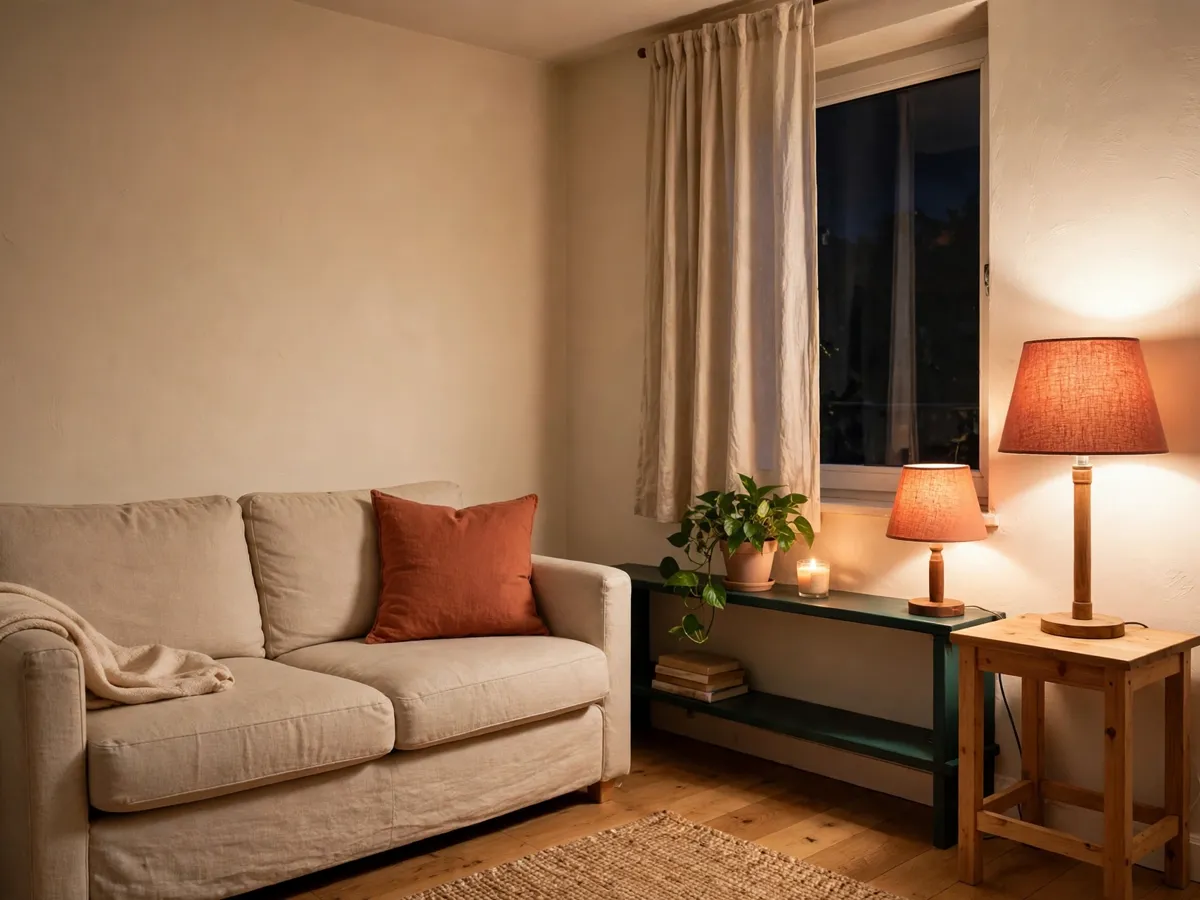
1. Why the ceiling light is the problem, not the answer
In a large room, one ceiling source can read as a room with light. In a small one, the same source reads as a glare, because there is no wall far enough away to soften it, and everything — the coffee table, the bed, the corner — sits in the same bright square. The small room needs the opposite of more brightness. It needs light at the height of the people in it, in the places they actually are, warm enough to read as a room at 9 p.m. instead of a waiting area at noon.
The move is to leave the ceiling light for when you are cleaning, and run the room on the lamps the rest of the time. One warm source beats one cold one every time, and the hour you are home is the hour the room has to be right, not the hour you take the photo.
Cost: $0 to try. Time: one evening, with the ceiling off and the lamps on.
2. Three lamps, three jobs — and stop at three
The layer that makes a small room glow is three lamps doing three different jobs. The task lamp sits where the hand reaches: by the arm of the sofa for reading, at the desk for work, or by the head of the bed for the last pages. The fill lamp takes the far corner, the one the eye lands on when you sit down, and turns empty into part of the room. The accent light is the small one on the shelf, the one that washes the wall behind the plant or the frame so the whole corner reads warm instead of dark. Three is the ceiling, because the fourth one starts to compete with the other three for the eye, and the room reads as a set of bulbs instead of a set of pockets.
Two heights do more than one: the task lamp at seat height and the fill lamp at floor height keep the room from flattening into one line of light. That is the layer, and it is the move that makes the space feel finished at the hour you use it.
Cost: $20–$80 for two or three small lamps. Time: one evening to place them and live with it overnight.
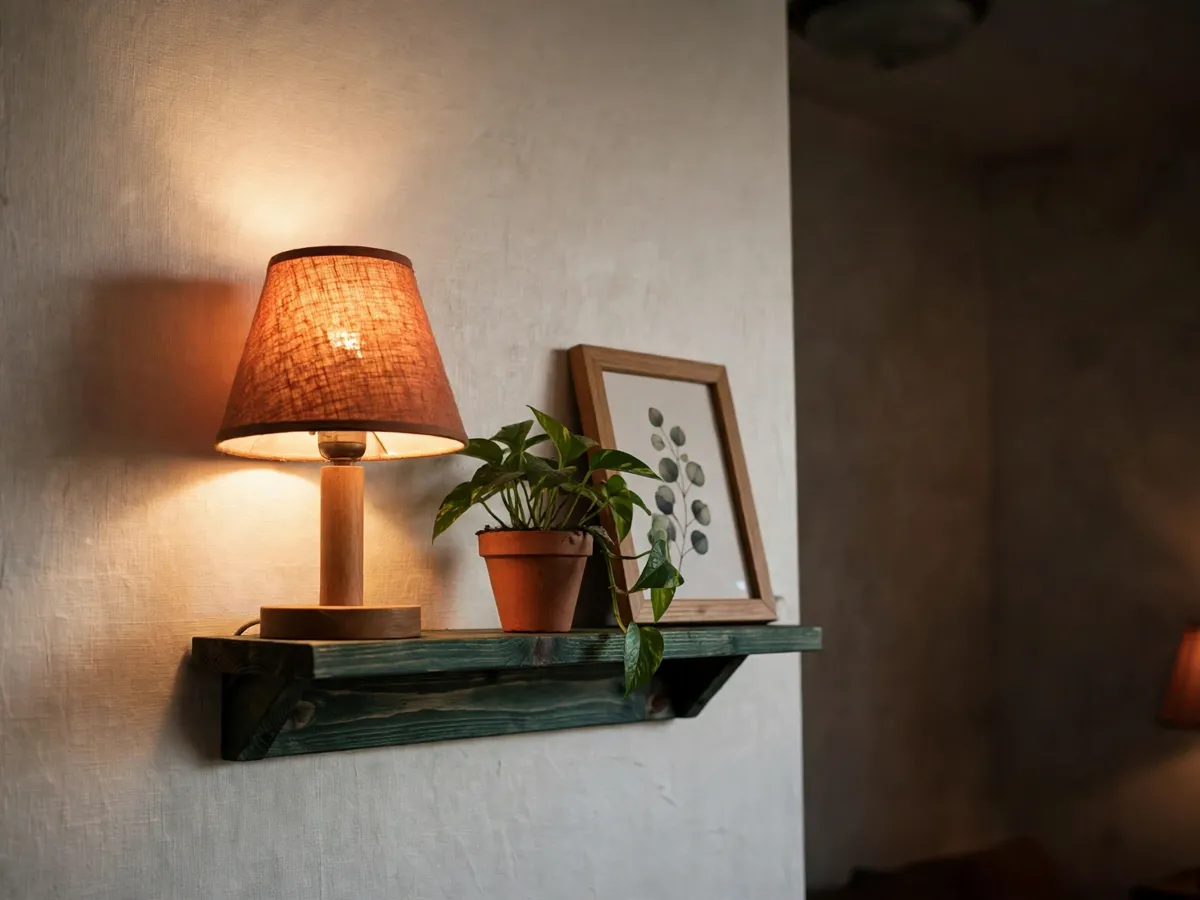
3. The bulb is the whole mood, and it is the cheap part
The fixture you buy is the body, and the bulb you put in it is the voice. A warm bulb — the kind that reads as the color of a candle held at a distance — does the cozy for the price of one part, and the swap takes a minute. A cold bulb in the same lamp does the opposite for the same price, which is the whole reason the mood is a bulb decision before it is a furniture one. Pick the warm one for every lamp in the plan, and keep the same color of warmth across all three, because a mix of warm and cold in one small room reads as a mistake, not a palette.
Cost: $5–$15 for the bulbs in the whole room. Time: ten minutes to swap them and check the room at the hour you use it.
4. Place the light where the eye already goes
The lamp goes where you already look, not where you think the room needs a lamp. By the arm of the sofa, because that is where the hand reaches. At the far corner, because that is where the eye lands when you sit down. Above the shelf, because that is the one surface that holds the plant and the frame. For the living room the plan sits in, the cozy living room guide covers the same three pockets, and the reading nook guide is the one version of the task lamp that earns its corner. The hallway and the bedroom run on the same rule: one pocket at the spot you actually stand, sit or read.
Cost: $0 to decide. Time: ten minutes with the ceiling off, checking each pocket from the seat.
What we would skip
Skip the ceiling rewire, because the lamps do the job for the price of three small buys and no electrician. Skip the dimmer-only fix, because a cold bulb dimmed is still cold, and the warm bulb off is the move that actually changes the hour. Skip the fourth lamp, because three pockets is the layer and the fourth is what tips the room into a set of bulbs. The one thing worth the money is the task lamp by the arm of the sofa, because it is the pocket the whole room reaches for.
Cost: $0. Time: the decisions that keep the layer at three.
Honest costs: where the money actually goes
Bulb-only route: $5–$15, one evening, and the ceiling square is already the exception instead of the room. Add the task lamp for $10–$30, the fill lamp for $10–$30 and the small accent light for $10–$20, and the whole layer is finished for about $30–$110. A secondhand lamp with a fresh warm bulb is the one spend that quietly does one of the three pockets, and the cold ceiling light is the one source the plan does not keep on.
Cost: $30–$120 for the whole layer. Time: one evening to place it, and the test is the hour you are home, not the photo.
Before you buy a lamp: copy this
- The ceiling light reserved for cleaning, not for the evening
- Three lamps with three jobs: task at the reach, fill at the far corner, accent on the shelf
- One color of warmth across every bulb in the plan
- Two heights, so the room does not flatten into one line
- The room checked at 9 p.m., because that is the hour it is
Cost: $0 to check. Time: fifteen minutes, before the first order.
Questions renters ask
How many lamps does a small room need?
Three, doing three jobs: one at the reach, one at the far corner and one on the shelf. Two is the minimum that still keeps the room from flattening, and the fourth is the one that starts to compete with the other three.
Which bulb is the warm one?
The one that reads as the color of a candle held at a distance, and this account picks 2700K for it. What matters is that every bulb in the room is the same color of warm, because the mix is what reads as a mistake.
Can I use the lights I already have?
Yes, when there are two of them with a warm bulb: one at the reach and one at the corner. The move is the placement and the bulb, and the fixture is only the body it sits in. The missing pocket is the one worth the small buy.
Do I need a dimmer?
Not for the plan. A dimmer softens a cold light, but the warm bulb off is the move that actually changes the hour, and the switch is the one that does it for free. The dimmer is the upgrade, not the starting point.
Save these on Pinterest
Pin the three-jobs step first, because it is the move that keeps the layer at three pockets instead of a set of bulbs. The room the plan sits in is in the cozy living room guide, and the bedroom version of the same three pockets is in the cozy bedroom guide. Both sit in the Small Room Decor collection for the next room you glow.