 Plant As Deco
Small Room Decor
Nightstand Ideas for a Small Bedroom: Fit the Gap You Have
By Plant As Deco · Updated 14 November 2026
A nightstand in a small bedroom is a width problem disguised as a furniture problem. The standard eighteen-inch table does not fit the twelve inches beside the bed, so the gap becomes where the phone goes on the floor, and the room loses the one surface that makes a bed usable. The fix is to measure the gap first and pick the shape that fits it: the wall shelf, the floating drawer or the stool. That is the whole job, and it costs one shelf, not a matched pair.
Weekend-ready: $20–$90, one afternoon. Wall-mounted or freestanding — renter-safe throughout.
1. Measure the gap and the walkway before the width
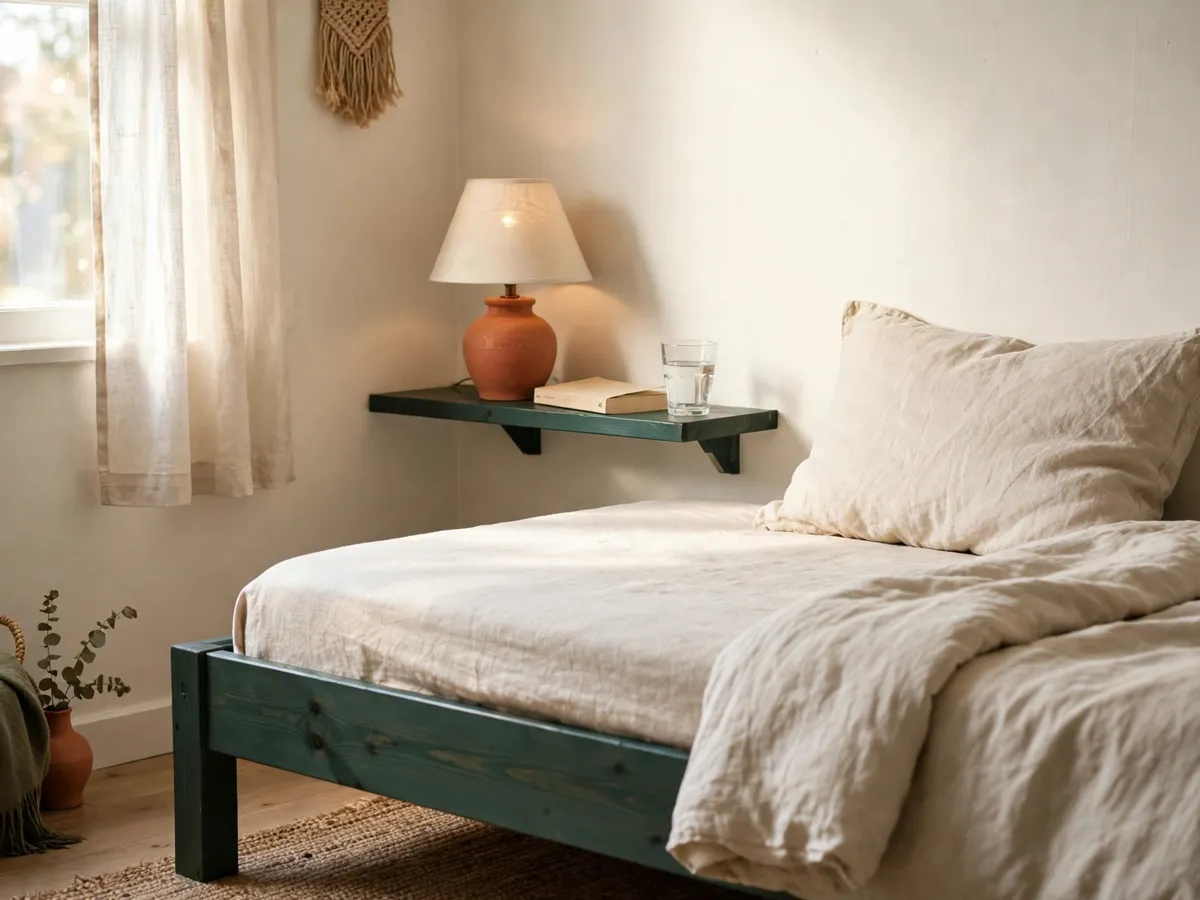
Two numbers decide the nightstand, and the width is the second one. The first is the gap between the bed and the wall, which is often eight to twelve inches in a small bedroom. The second is the walkway on the other side of the bed, because the nightstand on that side competes with the path to the door. The rule is the one the whole room runs on: the walkway wins, and the nightstand is the piece that gives. A twelve-inch gap takes a shelf or a stool; an eighteen-inch gap takes a real table. Measure both before you look at anything, and the shopping list writes itself. The walkway math is in the bedroom layout guide.
Cost: $0. Time: ten minutes with the tape, and the width is decided before the first order.
2. Three shapes that fit a narrow gap
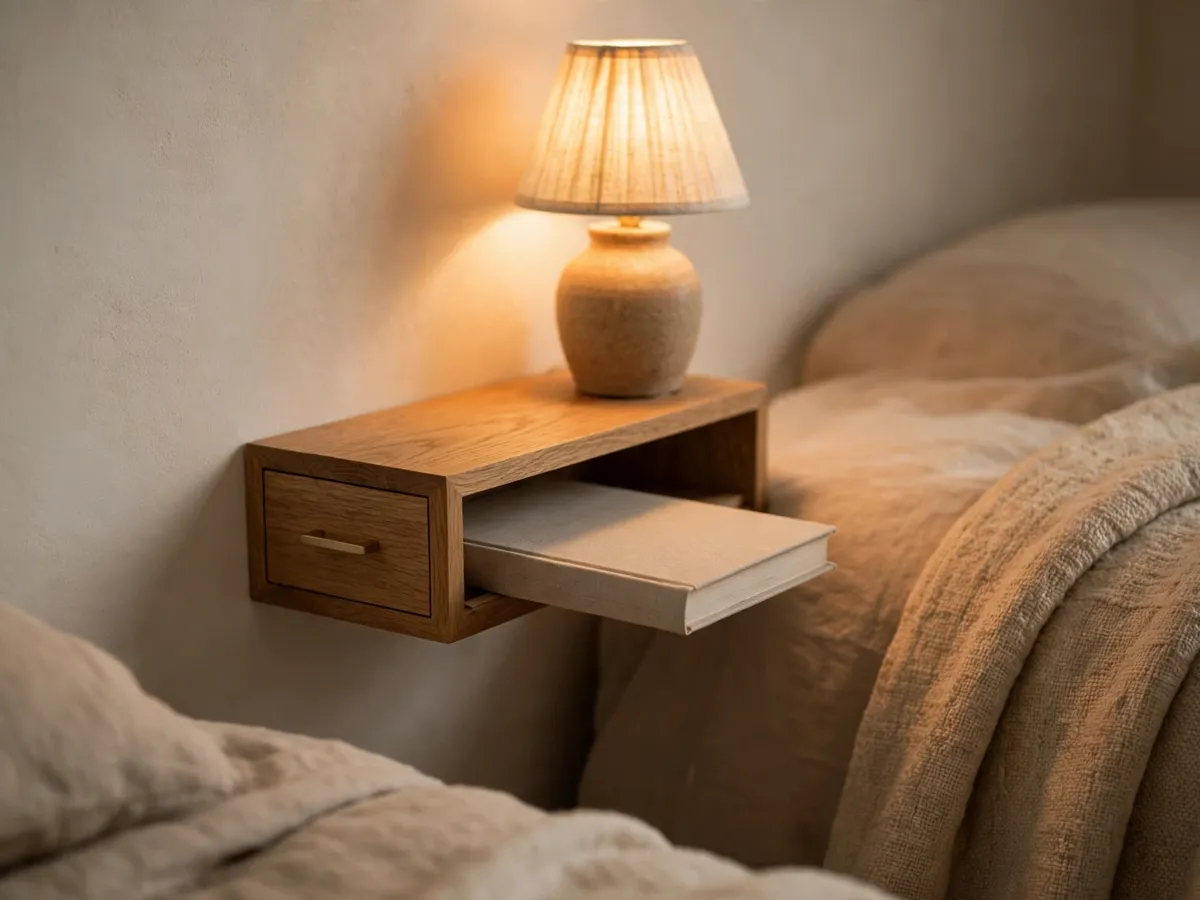
The wall shelf is the first: a shallow shelf at mattress height, one bracket pair, and it takes a lamp, a book and a glass without touching the floor. The floating drawer is the second, and it is the one that replaces the drawer the room lost — a single wall-hung box, twelve inches deep, with the bedside things inside and the lamp on top. The stool or the narrow side table is the third: freestanding, no fixing, and it slides under the bed frame when the room needs the floor back. Which one you pick depends on the gap and on whether the wall behind is drywall you can put two small anchors into. The no-drill versions and their honest weight ratings are in the renter wall guide.
Cost: $20–$60 for the shelf, $30–$90 for the floating drawer, $20–$50 for the stool. Time: twenty minutes to an hour.
3. The top sits level with the mattress, not the headboard
The height that works is the mattress height, because that is where the hand reaches without looking. A nightstand level with the top of the headboard is the one that makes the lamp a stretch, and a nightstand below the mattress is the one the glass falls off. Measure the mattress top, add nothing, and mount the shelf or pick the table to that line — it is the single measurement that decides whether the piece is used or merely owned. The same reach logic sets the wall light above it, which is in the warm lighting guide, and the two want to be planned together.
Cost: $0 to measure. Time: five minutes, and the height is the number you write on the tape.
4. Three things on top, and the cord out of sight
A nightstand is a small surface with a large appetite, and the pile of chargers, receipts and half-empty glasses is what turns it into a shelf nobody wants to look at. Three things is the count: the lamp, the book, the water. Everything else lives in the drawer or on the wall — the phone charges from a socket behind the shelf, the cable clipped to the leg, and the reading glasses in the drawer rather than on the top. The cord is the detail that decides whether the corner looks finished: a ten-dollar clip and a velcro tie do more than a new table. The surface rule is the same one the studio storage guide runs on every horizontal surface in the apartment.
Cost: $5–$15 for a clip and a tie. Time: fifteen minutes, and the corner reads as designed.
What we would skip
Skip the matched pair, because the far side of the bed does not need a table and the symmetry costs the walkway. Skip the deep eighteen-inch table in a twelve-inch gap, because it is the piece that blocks the closet door for two years. Skip the nightstand with the built-in charging station and the speaker and the drawer light, because the electronics are what fail first. The one thing worth the money is the floating drawer, because it replaces the storage the small bedroom does not have instead of only holding a lamp.
Cost: $0. Time: the decisions that keep the walkway clear.
Honest costs: where the money actually goes
Reuse-only route: $0, one afternoon, and the stool from the kitchen becomes the nightstand once it is the right height, because the height and the width are the whole job. Add the wall shelf for $20–$60 or the floating drawer for $30–$90, the small lamp for $10–$30 and the clip and tie for $5–$15, and both sides of the bed are finished for about $35–$135. A secondhand narrow table is the one spend that quietly does the job, and the drawer is the piece that buys back the storage.
Cost: $20–$90 for the side that matters. Time: one afternoon, and the test is reaching the lamp in the dark.
Before you order: copy this
- The gap beside the bed measured, and the walkway measured too
- A shape that fits the gap: shelf, floating drawer or stool
- The top level with the mattress, not the headboard
- Three things on the surface: lamp, book, water
- The charging cable clipped and tied, out of sight
Cost: $0 to check. Time: fifteen minutes, before the first order.
Questions renters ask
What can I use instead of a nightstand in a tiny bedroom?
A wall shelf at mattress height, a single wall-hung drawer, or a narrow stool that slides under the bed frame. All three do the job a table does — a surface within reach — and two of them do not take any floor at all.
How narrow can a nightstand be?
Eight to twelve inches deep is enough for a lamp, a book and a glass, and that is the depth most small bedrooms can actually give. The standard eighteen-inch table is the one that does not fit, which is why the shelf and the floating drawer exist.
How high should a nightstand be?
Level with the top of the mattress. That is where the hand reaches in the dark without looking, and the headboard height is the one that makes the lamp a stretch every night.
Do I need a nightstand on both sides of the bed?
Only if both sides have floor. In a small bedroom the far side is usually the wall side, and a table there is the piece that blocks the walkway. One honest nightstand on the side you get out of is enough.
Save these on Pinterest
Pin the gap-measurement step first, because it is the number that decides which shape fits. The walkway math is in the bedroom layout guide, and the no-drill versions with their weight ratings are in the renter wall guide. Both sit in the Small Room Decor collection for the next gap you furnish.