 Plant As Deco
Small Room Decor
Small Living Room Boho Ideas: Warm Layers Without the Mess
By Plant As Deco · Updated 14 November 2026
Boho in a small living room fails for one reason: the look runs on texture, and people buy quantity instead. The room fills with lanterns, tassels, a pile of cushions and three plants on the same shelf, and what the photo promised as relaxed reads in person as crowded. The version that works keeps the same warm ingredients — woven texture, earth color, one living green thing — and caps them at a number the floor plan can carry. This is that version: three textile layers, one wall move, one plant and the two rules that stop it becoming a jumble sale.
Weekend-ready: $60–$350, one weekend. Nothing fixed to the walls — renter-safe throughout.
1. Boho in a small room is texture, not quantity
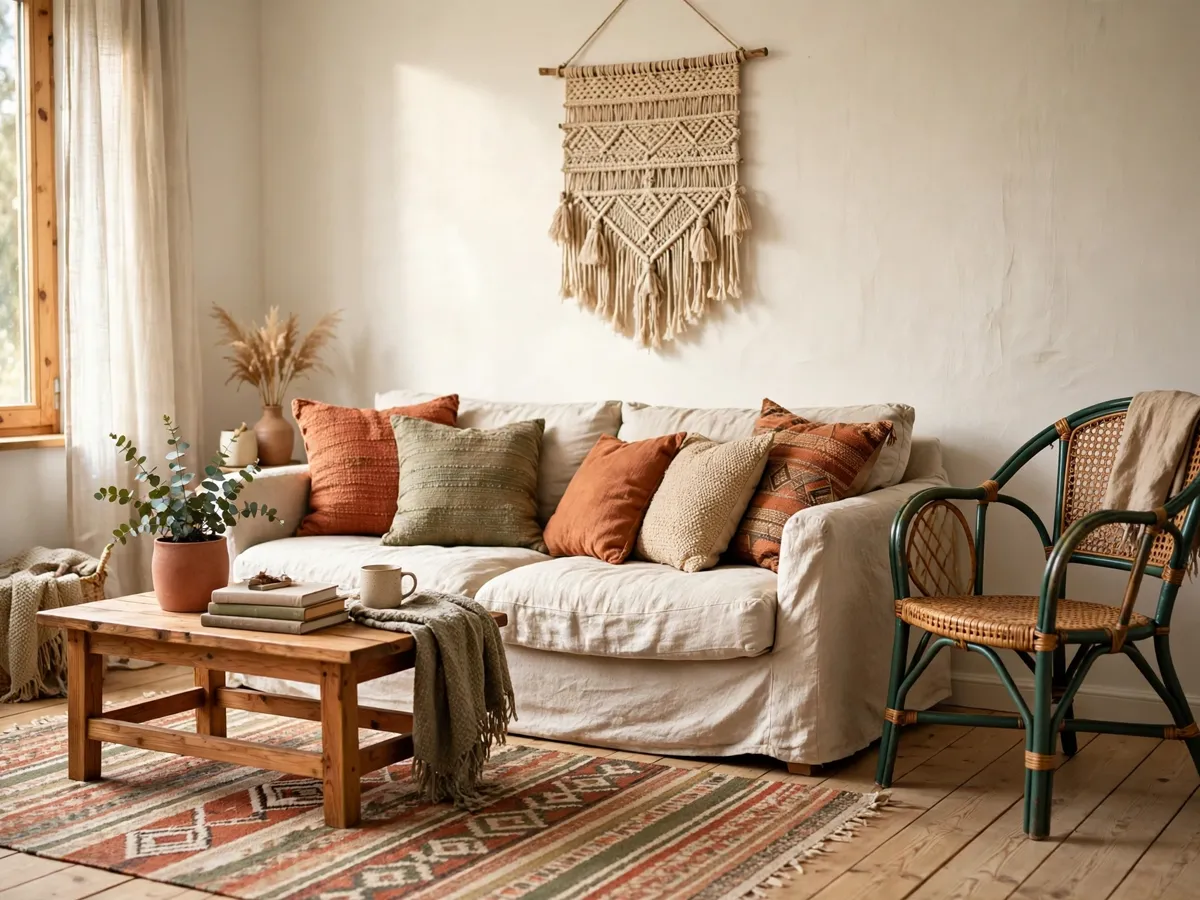
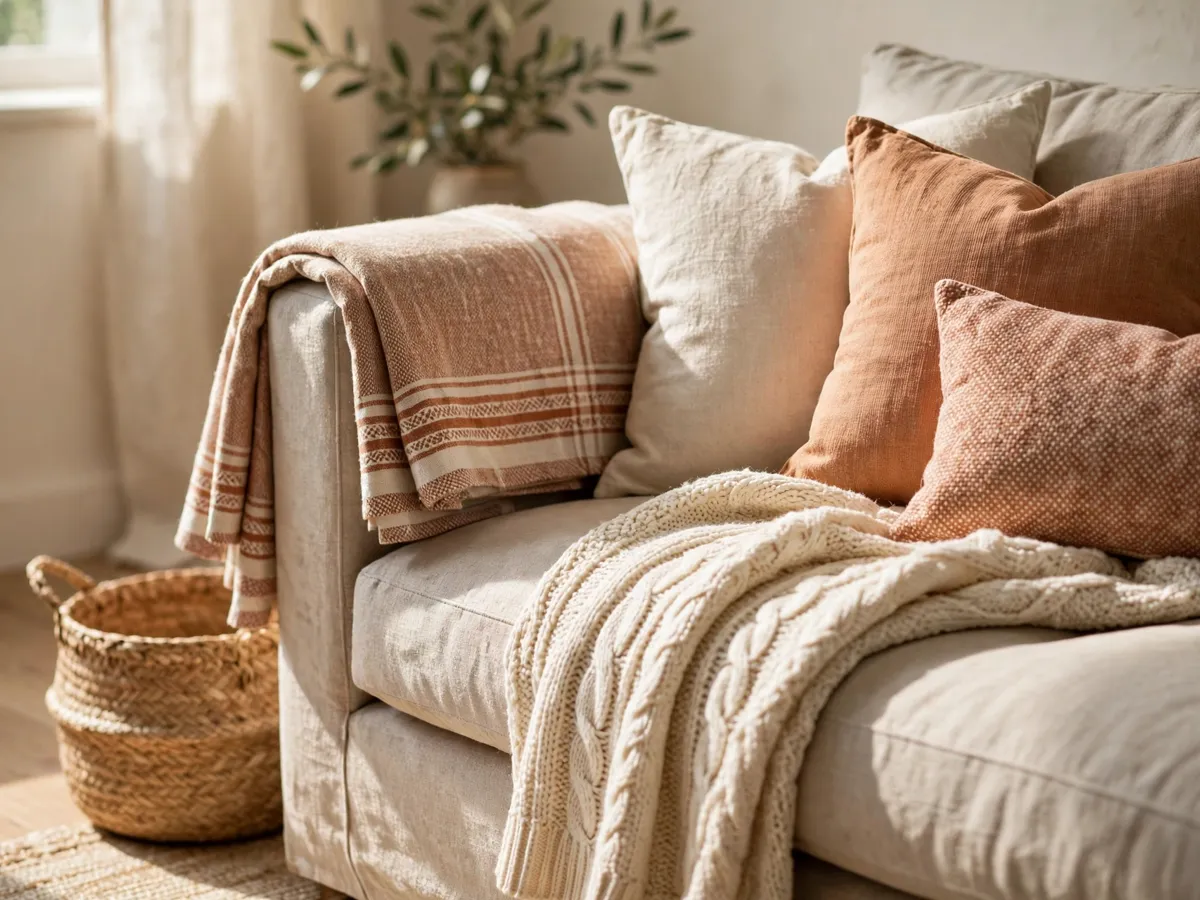
The whole look rests on three textile layers, and each one works a different level of the room. The rug is the base: a flatweave in jute or wool, thin enough that the door still clears it and the sofa legs still sit on the floor, which is the detail that keeps a small room honest about its own footprint. The throw is the middle layer, a woven or chunky knit draped at the arm where the hand lands, because a throw folded into a decoration is a texture nobody touches and the room reads it as such. The cushions are the top layer, and they mix deliberately: two sizes, three at most, one in each of the room's main colors and one patterned, so the sofa reads as relaxed rather than stocked. The full layering method, from fabric weights to the fold that makes a $20 throw look intentional, is in the fabric layers guide.
The color that holds those layers together is the 60-30-10 split in earth tones: roughly sixty percent of the visible fabric in one base — cream, oat or sand — thirty percent in the warm middle, terracotta or rust, and ten percent left for the dark accent, a deep green or a charcoal, which usually lands on one cushion and the plant pot. The split is what stops layered texture turning muddy, because the eye has a clear base to rest on and only two places to look for interest. Measure it loosely against what you can see from the doorway: sofa, rug, throw, cushions and curtains count; the floor under the rug does not.
Cost: $60–$180 for rug, throw and a set of covers. Time: an afternoon, with the sofa pulled forward once to seat the rug.
2. The wall gets one move, and the chair does the rest
Pick one wall statement, never two. A single macramé piece hung where the eye lands from the doorway is the classic choice, and it earns its place by filling a bare wall with texture that no print can supply. The alternative is a sparse gallery of frames in matching thin wood, four to five pieces at most with real breathing room between them, which suits a room whose textiles are already busy. Running both on opposite walls doubles the visual noise and the room reads smaller, because every surface is asking for attention at once. The spacing rules that keep a small gallery airy rather than packed are in the gallery wall guide.
The seating swap does the quiet work. Replace a second sofa or a bulky armchair with one rattan or cane chair — woven seats are mostly air, so they add the boho texture a solid upholstered box cannot, while taking up less of the eye and about the same floor. One is the ceiling; two cane chairs plus a sofa starts to read as a café. The chair is also the honest place to save, because secondhand cane seats get re-webbed for a few dollars and outlast most new flat-pack upholstery.
Cost: $30–$120 for the wall piece or $60–$150 for the chair; pick one route per wall. Time: a weekend afternoon, plus an hour to hang and step back.
3. One tall plant, and baskets instead of shelves
A boho room needs exactly one tall living thing, and in a small room that is a monstera or a snake plant standing between the sofa and the window, where it fills the vertical corner nothing else can reach. That single plant is the whole living layer. The room that collects a monstera, two trailing pothos, a shelf of small pots and a hanging basket is the room that reads as a nursery, and in fifteen square meters of floor the green competes with the textiles instead of resting against them. The plant choices that survive the light a small apartment actually gets are covered in the cozy living room aesthetic guide.
The boho storage move is the basket, and it is the one that earns its floor space twice: a seagrass or jute basket holds the throw when it comes off the arm, the controller, the charging cable, the paperback, and it does it as texture rather than as plastic. Two baskets is a room's worth — one by the sofa, one by the TV or the door. The third basket is the one that starts the pile.
Cost: $25–$70 for the plant and pot, $10–$30 a basket. Time: half an hour to place, and the corner is done.
4. The rules that stop boho tipping into a pit
Boho goes wrong on the flat surfaces first, so that is where the rules sit. Every surface — coffee table, shelf, TV unit — carries at most two items, and those two items work as a pair: a candle plus a small bowl, a stack of two books plus the tray that gathers them. The moment a third object arrives the surface reads as storage rather than styling, and in a small room there is no distance for the eye to blur it. The tray is the piece that quietly enforces the rule, because it draws a border the objects respect.
The basket is the trestle the room runs on: everything that lands on a surface has a basket it belongs to, so the five-minute reset at night is a sweep of the arm, not a hunt for homes. Run that reset every evening for a week and it holds — the room returns to its styled state each morning instead of drifting, which is the practical difference between a room that photographs boho once and a room that lives it. The wider renter system, from the entryway tray to the door-side basket, is in the apartment decor guide.
Cost: $0 for the rules, $15–$40 for the tray that enforces them. Time: five minutes a night, and the room holds.
What we would skip
Skip the five stacked rugs, because two rugs on one small floor is a trip edge and a visual argument; one flatweave carries the whole base layer. Skip the fairy lights around the window frame when a macramé already hangs in the room — the two together are the boho cliché that dates fastest, and warm lamps do the job better anyway. Skip the yellow plastic-mesh "rattan" storage cubes, which read as rattan in exactly no light and crack within a season; real seagrass baskets cost a few dollars more and last years. Skip the shelf of essential-oil bottles and tumbled stones: that is the surface rule broken by the bagful, and it is the single fastest way a boho room starts to read as a stall.
Cost: $0. Time: the decisions that keep the floor to one rug and the surfaces to two items.
Honest costs: where the money actually goes
Move-only route: $0, one afternoon, and the room reads warmer the moment the surfaces drop to two items each and the third plant leaves — most rooms already own more boho than they can display. The honest middle route is the $60–$180 layer: a flatweave rug, a woven throw and covers for the cushions you already have, bought over a month or two rather than in one order. The full route adds the one wall piece or the one cane chair and lands at $150–$350, and it is finished — boho does not keep accreting once the layers are set, because the count rules cap it. Secondhand is the boho budget's best friend: cane chairs, woven baskets and wool rugs are all pieces that were made to outlast their first room, and the price difference buys the rest of the layer.
Cost: $60–$350 all-in. Time: one weekend to set it, then five minutes a night to keep it.
Before you buy anything: copy this
- Three textile layers: flatweave rug, woven throw, mixed cushions
- 60-30-10 in earth tones — cream base, terracotta middle, one dark green accent
- One wall move only: a macramé or a sparse gallery, never both
- One tall plant in the corner, two baskets on the floor
- Two items per surface, one tray, and the five-minute reset every night
Cost: $0 to check. Time: 15 minutes, before the first order.
Questions renters ask
What is boho decor, in one sentence?
A layered mix of natural textures — woven, rattan, linen, jute — in warm earth colors with one live plant, built on a relaxed, collected-over-time feel rather than a matched set.
Does boho work in a small living room?
Yes, and often better than a minimal look, because a small room's coziness is texture working in its favor. The catch is the count: three textile layers instead of five, one tall plant instead of a shelf of them, and two items per surface. The floor plan sets the ceiling, not the style.
Where do I find boho pieces cheap?
Secondhand first: woven baskets, cane chairs and wool rugs show up constantly at thrift stores and online listings, and they were made to survive their first owner. Cushion covers are the cheapest refresh — a set of earth-tone covers re-dresses cushions you already own for a fraction of new ones. What costs more than it is worth is the flat-pack "rattan" and the printed mandala tapestry from a big-box aisle.
How do I keep boho from turning into a mess?
Two rules: every surface holds at most two items, and everything loose has a basket it belongs to. Then run the five-minute reset each evening — throw to its basket, surfaces back to their pair. The style reads relaxed, not neglected, for exactly as long as that reset holds.
Save these on Pinterest
Pin the three-layer step first, because it is the move the whole room wears. The spacing rules for a sparse gallery are in the gallery wall guide, the layering method behind the rug, throw and cushions is in the fabric layers guide, and the wider small-living-room plan these pieces sit in is the small living room guide. All of them sit in the Small Room Decor collection for the next room you warm.