 Plant As Deco
Small Room Decor
Coffee Table Alternatives for a Small Living Room
By Plant As Deco · Updated 14 November 2026
The coffee table is the piece most small living rooms would be better without, and nobody says it out loud because the room looks unfinished without one. What the room actually needs is a surface at knee height for a mug and a book — not a slab in the middle of the only walkway. The alternatives do that job and move out of the way: the ottoman with a tray, the nesting pair that splits apart, the bench against the wall. That is the whole swap, and it usually costs less than the table it replaces.
Weekend-ready: $0–$150, one afternoon. Rearranging and one new piece — renter-safe throughout.
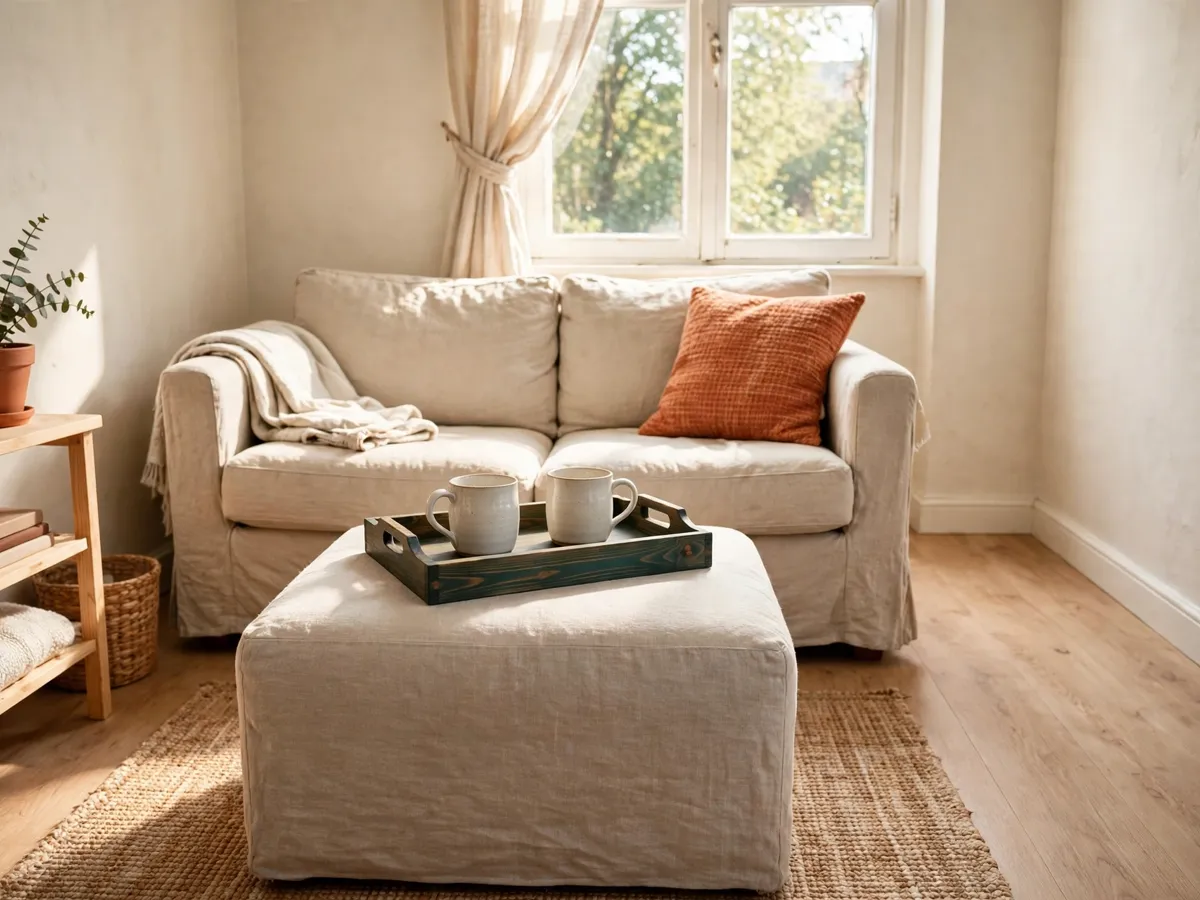
1. Find out what the table is actually costing you
Measure the gap between the front of the sofa and the coffee table, then between the table and whatever is opposite. A living room needs somewhere around eighteen inches to walk past a seat and about fourteen to sit down without turning sideways, and a standard coffee table takes twenty to twenty-four inches of depth out of the middle of the room before anyone has walked past it. In a small room that table is often the reason the seating has to be pushed against a wall. Measure it before you shop, because the answer changes which alternative you need — the ottoman if you want a surface, the nesting pair if the middle has to be empty most of the day. The walkway math for the rest of the room is in the living room layout guide.
Cost: $0. Time: ten minutes with the tape, and the number decides everything after it.
2. The upholstered ottoman, with a tray on top
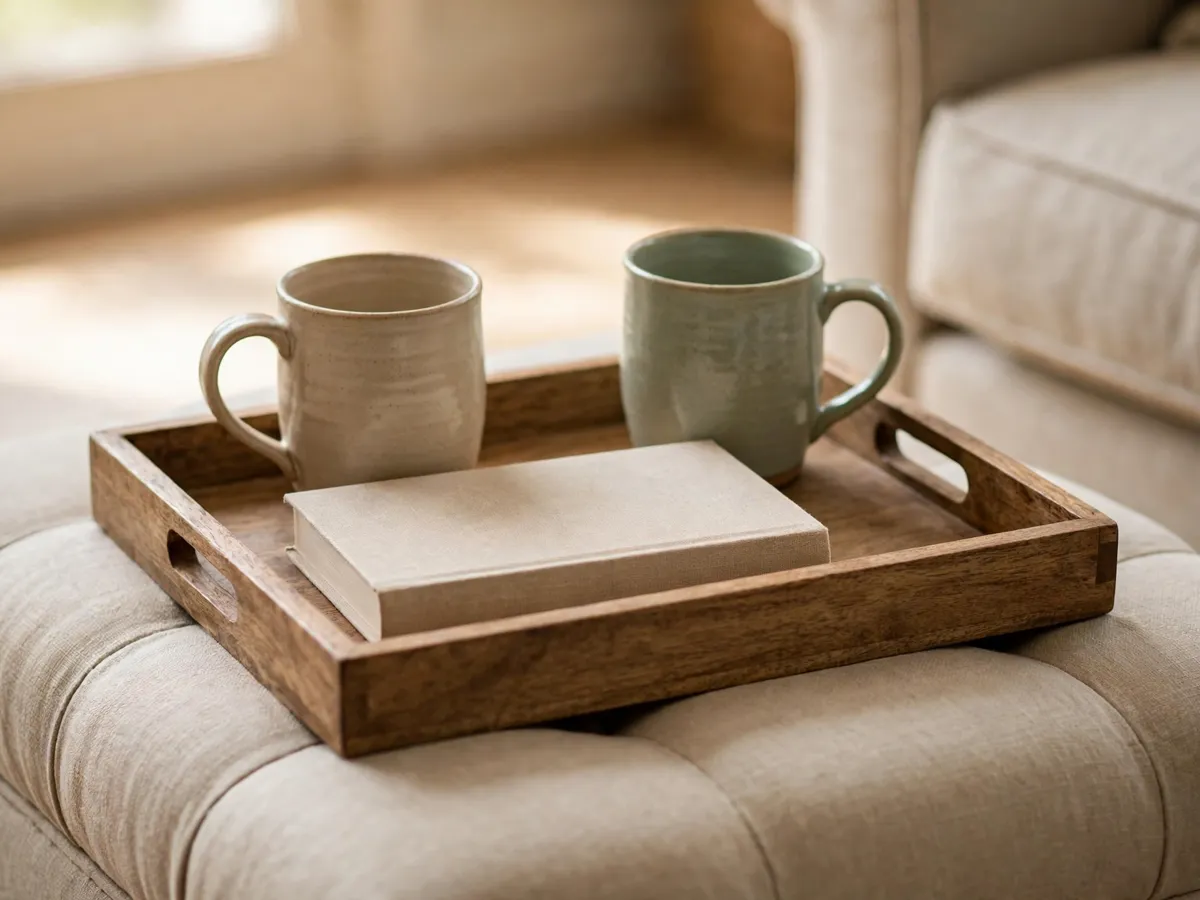
The ottoman is the alternative that keeps the room looking finished, because it is the same footprint as the table it replaces and it does three jobs instead of one: it holds a tray of mugs, it is a place to put your feet up, and it becomes extra seating when four people arrive. Look for one at seat height — around seventeen to eighteen inches — with a flat, firm top, so the tray does not tip when someone sits on the edge. The tray is the conversion kit: one with a small lip and a felt underside, wide enough for two mugs and a remote, and everything that used to be spread across the table lives on it. What the ottoman does not do is hide clutter, so the tray is not optional. The fabric choice follows the same rules as the rest of the soft pieces in the fabric layers guide.
Cost: $80–$150 for a flat-top ottoman, $15–$35 for a tray. Time: twenty minutes to place, and the room gains a footrest and a spare seat.
3. The nesting pair: a table that disappears
If the room genuinely has no middle, the nesting pair is the honest answer. Two small tables, one slightly smaller, that slide together into a single narrow stack; apart, one is a side table by the arm of the sofa and the other is the coffee table for the evening, and together they hold a tray the size of a small table. The trick is to buy them narrow — fourteen to sixteen inches across — so the stacked pair fits beside the sofa rather than in front of it. The same idea at a smaller scale is the side table that tucks under the arm, and the small living room decor guide treats those as the pair that does the work of a table without the footprint. A nesting pair is also the piece that survives a move, because two small tables fit in any room the next apartment turns out to be.
Cost: $40–$120 for a pair. Time: fifteen minutes to place, and the middle of the room stays empty on weekdays.
4. The bench or the long low stool, set off the centre line
A narrow bench along the back of the sofa or against the wall behind the seating does the surface job without occupying the middle: it holds the lamp, the stack of books, the plant, and it reads as a console rather than a table nobody can pass. The long low stool is the same idea at knee height and moves wherever it is needed — beside the sofa for a plate, in front of the window for a coffee, back against the wall when the room needs the floor. Both are the pieces that make a small living room work when the room is also the dining room and the office, and both are cheaper than a decent coffee table. The one rule is width: keep the bench shallower than twelve inches so it never becomes the thing you walk around.
Cost: $50–$130 for a slim bench, $25–$60 for a long stool. Time: twenty minutes, and the walkway is clear all day.
What we would skip
Skip the glass top, because in a small room the edges are at shin height and the glass shows every fingerprint. Skip the storage chest with the hinged lid in the middle of the room, because you cannot open it with a tray on it and nobody ever does. Skip the oversized square table that matches the sofa, because the size is what the room cannot give. The one thing worth the money is the ottoman with the flat top, because it replaces the table and the footstool instead of adding to them.
Cost: $0. Time: the decisions that keep the middle of the room walkable.
Honest costs: where the money actually goes
Remove-only route: $0, one afternoon, and the room reads bigger the moment the table is gone — a stool from another room and a tray on the ottoman-from-the-bedroom cover the surface job while you decide. Add the flat-top ottoman for $80–$150, the tray for $15–$35, or the nesting pair for $40–$120, and the room is finished for about $55–$185. A secondhand ottoman with a firm top is the one spend that quietly does the whole seating area, and the tray is the piece that turns it into a table.
Cost: $0–$150 for the swap. Time: one afternoon, and the test is walking from the door to the window without turning sideways.
Before you move the table out: copy this
- The gap in front of the sofa measured, and the one opposite
- An ottoman at seat height with a flat, firm top
- A tray with a lip that lives on it, not a bare surface
- Nesting tables narrow enough to stack beside the sofa
- Any bench kept under twelve inches deep
Cost: $0 to check. Time: fifteen minutes, before the first order.
Questions renters ask
What can I use instead of a coffee table in a small living room?
An upholstered ottoman with a tray is the closest match, because it keeps the footprint and adds a footrest and a spare seat. A nesting pair of narrow tables is the version that disappears when the room needs the floor, and a slim bench or a long low stool set off the centre line does the surface job without blocking the walkway.
Can a small living room work with no coffee table at all?
Yes, and it often works better. Two side tables at the arms of the sofa hold the mugs and the book, and the middle of the room stays clear. The room only reads unfinished for about a week; after that the floor space is what you notice.
How much space should be between the sofa and the coffee table?
Around eighteen inches to walk past and about fourteen to sit down without turning sideways. If the room cannot give that, the table is the piece that has to go, not the sofa — the walkway is the thing that makes the room usable.
What height should an ottoman be if I use it as a table?
Seat height, about seventeen to eighteen inches, with a flat top rather than a tufted one. That is high enough to reach from the sofa and low enough that the room still reads as a seating area, and the flat top is what keeps the tray level.
Save these on Pinterest
Pin the measurement step first, because it is the number that decides whether the table leaves the room. The walkway math is in the living room layout guide, and the soft pieces around the new ottoman are in the fabric layers guide. Both sit in the Small Room Decor collection for the next piece you move out.