 Plant As Deco
Small Room Decor
Accent Wall Ideas for a Small Bedroom: One Wall, One Color
By Plant As Deco · Updated 14 November 2026
An accent wall is the cheapest change in a small bedroom and the one most often done backwards: the color goes on the wall behind the door, the tone is dark enough to swallow the room, and the paint is the kind that cannot come off at move-out. The version that works is narrower than the tutorials suggest — one wall, the one the bed already faces, a tone close enough to the other three to stay in the same family, and a method that peels away in an hour. That is the whole job, and it costs one can or one roll.
Weekend-ready: $25–$120, one afternoon. Paint, decal or peel-and-stick panel — renter-safe throughout.
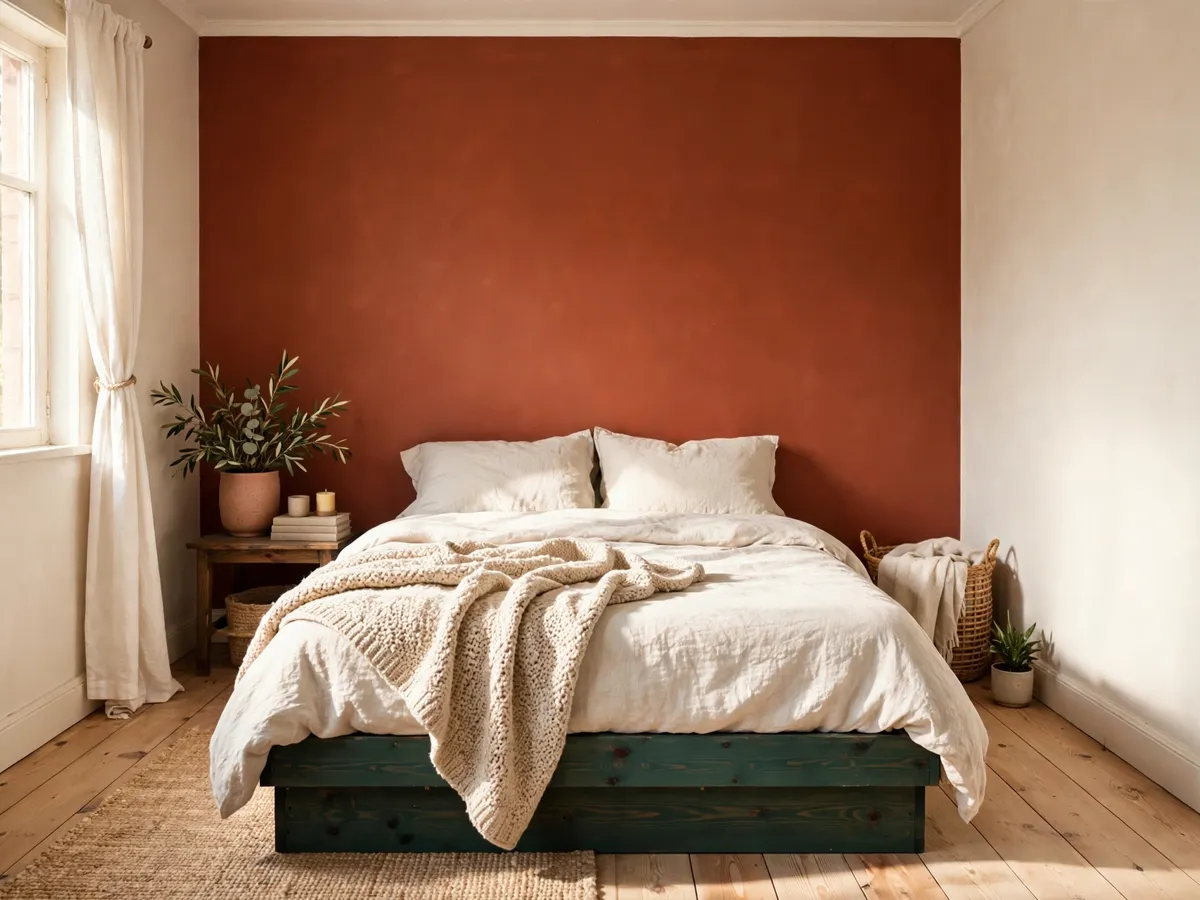
1. The wall behind the bed, because the headboard already anchors it
The accent wall goes where the room already looks: the wall the bed faces when you walk in. That wall has the headboard against it, the nightstands beside it and the pillows in front of it, so the color is framed by furniture instead of floating alone. The wall behind the door is the usual mistake — the door covers half of it, nobody faces it, and the color reads as a stripe in the corner. The wall with the window is the second mistake, because the light eats the color and the curtain covers the rest. One wall, the head wall, and the other three stay the warm neutral they already are. The same one-wall logic runs the gallery wall guide, where the wall is chosen before anything hangs on it.
Cost: $0 to choose. Time: ten minutes standing in the doorway, looking at what the eye lands on first.
2. The tone is one step deeper, not one world away
The accent that shrinks a small bedroom is the one that belongs to a different family: a near-black navy on a cream room, a saturated green under a warm white. The accent that works is one or two steps deeper on the same warm scale — the wall color in its evening version. A cream wall gets a soft clay or a muted olive; a greige wall gets a deep terracotta or a warm charcoal with brown in it. The reason is proportion: a small room reads as one thing, and a color from the same family keeps it reading as one thing while a foreign tone cuts it in half. The warm neutrals that hold up in bedroom light are in the cozy paint colors guide, and the accent is one of them, deeper.
Cost: $5–$10 for a sample pot. Time: three days of living with the swatch on the wall before the can.
3. Three renter methods, and how each one comes off
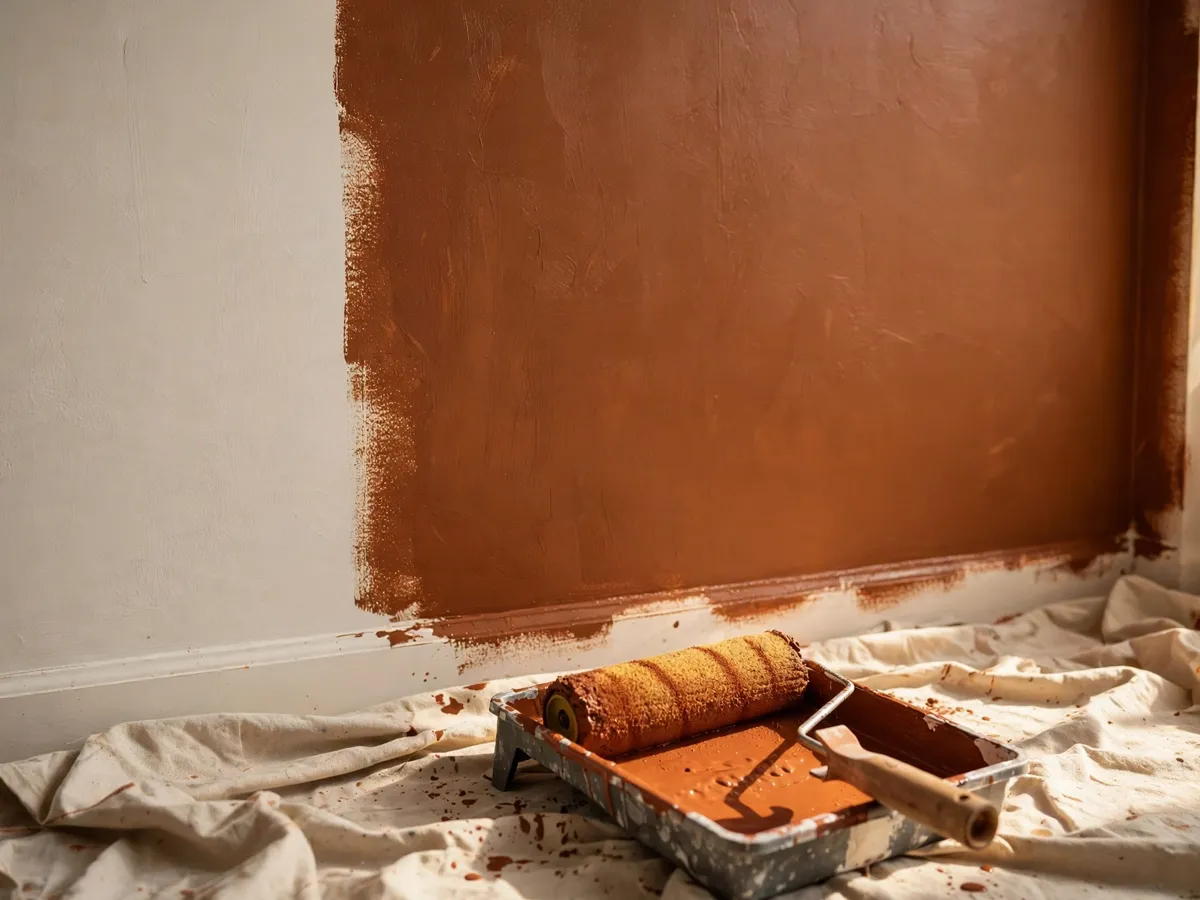
Painting is the best finish and the worst rental risk, so the honest order is: ask first, and if the answer is no, there are three methods that come off. The peel-and-stick panel is the closest thing to paint — a matte adhesive sheet cut to the wall, no pattern, one color — and it removes clean on a cured wall, which is the same seven-day scrap test the wallpaper guide describes. The decal or the large-format wall sticker is the second: cheaper, easier, and the one that reads as a decal if the shape is fussy, so a single big arch or a plain block beats a quote. The third is the fabric panel — a length of linen or a tapestry hung from a tension rail at the ceiling — which is the softest version and the one that needs the steamer most. All three come off in an hour with no more than a cloth and a hairdryer on low.
Cost: $25–$70 for a peel-and-stick panel, $15–$40 for a decal, $20–$50 for the fabric. Time: one afternoon per method.
4. Keep everything else quiet, and the wall does the talking
The accent wall fails when the rest of the room answers it. A deep wall plus a patterned duvet plus two art prints plus a colored rug is four voices in a room that has space for one, and the wall stops being an accent and becomes the loudest thing in a loud room. The rule is subtraction: one accent wall, bedding in the room's base color, art kept to one piece or none on the accent wall itself, and the accent repeated once — a cushion, a throw — so the color has an echo. The bed that sits against the wall is the piece that sets the tone, and the bedroom aesthetic guide keeps the same restraint on the other three walls.
Cost: $0 to subtract. Time: twenty minutes taking the extra pieces down, and the room reads bigger.
What we would skip
Skip the near-black wall, because it makes a small bedroom read as a corridor with a bed in it — and it shows every mark the headboard leaves. Skip the second accent, because two colored walls in a small room is a scheme the room cannot carry. Skip the gallery of prints on the accent wall, because the color is the decoration and the frames are the noise. The one thing worth the money is the sample pot, because three days of living with the swatch is what stops a wall from being repainted twice.
Cost: $0. Time: the decisions that keep the room at one accent.
Honest costs: where the money actually goes
Decal route: $15–$40 for one big shape, one afternoon, and the wall reads as a color block from the doorway. Add the sample pot for $5–$10 and the peel-and-stick panel for $25–$70 and the same wall is a paint-grade finish for about $30–$80. The real paint is the $25–$50 can plus a roller and tape, and it is the only option that needs the landlord first. Whatever the method, budget the cloth and the hairdryer for removal day, and keep the offcut in a drawer — it is the patch kit for the mark the headboard makes.
Cost: $25–$120 for the whole wall, method depending. Time: one afternoon, and the test is the wall from the doorway with the lamps off.
Before you buy the can: copy this
- The wall behind the bed, never the wall behind the door
- A tone one or two steps deeper on the same warm scale
- The sample pot lived with for three days before the can
- A renter method that comes off: panel, decal or fabric
- The other three walls and the bedding kept quiet
Cost: $0 to check. Time: fifteen minutes, before the first order.
Questions renters ask
Which wall should be the accent wall in a small bedroom?
The wall behind the bed, because the headboard, the nightstands and the pillows already frame it. The wall behind the door is covered half the time and nobody faces it, and the window wall loses the color to the light and the curtain.
Does an accent wall make a small bedroom look smaller?
A dark one from another color family does. One wall in a tone one or two steps deeper on the same warm scale makes the room read deeper instead of narrower, because the eye gets a direction to follow rather than a box to sit in.
Can I do an accent wall without painting?
Yes: a plain peel-and-stick panel in a matte solid color is the closest finish to paint, and a single large decal or a fabric panel hung from a tension rail are the cheaper two. All three come off in about an hour on a cured wall.
What color accent wall works with a beige rental?
Stay on the warm scale: a soft clay, a muted olive, a deep terracotta, a warm charcoal with brown in it. The beige is already the base, so the accent is its deeper version — and the cool greys and the saturated blues are the ones that fight it.
Save these on Pinterest
Pin the which-wall step first, because it is the decision that makes the color read as a wall instead of a stripe. The hanging methods that come off clean are in the renter wall guide, and the paper version of the same wall is in the wallpaper guide. Both sit in the Small Room Decor collection for the next wall you color.