 Plant As Deco
Small Room Decor
Console Table Ideas for Small Spaces: The Hardest-Working Narrow Piece
By Plant As Deco · Updated 14 November 2026
A console table is the only piece of furniture that buys you a surface without buying you a footprint. Twelve to sixteen inches deep, up against a wall or a sofa back, it holds a lamp, a tray for keys and a place for the mail, and it does it in the sliver of space no other furniture wants. The hallway is where most people meet this piece first — keys, mail, a place for the bag — and the full narrow-hallway plan, including the drop-zone setup, lives in the hallway guide. This page is about the piece itself: which depth and height to shop for, the four places it earns its keep, how to style the top so it calms the room rather than cluttering it, and the no-drilling version for rentals.
Weekend-ready: $60–$250, one afternoon to shop and style. Freestanding and wall-leaning — renter-safe throughout.
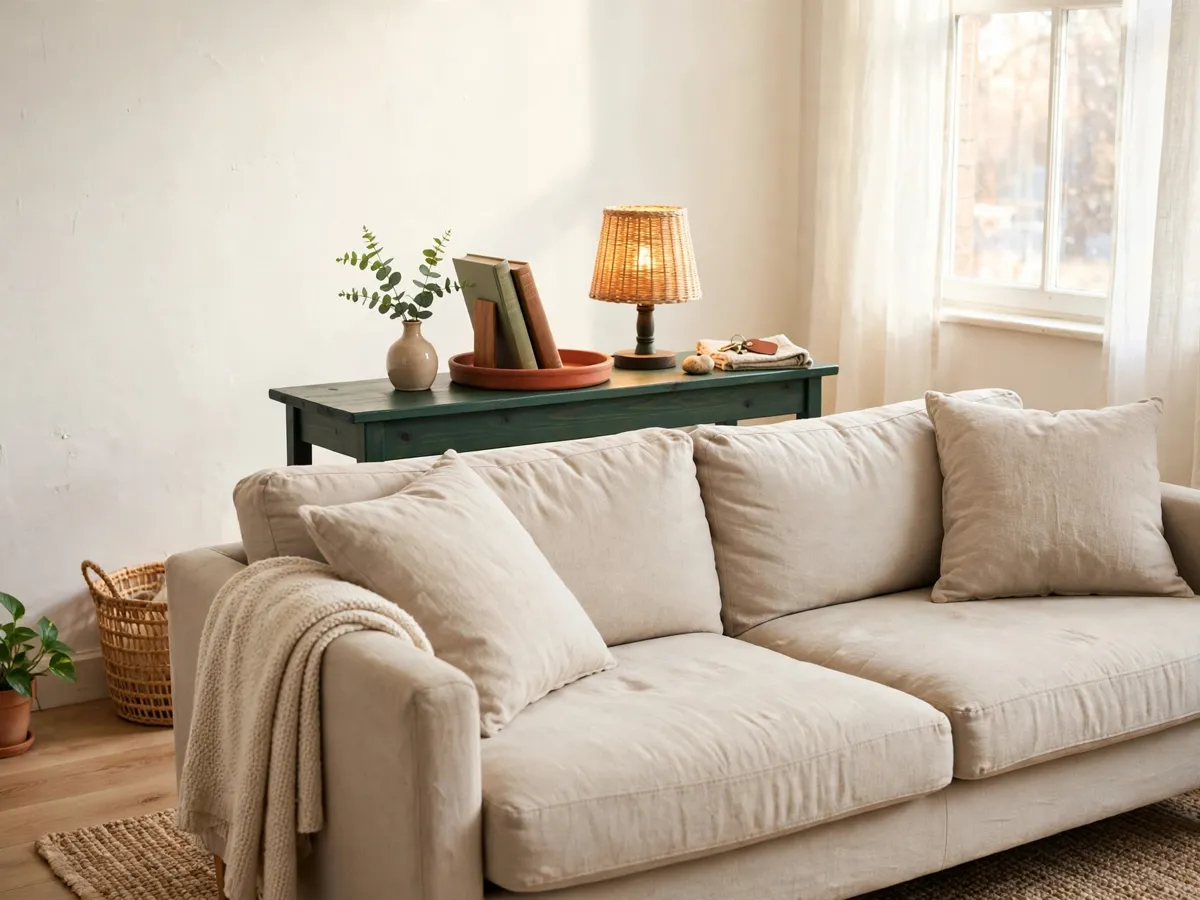
1. Shop by the spot, not by the picture
Every console decision starts with where it is going, because the measurements that make one work are the measurements of the gap it lives in. The all-purpose depth is twelve to sixteen inches: enough for a lamp with a shade, a book stack and a coffee cup, and shallow enough to sit behind a sofa or along a walking lane without claiming it. A tight hallway or the gap between a door swing and a wall wants ten to twelve inches — and at that depth, the piece becomes a landing strip for keys and glasses rather than a display surface, which is fine, because that is the honest job in a hall. Height follows the same logic. Behind a sofa, the console top wants to sit level with the sofa back, twenty-eight to thirty-two inches in most rooms, so the table and the sofa read as one line from across the room; a head-high console behind a low sofa looks like a fence. Along a plain wall, thirty inches is the comfortable number — counter height, reachable without stooping. Weight matters as much as size in a small space. A metal frame with a glass top, or thin-profile wood, reads as almost nothing from across the room, which keeps a narrow room breathing; a solid-wood slab table the same size reads as a cabinet, and in a third-floor walk-up it is also a two-person carry up every stair.
Cost: $60–$250 depending on material. Time: fifteen minutes of measuring, gap and walking lane included.
2. The four spots where it works hardest
Behind the sofa is the classic, and in a small living room it is the move that turns the dead back of the couch into useful furniture: a lamp that lights the seating without a floor cord, a tray for the remotes, a drink ledge for movie nights. Height at the sofa back, depth at sixteen inches or less, and the sofa can sit two inches off the wall with the console filling the gap behind it. The second spot is the standing desk. A forty-inch console against a wall at thirty inches tall takes a laptop, a low task lamp and a stool that slides under it at the end of the day — a work spot that disappears on weekends by clearing the top, which is the whole argument for it over a desk in a one-bedroom. Third, behind the front door. When the door opens inward, the wall it swings past is the most underused surface in the apartment; a ten-to-twelve-inch console there catches keys, outgoing mail and the phone that is always missing, and the door's swing arc sets the depth limit. Fourth, the vanity version: a slim console in a bedroom corner with a small mirror above it and one drawer of grooming things, which gives a bedroom a getting-ready spot without a full vanity's footprint. In all four spots the same rule keeps it friendly: the table touching the wall or the sofa back, and nothing loose perched where a passing hip can catch it.
Cost: $60–$250 for the table itself. Time: one afternoon to place, level and style.
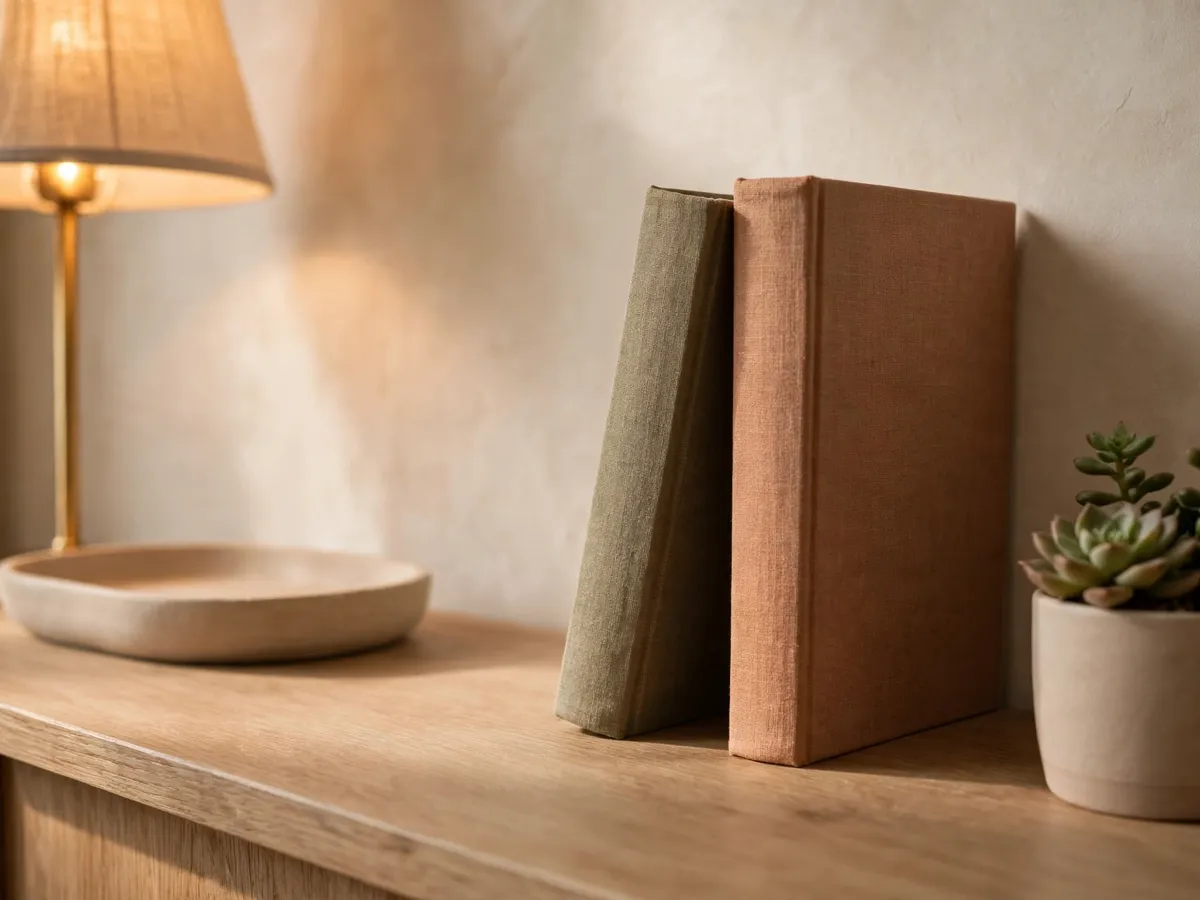
3. The top: one formula, four objects
A console top is small, which makes it easy to style and easier to overfill, and the difference between the two is one formula. Start with a lamp — one, tall enough to read as a lamp rather than a candle, because it gives the arrangement its height and the corner its evening light. Add one low thing: a tray, a wide bowl, a shallow dish that catches keys, and give that object the practical job, because every surface in a small home should hold something you actually set down. Add one or two upright objects that lean or stack — two books resting against the wall, a leaning framed photo — these fill the middle height between the lamp and the tray. Finish with one small plant, which softens the hard edges of wood and metal. Four objects, odd numbers wherever there is a choice: three things on the tray, one book stack rather than two, because odd groupings read as arranged while even ones read as symmetrical and stiff. The last rule is the one that does the visual work: leave about sixty percent of the surface empty. A console with visible table around its objects looks deliberate and calm; the same table covered wall-to-wall looks like the storage the room does not have. When the top starts collecting the week's mail anyway, the honest fix is one bowl for the paper and a weekly clear-out rather than a bigger table.
Cost: $0 using things you already own; $20–$60 for a lamp and a tray. Time: twenty minutes, styled twice over one week.
4. The no-drill version for rentals
Nothing about a console needs a hole in the wall. Freestanding tables do the whole job, and a table that leans lightly against the wall is stable under its own weight. The two upgrades that make a freestanding piece safe in a home with kids or a busy lane: rubber pads under the legs, which stop sliding on hard floors for a few dollars, and a strap kit only if the piece genuinely wobbles. The cords are the real rental project, because a lamp on a console against a wall means a wire running down to the outlet — clip it along the back leg with adhesive cable clips, run it down the leg closest to the outlet, and the wire disappears into the silhouette of the table. A lamp with a long cord from a floor outlet beats an extension lead; if the outlet is under the table, the cord runs down one leg and nothing shows at eye level at all. Lighting without any outlet nearby is still possible: a small rechargeable lamp on the top, or a wall-wash from a floor lamp a few feet away, gives the corner light without a single fixture on the wall. For everything else that would usually be drilled — hooks, mirrors, shelves — the damage-free hardware options are collected in the no-drill wall guide, and the warm-light layer for the same corner is planned in the warm lighting guide.
Cost: $5–$15 in pads and clips. Time: thirty minutes with the table in place.
What we would skip
Skip the twenty-plus-inch console in a walking lane. Past twenty inches the piece is a desk or a sideboard wearing a console's name, and in a hall or behind a sofa it takes the first inch of the room every body brushes past. Skip real marble tops in an upper-floor apartment: marble slabs are heavy, stairs are stairs, and the visual payoff over wood or a marble-look top is small from across a room. Skip consoles with drawers that come down to the floor — the closed base kills the visible floor that makes a narrow room read open, and one basket underneath holds the same things while showing light beneath. And skip the floating shelf that hangs an inch off the wall: the gap looks like a mistake, reads as clutter from the doorway, and drops whatever is leaning on it the first time the shelf is bumped. The one spend worth making is a real lamp on the top, because a lit console corner changes a hallway at night more than any table upgrade.
Cost: $0 to skip. Time: the decisions that keep the lane clear every day.
Honest costs: where the money actually goes
The honest band for a console that lasts is $60–$250. At the low end, sixty to a hundred dollars buys simple wood and metal frames — light, narrow, and honest about what they are, which is exactly the brief for most apartments. The middle of the band, $100–$180, is where the solid-wood versions and the better hairpin and trestle frames live, and where the piece starts feeling like furniture rather than a stopgap. Above that, you are paying for material weight and finish, which a small space often does not need — a slim profile matters more than a heavy slab. Secondhand is the shortcut to the middle band at the low band's price. The add-ons are cheap: rubber pads at a few dollars, cable clips under five, a tray at $10–$20 and a good lamp at $25–$60, with the lighting plan and the wattage for a cozy corner spelled out in the warm lighting guide. Where the console sits behind the sofa and the sofa is doing the room-dividing work as well, the placement rules for the whole seating zone are in the open-plan guide.
Cost: $60–$250 total. Time: one afternoon to shop, place and style.
Before you click buy: copy this
- Gap measured, walking lane kept clear of the door swing and the daily path
- Twelve to sixteen inches deep, ten to twelve for a tight hall
- Twenty-eight to thirty-two inches tall behind a sofa, level with the sofa back
- Four objects on top, odd numbers, sixty percent of the surface left empty
- Rubber pads under the legs and the lamp cord clipped down one leg
Cost: $0 to check. Time: fifteen minutes, before the order goes through.
Questions renters ask
How narrow should a console table be for a hallway?
Ten to twelve inches for a hall you actually walk through, with the door's swing arc subtracted from the space before you measure. Twelve to sixteen inches works when the console sits behind a sofa or on a wall the lane does not touch. Below ten inches, a shelf does the job with less furniture.
How tall should a console table be behind a sofa?
Level with the sofa back, which lands at twenty-eight to thirty-two inches for most sofas. Matching the sofa's line makes the two pieces read as one from across the room; a console a head higher than the sofa back reads as a wall behind the seating.
Can a console table work as a desk?
Yes, for laptop work. Around forty inches of length and thirty inches of height take a laptop, a task lamp and a note pad, and a stool slides under at the end of the day. It suits short daily sessions and weekend clearing rather than dual-monitor setups, and the top has to go back to being a console every week or the corner becomes an office.
Does a console table need to be attached to the wall?
No. A freestanding console leaning lightly against the wall is stable under its own weight, and rubber pads under the legs stop it sliding on hard floors. A strap kit only becomes worth it if the piece wobbles or small children use it as a hand rail — otherwise the whole arrangement stays hole-free.
Save these on Pinterest
Pin the depth and height numbers — twelve to sixteen inches deep, level with the sofa back — because they are the measurements that make the piece fit the first time. The full entry drop-zone plan with the console as its anchor is in the hallway guide, and the no-drill hardware for the mirror and hooks that join it on the same wall is in the no-drill wall guide.