 Plant As Deco
Small Room Decor
How High to Hang Pictures in a Small Room
By Plant As Deco · Updated 14 November 2026
Pictures end up near the ceiling in small rooms for one reason: the wall looks tall and empty, so the frame goes up where the space is. The result is the thing you notice in every rental photo — art floating above the furniture, connected to nothing, with a foot of bare wall underneath it. The fix is a number, and it is the same number whether the room is big or small: the middle of the picture sits at fifty-seven inches, and the gap to whatever is below it is measured from the furniture, not the floor.
Weekend-ready: $0–$25, one afternoon. Hanging hardware only — renter-safe throughout.
1. The centre of the picture goes at fifty-seven inches
Fifty-seven inches from the floor to the middle of the frame is the height galleries and museums settled on, and it is the height most people can look at straight on without lifting the chin. It is measured to the centre of the artwork, not to the hook and not to the top edge — so a tall print and a small print on the same wall both get their middle at the same line, and the wall reads as one arrangement instead of two objects at random heights. In a small room this line is what makes the wall feel considered, because the eye finds the same level across the room. If the frame sits above a piece of furniture, the furniture wins and the line moves down — that is the rest of this page.
Cost: $0. Time: two minutes with a tape and a pencil mark on the wall.
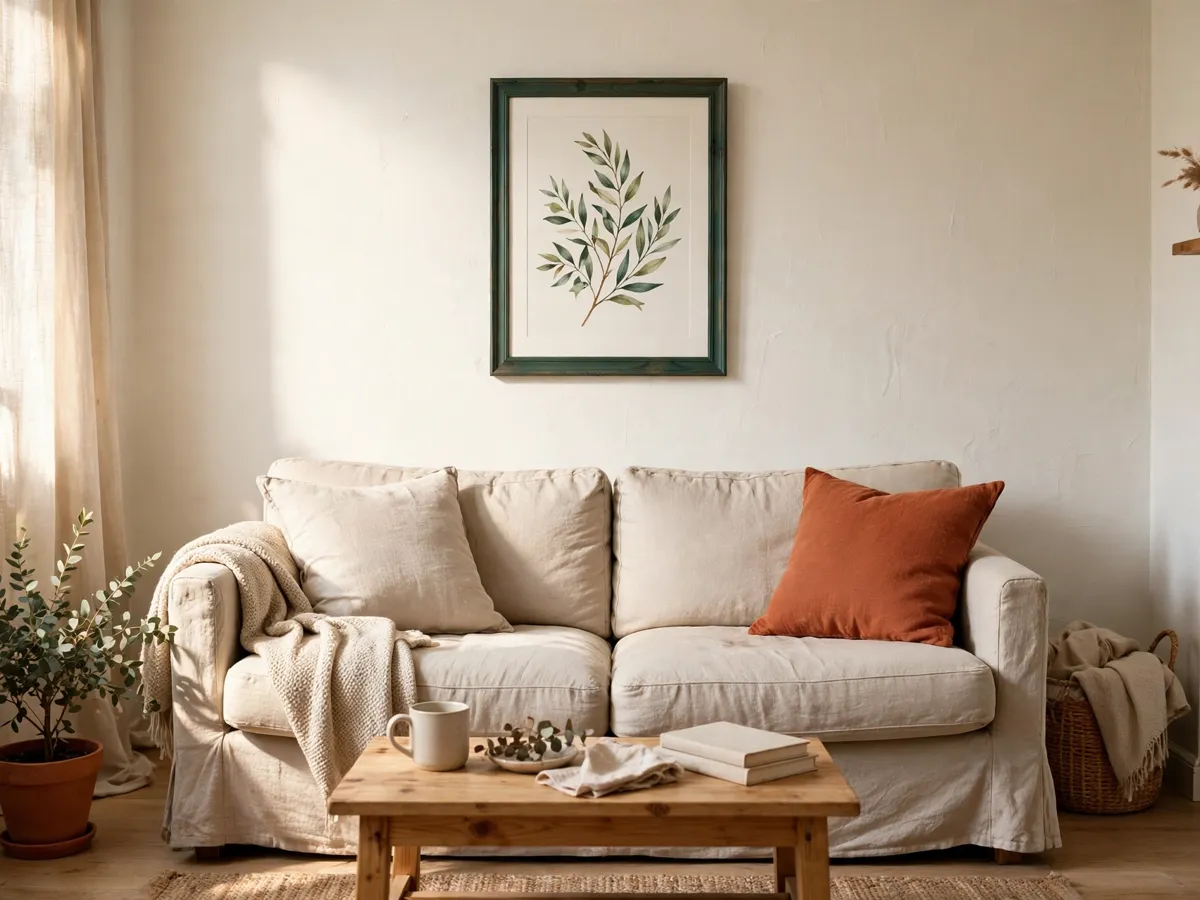
2. Above a sofa: six to ten inches over the back, and no more
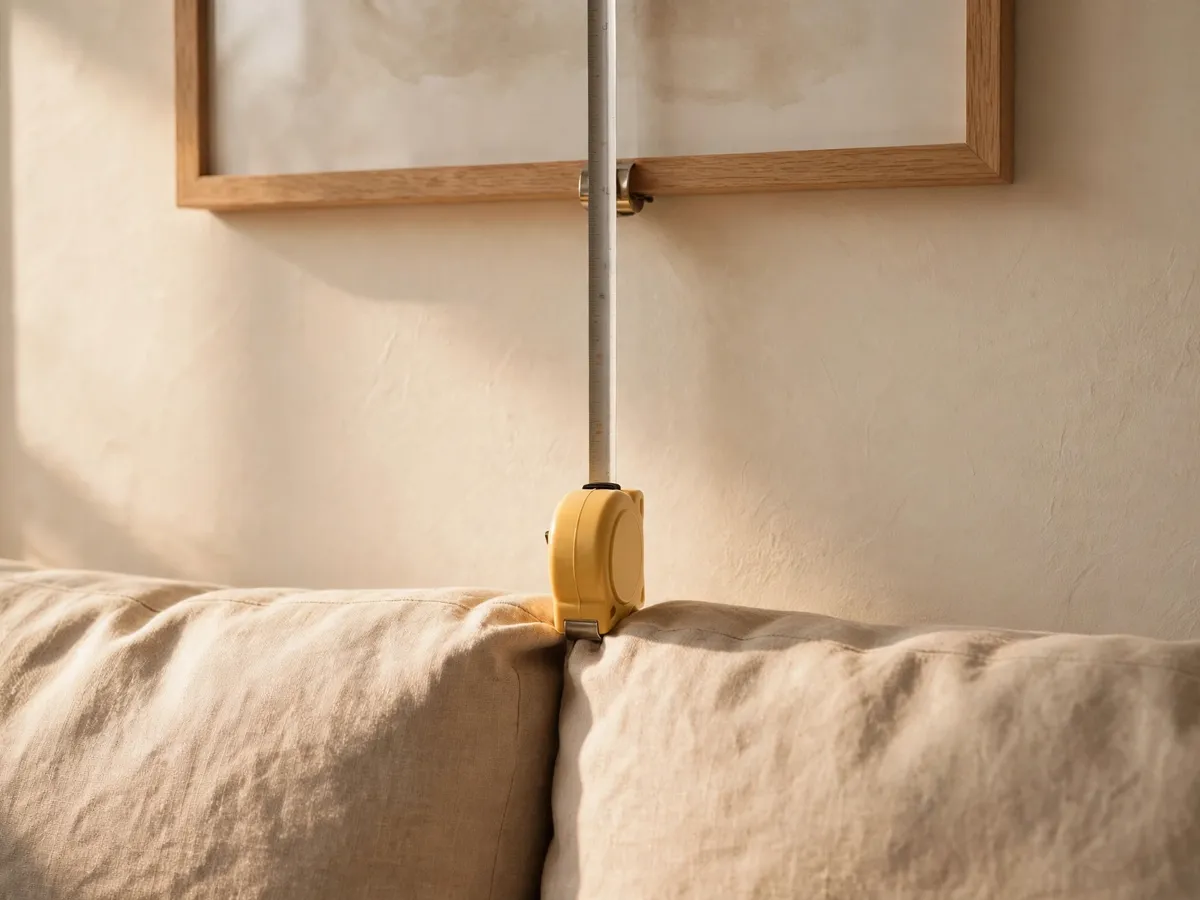
The gap that looks right over a sofa is six to ten inches from the top of the sofa back to the bottom of the frame. Closer than six and the art feels like it is resting on the cushions; further than ten and the wall opens a gap that makes the sofa look like it slid forward. The width matters as much as the height: the picture or the group should run about two thirds of the sofa width, so the arrangement is anchored to the furniture underneath rather than floating over one end. In a small room, sit on the sofa and look at the wall — that angle is the one the art is actually seen from, and it is usually lower than the height people hang at. The arrangement rules for a group of frames are in the gallery wall guide; this is the height the whole group hangs at.
Cost: $0 to measure. Time: ten minutes, with the sofa in its final position before anything is hung.
3. Above a bed: six to eight inches over the headboard
A picture over a bed follows the same rule with a slightly tighter gap, because the headboard is the anchor and the wall behind it is the first thing you see lying down. Six to eight inches above the top of the headboard, centred on the bed, and wide enough to run about two thirds of the headboard width. The sitting-up test is the one that catches the mistake: sit against the headboard and check that the frame is not so low that a raised hand reaches it, and not so high that you are looking at it from underneath. The height of the bed itself is set in the bedroom layout guide, and the art is hung after the bed is where it will stay.
Cost: $0. Time: fifteen minutes, and the bed must be in its final place first.
4. Low ceilings: hang lower, and keep it to one line
An eight-foot ceiling is the small-room standard, and it changes the plan in one way: there is no room for the stacked two-picture arrangement that tall rooms carry. Keep the art in a single horizontal line at the fifty-seven-inch centre, and the wall above it stays quiet instead of crowded. The instinct in a low room is to hang higher to fill the space, and that is exactly backwards — the higher the art goes, the more the ceiling feels low, because the gap between the frame and the ceiling shrinks. The other low-ceiling trick is the one that costs nothing: put the art where the furniture already is, so the eye reads art and sofa as one thing rather than art on an empty wall with a sofa somewhere below it.
Cost: $0. Time: the decision that stops the tilt upward.
What we would skip
Skip the nail-and-hope method, because one wrong hole in a rental wall is a patch and a repaint — the paper template taped up first costs nothing and gets the height right the first time. Skip the wire hanger on the back of the frame, because it lets the picture drift off level every few months; two D-rings sit flatter. Skip the stack of two frames in a room with a low ceiling, because the vertical arrangement needs wall height the room does not have. The one thing worth the money is a small spirit level, because level is the difference between art and a picture that looks hung in a hurry.
Cost: $0. Time: the decisions that keep the wall to one line.
Honest costs: where the money actually goes
Measure-only route: $0, one afternoon, and the pictures that are already on the wall come down, get re-marked and go back up at the right height — most small rooms need exactly this and nothing else. Add a small spirit level for $5–$15 and a pack of D-rings and picture wire for $5–$10, and the whole wall is done for under $25. If the wall cannot take a nail, the adhesive strips and their honest weight limits are in the renter wall guide, and the mirror that goes beside the art follows its own height rule in the mirror placement guide.
Cost: $0–$25. Time: one afternoon, and the test is the wall from the doorway and from the sofa.
Before you make the hole: copy this
- The centre of the frame marked at fifty-seven inches
- Six to ten inches of gap above a sofa back
- Six to eight inches of gap above a headboard
- The art running about two thirds of the furniture width
- A paper template taped up and looked at for a day first
Cost: $0 to check. Time: fifteen minutes, before the first hole.
Questions renters ask
How high should pictures hang on a wall?
The middle of the picture at fifty-seven inches from the floor, measured to the centre of the frame rather than the top edge. When the art hangs above furniture, the furniture sets the height instead: six to ten inches above a sofa back, six to eight above a headboard.
How high above a couch should a picture hang?
Six to ten inches from the top of the sofa back to the bottom of the frame, with the art running about two thirds of the sofa width. Closer reads as resting on the cushions, further opens a gap that makes the sofa look pushed forward.
Should art hang lower in a room with low ceilings?
Yes, and in one line. Hanging higher to fill the space does the opposite of what it is meant to: it shrinks the gap to the ceiling and makes the room feel lower. A single horizontal line at the fifty-seven-inch centre keeps the wall quiet.
Can I hang pictures without nails in a rental?
Adhesive strips work for light frames, and the weight limit on the packet is the real one — a glass frame with a wide mat is heavier than it looks. For anything heavier, a small hook in a spot you can patch with the paint the landlord left behind is the safer trade.
Save these on Pinterest
Pin the fifty-seven-inch line first, because it is the number that fixes every wall in the apartment. The arrangement rules for a group of frames are in the gallery wall guide, and the no-nail hardware with its weight limits is in the renter wall guide. Both sit in the Small Room Decor collection for the next wall that needs a line.