 Plant As Deco
Small Room Decor
Small Bathroom Mirror Ideas: Shape and Scale Over the Sink
By Plant As Deco · Updated 14 November 2026
The mirror over the sink is the first thing every small bathroom gets wrong, and it is usually wrong in the same direction: too small, too high, or centered on the wall instead of on the vanity below it. A mirror in a small bathroom is not decoration — it is the room doubling device, the light spreader, and the thing you actually shave and apply sunscreen in front of every morning. Those three jobs all answer to the vanity width, which makes the vanity the starting measurement, before any shape or frame catches your eye. This page is the over-the-sink decision for a small bathroom: how wide, how tall, which shape, what lighting, and when the mirror should be secretly a cabinet.
Weekend-ready: $40–$250, one afternoon. Stick-on and lean-back options throughout — renter-safe throughout.
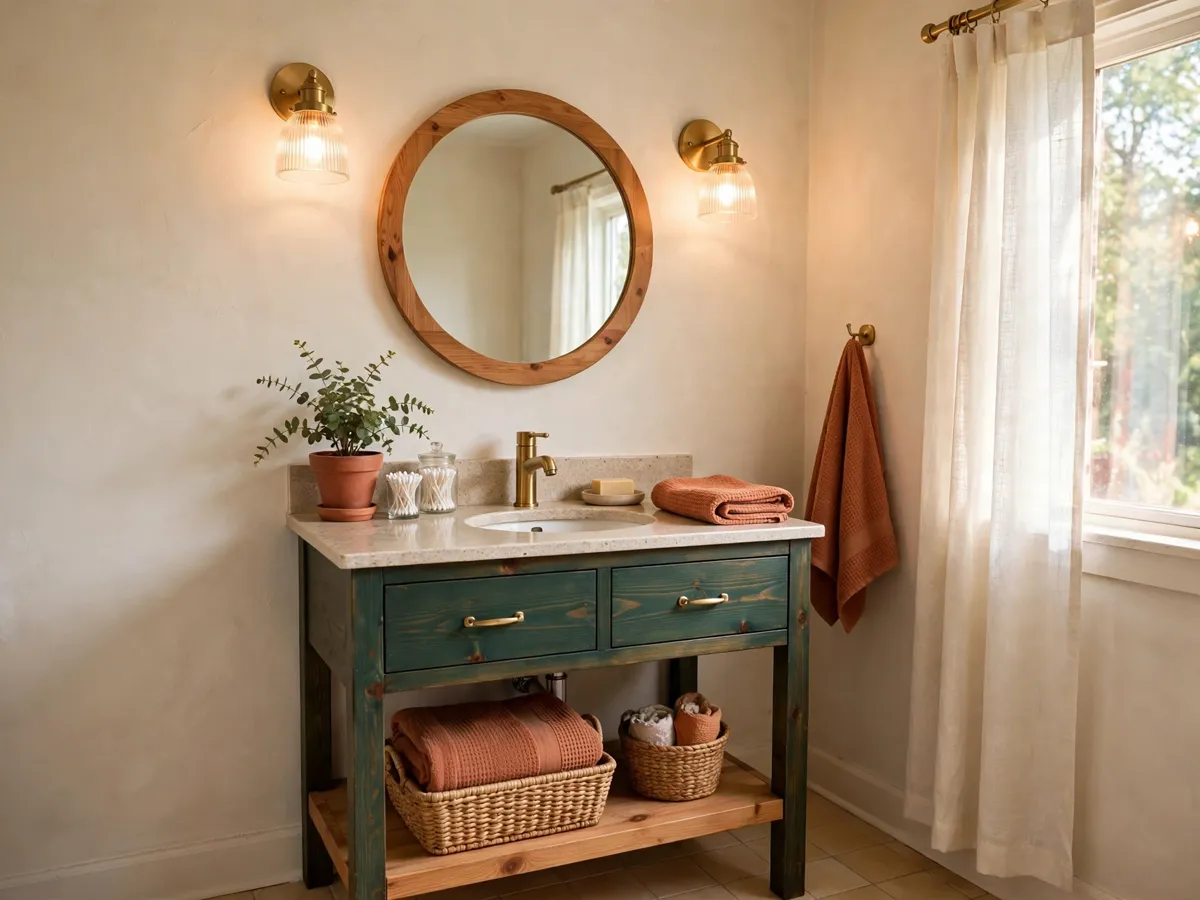
1. Width comes from the vanity, not the wall
The rule that settles most arguments: the mirror should never be wider than the vanity. When the mirror runs past the vanity edges, the bathroom reads as two objects that share a wall by accident, and the counter line — the horizontal that a small bathroom hangs its whole sense of order on — loses its clean ends. The working formula is simple: mirror width equals vanity width minus two to four inches on each side. A thirty-six-inch vanity carries a mirror between twenty-eight and thirty-two inches wide; a twenty-four-inch vanity gets something around twenty. Height follows: thirty to thirty-six inches tall covers the standard seeing range, and the exact position is set by the tallest person who uses the sink — their eyes should land in the middle of the glass with a little room above, which usually puts the mirror bottom near forty inches off the floor and the top comfortably below the ceiling line. One large mirror beats a set of small ones on every count here: one clean rectangle of reflection spreads more light than four panes with frames chopping it up, one wipe-down replaces four, and the room above a single sink does not have the wall for a grid anyway. Where every other room's mirror hangs — height over a console, entry checks, the full-length question — is covered separately in the mirror placement guide; the sink changes the rules enough to get its own page.
Cost: $0. Time: ten minutes with a tape, standing at the sink in use, not from the doorway.
2. Shape does the work the room cannot
Small bathrooms come in two flavors: boxy or low. Boxy rooms — square, tiled on every surface, all hard right angles — get the round mirror. A circle over the sink is the single easiest way to put a curve in a room made of corners, and the effect is not subtle: the round shape reads softer and calmer than the same size rectangle against tile. An oval pulls a second trick, stretching the eye vertically, so a five-by-eight bathroom with a standard ceiling gets a quiet lift from an oval where a squat rectangle would underline the low ceiling. When the ceiling is genuinely low, go further and turn the rectangle upright: a vertical mirror standing taller than wide draws the room's middle line upward and the floor feels farther away. Frame choice follows the same scale logic. A thin metal frame — black steel or brushed brass — outlines the glass without adding visual inches, and it is the safe call for every small bathroom. A thick wood frame is beautiful, and it belongs in rooms with the depth to spend on it: the frame eats mirror glass from the inside, and in a tight five-by-eight that lost width is the difference between seeing your whole face and catching a chin. Frame thickness is a big-room luxury; skip it here.
Cost: $0 to plan. Time: five minutes of standing in the doorway and naming the room's problem: corners, ceiling, or width.
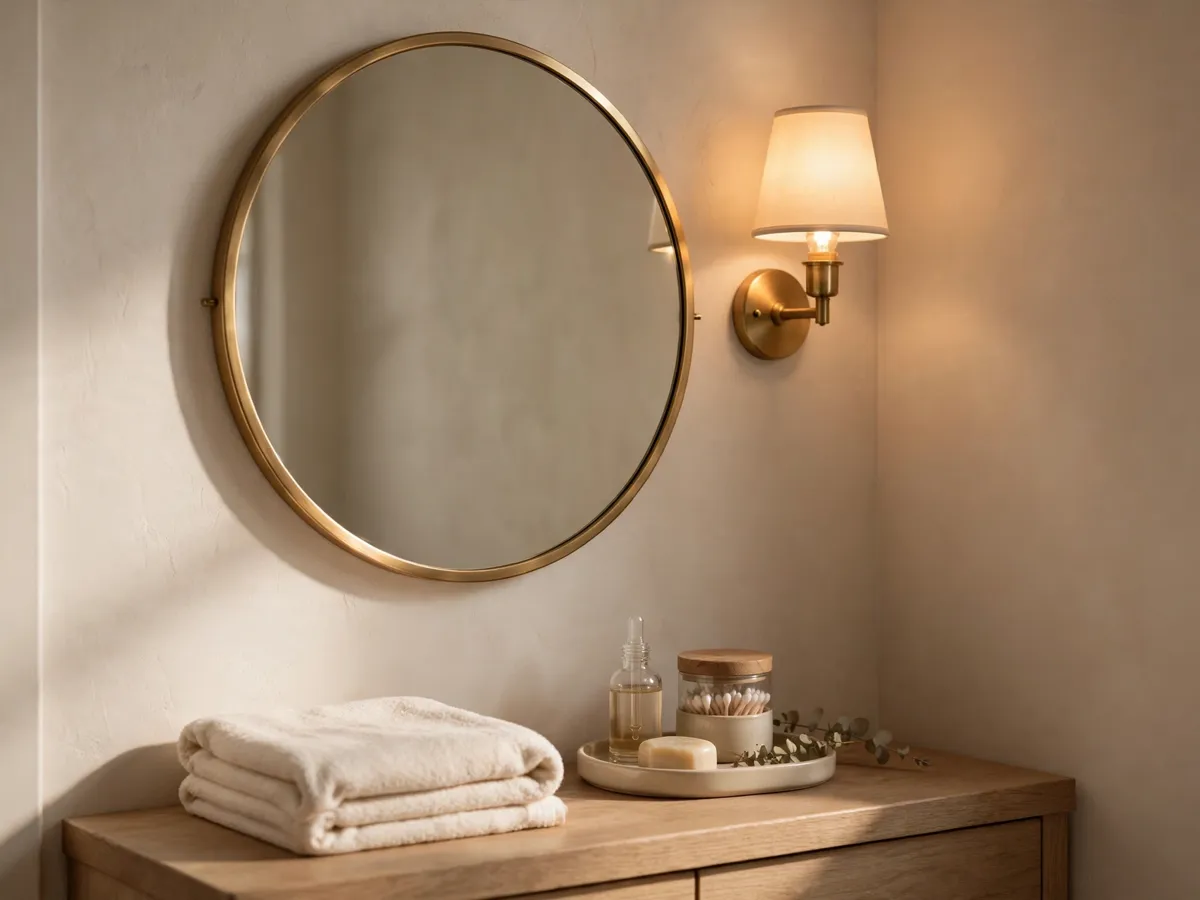
3. Two lights beside the mirror, not one behind you
The standard rental bathroom lights the mirror from the ceiling behind your head, and that single overhead light does one thing reliably: it puts shadows under your eyes, brows and jaw every time you lean toward the glass. Two lights at eye level — one on each side of the mirror, sixty to sixty-six inches off the floor — light the face evenly from both directions, and they read warmer and more expensive than any fixture overhead. Even one sconce on the side nearest the window beats the ceiling glare. Wiring is where renters stop reading, and the drill-free options have gotten good: battery stick-on puck lights and picture lights mount above the frame with adhesive and run months on a charge; LED vanity mirrors carry a thin light strip built into the frame itself, so one plug behind the sink lights the whole glass with zero wall holes. The color of the light matters as much as the position, and the full warm-versus-cool walkthrough for small rooms is in the warm lighting guide— the short version for a mirror is warm white around the face, because daylight-bright white at 6 a.m. is nobody's friend.
Cost: $15–$60 drill-free. Time: half an hour, including wiping the wall before the adhesive goes on.
4. When the mirror should hide shelves
The tightest bathrooms need the mirror to carry storage. A medicine cabinet with a mirrored door is the two-in-one move: the reflection you need over the sink, and three shallow interior shelves that take the daily clutter — toothpaste, floss, the contact case, the half-used sunscreen — off the counter and out of sight, which matters more in a bathroom whose counter is twenty-four inches wide. Surface-mount cabinets hang on the wall like a mirror; recessed ones sit inside the wall itself and steal no depth from the room at all, though they need a wall without pipes behind it and are a landlord conversation. Below the mirror, a six-inch-deep shelf between the vanity and the glass holds the things you want in reach — soap, a small cup, one plant — without claiming counter width. Two fully drill-free options finish the list: an adhesive-mount mirror that goes straight onto tile with strips rated for its weight, and the lean-back mirror resting against the wall on a narrow vanity shelf, which needs nothing from the wall but a stable base. Storage beyond the mirror — baskets, over-toilet units, the under-sink shuffle — is the bigger picture in the small bathroom decor guide; this page just handles the piece over the sink.
Cost: $20–$80 without drilling. Time: one afternoon, and the counter is clear the same evening.
What we would skip
Skip the Hollywood mirror with round bulbs ringing it. The glare photographs well and lights badly: the bulbs sit at mirror height on all sides, they catch every reflection from the doorway, and the fixture needs the vanity width of a double sink. Skip the four-square mirrored tile grid as well — it was a trend, it chops the reflection into panes, and the grout lines between tiles collect steam and toothpaste spray. Do not hang the mirror off-center of the vanity; the sink is the room's anchor, and a mirror shifted to one side reads like a mistake from every spot on the tile. And pass on the thick chunky frame in a five-by-eight bathroom — the frame takes glass width from the inside and visual width from the wall, and the room has neither to give. The one thing worth the upgrade money is a sealed or frameless mirror edge in a bathroom: it shrugs off steam where an unsealed frame edge swells and flakes over a couple of years.
Cost: $0. Time: the decisions that keep the room calm.
Honest costs: where the money actually goes
Plain frameless mirrors start around $40–$60 and do the whole job — the glass does not know what it cost. Thin-framed round and oval mirrors run $60–$150, and that band is where most small-bathroom budgets should land. LED-lit mirrors run $100–$200 and are worth it when the bathroom has one sad ceiling light and no option to add sconces, since the frame light solves the shadow problem in one purchase. Medicine cabinets sit higher at $80–$250, with surface-mount versions at the low end and recessed or mirrored-inside models at the top; the storage they free on the counter is the real return. Add $5–$15 of adhesive strips or mirror clips and the install is done. The rest of the room's budget — towels, shower curtain, the counter styling — is laid out with real numbers in the small bathroom decor guide, and the art and hooks that finish the walls hang at the heights in the picture height guide.
Cost: $40–$200 for the mirror route, $80–$250 for the medicine cabinet route. Time: one afternoon, plus a second pair of hands for the hang.
Before you hang it: copy this
- Mirror width = vanity width minus two to four inches each side
- The tallest user's eyes landing mid-glass, not near the top
- Shape picked from the room's problem: round for corners, oval or vertical for a low ceiling
- Light planned at the sides, not the ceiling behind your head
- Adhesive strips rated for the mirror's real weight, checked before the paper backing comes off
Cost: $0 to check. Time: fifteen minutes, before the wall gets touched.
Questions renters ask
Does a bigger mirror actually make a small bathroom feel bigger?
Honestly, only when there is something to reflect. A large mirror facing a window carries real light and a second view of the room, and the space genuinely reads wider. The same mirror facing a blank wall mostly reflects the blank wall. Size helps at the margin; position and lighting do the heavy lifting.
What shape works best in a square bathroom?
Round. A bathroom that is square and tiled already has every corner it needs, and a circle over the vanity is the one curve in the room, which reads calm rather than stark. Pair it with a thin metal frame and the corners stop shouting.
Can I hang a bathroom mirror without drilling?
Yes, within weight. Heavy-duty mirror adhesive strips hold a framed mirror on tile when the weight is under the strip rating, and the rating is on the packet. A lean-back mirror resting against the wall on a narrow shelf skips the wall entirely. Full-size frameless glass over about twenty pounds still wants clips or a contractor — adhesive has a limit and bathrooms are steamy.
Is a medicine cabinet worth it over a plain mirror?
In a bathroom with a small counter, yes, without hesitation. Three hidden shelves take the daily clutter off a twenty-four-inch vanity top, and the mirror work is the same. In a bathroom with a wide double vanity and drawers, the plain mirror is the better spend — you already have the storage.
Save these on Pinterest
Pin the vanity-minus-two-to-four formula first, because it settles the mirror decision before the shopping starts. Mirror heights for every other room in the apartment are in the mirror placement guide, the rest of the small bathroom plan is in the bathroom decor guide, and the light color that flatters a face in the morning is in the warm lighting guide. All of them live in the Small Room Decor collection for the next room that needs a mirror sized.