 Plant As Deco
Small Room Decor
Small Bedroom Dresser Ideas: Tall, Shallow, or Doing Two Jobs
By Plant As Deco · Updated 14 November 2026
A dresser is the biggest thing most small bedrooms buy, and it usually gets chosen for its drawer count rather than for the floor it will stand on. The drawer count is the wrong number to shop by. What decides whether the room still works is the footprint: a piece that runs sixty inches wide and two feet deep claims a patch of floor a small bedroom rarely has to spare, while a tall narrow chest holds the same clothes against a strip of wall eighteen inches wide. Choosing between tall and wide, shallow and standard, one job and two jobs is a measuring exercise — one tape, one look at how the door swings, and one honest walk across the room before any money changes hands.
Weekend-ready: $80–$400, one weekend of measuring and shopping. Secondhand pieces need a wipe-down and new knobs at most — renter-safe throughout.
1. Tall or wide: let the wall decide
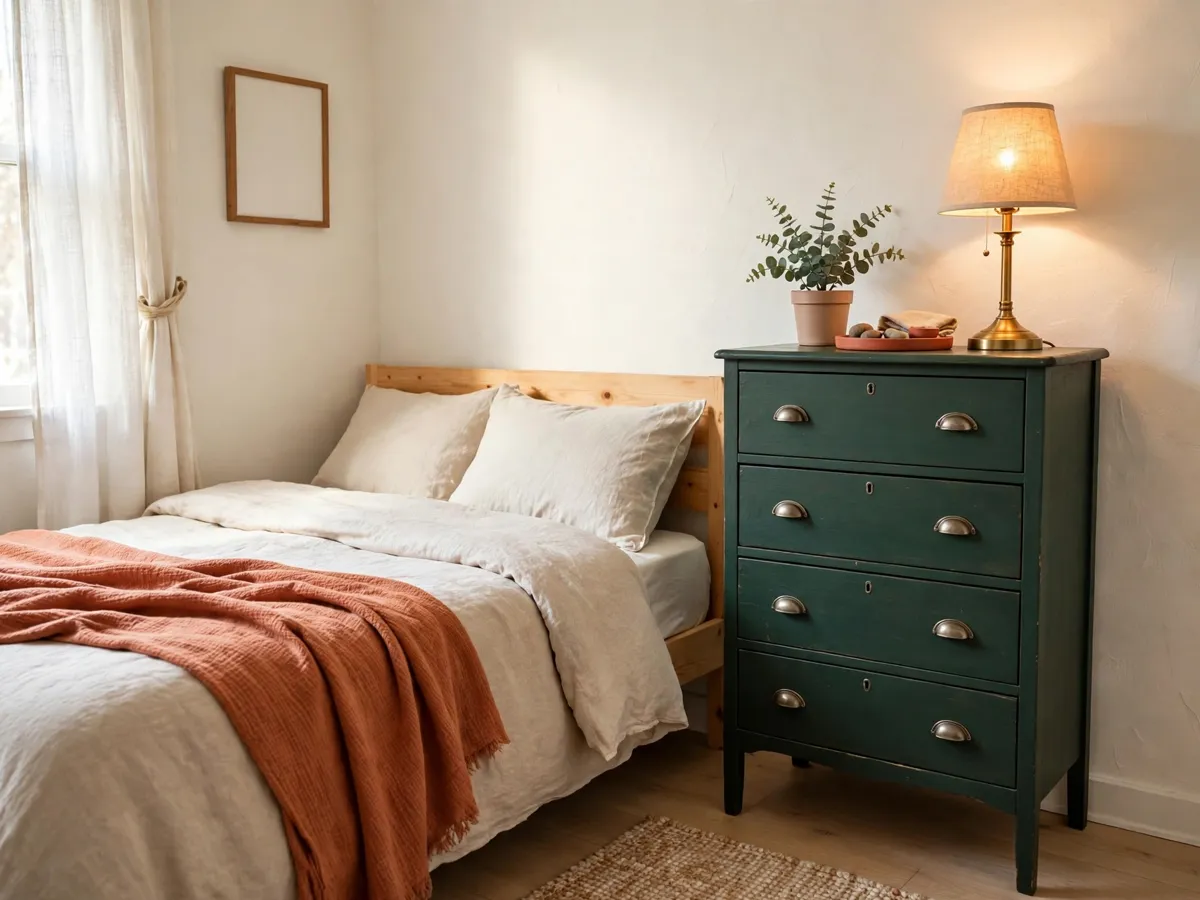
A tallboy — a chest of drawers that stands up instead of stretching out — runs roughly seventeen to twenty inches wide and forty to fifty inches high, and it is the piece a narrow bedroom wants, because a small bedroom runs short of floor long before it runs short of wall. A low wide dresser makes the opposite trade: fifty to sixty inches across and about thirty high, it spends floor instead of height, and it earns a place only where there is a genuinely empty stretch of wall — the wall opposite the foot of the bed, or the run beside a window that never gets furniture against it. The mistake to catch before buying is that a dresser that is too big takes its footprint everywhere it goes: the walkway narrows, the door swings into the drawer corners, and the vacuum stops reaching the wall. So the measurements come first. Measure the wall the piece will stand against, then check the drawer path: pull every drawer of the model fully open, because the front of an open drawer lands roughly thirty inches into the room, and whatever sits in that thirty inches — the bed corner, the door swing, your own knees — is part of the real footprint. The bed position that decides which walls are even available is laid out in the bedroom layout guide, and the dresser is chosen after the bed is where it will stay.
Cost: $0. Time: twenty minutes with a tape, including the door swing check.
2. Shallow dressers: fifteen to eighteen inches, a fair trade
Standard dressers run eighteen to twenty-four inches deep, and the shallow version cuts that to fifteen or eighteen. Those few inches sound like nothing until the walkway is measured: in a bedroom under ten feet wide with the bed pushed near one wall, three inches off the depth of the dresser is three inches of walking room on every trip to the closet, and it is the difference between turning sideways and walking straight. The trade is honest — drawers get shallower, sweaters stack instead of lying flat, and a folded duvet will not fit at all — but shallow drawers encourage the habit small rooms need anyway: fold small, stack upright, and see everything from the front of the drawer instead of digging toward the back. Pick the shallow profile when the room is under ten feet wide, when the bed sits close to the dresser wall, or when the only home for the dresser is the walkway itself. When the bedroom has no wall for even a shallow piece, the plan for spreading storage beyond the bedroom walls is in the studio apartment storage guide, because a chest can live happily in a hallway — which is where the third arrangement below sends it.
Cost: $0 to measure. Time: fifteen minutes, and the walkway is the number that matters.
3. One piece, two jobs: nightstand, vanity, or drop zone
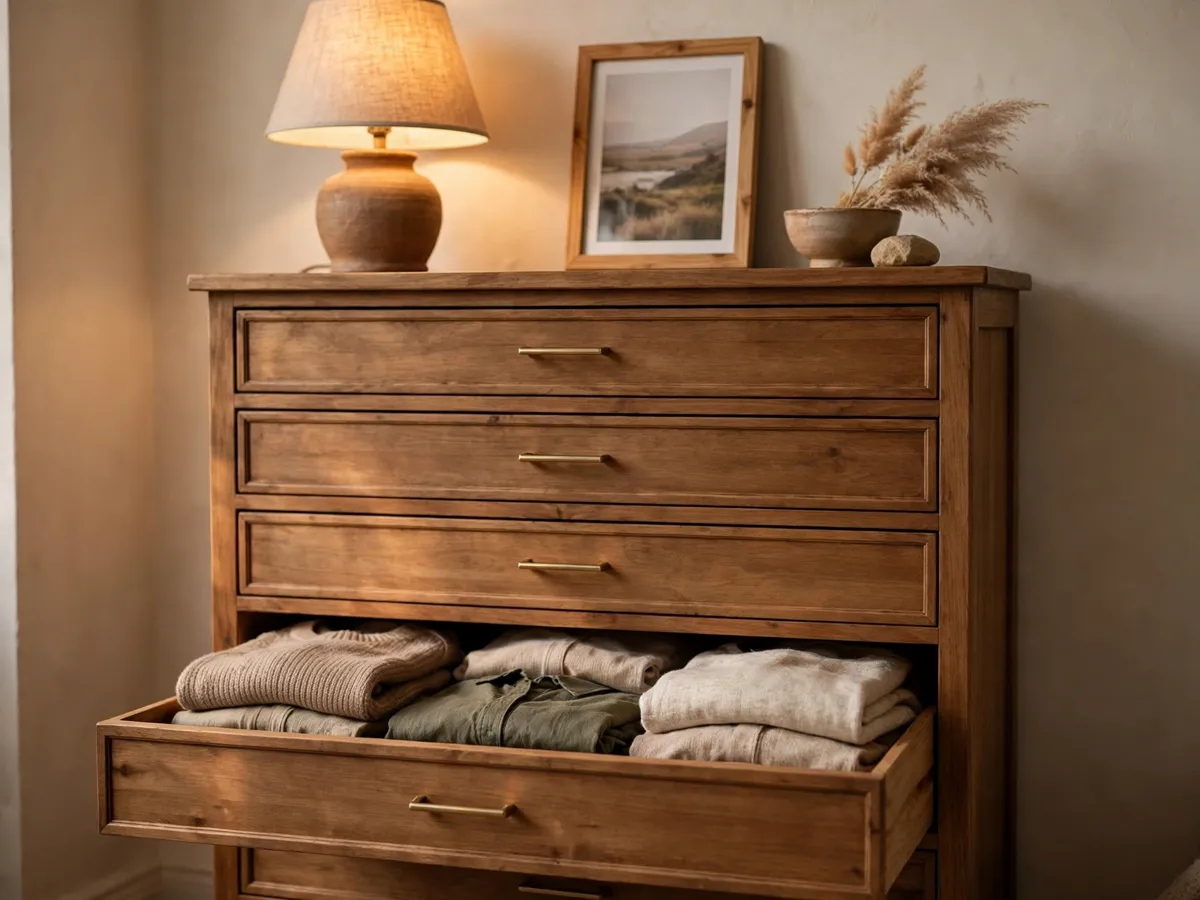
The most useful dresser in a small bedroom is the one that replaces a second piece of furniture. The straightforward double duty is dresser as nightstand: place the dresser beside the bed with its top near the level of the mattress — most beds land between twenty-four and twenty-eight inches high, and a standard dresser top sits inside that band — and one piece now does what a nightstand and a dresser did separately: drawers of clothes within reach of the pillow, and a surface wide enough for a lamp, a book and a glass of water, with no orphaned nightstand squatting next to it. The second arrangement is the corner vanity: the same dresser with a wall mirror above it and a small tray on top turns the narrowest corner into a getting-ready spot without giving floor to a vanity table. The third is the borrowed dresser: when the bedroom has no wall to spare at all, a shallow chest in the hallway or just inside the apartment door takes the overflow — socks, t-shirts, the gym clothes that never made it to the closet — and doubles as a landing surface on the way in and out. One caution carries across all three: the lamp and charger heights still matter when the piece underneath is a dresser, and the numbers are in the nightstand guide.
Cost: $0 to rearrange. Time: one afternoon, mostly sliding furniture and re-homing whatever lived on the nightstand.
4. Keeping the top from collecting clothes
A dresser top starts as a styling decision and ends as a laundry-adjacent surface, usually within a month. The rule that stops it: the top of a dresser is working space, not a display shelf. One lamp, set at the end nearest the bed or the door. One small tray that catches the honest daily clutter — keys, rings, the charger, the bobby pins — so the clutter stays in one square instead of spreading. At most two decorative objects; a framed photo and one small plant are plenty, and a stack of books counts as one of the two. That is the whole budget. The thing that actually ruins the room is the stack of clean but unfolded clothes, because a pile on top makes a tidy bedroom read as undone, and piles grow: the shirt from Tuesday becomes the week by Sunday. When the drawers are so full that clothes are living on top, that is a message about the dresser rather than about you, and the answer is either folding smaller inside the drawers or a second shallow piece on another wall. The budget version of the whole setup, lamp and tray included, is laid out with real prices in the cozy small bedroom budget guide.
Cost: $10–$40 for a tray, using a lamp you already own. Time: twenty minutes once, then a ten-second reset each evening.
What we would skip
Skip the twenty-four-inch-deep dresser for any bedroom under ten feet wide; the depth eats the walkway, and the room pays for it every day. Skip the six-drawer matched pair when one tallboy holds the same wardrobe — the second piece is usually bought for symmetry, and symmetry is a big-room goal. Skip the Hollywood mirror with bulbs ringing it on top of a small dresser: the light is unkind at close range, the bulbs glare at night, and the footprint it demands is a small table of its own. Skip the soft unframed fabric-covered dresser as well — the velvet looks cozy in the store and holds dust, stray threads and the ring from a wet glass within a week, where a wood or sealed surface wipes clean in one pass. The one thing worth paying extra for is full-extension drawer slides: a drawer that pulls all the way out shows you its back half, and in shallow drawers that visibility does most of the organizing.
Cost: $0. Time: the decisions that keep the room walking straight.
Honest costs: where the money actually goes
The honest spread: secondhand solid-wood dressers run $80–$200 through thrift stores, estate sales and marketplace listings, and they are usually the best wood for the money — expect one hour of cleaning, a check that every drawer glides, and possibly $10–$15 of new knobs. New wood-look pieces run $150–$400, and the price moves mostly with drawer count and depth, which is exactly why the tape comes first: paying $380 for six drawers in a room that fits four is buying the wrong thing twice. Knobs and pulls run $3–$8 each and are the cheapest refresh in the room, and a can of furniture wax at $10–$20 brings a tired secondhand top back in one sitting. When the room is a guest room instead — same rules, smaller wardrobe, lower stakes — the shopping shortlist is in the guest room budget guide, and one marketplace search usually serves both rooms.
Cost: $80–$400 all-in. Time: one weekend — an evening of measuring and listings, a day of picking up or assembling.
Before you buy: copy this
- The wall measured, with the door swing and bed corner marked
- Thirty inches of drawer-opening clearance checked in front
- Width, depth and height of the piece written down and shopped with
- Top height within a few inches of the mattress if it doubles as a nightstand
- One lamp, one tray, two objects — the top decided in advance
Cost: $0 to check. Time: fifteen minutes, before the listing is paid for.
Questions renters ask
Is a tall or a wide dresser better in a small bedroom?
Tall, most of the time. A tallboy seventeen to twenty inches wide holds a full wardrobe against a strip of wall, while a wide dresser spends fifty to sixty inches of floor the room needs for walking. A wide low dresser earns its spot only against a genuinely empty wall, and never in a walkway.
How high should a dresser be when it doubles as a nightstand?
Near the level of the mattress, which usually lands between twenty-four and twenty-eight inches from the floor. Within two or three inches either way feels right; much lower and the lamp glares up from below the pillow, much higher and the lamp sits above eye level in bed.
How shallow can a dresser be?
Fifteen inches is the practical limit, and fifteen to eighteen is the useful band for tight walkways. Below fifteen, a drawer barely holds a folded stack of shirts. Standard depth runs eighteen to twenty-four — going shallow is a deliberate trade of drawer depth for walking room.
Is an old dresser worth fixing up?
Usually, when the frame is sound and the drawers glide. Cleaning, wax and $10–$15 of new knobs handle most of what a secondhand piece needs. Replace it instead when drawer bottoms sag, the runners are cracked, or a musty smell survives a proper wash — those repairs cost more than a $120 replacement.
Save these on Pinterest
Pin the measuring step first — wall, drawer path, door swing — because it is the part that decides everything else about the piece. The bed placement that picks the dresser wall is in the bedroom layout guide, the lamp and charger heights for a dresser doing nightstand duty are in the nightstand guide, and the budget version of the whole list is in the cozy small bedroom budget guide. All of them live in the Small Room Decor collection for the next wall that needs a plan.