 Plant As Deco
Gardening & Planting Tips
Companion Planting for Balcony Pots: What Actually Works
By Plant As Deco · Updated 13 November 2026
Most companion planting advice is written for a garden bed, where a tomato has eight square feet and can afford neighbors. In a 5-gallon bucket the math is different: every second plant competes for the same water and the same small root run. So the honest version for a balcony is short — a few pairings that earn their space, a longer list that is folklore, and one rule about spacing that matters more than any pairing.
Weekend-ready: $10–$25, one afternoon. Two or three pots, no garden bed — renter-safe.
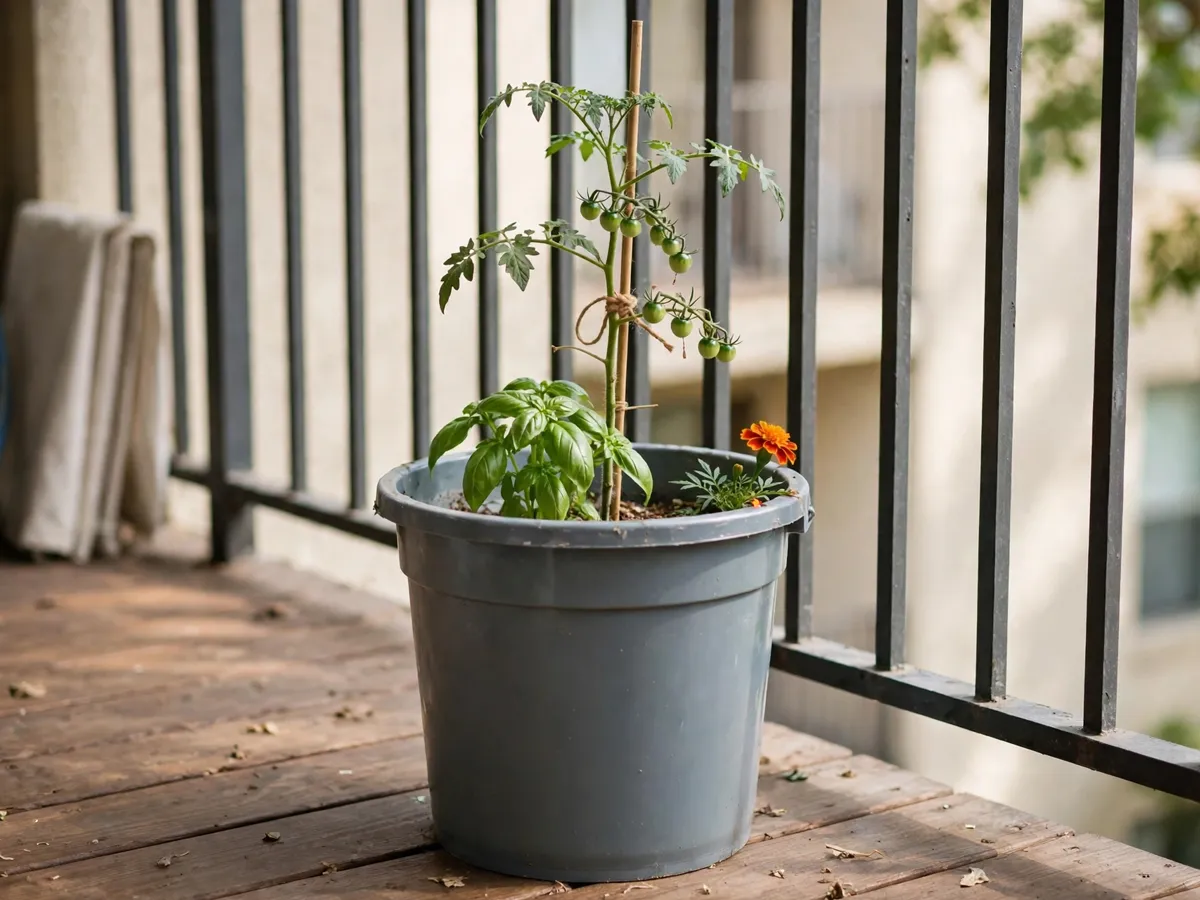
At a glance
- Who it is for
- Anyone with two or three pots on a balcony or a doorstep and a tomato that needs company.
- What you need
- A 5-gallon bucket per fruiting plant, plus small pots for basil, marigolds and lettuce.
- What it costs and takes
- $10–$25 in plants, one afternoon to pot, and a summer of watching what happens.
Why a pot changes the answer
In a bed, a tomato is one plant among dozens, and companion planting is mostly about insects and shade. Tall plants break the wind, flowers bring in insects that eat the ones you do not want, and a low cover keeps the soil cool. A bed has room to pay for it.
A container is a closed budget. The limiting factors are root volume and water, and anything sharing the pot takes both from the tomato. The mix in a 5-gallon bucket is the whole root run, with no deeper layer to reach when the top dries out.
So the honest rule is restraint: one fruiting plant per bucket, with small shallow-rooted plants at the rim rather than another deep-rooted crop in the same soil. For the container basics, our guide to growing vegetables in pots covers depth, mix and watering.
The exception worth using is the rim plant itself. A shallow-rooted herb or flower at the edge works as living mulch: it shades the mix surface, which keeps the pot cooler and slows evaporation. That is the main reason to bother.
Cost: $0. Time: 5 minutes.
The pairings that earn their space
Three pairings survive the container test, each for a different reason: one for the scent that is supposed to help with pests, one for shade at the rim, one for space.
| Pairing | Pot | What it does | Honest verdict |
|---|---|---|---|
| Tomato + basil | 5-gallon bucket, basil at the rim | Basil is shallow-rooted, so it shares water without competing for depth; the strong scent is the traditional reason | Worth it for the scent, not for a measurable pest effect |
| Tomato + marigold | 5-gallon bucket, one marigold at the rim | French marigolds are the classic pairing; a single small plant at the edge is the container version | Keep one, not a ring — the ring is a garden-bed answer |
| Cucumber + lettuce | Wide shallow pot, lettuce at the base | Lettuce is shallow and finishes early, so it uses the space while the cucumber is still small | The one pairing that genuinely saves space |
None of these will transform a harvest. A tomato that fruits well does so because it had sun, water and a big enough pot. The companions are decoration with a possible side benefit, and the best of them — lettuce under a young cucumber — is a space decision, not a pest one.
Cost: $0. Time: 10 minutes.
What is mostly folklore
Four claims come up in every companion planting chart. Here is what each one means in a bucket.
1. “Marigolds repel every pest.” A single marigold at the rim will not protect a bucket. The pest pressure in a container is usually aphids on new growth, and the answer is a hose or a finger.
2. “Beans feed the tomato next to them.” Beans fix nitrogen through their roots, but the amount that reaches a neighboring plant in the same season is small, and the bean plant takes the same water.
3. “Carrots and tomatoes are best friends.” This works in a bed, where the carrot uses the cool shallow layer. In a bucket the carrot needs the depth the tomato is using, so it grows a stub.
4. “Herbs confuse the pests.” A strong scent can make it harder for an insect to land on the right plant in a bed. A single basil plant in a bucket is a garnish, not a barrier.
The pattern is the same in all four: each claim describes a bed with space to spare. A bucket has none, and the plant that pays is the one you wanted to eat.
Cost: $0. Time: 5 minutes.
Spacing is the rule that matters
The number that decides the season is plants per pot, not which plant sits next to which. One tomato per 5-gallon bucket. One zucchini per bucket. One cucumber per bucket, or two in a wide trough if the variety is compact. Three or four lettuce in a shallow pot, thinned as they grow.
Two tomato plants in one bucket is the mistake that looks generous. Both survive, and neither fruits properly: the root run is split between them, and the top growth shades itself. You get two tall plants and very little to pick.
The practical test takes a second: if the two plants touch at the rim, they are competing. Move one now, while it still has roots worth moving, not in July when it is a hedge.
The balcony decides some of this for you: a narrow railing fits single buckets in a row, a corner fits one wide trough. If you are still choosing, our balcony garden ideas guide starts with the space you actually have.
Cost: $0. Time: 10 minutes.
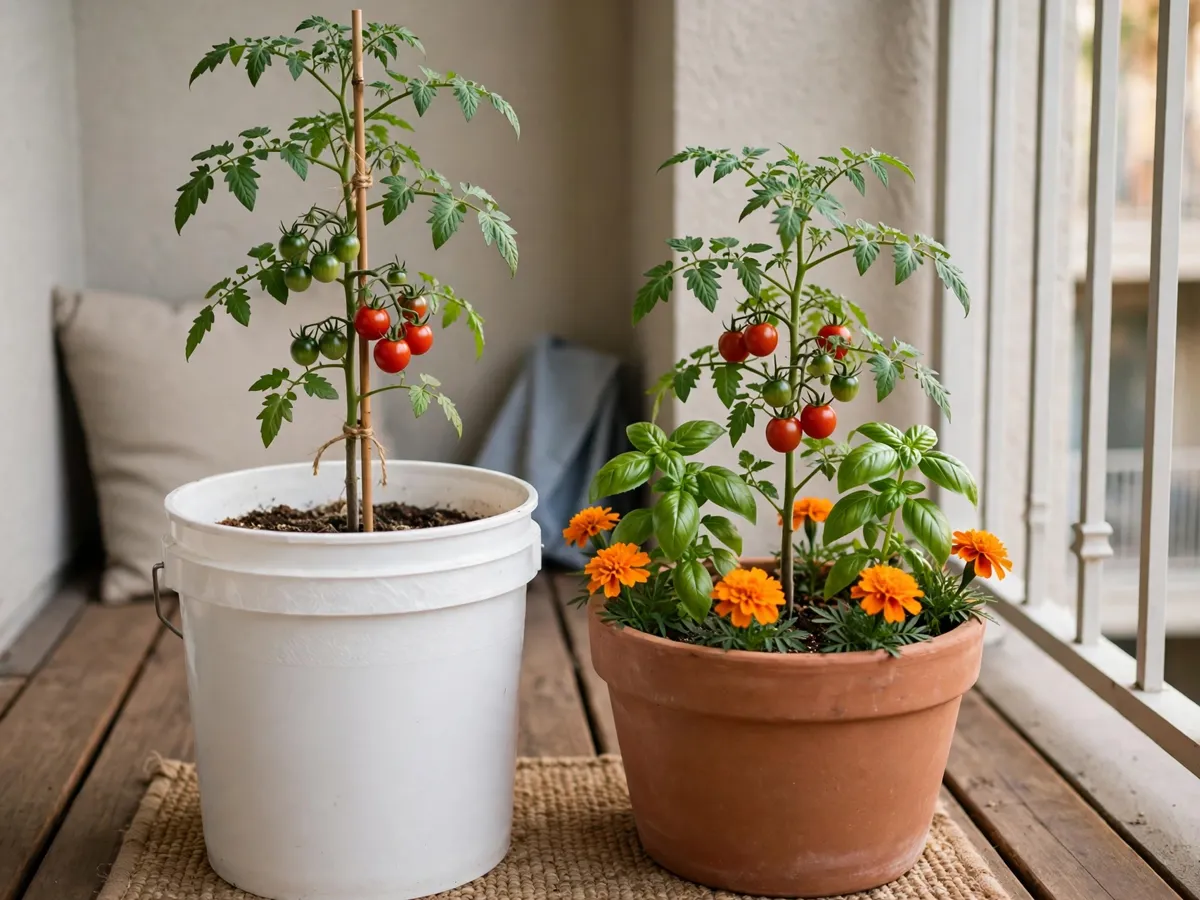
The three-plant bucket, step by step
One bucket, one afternoon. Fill a 5-gallon bucket with potting mix to an inch below the rim, so water has somewhere to go before it runs over the side. Set the tomato seedling slightly deeper than it sat in its nursery pot; the buried stem roots along its length.
Water it in until it runs out of the holes. Then plant one basil and one French marigold at the rim, about 6 inches from the tomato stem, in the mix the tomato is not using. Add a stake at planting, not later; driving one through established roots in July sets the plant back.
The honest expectation: the basil is the plant you will harvest all summer, pinched at the tops so it bushes. The marigold is there because it looks good and might help; if it sulks in the tomato’s shade, that answers the folklore question in one pot.
Cost: $6–$15 for the tomato seedling, $3–$5 each for basil and marigold. Time: 20 minutes.
What goes wrong
1. The basil yellows by August. The tomato is shading it and taking the water. Fix: move the basil to its own pot with morning sun. If the only spare spot is a dim room, our low-light indoor plants guide is the honest check on what will grow there.
2. Aphids on the tomato’s new growth. A hose blast, then a finger, and remove the worst leaves. A single marigold was never going to stop this.
3. The marigold gets leggy and flops. It wanted more sun than the tomato leaves allowed. Fix: cut it back by half and expect a smaller plant.
4. The tomato fruits but they stay small. The pot is the limit, not the companions. A 5-gallon bucket gives a handful a week from a cherry type, and no rim plant changes that.
5. Everything in the bucket dries out by noon. Two plants in one pot double the draw on a small reservoir. Fix: water more often or split the plants.
Cost: $0. Time: 10 minutes.
What we would skip
Skip a companion planting chart built for a vegetable bed. Skip a ring of eight marigolds around one tomato, and skip the “three sisters” bucket with corn, beans and squash. Skip interplanting two fruiting plants in one pot, and skip any pairing sold as pest control, because in a container the pests arrive by air and by walking.
The money is better spent on a second bucket than on a second plant in the first one.
Cost: $0. Time: 2 minutes.
Weekend checklist
- Pot depth measured on the inside, not the outside
- One fruiting plant per bucket, no exceptions
- The tomato set deeper than it sat in its nursery pot
- Basil and marigold at the rim, about 6 inches from the stem
- A stake set beside the tomato at planting
- The pairings you skipped written down so you do not try them in June
- Watering day written on the calendar
- A second bucket budgeted for next season
If you want to keep the basil going once the balcony loses its light, our grow light guide covers the smallest setup that works in a dim room.
Cost: $0. Time: 20 minutes.
Questions beginners ask
Can I plant basil and tomato in the same pot?
Yes, with the basil at the rim so its shallow roots share the water without competing for depth. Keep it to one basil plant, and move it if the tomato leafs out over it.
Do marigolds really protect a tomato?
One at the rim is decoration with a possible benefit. A ring of them is a garden-bed answer, and in a bucket it takes the root space the tomato needs.
How many tomato plants go in a 5-gallon bucket?
One. Two survive, but the root run is split between them and neither fruits properly.
What is the best companion for a cucumber?
Lettuce, sown at the base while the cucumber is still small. It finishes early and is shallow-rooted, so it uses space the cucumber has not filled.
Save these on Pinterest
Pin the three-pairings table and the one-plant-per-bucket rule, because those are the two numbers you will check again when you pot up in spring. The Gardening & Planting Tips collection holds the rest of the small-space growing ideas.