 Plant As Deco
Gardening & Planting Tips
Growing Vegetables in Pots: Carrots, Zucchini, Tomatoes
By Plant As Deco · Updated 13 November 2026
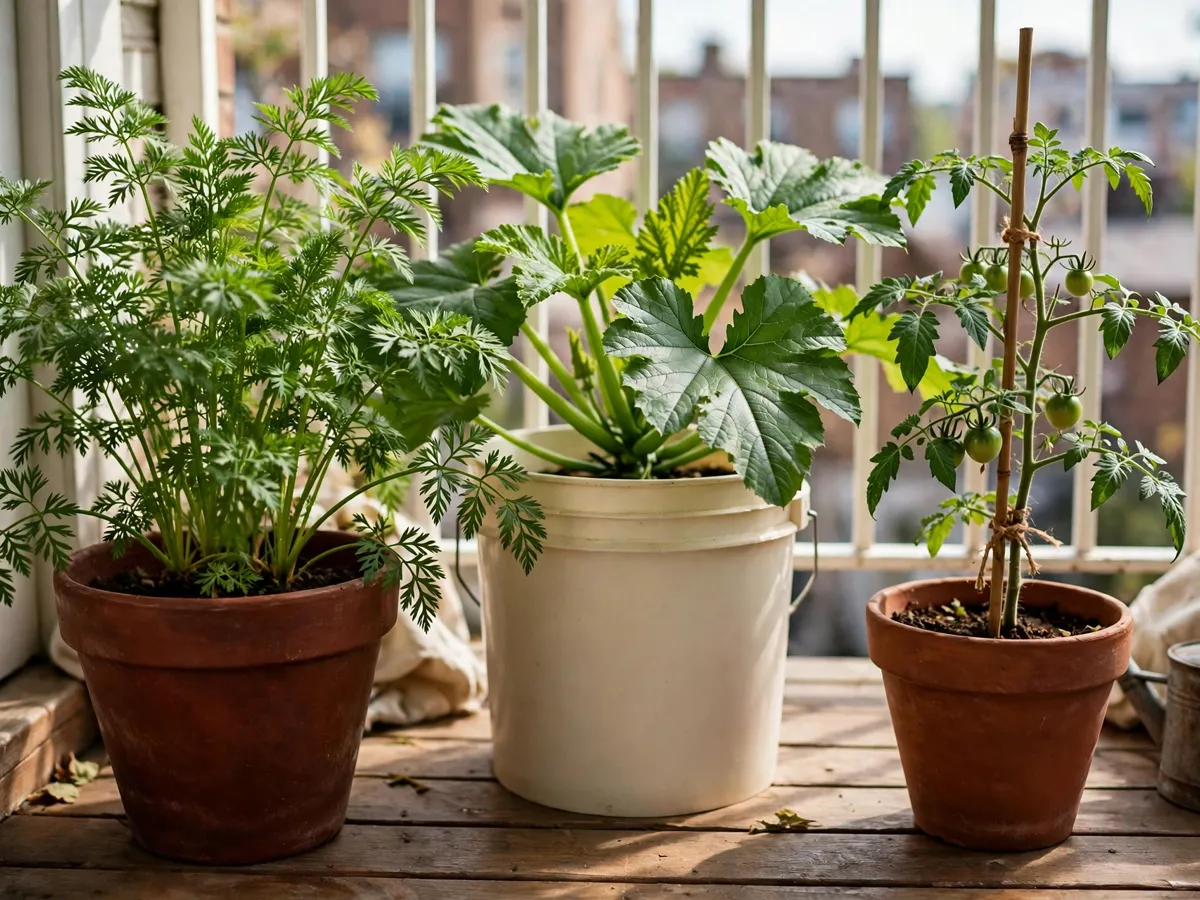
A container vegetable patch fails on two numbers, and neither is the fertilizer. The first is depth: a carrot in six inches of mix grows a stump, and no feeding fixes that. The second is how many plants go in one pot: one zucchini in a bucket is a harvest, two is a competition. This page covers those two numbers, then the water and feed that follow from them.
Weekend-ready: $20–$55, one afternoon. Three containers, no garden bed — renter-safe.
At a glance
- Who it is for
- Anyone with a sunny balcony or a doorway step and no garden bed.
- What you need
- Three containers with drainage holes, potting mix, seed and one stake.
- What it costs and takes
- $20–$55, one afternoon to plant, 50–80 days to eat.
Depth first, everything else second
Roots need volume, and the depth of the pot decides which crops are even possible. A shallow pot is not a smaller version of a deep one; it is a different crop. Six inches of mix grows salad, ten inches grows carrots, and a bucket grows a tomato. Pick the crop after you measure, not before you shop.
The working numbers: salad leaves and herbs want 6–8 inches; carrots and radishes want 10–12 inches of loose mix with no stones; zucchini and tomatoes want a 5-gallon bucket, roughly 12 inches deep and 12 across.
Measure the inside depth from the base to the rim, not the outside of the pot, and remember the mix settles after the first few waterings. A pot sold as 12 inches is often 11 inside, and that inch is where a carrot stops.
Cost: $0. Time: 5 minutes with a tape measure.
The three crops, with the numbers
These three cover the range — a root, a sprawler and a fruiting plant — and each one fails differently. Read the row for the crop you actually want to eat.
| Crop | Minimum pot | Plants per pot | Days to harvest | What you actually get |
|---|---|---|---|---|
| Carrots | 10–12 inches deep | 12–16 thinned to 2 inches apart | 70–80 | A handful per pot, small but sweet |
| Zucchini | 5-gallon bucket, 12 inches deep | 1 | 50–60 | More than one household eats in August |
| Cherry tomato | 5-gallon bucket, 12 inches deep | 1 | 60–80 | A handful a week at peak, not a bushel |
A full-size beefsteak tomato in a bucket is the common disappointment. The plant lives, the fruit stays small, because a bucket cannot hold the root run that fruit size needs. Choose a cherry or a compact determinate type instead, and the same bucket gives you something to pick. If you are wondering what else can share that bucket, the companion planting guide for balcony pots answers it with three pairings and one rule.
Cost: $8–$20 for seed and mix. Time: 30 minutes to plant all three.
Potting mix, not garden soil
Bagged potting mix is built to hold air and drain in a container. Garden soil from the ground is built to sit in a field, and in a pot it compacts into a brick that sheds water off the top. The practical test: water a pot of garden soil once and watch how slowly it drains. If the surface puddles and the water sits, that is the next three months of your plant’s life.
Every pot needs holes. A saucer is for catching water and should be emptied, not left as a reservoir. A layer of gravel in the bottom does not create drainage — the hole does — and gravel only raises the water table inside the pot. Fill the mix to an inch below the rim so water has somewhere to go before it runs over the side.
If you are starting with an empty balcony rather than empty pots, our balcony garden ideas guide starts with the containers you already own.
If the mix is dry and repels water, sit the pot in a tub of water for twenty minutes so it soaks up from the bottom, then let it drain. Top watering alone will run straight down the sides of dry mix and leave the root ball dry in the middle.
Cost: $8–$15 per bag of potting mix. Time: 15 minutes.
Water and feed: the container tax
A pot has a small reservoir, so it dries faster than ground soil, and every watering leaches a little feed out of the bottom. That is the container tax: you are not just growing a plant, you are maintaining a small volume of water and food that keeps leaving.
The routine: check the top inch with a finger every day in warm weather, water until it runs out of the holes, and feed every two weeks with a liquid feed at the strength on the bottle. More plants die from a half-watered pot than from a missed feed, because a light sprinkle wets the surface and leaves the roots below it dry.
The failure worth knowing: a container plant that wilts at noon and recovers by evening is usually just hot, not dying. One that stays wilted at dusk needs water now — and if it stays wilted after a full watering, the pot is too small for the plant.
Blossom-end rot on container tomatoes is the other one people misread. A dark leathery patch on the bottom of the fruit is usually uneven watering, not a missing bag of anything. Steady water and a mulch layer do more than a calcium bottle.
When the season ends and you want to keep something growing inside, our grow light guide covers the smallest setup that works in a dim room.
Cost: $8–$15 for liquid feed for the season. Time: 5 minutes a day.
Carrots: thin them or get nothing
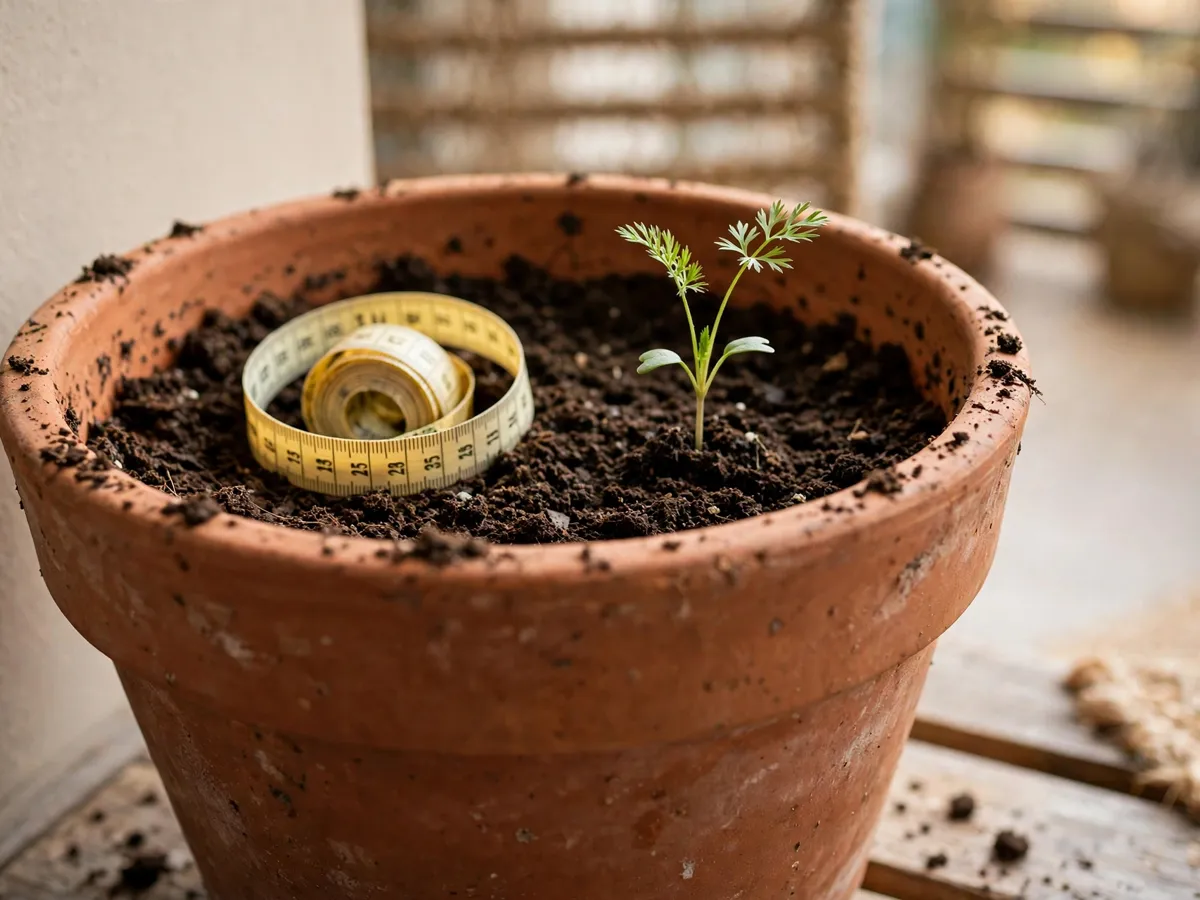
Sow carrot seed thinly, keep the mix damp until they sprout, then thin to two inches apart when the seedlings are an inch tall. Thinning is the step people skip, and it is why home carrots come out as tangled forks: each root needs its own space to swell, and crowded seedlings wrap around each other.
Carrot seed needs consistent moisture to germinate, which is why a pot is easier than a bed. You can water a small surface evenly, and a board or a sheet of plastic over the pot holds that moisture until the first sprout. Check under the cover daily once the green shows.
The honest expectation: a 12-inch pot holds a dozen carrots. This is a garnish crop, not a pantry, and the flavor of a small home carrot is the reason to grow it anyway. If you would rather start with cuttings than seed, our propagation guide covers the jar-and-node version.
Cost: $3 per seed packet. Time: 10 minutes to sow, 10 minutes to thin.
What goes wrong
1. Everything wilts by noon. The pot is too small for the plant or the mix is dry. Fix: check the weight of the pot before watering — a light pot is dry, a heavy one is not, and that test beats a moisture meter.
2. Zucchini flowers drop without fruit. The first flowers are usually male; fruit follows once female flowers open, and cool nights slow it down. Fix: wait, and leave the male flowers on the plant until the females have opened.
3. Tomato leaves yellow from the bottom. Usually too much water sitting in the saucer, or a plant that has outgrown the pot. Fix: empty the saucer, let the top inch dry, and check that the holes are still open.
4. Carrots come out forked and stubby. The mix was too heavy or too shallow, or the seedlings were never thinned. Fix: next sowing, use loose mix, a 12-inch pot, and thin at one inch tall.
5. Nothing germinates. The mix dried out between waterings. Fix: cover the pot with a board or a sheet of plastic until the first sprout, and check under it every day.
Cost: $0. Time: 10 minutes to check.
What we would skip
Skip a full-size beefsteak tomato in a bucket, two zucchini in one pot, and garden soil in any container. Skip a moisture meter when a finger works. Skip gravel in the bottom “for drainage”, because the hole does the work and the gravel only takes up root space. And skip the self-watering planter bought before the first season, because you do not yet know how much water your balcony actually loses. The first season is about learning your balcony’s water loss, and that is free.
Cost: $0. Time: 2 minutes.
The season, honestly
Containers are a warm-season project. Start seed indoors four to six weeks before the last frost for tomatoes and zucchini, sow carrots direct once the mix is workable, and expect the harvest to arrive in a burst rather than a trickle: three weeks of more zucchini than you planned, then none.
A container harvest replaces a few grocery runs, not the produce aisle. That is still the point — the tomato you eat warm off the plant, the carrot you pull because you wanted to see it. If the light on the balcony turns out to be the limit rather than the pots, our low-light indoor plants guide is the honest next read.
Cost: $0. Time: 5 minutes.
Weekend checklist
- Pot depth measured on the inside, not the outside
- Drainage holes checked and saucers emptied
- Potting mix bought, not garden soil
- Mix filled to an inch below the rim
- Seed sown at the depth on the packet
- Carrot seedlings thinned to two inches
- One stake set beside the tomato at planting, not later
- Feed and watering day written on the calendar
Cost: $0. Time: 20 minutes.
Questions beginners ask
How deep does a pot need to be for carrots?
10–12 inches of loose mix with no stones. Measure it on the inside, from the base to the rim, and remember the mix settles after the first few waterings.
How many zucchini per bucket?
One, in a 5-gallon bucket about 12 inches deep. Two plants in one bucket compete for the same water and feed, and neither of them does well.
What does a 5-gallon tomato actually give?
A handful a week at peak from a cherry or compact determinate type, not a bushel. A full-size beefsteak in a bucket usually stays small.
Can I use soil from the yard?
No. Garden soil compacts in a pot and stops draining, so water sheds off the top instead of reaching the roots. Use bagged potting mix.
Save these on Pinterest
Pin the pot-depth table, because it is the number you will check again next spring. The Gardening & Planting Tips collection holds the rest of the small-space growing ideas.