 Plant As Deco
Gardening & Planting Tips
Houseplant Propagation: One Leaf, One Jar, One Cut
By Plant As Deco · Updated 13 November 2026
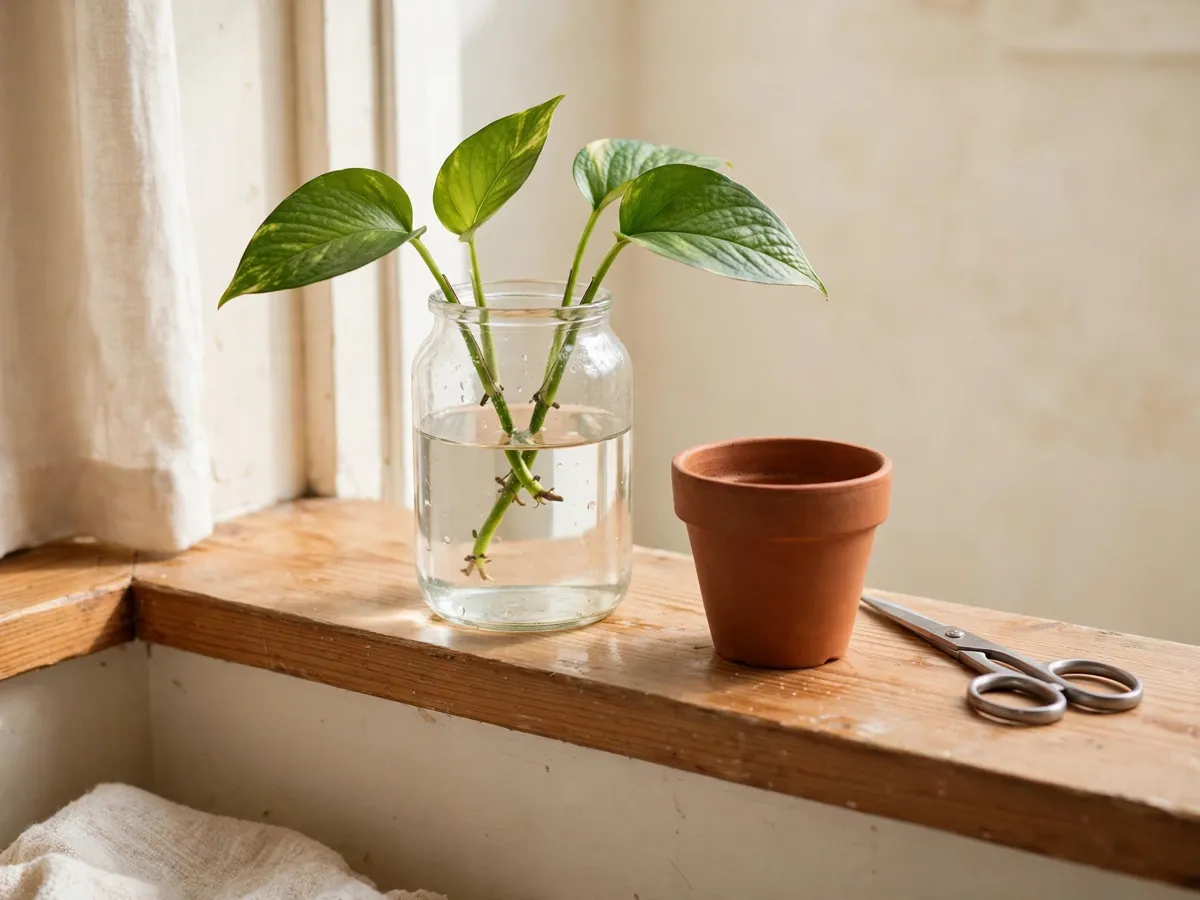
Propagation fails for one reason far more often than any other: the cutting had no node. A leaf in water can look fine for a month and never root, because the roots come from the node, not from the leaf. So this page starts at the node, then splits the plants into the three groups that actually behave differently, and says honestly how long each one takes.
Weekend-ready: $0–$12, one afternoon. One leaf, one jar of tap water — renter-safe.
At a glance
- Who it is for
- Anyone who wants more plants from the ones already on the windowsill.
- What you need
- Sharp scissors, a jar, tap water and one healthy stem.
- What it costs and takes
- $0–$12, 20 minutes to set up, then two to six weeks of waiting.
The node is the whole trick
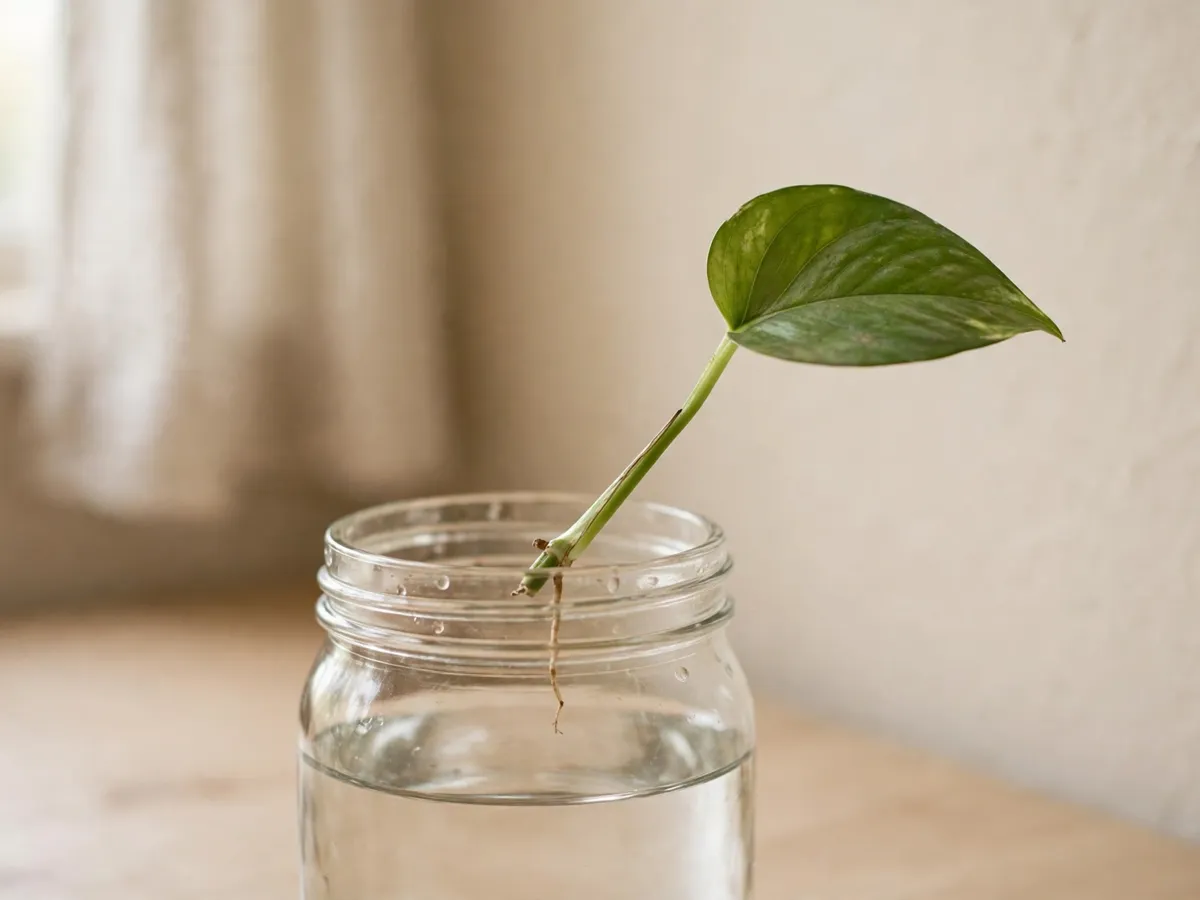
The node is the small bump on the stem where a leaf joins it. Look closely and it often carries a little brown nub, which is an aerial root waiting for something wet. Roots grow from that point, which is why the bump matters more than the length of the stem.
A stem cut between two nodes can still push roots at the cut end for some plants, but the reliable cut is 1/2 inch below a node. That single measurement is the difference between a cutting that roots in three weeks and one that sits in the same water until you give up on it.
The practical test costs nothing and takes ten seconds: find the bump with a fingertip before the scissors move. If your finger cannot find it, you are holding a leaf stem, not a node, and no amount of clean water will fix that.
Three rules for the cut. Use clean scissors, wiped with alcohol, so the cut end does not start life carrying bacteria. Cut at a slight angle, because more cut surface meets the water. Strip the leaves that would sit underwater, because a leaf left in the water rots and turns the jar cloudy in a few days.
Cost: $0. Time: 10 minutes.
Three groups, three methods
Almost every houseplant on a windowsill falls into one of three groups, and the method follows the group, not the plant name. Sort your plants first, then read only the row that applies to yours.
| Group | Method | Which plants | Roots in |
|---|---|---|---|
| Vining, roots in water | 4–6 inch stem cut below a node, in a jar | Pothos, heartleaf philodendron, tradescantia | 2–4 weeks |
| Rosette or offset | Split the offset from the mother plant | Spider plant, aloe, snake plant (division) | Already rooted |
| Leaf or division, slower | Leaf cutting in water, or a root division in soil | Snake plant, ZZ plant | 4–8 weeks |
The first group is the beginner group, and it is the only one that reliably works in a jar on a windowsill with no extra gear. The other two are honest options rather than harder versions of the same thing: they want a mother plant you are willing to split, or patience measured in months instead of weeks.
Cost: $0. Time: 10 minutes to sort your plants into groups.
Water or soil: the honest trade
Water is visible. You can see the roots start as small white points, you change the water every 3–5 days, and nothing needs potting until the roots are actually there. For a first cutting that visibility is worth more than speed, because you learn what a root looks like instead of guessing at it.
Soil is faster to establish once it works, because water roots are built for water and have to adapt when they move to soil. A cutting rooted in a jar spends its first weeks in mix rebuilding the roots it grew for a different job. A cutting started in damp mix skips that step entirely.
The rule that saves disappointment: root in water if you want to watch it, root in soil if you want it to take. Either way, pot up when the roots reach 2–3 inches, not when they fill the jar. A jar packed with roots is a cutting that stayed too long, and those roots break in the move. The pot and mix side is in our repotting guide.
Cost: $0–$8 for a small bag of potting mix. Time: 5 minutes to read once.
Snake plant: divide, do not slice
A snake plant spreads by thick underground stems, so the fastest way to more of them is division at repotting time. Knock the root ball out of the pot, find the join where two clumps meet, and pull them apart with your hands. Each clump keeps its own roots, which is the whole reason this works.
A leaf cutting works, but there is a catch worth knowing before you try. A leaf taken from a variegated snake plant usually comes back plain green, because the yellow edge is not carried in the leaf tissue. You get a healthy plant that looks nothing like the one you started with.
The split rule: each division needs roots and at least two leaves. A division with one leaf and no roots will sit for months doing nothing, and it will look alive the whole time, which is the frustrating part.
Pot up divisions in the same mix the mother plant was in, water once, and leave them alone for a week before the first real watering. A division that is fussed over rots faster than one that is ignored.
Cost: $0. Time: 20 minutes at repotting.
What actually goes wrong
1. The stem end goes mushy. The cut was made with dirty scissors or a leaf was left underwater. Fix: cut 1/2 inch above the mush and start again in a clean jar, with clean water.
2. Roots never appear after four weeks. Check for a node. A leaf-only cutting will not root, and a stem with no node is a slow death that looks like patience.
3. The water turns cloudy and smells. Change it every 3–5 days and keep the jar out of direct sun, because algae likes light and still water.
4. The cutting yellows from the leaf tip. This is usually too much direct sun on a cutting with no roots to drink. Move it to bright indirect light and leave it there. Plants that tolerate a dim room are listed in our low-light indoor plants guide.
5. Roots form, then rot after potting. The mix stayed wet. Water once at potting, then wait until the top inch is dry before the next watering, even if that takes ten days.
The honest limit: not every cutting takes, and losing one is normal. Take two cuttings from a plant you can spare rather than one from a plant you cannot, and you will stop treating a single jar as a test of your ability.
Cost: $0. Time: 10 minutes to check.
The four-week timeline, honestly
Days 1–7: nothing visible, and that is the normal state. Days 7–14: the cut end callouses and small white bumps appear at the node. Those bumps are the first roots, and they are easy to miss if you change the water in a hurry.
Days 14–28: the roots lengthen. Week 4–6: pot up when the roots hit 2–3 inches. Weeks 6–10: new growth appears above the soil, which is the point where the cutting has stopped being a cutting.
A cutting that shows no root at week four is not necessarily dead, especially in a cool room where everything runs slower. A cutting with a black mushy end is dead, and the sooner you cut above it and start again, the sooner you have roots. Slow winter light stretches this timeline, and our grow light guide covers the smallest setup that fixes it.
Cost: $0. Time: 5 minutes.
What we would skip
Skip rooting hormone for pothos, philodendron and tradescantia, because they root without it. Skip the propagation station with test tubes when a jam jar does the same job. Skip moss poles for cuttings that are not climbing yet, a heat mat for a windowsill in a heated apartment, and buying a second plant of the same species to propagate later.
The money is better spent on a small bag of potting mix than on gear. If you want more growing space instead, our balcony garden ideas guide starts with the pots you already own.
Cost: $0. Time: 2 minutes.
Weekend checklist
- Scissors cleaned with alcohol
- One healthy stem chosen, not the weakest one
- Node found by touch before the cut
- Cut made 1/2 inch below the node at an angle
- Lower leaves stripped so none sit in water
- Jar filled with room-temperature tap water
- Jar placed in bright indirect light, out of direct sun
- Water-change day written on the calendar
Cost: $0. Time: 20 minutes.
Questions beginners ask
Can I root a leaf with no stem?
No for most houseplants. Roots come from the node on the stem, so a leaf on its own has nowhere to grow them from.
How often do I change the water?
Every 3–5 days, and sooner if it turns cloudy. Room-temperature tap water is fine, and a clean jar matters more than a special bottle of anything.
When do I pot it up?
When the roots reach 2–3 inches, not when they fill the jar. Roots that have grown into a tangle break in the move, and a shorter root system settles into mix faster.
Why did my variegated snake plant cutting come back plain green?
The yellow edge is not carried in the leaf tissue, so the new plant grows without it. Divide the plant instead, and the divisions keep the pattern the mother plant had.
Save these on Pinterest
Pin the node photograph in your head and the three-group table, because those are the two things you will check again on the next cutting. The Gardening & Planting Tips collection holds the rest of the windowsill ideas.