 Plant As Deco
Home Organization & Storage
Capsule Wardrobe: Count Your Closet by Slot
By Plant As Deco · Updated 26 November 2026
Most capsule wardrobe guides start with a number, usually thirty pieces. That number assumes a laundry schedule, a body, a job, and a climate that are not yours. This guide builds the capsule the other way around: count the slots your week actually needs, cap the total at what one laundry load can carry, then test it for seven days before anything is donated.
Weekend-ready: $0–$40, one evening for the count and one week for the trial. Renter-safe: this is a sorting and labeling job, not a closet rebuild.
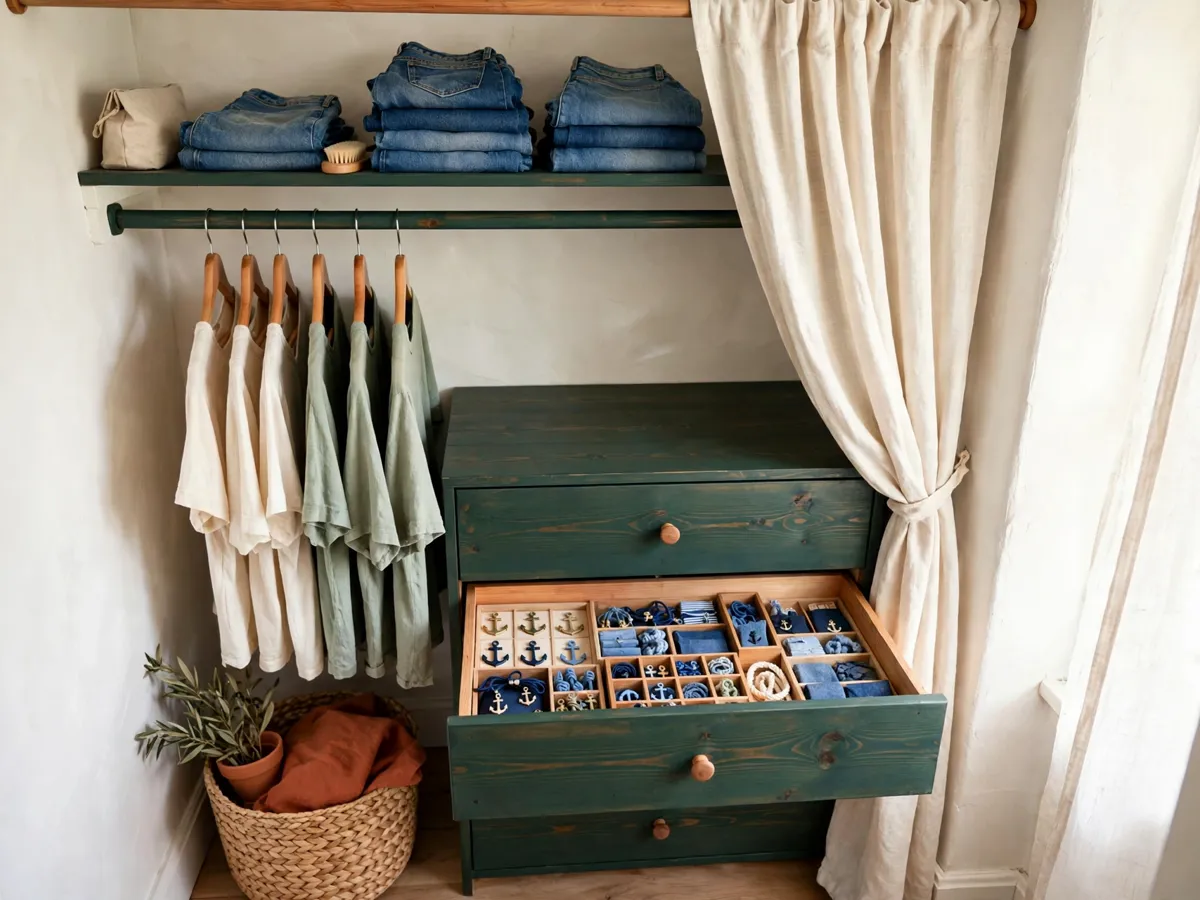
1. What a Capsule Wardrobe Is Actually Solving
A full closet is not a storage problem. It is a decision problem that shows up every morning, when you are standing in front of more options than the day requires. A capsule wardrobe does not make you own less for its own sake. It removes the choices you never make so the remaining ones are fast.
The second thing it solves is laundry. A capsule sized to one wash load can be refreshed in a single run, which means the system never breaks when a week goes badly. A capsule that exceeds that capacity quietly rebuilds itself, because something always ends up dirty when you need it.
What it does not solve is fit. A wardrobe of five pieces that all pinch at the waist is smaller and still worse. Treat this as a sorting project, not a shopping project, until the trial week has shown you which pieces earn their slot.
Cost: $0. Time: 15 minutes. Write down what a normal week asks you to wear: work, home, one errand, one occasion.
2. Count Your Own Closet First
Start from your real week, not from a list of approved garments. Count how many outfits you need between laundry days, then add one spare per slot for a spill or an unexpected change. That number is your floor, and the laundry test in the next section sets your ceiling.
Use this slot template and fill it in with your own numbers rather than copying a total.
| Slot | Typical starting count | Add a spare when |
|---|---|---|
| Tops | One per weekday, plus one spare | You work somewhere with a dress code that rules out part of the set |
| Bottoms | One per two days, rounded up | You commute by bike or change clothes after work |
| Layers | Two or three, matched to your indoor and outdoor swing | Your day moves between an overheated room and cold air |
| Shoes | One pair per activity type, plus one wet-weather pair | You stand for most of the day or walk a long distance |
| Outerwear | Two seasonal pieces, more only if the climate demands it | One coat cannot cover rain, cold, and a dressier occasion |
Do not add shoes and accessories to the piece count until the clothing slots are settled. A capsule with seven pairs of shoes and one spare top is not small; it is just miscounted.
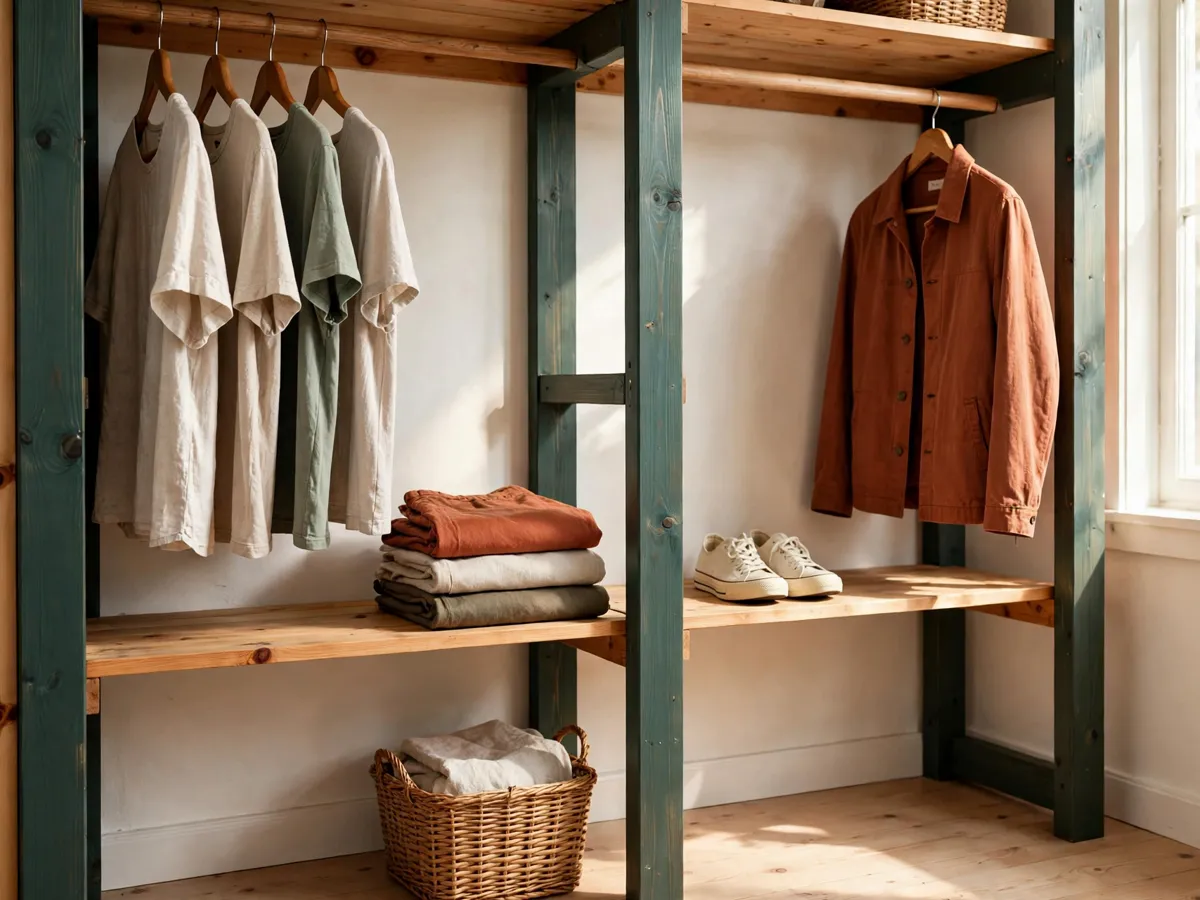
Cost: $0. Time: 45 minutes. Fill every slot with your own count, then total only the clothing rows.
3. The Laundry-Capacity Test
This is the step that decides the capsule size, and it takes one load of laundry to run. Wash a normal weekday's worth of clothes, then look at how full the drum was. Multiply that by the number of days between your usual laundry sessions, and you have a working capacity in outfits.
Compare that capacity to the slot count you just finished. If the slot count is larger, you have two honest options: cut slots down to the capacity, or accept a two-load week and choose a smaller capsule on purpose. What does not work is a capsule larger than your laundry can carry, because it will fail on the first busy week and the extra pieces will drift back in.
A note on what you are washing. The National Park Service notes that laundering synthetic fabrics is considered a substantial source of microfibers to the environment. A capsule wardrobe tends to wash smaller loads more often, which changes the pattern rather than the total, and choosing natural fibers for the layers that get washed most is one reasonable way to reduce synthetic wash volume without turning this into a rules list. Wash only what is actually dirty, and let a worn-once top air instead of running it through every load.
Cost: $0. Time: one laundry cycle plus 10 minutes. Count the drum fill, multiply by your laundry interval, and compare.
4. Choose Anchor Colors So Everything Mixes
A capsule fails at the door, not the drawer, when two pieces you own cannot be worn together. The fix is an anchor rule instead of a color theory lesson: two neutral bases and one accent that repeats.
Pick the two neutrals from what you already wear most often, because a neutral you dislike will not leave the hanger. Then pick one accent color and let it appear in maybe three pieces across the whole capsule. The accent is what keeps the set from looking like a uniform, and limiting it to three is what keeps every other piece wearable.
When a piece is between two anchors, use the daylight test. Hold it against each anchor in front of a window, not under a warm bulb. If it fights both, it is an accent you did not plan for, and it belongs in the keep box until the accent rule changes on purpose.
Cost: $0. Time: 30 minutes. Name two neutrals and one accent, write them on the closet door, and stop buying outside them.
5. The Seven-Day Trial Week
Nothing leaves the closet before the trial week. Pull the pieces you intend to keep into reach, move everything else to a closed box, then run a normal week and log what you wore each day in a note on your phone.
The log is the whole method. After seven days you will have three lists without guessing: pieces worn four or more times (the anchors that stay), pieces worn once (the working set), and pieces never reached for (the honest cut list). A piece you wore five times in seven days matters more than a piece that photographs well and never leaves the drawer.
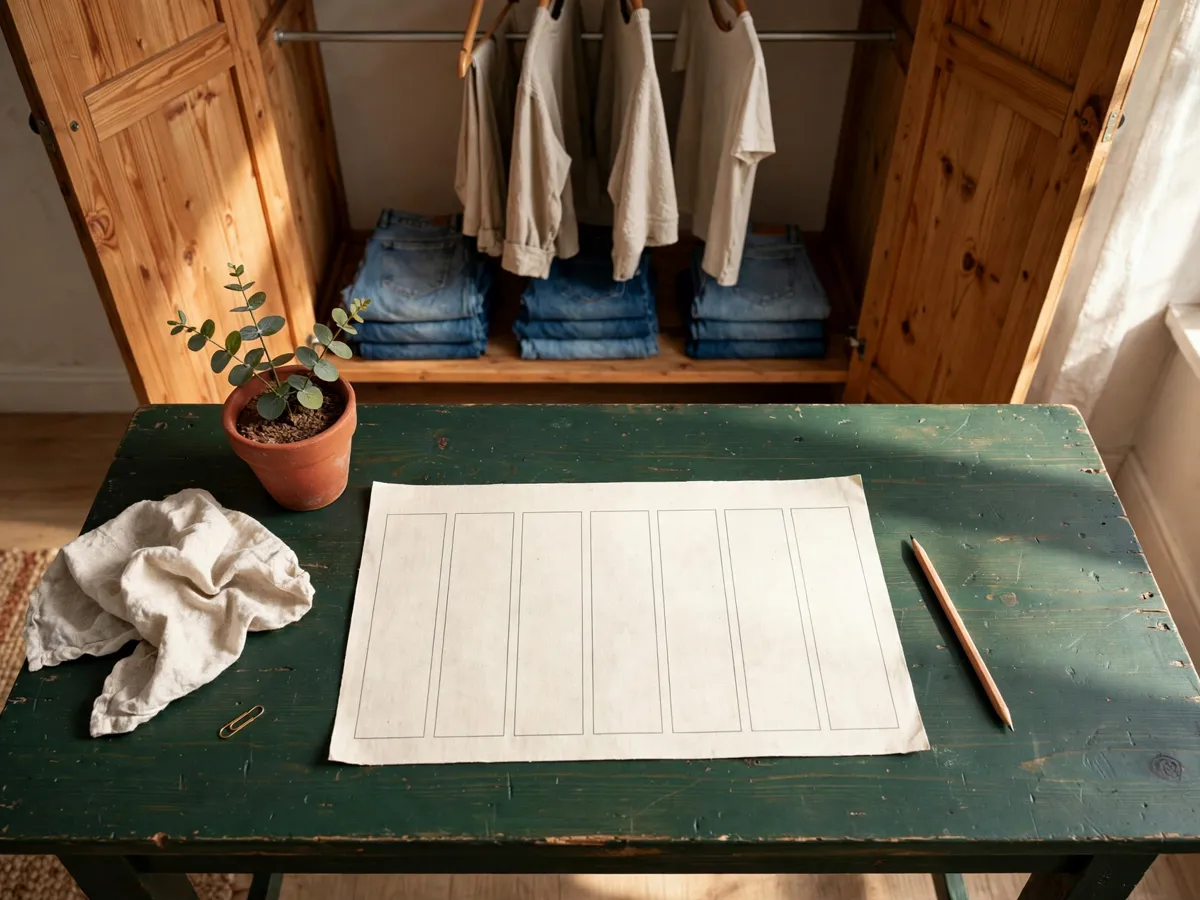
One rule keeps the trial honest: if you open the closed box during the week, write down which piece you took and why. That note is the most useful data you will collect, because it names the slot the capsule is missing rather than letting you pretend the old closet is not there.
Cost: $0. Time: 15 minutes a day, one hour at the end of the week. Log every outfit, note every box raid.
6. Cut and Sort Into Four Piles
After the trial, sort the capsule into four piles rather than one. The pile decides the destination, and the destination is what keeps the closet from refilling.
- Keep. Worn four or more times in the week. These are the pieces the system is built on.
- Box. Good pieces the current season cannot use. They go into the swap box, not the donation bag.
- Repair. Fits the capsule but has a fixable fault. A missing button costs less than the replacement garment.
- Donate. Does not fit the slots, the anchors, or the week. Leave it in a bag by the door until the bag leaves.
Wash or air out every piece before it is stored. Odors and invisible stains seal into a box for a season and come back worse, and a bag that smells when it is reopened is a bag nobody wants to reopen. For worn-out pairs that leave the rotation, the Goodwill donation guidelines accept clothing you no longer need and welcome shoes, handbags and jewelry. A full capsule edit usually has somewhere to go in one trip, and a labeled bag by the door turns a decision into a finished task.
Cost: $0. Time: 60–90 minutes. Four piles, washed and dried, and the donation bag out of the house this week.
7. Store the Swap Box for the Next Season
A capsule that ignores the seasons fails in October. The swap box is the seasonal half of the system: the pieces that come out when the weather turns.
Label two boxes, not one. One holds the current season's off-duty pieces, and one holds the next season's arrivals. Writing the month on the box lid is what makes the swap happen before you need it. Store the boxes off the floor in the driest part of the closet, and if the only dry storage is a basement or an attic, use sealed bins rather than open cardboard, following the same rule as any other stored textile.
Keep one clear bin per box so the swap has somewhere to land. Without it, the outgoing pile sits on a chair for a week and the capsule has already grown by the time it is resolved.
Cost: $8–$22 for two lidded bins. Time: 30 minutes. Label both boxes with a month and keep them off the closet floor.
8. Keep It From Filling Back Up
Two habits hold the line. The first is one-in, one-out: anything that comes into the capsule pushes something of the same slot out into the swap box or the donation bag. It works because it is a rule you can apply in the store, before the purchase, when you have not yet spent the money.
The second is a thirty-second reset. Every night, put the worn-not-dirty pieces back on the hanger or in the drawer and move the dirty ones to the basket. This sounds too small to matter, and it is the difference between a closet that reads as a set and a chair that accumulates. Keep the basket where you actually change clothes, because distance is what decides whether it gets used.
One safety note that belongs beside any dresser holding this system. The CPSC clothing storage unit rule covers a free-standing furniture item with drawers or hinged doors intended for clothing storage that is at least 27 inches tall and at least 30 pounds. That describes a normal bedroom dresser, so an anchoring kit is worth using rather than assuming the drawers you already own were secured when they were made.
Cost: $0, plus $8–$15 for an anchor kit if your dresser lacks one. Time: 5 minutes a day for the reset, 20 minutes to anchor.
9. Cost, Time, and a One-Closet Starter Checklist
The main cost of a capsule is the afternoon it takes, not the clothes. These are budget estimates for ordinary US retail prices for the few things worth buying.
- Matching hangers, about $12 to $25 for twenty, which make a small rail read as one set.
- Two lidded swap bins, about $8 to $22 each, sized to your closet shelf.
- A drawer anchor kit, about $8 to $15, for a dresser that did not come with one.
- Labels and a marker, about $3 to $8, for box months and drawer zones.
- One tailored piece, optional, about $10 to $30, which rescues a garment the trial week proved you like.
Starter checklist
- Write down what a normal week asks you to wear.
- Fill every slot with your own count, not a fixed total.
- Run the laundry-capacity test.
- Name two neutrals and one accent color.
- Pull the keeper pieces into reach and close the box.
- Log seven days of outfits and every box raid.
- Sort into keep, box, repair, and donate.
- Label both swap boxes with a month.
- Anchor the dresser and start the nightly reset.
The first capsule is always the hardest, because it is the first time the closet has been counted rather than guessed at. The second one takes a fraction of the time, since the slots, the anchors, and the swap dates are already written down.
Cost: $20–$70 if you buy hangers, bins, and an anchor kit. Time: 3 hours spread over one week. Sort first, buy nothing until the trial week ends.
What we would skip
We would skip the color-theory overhaul before the trial week. Swapping a working wardrobe for a palette you have not tested leaves you with a smaller closet and nothing to wear, which is the failure mode this system is supposed to fix.
We would also skip buying a new capsule before editing the old one. The count, the laundry test, and the trial week are free, and they usually show that half of what you need is already hanging there.
Frequently Asked Questions
How many pieces should a capsule wardrobe have?
As many as your week needs and your laundry can carry, which is usually between twenty and forty clothing pieces depending on how often you wash. The slot count and the laundry test give you your number, and the trial week confirms it.
Do shoes and accessories count in the piece total?
Count them separately until the clothing slots are settled. Shoes belong to activity types rather than outfits, so a small number of pairs can cover a large set of looks without breaking the limit.
What if the trial week shows I need more than I planned?
Add the slot, not a pile. Note which piece you raided from the box and why, then raise that one slot by one piece at the next swap date. Growing by a slot is a decision; growing by a pile is how the closet fills again.
Is a capsule wardrobe worth it in a cold climate?
Yes, with a bigger outerwear and layer slot. Cold weather adds bulk that needs storage more than it adds choices, so the swap box matters more than the piece count.
Save these on Pinterest
Save the slot table, the laundry-capacity test, and the seven-day log together. They work as one sequence: count your week, cap it at one load, then let the log tell you what earns a slot.
More home organization and storage guides are collected in one place: home organization and storage.