 Plant As Deco
Home Organization & Storage
Small Closet Organization Ideas: A Beginner Weekend Reset
By Plant As Deco · Updated 13 November 2026
Small closets fail when everything competes for one rod and one shelf. This reset gives every category one home, uses vertical space you already own, and ends with a routine that keeps it from sliding back. Renter-safe throughout — nothing here needs a drill, a stud, or your landlord's permission.
Weekend-ready: $20–$70, one weekend. Declutter first, buy containers last — renter-safe.
This guide contains an affiliate link. As an Amazon Associate we earn from qualifying purchases, at no extra cost to you.
Key takeaways
- Measure rod length, rod-to-floor, shelf depth and door swing before buying anything.
- Empty it fully: keep, relocate, donate — and bag donations the same day.
- Zone the rod daily / work / occasion, long items at one end.
- Hang what creases, fold knits, tees and jeans.
- One open, labeled bin per shelf; nothing stacked more than two high.
- Two-minute nightly hang, paired to a habit you already have.
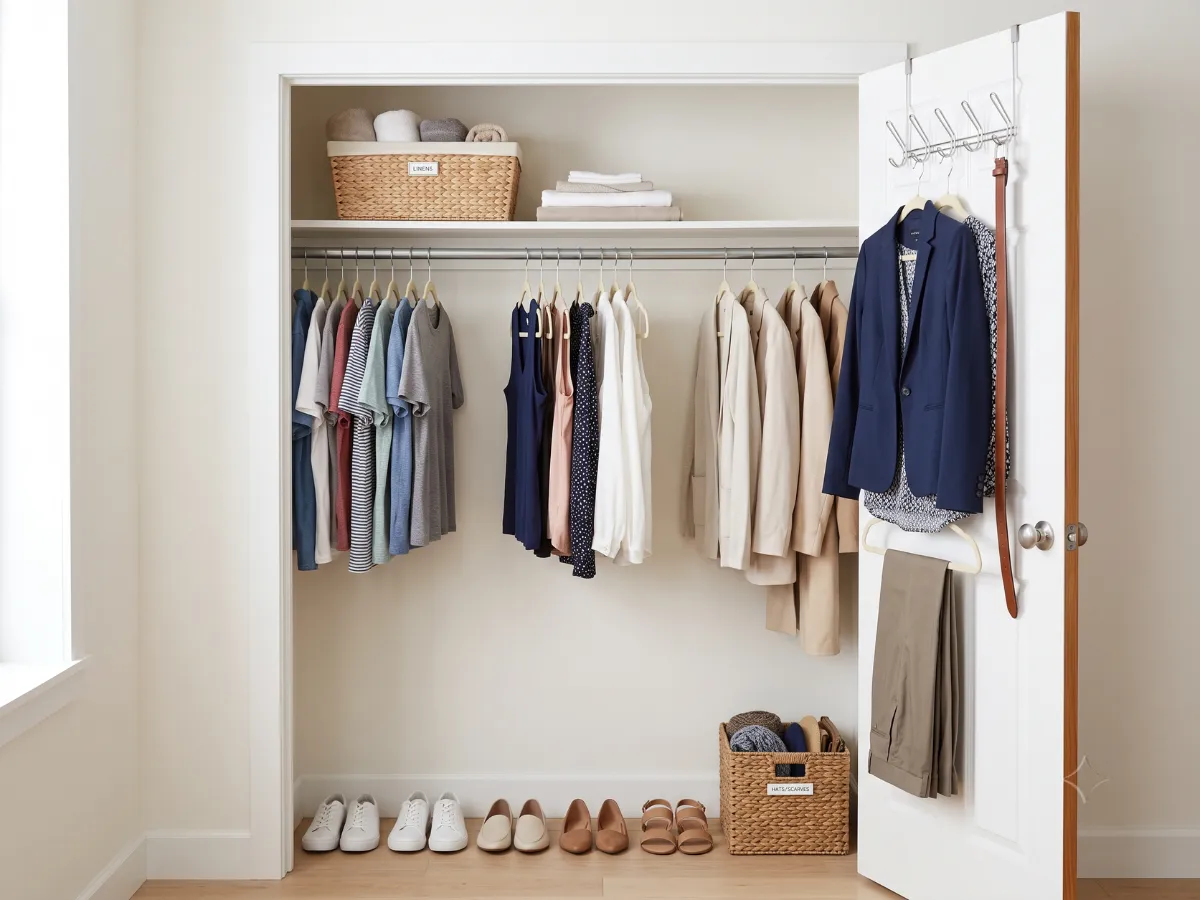
1. Measure the closet before you buy a single bin
Most small-closet resets die at the store: you buy a shelf unit or a set of bins that look right online and then do not fit the actual space. Spend five minutes with a tape measure first and write down four numbers — the rod length, the distance from rod to floor, the shelf depth, and how far the door swings into the opening. Those four numbers decide everything you are allowed to buy.
Shelf depth is the one people get wrong. A shelf eight inches deep cannot hold a standard storage cube, and a bin that sticks out past the shelf edge catches on clothes as you pull them off the rod. If your shelf is shallow, buy shallow bins or a fabric hanging organizer instead of forcing a deep cube into a narrow space.
Cost: $0. Time: 5 minutes. Keep the four numbers on your phone — you will want them the next time something needs replacing too.
2. Empty it fully, then sort into three piles
Half-declutters fail because you never see the full volume. Pull everything out onto the bed or the floor, wipe the shelves, then sort into three piles: keep, relocate, donate. Keep is what you actually wear. Relocate is what belongs in another room — the winter coat goes to a garment bag under the bed, the spare towels go to the linen closet. Donate is anything you did not wear last season unless it is genuine occasion wear.
The relocate pile matters more than it looks. A small closet only works when it holds clothes you wear now; everything seasonal or situational has to live somewhere else. Give that somewhere a name before you start, or the relocate pile just moves the clutter to a new chair.
Cost: $0. Time: 2 hours. Bag donations the same day so they stop living on the chair. Donation rules vary by location: what items you can bring to a donation center will depend on the Goodwill organization you are donating to.
3. Zone the rod: daily, work, occasion
One mixed rod means morning rummaging. Group what is left into three zones — daily left, work middle, occasion right — with a half-inch of breathing room between them. You will see gaps again, which is the point: a gap tells you the closet is not overfull, and an overfull closet is what makes people stop putting things back.
Hang each zone in one direction, left to right, and within a zone sort by sleeve length so the hemline steps down. Long items go at one end so the short items underneath free up floor space for a shoe row or a bin. If the rod will not hold all three zones, the occasion zone is the one to relocate — you reach it a few times a year, so it does not earn prime hanging space.
Cost: $0. Time: 45 minutes. Matching slim hangers help, but zoning matters more than hangers — do not wait on new hangers to start.
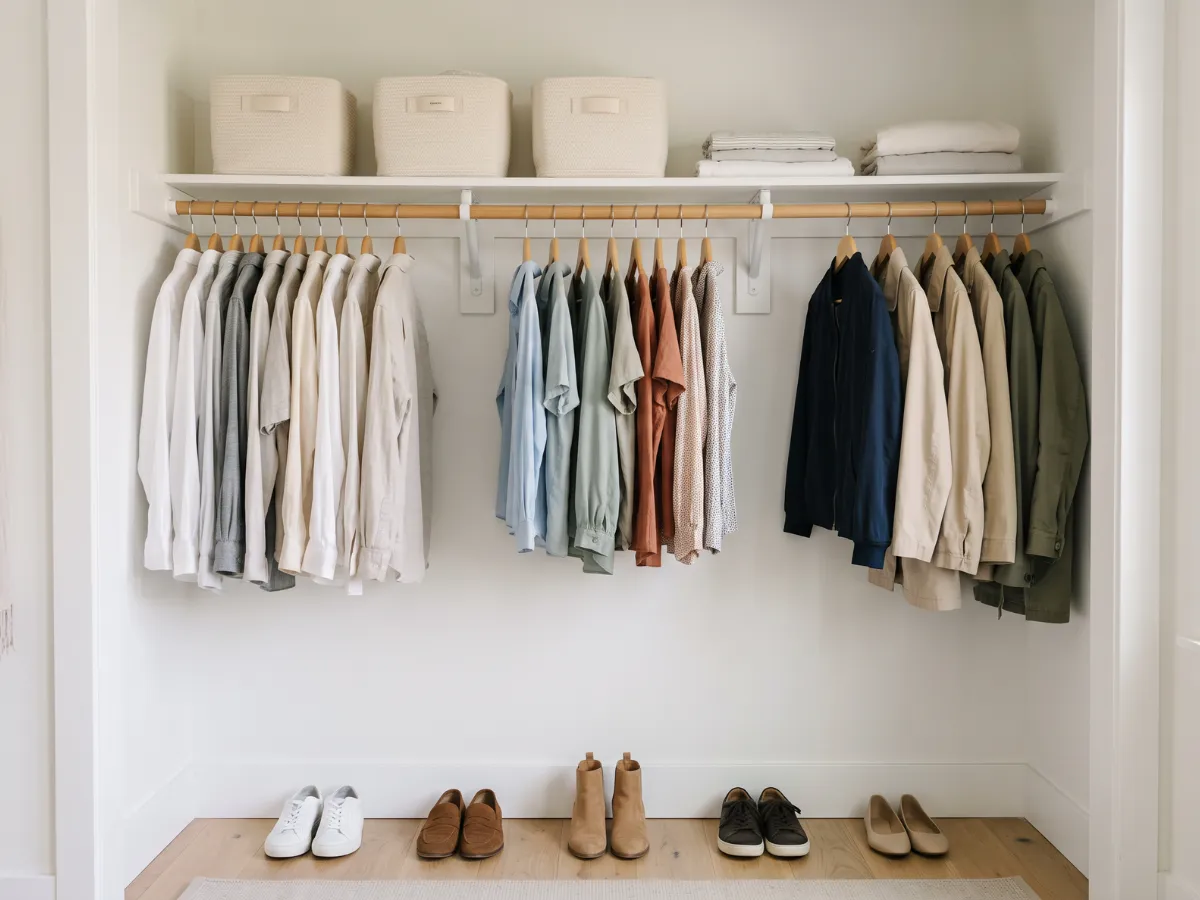
4. Use the vertical space you already own
The door back, the shelf top, and the floor each hold one category. Hooks on the door for tomorrow's outfit, one bin on the top shelf for off-season, shoes in a single row on the floor. Nothing stacked more than two high, because the third item in a stack never comes back out — it just buries the two underneath it.
The space above the rod is the most wasted real estate in a small closet. A single shelf or a fabric hanging organizer up there turns dead air into folded-sweater or bag storage without touching the floor. On the door, over-door hooks beat adhesive strips for anything with weight; save the adhesive hooks for scarves, belts, and tomorrow's outfit, which are light enough to stay put.
Cost: $10–$30 for hooks and one bin. Time: 30 minutes. Over-hook doors, no screws — renter-safe by default.
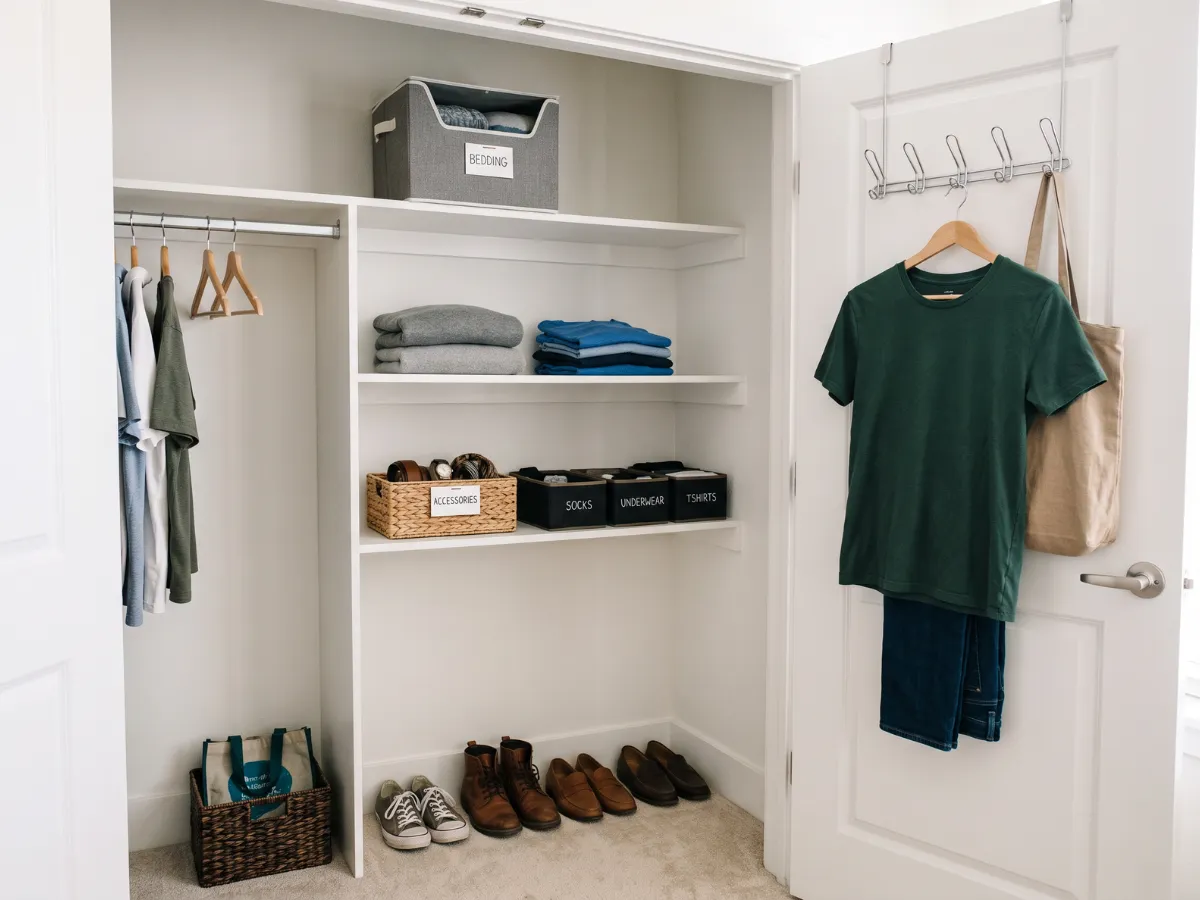
5. Decide folded or hung, garment by garment
The rod is your scarcest resource, so only things that must hang should hang. Blouses, dresses, jackets, and anything that creases go on the rod. Knits, tees, jeans, and leggings fold — hanging a heavy sweater stretches the shoulders out of shape, and folded knits take a third of the rod space for twice the clothes.
Fold to one width so the stack lines up with the shelf edge instead of spilling forward. A drawer divider or even a folded towel at the front of a shelf stops the stack from sliding off when you pull one item from the middle. If you run out of rod before you run out of hangers, that is the signal to fold more, not to buy a second rod.
Cost: $0–$15 for one drawer divider. Time: 30 minutes. Do this while the keep pile is still on the bed, before anything goes back.
6. Contain the small stuff in one bin per shelf
Accessories and folded extras spread until they are boxed. One open bin per shelf — scarves, gym, repairs — with a label you can read from the doorway. If a bin overflows, something leaves before anything new enters. The label is not decoration; it is what makes the bin returnable when someone else in the house puts things away.
Buy bins after the declutter, not before, and only for the categories you actually kept. Most people discover they need three or four bins, not the eight they almost bought. Clear beats opaque for anything you reach for often, because you can see the contents without pulling the bin down; opaque is fine for the off-season bin that lives on the top shelf.
Cost: $10–$25. Time: 30 minutes. Open bins beat lidded ones here; you need to see inside.
A six-pack when you only need four is not a mistake
The rule above says three or four bins, and a set of six does not break it if you know where the extra two go: one on the shelf you have not done yet, and the rest folded flat until they are needed. Fabric cubes are the open bins this step asks for — no lid, so you can see in — and the spare space costs nothing while it sits folded.
See the six-pack of 11-inch fabric storage cubes. Measure before you order, and use the shelf depth number from step 1 rather than guessing: each cube is about 10.2 inches square and 11 high, so it needs a shelf at least eleven inches deep and a cube organizer opening of eleven inches or more. If your shelf is the eight-inch one this guide warns about, these are the wrong buy and a shallow fabric bin in the same style is the right one. Each cube is rated for 11 pounds — scarves and gym kit, not a stack of jeans.
Price and stock were checked when this guide was last updated; they move. As an Amazon Associate we earn from qualifying purchases.
7. A two-minute nightly hang keeps the reset
Resets die on the chairdrobe. Hang or bin everything before bed — two minutes, no exceptions for the first two weeks. Pair it with an existing habit, like brushing your teeth or setting out tomorrow's clothes, so it sticks without a reminder app. The habit is the whole system; the bins and the zones only hold as long as things get put back.
Give the chair one honest job if it is going to exist anyway: the worn-once-not-dirty layer that is not ready for the hamper or the rod. One item, not a stack. When the chair holds more than that, it has become the closet you were trying to fix.
Cost: $0. Time: 2 minutes nightly. Miss a night, reset the next morning before it compounds.
What we would skip in a small closet
- A second tension rod across a short closet — it blocks the clothes already hanging and rarely fits the depth you measured.
- Lidded bins for daily wear. If you have to lift a lid to see it, you will not put it back.
- A full matching-hanger set bought before the declutter. You will own fewer hangers than you think once the donate pile leaves.
- Over-the-door shoe pockets for accessories — the pockets sag and the small items mix back into one jumble.
- Anything that needs a screw, a drill, or a stud for a rental. Over-door and adhesive carry a light daily load and come off clean at move-out.
Weekend reset checklist: copy this before you start
- Four measurements written down: rod, rod-to-floor, shelf depth, door swing
- Everything pulled out, sorted: keep, relocate, donate
- Rod zoned in three groups with breathing room between
- Folded-vs-hung decided per garment; knits and tees folded
- Vertical trio set: door hooks, top-shelf bin, shoe row
- One open bin per shelf, labeled from the doorway
- Two-minute nightly hang paired with an existing habit
Small closet questions, answered
How do I organize a small closet with no shelves?
Go vertical on the door and the rod. An over-door hook rail carries tomorrow's outfit and bags, and a fabric hanging organizer clips onto the rod to create shelf-like cubbies for folded knits. The floor holds one shoe row. None of it needs a built-in shelf or a drill.
Should everything hang, or should I fold?
Hang what creases — blouses, dresses, jackets. Fold knits, tees, jeans, and leggings. Folding those takes a third of the rod space and protects heavy sweaters from stretching at the shoulders. The rod is your scarcest resource, so let the things that must hang have it.
What is the cheapest way to add storage to a rental closet?
Over-door hooks and one top-shelf bin, both under $30 together. They use space that is already there — the door back and the air above the rod — and they come off clean at move-out, which is what makes them renter-safe.
How do I keep a small closet from getting messy again?
With the two-minute nightly hang, paired to a habit you already do. The bins and zones only hold if things get put back, and one small daily action beats a bigger reset you keep postponing. Miss a night and fix it the next morning before it compounds.
Save these on Pinterest
Pin your starting pile — keep, relocate, donate — then see the Organization & Storage collection for the kitchen companion checklist.