 Plant As Deco
Home Organization & Storage
Bathroom Organization Ideas for Small Spaces: A Renter Weekend Reset
By Plant As Deco · Updated 13 November 2026
Small bathrooms fail at the same two points: the cabinet under the sink and the flat surfaces that collect everything. This reset measures the cabinet and the pipe first, zones the under-sink by how often you reach for something, takes storage vertical, and ends with a two-minute routine that keeps the counter clear. Renter-safe throughout: nothing drilled, nothing glued.
Weekend-ready: $20–$60, one weekend. Measure first, buy containers last, renter-safe.
This guide contains an affiliate link. As an Amazon Associate we earn from qualifying purchases, at no extra cost to you.
1. Measure the cabinet and the pipe before you buy anything
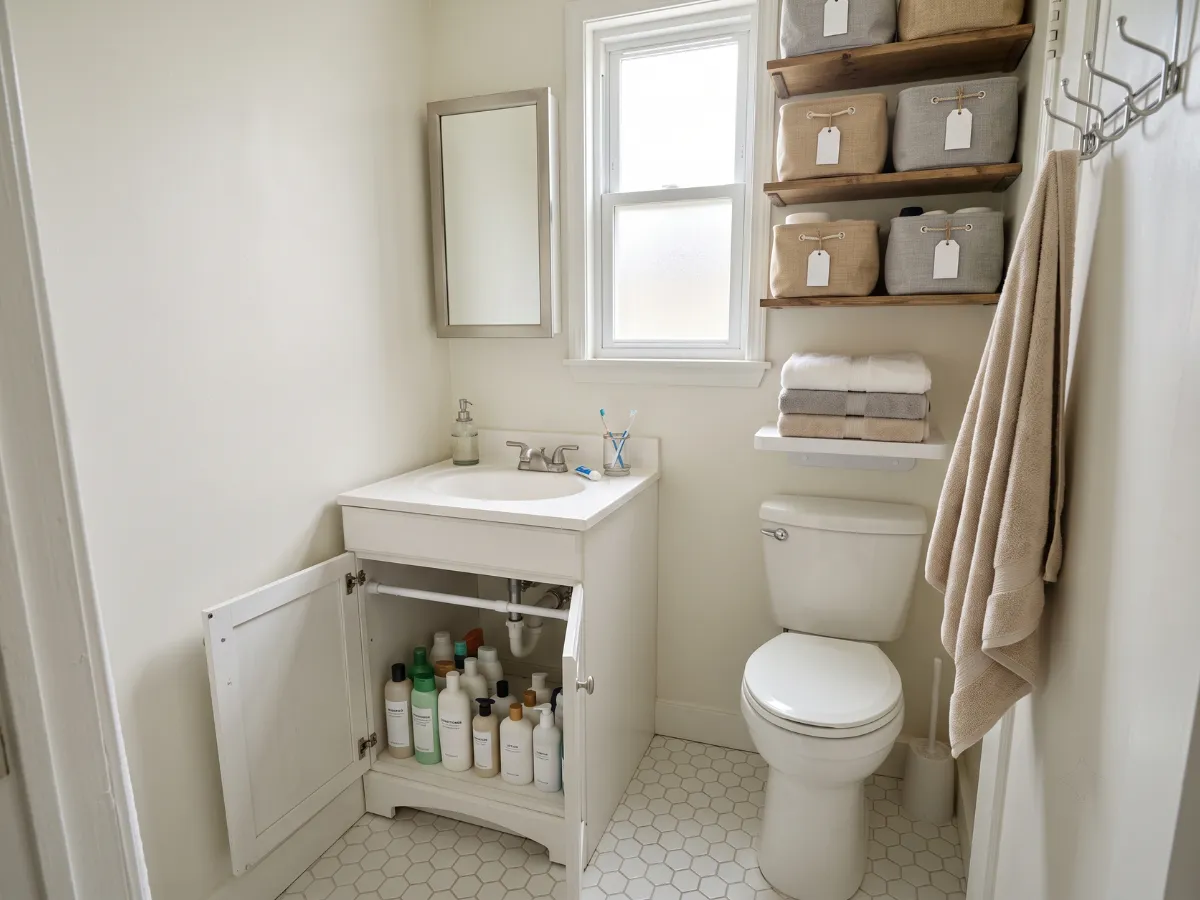
Under-sink organizers fail for one reason: nobody measured. Open the cabinet and take three numbers with a tape measure. The width at the narrowest point, the depth from the back wall to the inside of the door, and the height from the cabinet floor to the underside of the sink. Then measure the plumbing, because that shape decides what fits. Note how far the drain pipe sits off the back wall and how far the trap projects into the cabinet. A pipe that hugs the wall leaves room for a sliding organizer. A trap sitting dead center leaves a U-shaped gap, which wants two small bins that flank it, or one shelf mounted above the pipe holding the bottles you touch weekly. Write the three numbers on your phone before you shop, and check them against the dimensions on the listing: every organizer worth buying states its size, and the ones that do not are a guess.
Cost: $0. Time: 20 minutes. A tape measure and one phone photo of the open cabinet are the whole kit.
2. Empty it fully, then sort into three piles
Half-resets fail because you never see the full volume. Pull everything out of the cabinet, the drawers, and the shower ledge, then sort: daily, weekly, rarely. The rarely pile leaves the bathroom for a closet shelf, or leaves the home. Expired bottles and dried-out tubes go first; they are holding the best spots. Two half-used cleaners count as one item, so finish the open bottle before the next one is opened.
Cost: $0. Time: 1 hour. Bag the discards the same day so they stop living on the counter. For safer cleaner choices, the EPA Safer Choice guide explains what to look for on the label.
3. Zone the under-sink cabinet: daily, weekly, backup
Frequency decides position, not category. Everything you touch every day goes at the front, at hand height, where the door opens: the soap refill, the daily spray, the toothbrush cup. Weekly items sit behind it: the shampoo you rotate through, the spare razor, the tub cleaner. Backup stock goes to the back and the highest shelf: refill bottles, the extra toothpaste, the hotel-size soaps. Stand bottles upright with labels facing out so a glance beats a rummage, and give each zone one open container instead of five loose items. When the backup shelf fills, stop buying until it empties. That one rule is what keeps a narrow cabinet from overflowing again by spring.
Cost: $0–$20 for two bins and one small shelf. Time: 30 minutes. Group by how often you reach for something, not by what the product is.
4. Take storage vertical: the door, the wall, the mirror
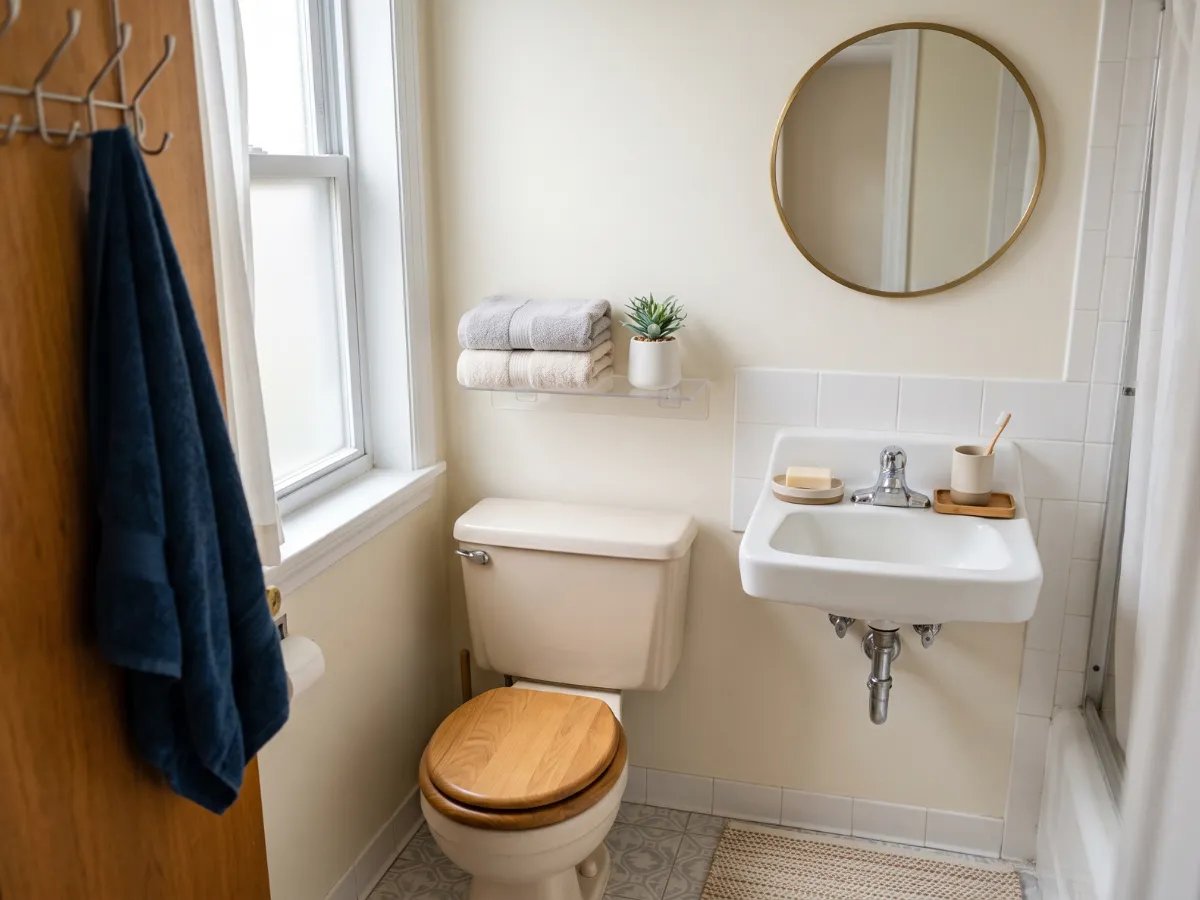
Small bathrooms hide their storage in height, and three vertical spots replace the tower the floor has no room for. On the back of the door, over-the-door hooks take towels and tomorrow's clothes, and a hanging organizer with clear pockets holds the daily kit at eye level. Above the toilet, one adhesive shelf carries folded towels; keep it to one shelf and two stacks, because a wall of shelves over a toilet reads cluttered and collects dust. The mirror zone stays for what you touch twice a day and nothing else. Measure before buying here too: an above-toilet shelf needs clearance over the tank, and a door hook needs a door that still clears the frame when it swings.
Cost: $10–$25 for hooks and one shelf. Time: 30 minutes. Over-the-door hooks need no screws, renter-safe by default.
The door half of that step, and the measurement it needs
The step above splits vertical storage three ways. This is the door part only: the wall shelf and the mirror zone are separate buys, and a bathroom with a door rack alone already reads tidier than one with everything on the counter. It needs no screws and no studs, so it comes back off when the lease ends with nothing to patch.
See the 9-hook over-the-door rack. Nine hooks sit on two staggered tiers, which is how one door holds two towels, a robe and tomorrow's clothes without any hook carrying more than one thing. The finish is a bronze epoxy over steel, and soft foam pads sit where the rack meets the door so the paint does not take the wear. One number decides whether it fits: the rack is built for residential doors up to 1 7/16 inches thick, and the listing says outright that thicker doors, heavily painted ones and some dorm doors will not work. That is the fit check the step above tells you to do before you buy, so measure the door's thickness at the edge, then close the door and make sure there is still room above it for the rack, because a rack that stops the door short of the frame is the failure that ends up in a drawer. If your bathroom door is thicker than that, skip it and hang the same rack over the closet door instead.
Price and stock were checked when this guide was last updated; they move. As an Amazon Associate we earn from qualifying purchases.
5. Contain the small stuff with labels facing out
Tubes and jars spread until they are boxed. One open bin per shelf, one for hair, one for skin, one for first aid, with a label you can read from the doorway. If a bin overflows, something leaves before anything new enters. Open bins beat lidded ones here, because you need to see inside at a glance in a room this size. Decant only what you buy in bulk and leave the rest in its original packaging, with a binder clip on a half-empty tube so the last of it stays usable instead of drying out at the back of a drawer.
Cost: $10–$20. Time: 20 minutes. Skip the matching decant set; three plain bins and a roll of tape do the same job.
6. Share the bathroom: one shelf and one bin per person
A shared bathroom fails at the door, not at the bins. Two people's bottles in one cabinet turn the zones back into a pile within a day. Give each person one shelf and one bin, label both with a name, and keep one shared shelf for backup stock and cleaning supplies. Each person gets one hook on the door back for a towel, and the counter stays down to one shared tray. When the cabinet is too narrow for two full zones, move the backup stock out to a hallway closet and let each person keep daily items only. The room then only holds what someone actually uses, and nobody has to dig past a roommate's shampoo to reach the soap.
Cost: $0–$10 for one extra bin and a label maker tape. Time: 15 minutes to divide and relabel. Relabel whenever a roommate changes.
7. A two-minute nightly reset keeps the counter clear
Resets die on the counter. Every night, in the same order: caps on, daily items back in their bin, one wipe of the sink edge, trash out if it is full. Two minutes, paired with brushing your teeth so it runs without a reminder. Miss a night and reset the next morning before it compounds. The counter stays down to soap and one tray, and that clear surface is what makes a small bathroom read calm instead of crowded.
Cost: $0. Time: 2 minutes nightly. Same order every night, no decision required. The weekly side of the same habit lives in the small-apartment cleaning routine.
Common questions
How to organize under your bathroom sink?
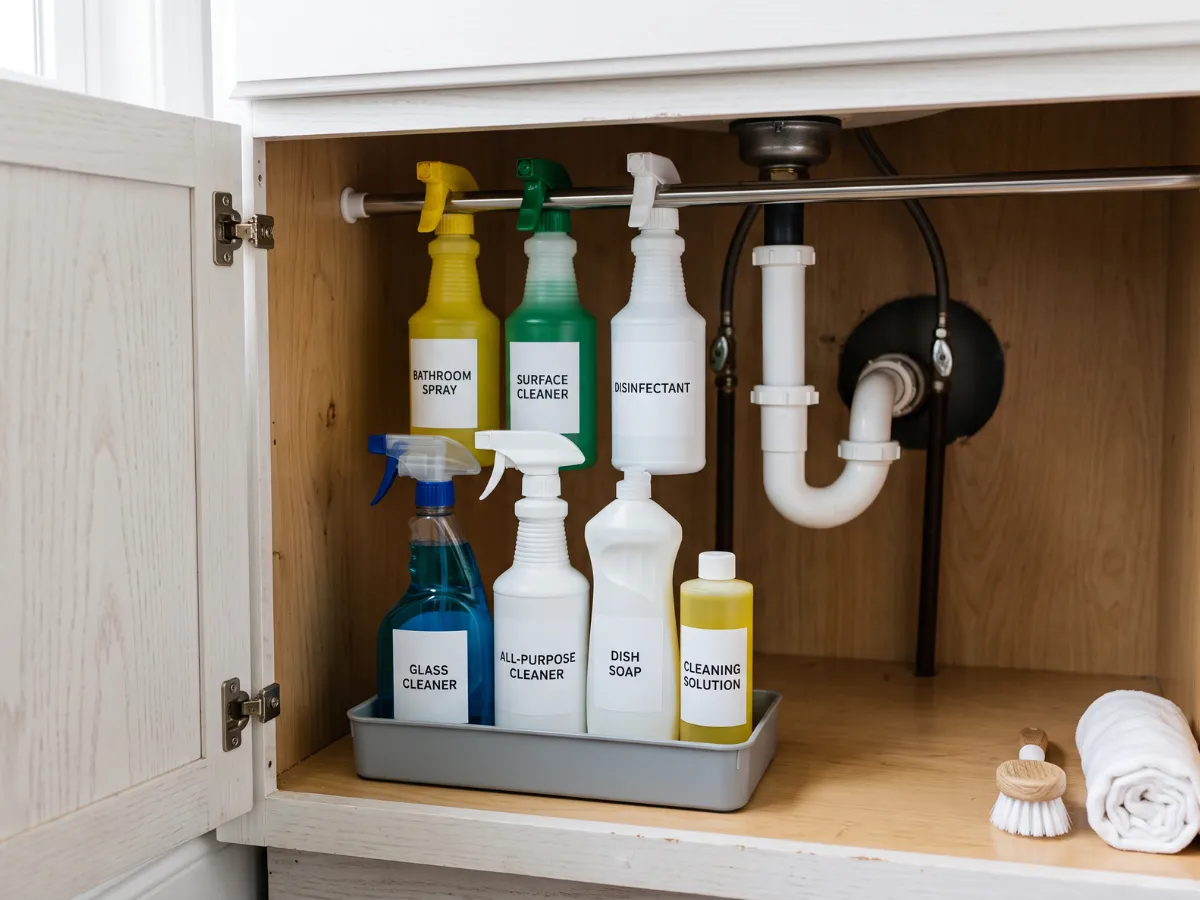
Empty it, measure the pipe, then zone by frequency: daily at the front, weekly behind it, backup at the back. Two small bins that flank a center trap do more than a drawer insert that fights the plumbing, and a tension rod across the cabinet holds spray bottles off the floor for less than any organizer set.
Under sink bathroom storage with no cabinet: what works?
Work around the pipes instead of hiding them. A tension rod between the walls of the vanity holds spray bottles, a small tray catches the drips, and the counter keeps one open basket for daily items. Exposed pipes have one real advantage: you see a leak the week it starts.
What should stay on the bathroom countertop?
Soap, one tray, and whatever you use twice a day. Everything else moves to a shelf, a bin, or the back of the door. A clear counter is the fastest visible win in a small bathroom, and it costs nothing but the decision.
Do bathroom organization ideas for small spaces need drilling?
No. Over-the-door hooks, adhesive shelves, tension rods and open bins cover this whole plan, and each one comes off without a mark. The only measurement that matters is the cabinet, and the only tool you need is a tape measure.
How often should the under-sink zones be redone?
Once a season is enough for a full re-sort; the nightly reset covers the rest. When a zone stops working, the fix is usually a smaller pile rather than a new organizer. Pull the backup stock out first and see whether the daily items fit again.
Weekend reset checklist: copy this before you start
- Cabinet and pipe measured, the three numbers saved
- Everything pulled out and sorted: daily, weekly, rarely
- Under-sink zoned by frequency, bottles upright, labels out
- Three vertical spots set: door hooks, shelf, mirror zone
- One open bin per shelf, labeled from the doorway
- Shared bathroom split: one shelf and one bin per person
- Counter down to soap and one tray after the nightly reset
Before and after: what actually changes
Before: bottles crowded around the drain pipe, backup stock stacked in front of the daily soap, towels over the door frame, and a counter holding everything at once. After: three zones under the sink with daily items at hand height, one shelf above the toilet, and a counter down to soap and one tray. Same bathroom, same plumbing, same rental. The difference is position, not square footage.
Skip the showroom moves: matching decant sets, a drawer insert that ignores the trap, or a shelf above the toilet that blocks the flush. Measure first and let the pipe decide the organizer.
Save these on Pinterest
Pin the zone you will tackle first: the under-sink and the door back are the fastest wins. The rest of the system lives in the Organization & Storage collection for the kitchen and closet resets.