 Plant As Deco
Home Organization & Storage
Laundry Room Organization for Small Spaces: A Renter Weekend Reset
By Plant As Deco · Updated 13 November 2026
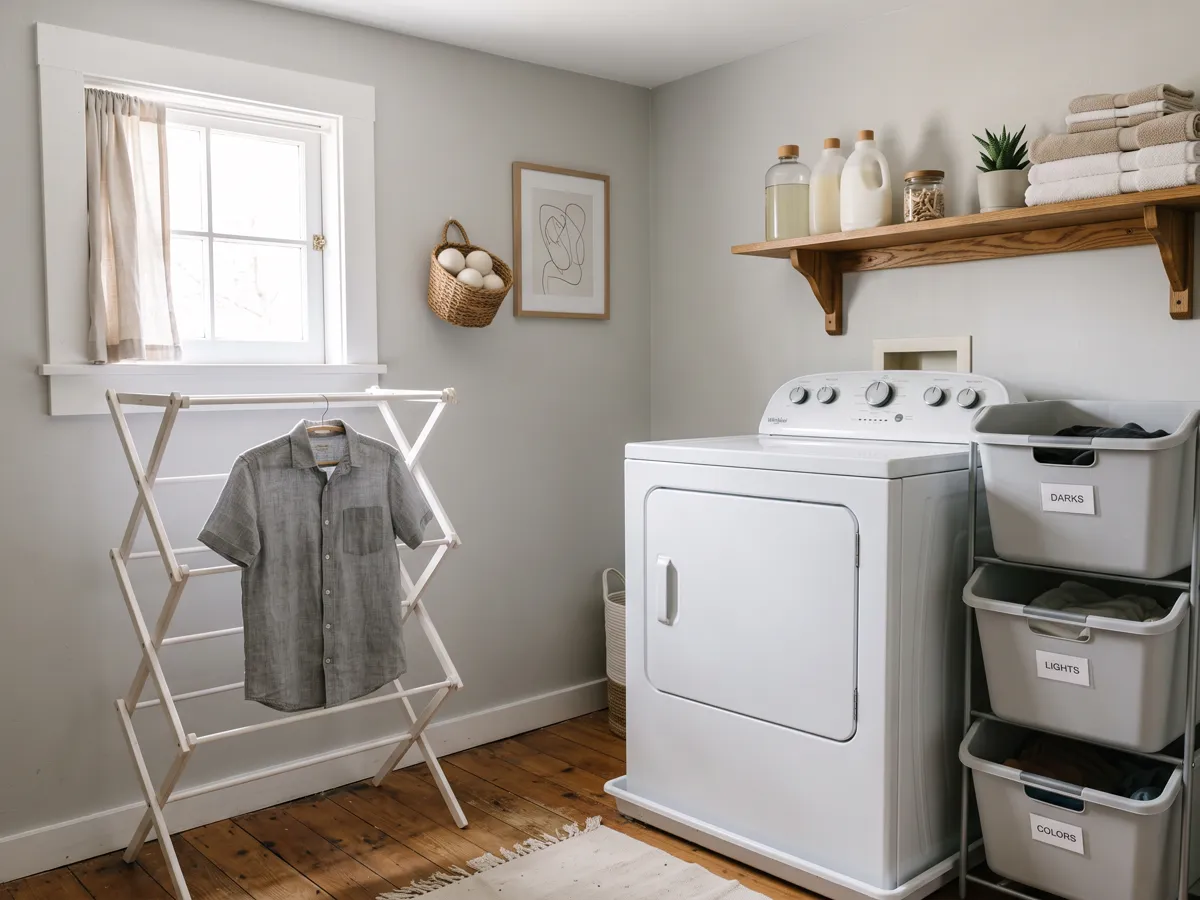
Small laundry corners fail at sorting and surfaces: one mixed pile, detergent bottles spread across the washer lid, and nowhere to dry one delicate. This reset builds a sort station that fits a closet footprint, takes drying vertical, and zones supplies so the washer top stays clear. Renter-safe throughout — nothing drilled into tile.
Weekend-ready: $25–$70, one weekend. Sort first, stack vertical — renter-safe.
This guide contains an affiliate link. As an Amazon Associate we earn from qualifying purchases, at no extra cost to you.
At a glance
- Who it is for
- Anyone with a washer and dryer in a closet, a bathroom or a corner of the kitchen, rented and not yours to rebuild.
- What you need
- A tape measure, one 12-inch shelf or a freestanding unit, three baskets, and a small bottle for decanting.
- What it costs and takes
- $25–$90 and one afternoon; the freestanding route needs no holes at all.
1. Pull everything out, toss the empties
Laundry corners collect almost-empty bottles and single socks for months. Pull everything off the washer, the shelf, and the floor, then sort: stays in the laundry zone, relocates elsewhere, leaves the home. Finish the stray bottles first and recycle the empties — half bottles hold the best spots.
Cost: $0. Time: 45 minutes. Bag the discards the same day so they stop living on top of the dryer.
2. Build a three-stream sort station in a closet footprint
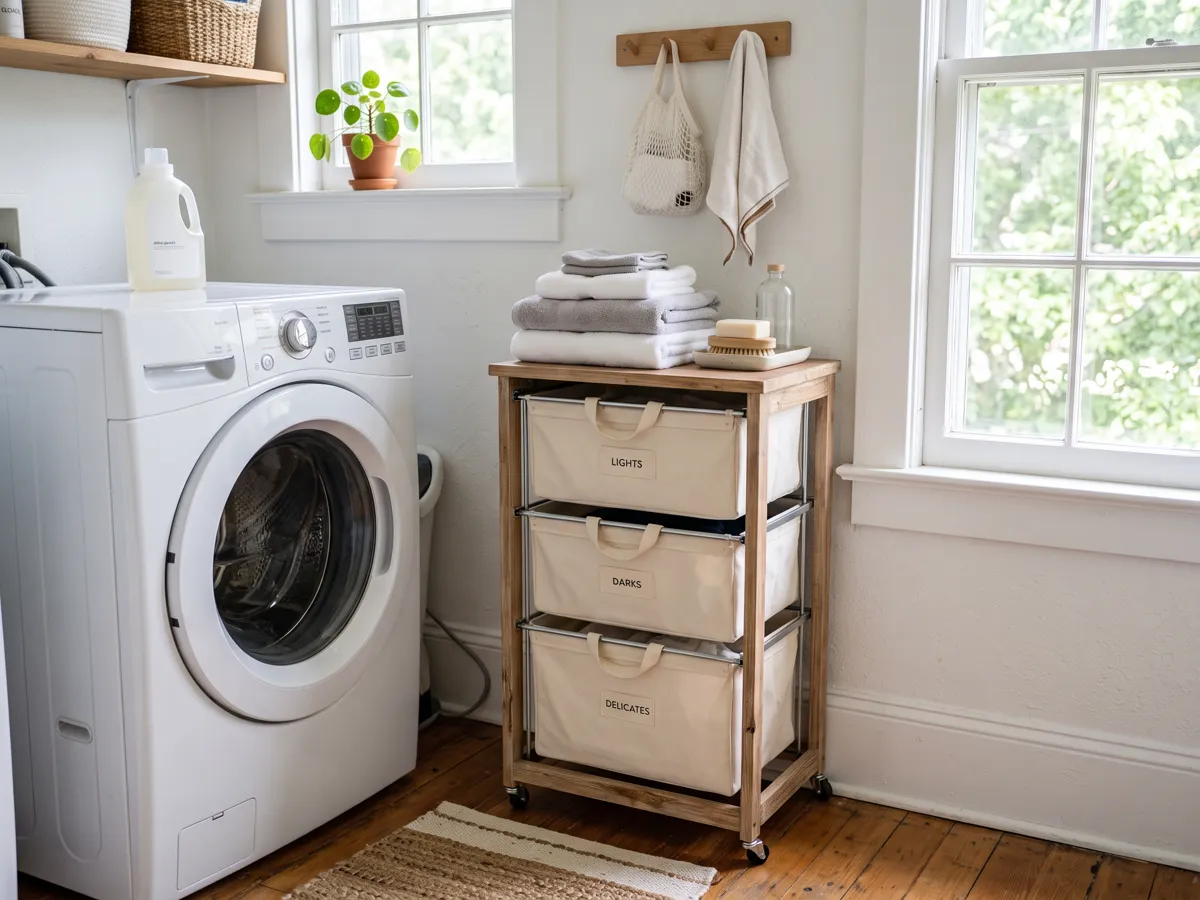
Sorting works when the bins are where clothes land. Stack three slim bins — lights, darks, delicates — in a single closet-width footprint next to the washer, or use a double hamper plus one mesh bag on a hook. When sorting takes zero steps, the mixed pile on the floor stops forming.
Cost: $15–$35 for stackable bins. Time: 30 minutes. Label each bin at eye level so guests and roommates sort correctly too.
The double-hamper route to that station
The step above offers two builds for the same station: three slim bins, or a double hamper plus one mesh bag on a hook. This is the second build, for the corner where the floor is narrower than a closet — the hamper carries lights and darks in one footprint and the mesh bag on the hook takes the delicates. The lid matters in a bedroom or a shared space: it hides the pile that would otherwise sit open next to the bed.
See the double laundry hamper. Two divided sections, one for lights and one for darks, with a drawstring laundry bag in each that lifts out by its handles and goes to the machine in one trip. The frame is polyester fabric over a steel rod and six glass-fibre support poles, with stiff panels top and bottom — not a rigid basket, so it folds flat when a move or a deep clean needs the space back, and it takes a few minutes of threading the poles and tying the buckles before the first use. The footprint is 23.6 by 13.8 inches and it stands 25.6 inches tall, which is the set of numbers to measure against the gap next to your washer before buying, and the two sections together hold roughly three to four loads, which suits a once-a-week wash day. The delicates still need a mesh bag of their own on a hook, and that one is a separate buy, because a mesh bag is what keeps a sweater out of the spin cycle.
Price and stock were checked when this guide was last updated; they move. As an Amazon Associate we earn from qualifying purchases.
3. Fit a 12-inch shelf above the machines
Measure three things first: the width of the two machines side by side, the clear height from the machine tops to whatever is above, and the depth you can take without the shelf catching your head when you load. Tape the three numbers to the wall before you buy anything.
Why 12 inches: a detergent jug is about 10 inches deep and a 12-inch shelf still clears the door swing. Deeper than 16 inches and the front edge sits at forehead height every time you bend to load — that is the shelf people take back down.
Set the underside about 18 inches above the machine top so a full jug and your hand fit, or split it into two shelves 10 inches apart when the ceiling is low. A shelf you cannot see the back of is a shelf you stop using.
Rental note: a screwed shelf needs studs or toggles, and the wall behind the machines is often the one you cannot touch. The no-hole route is a floor-standing unit beside the machines, or an over-the-machine rack on the appliance tops — but a washer that walks on spin rattles anything balanced there, so level the feet first. Same zone logic as kitchen storage by zone: heavy high, daily in reach.
| Shelf depth | What it holds | The catch |
|---|---|---|
| 8 inches | Detergent bottles upright, a lint bin, dryer sheets | A jug handle overhangs the front edge, so nothing deep goes here |
| 12 inches | A full jug, plus a basket for singles and lint | The tallest bottle sets the gap to the shelf above |
| 16 inches or deeper | Too deep for a laundry alcove | The front edge catches your head every time you load |
Cost: $25–$60 for a board, two brackets and screws, or $40–$90 for a freestanding unit. Time: 1 hour.
4. Zone supplies: detergent high, daily kit on a tray
Keep the heavy detergent where you lift it least — a shelf at shoulder height above the washer — and corral the daily kit on one tray: stain stick, dryer balls, mesh bags. Backstock lives elsewhere, not in the laundry corner. The washer lid stays clear; that clear surface is what makes the corner read calm.
Cost: $5–$15 for a tray and shelf brackets. Time: 20 minutes. One open bottle of each product — finish it before opening the next.
5. Decant the detergent and label the bottle
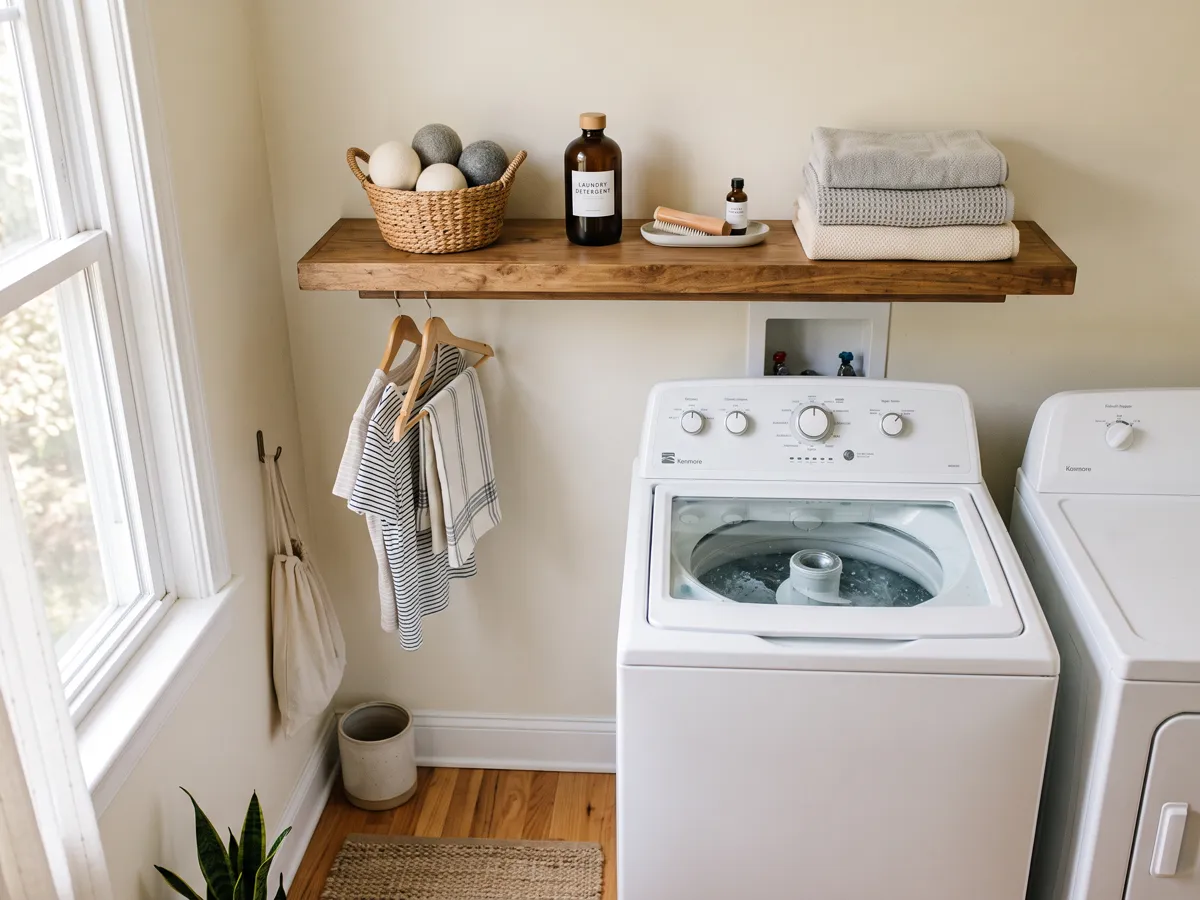
The big jug is heavy, drips on the machine top and needs two hands. Decant a week’s worth into a smaller bottle with a cap you can open one-handed, and keep the original jug on the high shelf for refills. The washer top stays dry, which is the part the eye reads first.
Use the cap that came with the product to dose, not a guess. A smaller bottle with a marked cap is what stops the over-pour that leaves a residue ring in the drawer and a film on the seal.
Label the bottle. Write the word detergent and the dose on a strip of tape: an unmarked bottle in a laundry room is the one thing a visitor will open, and detergent is not a drink. Never decant into a water, juice or food bottle; keep every decanted bottle labeled and out of reach of children.
Rinse the funnel and the small bottle between products, and never mix two detergents in one bottle. The cleaning routine for a small apartment keeps the rest of the supplies on the same short cycle, so the bottle gets rinsed when the shelf gets wiped.
Cost: $0–$8 for a bottle and a funnel. Time: 10 minutes.
6. Dry vertical: a folding rack and real airflow
Delicates draped over chairs never dry and always fall. Mount one folding rack on the wall or hang an over-door version, and keep air moving — a cracked door or a small fan beats a sealed damp corner every time. Wet loads should never sit overnight; that sour smell means a rewash.
Cost: $10-$25 for a folding rack. Time: 30 minutes. Keep the dryer clean — the USFA appliance fire prevention guide reports that failure to clean was the leading factor contributing to the ignition of clothes dryer fires in homes from 2018-2020.
7. Fold the same day, one basket at a time
Clean laundry dies in the basket. Fold each load the day it dries, straight from dryer to drawer, and cap the system at one basket — a second clean basket means folding is overdue, not that you need more baskets. Ten minutes per load beats a Sunday mountain.
Cost: $0. Time: 10 minutes per load. Pair folding with a show you only watch while folding.
8. Lint every load, wipe the gasket monthly
Clear the lint screen with every single load and empty the bin beside the dryer before it overflows. Once a month, wipe the washer gasket and run an empty hot cycle — five minutes that keeps musty smells from settling into the corner for good.
Cost: $0. Time: 1 minute per load, 10 minutes monthly. A full lint screen also dries slower, so this saves time twice.
9. Split the room when the laundry is shared
In a shared apartment the organization system fails at the door, not at the bins: one person's socks land on top of the sort station and the three streams collapse into one mixed pile within a day. Give each person a bin and keep one shared bin for towels and bedding, then put a small hook or over-door basket inside each bedroom for what is not ready to wash. The room then only ever handles clothes that are actually dirty and actually sorted.
Keep the claim to what the system can hold: three labeled bins, one clear washer top, and one basket per person. Anything past that needs a second closet, a hall cupboard or a smaller weekly load — the corner cannot be organized into more space than it has.
Cost: $0–$20 for two extra bins and hooks. Time: 30 minutes to relabel and reset. Relabel whenever a roommate changes, because an unused bin becomes the mixed pile again.
What goes wrong
The shelf sags in the middle. The board is too thin for the span — add a center bracket or use a 1-inch board.
Everything on the shelf rattles on spin. The machine is not level — adjust the feet and re-check with a spirit level before blaming the shelf.
The drying rack blocks the door. Move it to the tub or over the machines, and dry with the door open and the fan on.
Detergent drips down the machine front. The jug is too big for the tray — that is the whole reason to decant.
The sort station is a pile again by Thursday. The baskets are too small for a real load — size one basket per load type, not one basket per color.
Cost: $0. Time: 10 minutes to check each one.
What we would skip in a rental
Clear out what nobody wears first with the room-by-room declutter checklist, then spend on the one thing that fixes the corner. These six are the buys we would leave on the shelf.
- Built-in cabinets or a counter over the machines — the landlord owns the room, and a counter needs a frame.
- Stacking the machines without the manufacturer’s stacking kit.
- A shelf screwed into drywall with no stud and no toggle.
- A decorative basket set that does not stack when it is empty.
- A folding table that blocks the door swing.
- A second drying rack before the first one has a home.
The money is better spent on one shelf that fits than on five containers that do not.
Cost: $0. Time: 2 minutes.
Common questions
How often should the dryer lint screen be cleaned?
Every load. Clearing the screen is the one upkeep step that changes both safety and drying time: the USFA appliance fire prevention guide reports that failure to clean was the leading factor contributing to the ignition of clothes dryer fires in homes from 2018-2020. Wash the screen in soapy water once a month if it looks waxy — the residue is dryer sheet film, not lint.
What is the cheapest way to sort laundry in a small space?
Three slim bins stacked in one closet-width footprint, labeled at eye level: lights, darks, delicates. If the footprint will not take three, a double hamper plus one mesh bag on a hook does the same job. Sorting works when it costs zero steps — the moment you have to walk to sort, a mixed pile starts forming on the floor.
Can laundry be organized without buying anything?
Most of it. Steps one, five and six are free: pull everything out and recycle the empties, fold each load the day it dries with one basket as the cap, and clear the lint screen every load. That leaves only the sort bins and the folding rack as real purchases, and both can be replaced with what you already own — a laundry basket, a mesh bag and a chair near an open door.
Why does the laundry corner smell even when it is tidy?
Usually standing water: a gasket that never dries, a drain trap, or a wet load left in the machine overnight. Wipe the gasket after every wash, leave the door cracked so the drum dries, and never leave a damp load sitting past the evening. A sealed damp corner keeps that smell even after everything else is clean.
Where should detergent live in a small laundry space?
On the highest shelf you can reach comfortably, above the washer — shoulder height, not overhead. That keeps the heavy bottle off the washer lid, which is the surface that makes the whole corner read calm or cluttered. The daily kit goes on one tray at hand height: stain stick, dryer balls, mesh bags. Backstock stays out of the room entirely.
Weekend checklist: copy this before you start
- Everything pulled out, empties recycled, strays finished
- Three sort streams set in one closet-width footprint
- Folding rack mounted, damp corner ventilated
- Detergent on the high shelf, daily kit on one tray
- One-basket rule set, lint screen cleared every load
Before and after: what actually changes
Before: one mixed pile on the floor, bottles across the washer lid, delicates draped over a chair. After: three labeled sort streams, a clear washer top, supplies on one shelf and tray, drying on a rack with moving air. Same corner, same machines. The difference is zones, not square footage.
Skip the showroom moves: matching decant-everything sets, a new washer you do not need, or anything that needs a contractor. Small spaces deserve good systems, not a big invoice.
Save these on Pinterest
Pin the zone you will tackle first — the sort station and the folding rack are the fastest wins. The rest of the system lives in the Organization & Storage collection for the kitchen and closet resets.