 Plant As Deco
Home Organization & Storage
Declutter Checklist Room by Room: A Beginner Weekend Plan for Renters
By Plant As Deco · Updated 18 November 2026
Whole-home decluttering stalls because it starts everywhere at once. This checklist goes room by room instead: one room, one pass, one bag out the door before you move on. Five rooms, one weekend, and a keep-or-let-go rule that ends the maybe pile. Renter-safe throughout — nothing drilled, nothing painted. Then comes the part most plans skip: a 20-minute daily reset and a room-by-room weekly rotation that keeps the rooms clear, plus the clean-in-the-right-order rule that bridges straight into a cleaning routine.
Weekend-ready: $0–$20, one weekend. One room at a time, bags out the door — renter-safe.
This guide contains an affiliate link. As an Amazon Associate we earn from qualifying purchases, at no extra cost to you.

The keep rule: used in a year, or it goes
Before the first room, agree on the rule: if you have not used it in the past year and it has no fixed plan for the next month, it leaves — donate, recycle, or trash. No maybe box; maybes are how clutter comes back. Duplicates go first: second scissors, third water bottle, fifth tote bag.
Cost: $0. Time: 10 minutes to set the rule. Keep three bags per room — donate, recycle, trash — and tie each one before moving on. Sort keep, donate, and recycle piles as you go — the EPA recycling guide links to a page called "how do I recycle..." for the per-material detail.
1. Bedroom: closet, drawers, then surfaces
Start where the clothes are. Pull every hanger, apply the keep rule, then do drawers one at a time — socks and underwear expire quietly and hold prime space. Finish with the surfaces: nightstand down to lamp and book, dresser top down to one tray. For worn-out pairs that leave the rotation, the Goodwill donation guidelines accept clothing you no longer need and welcome shoes, handbags and jewelry.
Bag the worn pairs the same evening so they leave with the rest of the load instead of living under the bed. Donation rules vary by location: what items you can bring to a donation center will depend on the Goodwill organization you are donating to. Read your local list before the car gets loaded, and split anything they will not take into the recycle and trash bags you already have open.
Cost: $0–$10 for donation bags and labels. Time: 2–3 hours. Bag donations the same day so they stop living by the door.

2. Kitchen: duplicates, expired food, then counters
Kitchens clog at the gadget drawer and the pantry back. Pull all utensils first — keep one good version of each tool — then check every date in the pantry and fridge. Clear the counters last: daily coffee setup stays, everything else gets a home inside a cabinet. A clear counter is what makes a small kitchen read calm.
Cost: $0. Time: 2 hours. Expired food leaves today, not after one more maybe — check dates, not wishes.
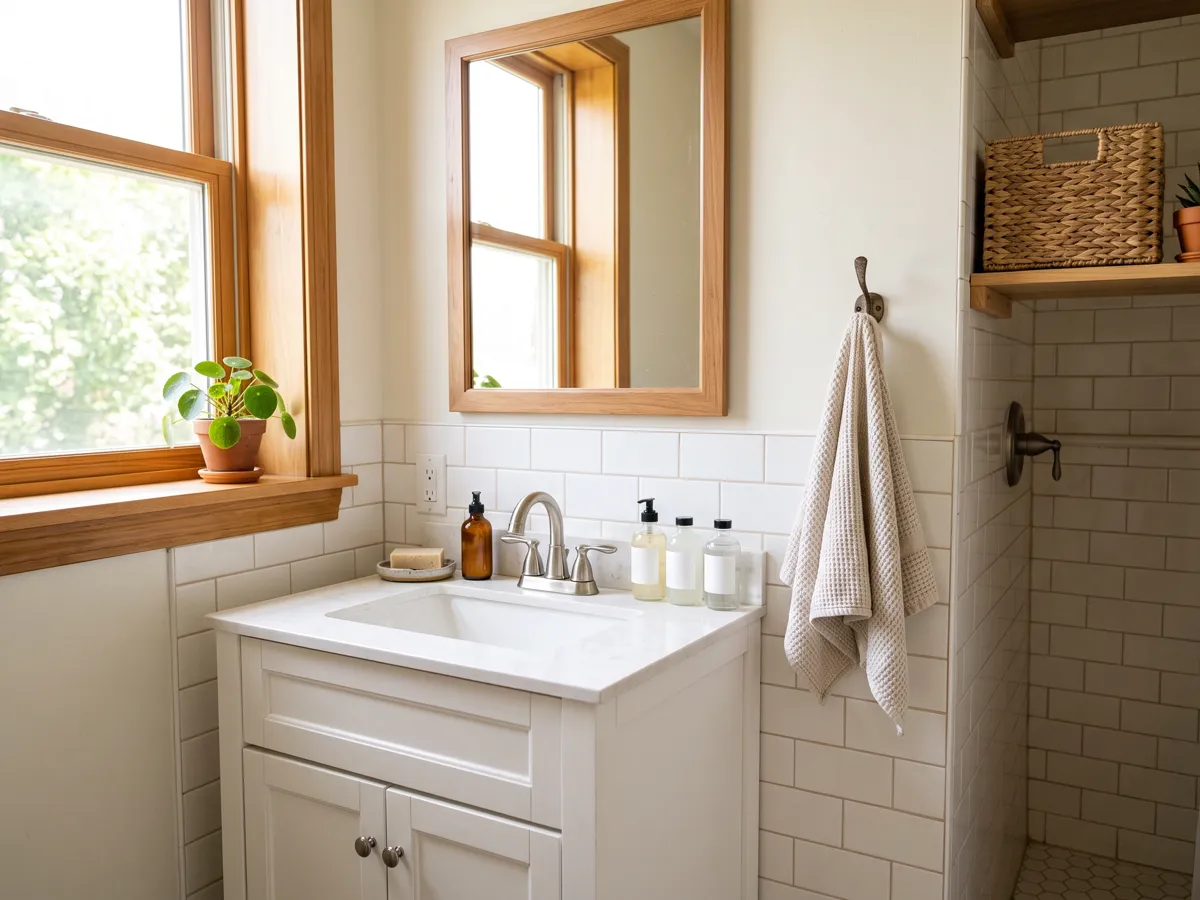
3. Bathroom: expired bottles, then the cabinet
Expired sunscreen and dried-out tubes hold the best spots in a small bathroom. Pull everything from the cabinet, the drawers, and the shower ledge, toss what expired, then put back only what you use weekly. Counter down to soap and one tray — that clear surface holds the whole reset together.
Cost: $0–$5 for a small trash bag run. Time: 1 hour. Relocate the rarely pile to a closet shelf; it never needed bathroom space.
4. Living room and entry: paper, cables, then the drop zone
Shared rooms collect paper and cables. Sort the paper pile into three — act, file, recycle — and recycle on the spot. Untangle cables, label the keepers with tape, and retire the mystery chargers. Finish at the entry: one tray for keys, hooks for coats you wear weekly, shoes down to the pairs that fit the rack.
Cost: $0–$5 for tape and labels. Time: 2 hours. When in doubt, photograph the paper, then recycle it. Old cleaners and batteries never ride in the trash bag. The EPA household hazardous waste guidance is clear that products such as paints, cleaners, oils, batteries, and pesticides can contain hazardous ingredients and require special care when you dispose of them. Bag them separately while you pass the room, and take the whole box on the donation run so nothing sits in a closet for another month.
When the cable step needs a tray, not tape
Tape and labels fix the chargers. What they cannot fix is a power strip and its six cords hanging in the open under a desk, where the room still reads cluttered after every cable has been named. A tray clamps under the same desk, holds the strip, and keeps the cords off the floor where the vacuum and your feet both go. It is the one part of this step that can need a purchase.
See the under-desk cable tray we would buy. Measure the desk underside before you order: check the depth of the lip it clamps to and the width you have to spare, because a tray that fits the strip but not the apron is the usual return. Do the sort above first either way — a tidy tray holding four mystery chargers is still a drawer of clutter.
Price and stock were checked when this guide was last updated; they move. As an Amazon Associate we earn from qualifying purchases.
5. Bags out the door before Sunday night
A declutter is not done until the bags leave the home. Drop donations at the collection point, take recycling to the bin, and trash out the same weekend — bags by the door creep back into closets by Wednesday. Then run one 10-minute nightly tidy per room to hold the reset: surfaces clear, one load of laundry, bags that never restart.
Cost: $0. Time: 30 minutes for the drop-off run. Schedule it like an appointment, not a someday.
6. The 20-minute daily reset that holds it
A declutter falls apart without a closing habit, so give each evening the same 20 minutes: 5 minutes on dishes and the kitchen counter, 5 minutes on the living room surfaces and one paper sweep, 5 minutes on clothes back to closet or hamper, and 5 minutes on the bathroom counter and one trash check. Set a timer and stop at 20 — a reset you can finish beats a perfect one you skip.
Cost: $0. Time: 20 minutes an evening, done before screens come out. Same order every night so the habit runs itself.
7. A room-by-room weekly rotation for small apartments
One room a day beats a Saturday marathon. Monday is the bedroom: sheets changed, drawers straightened, one surface wiped. Tuesday is the bathroom: mirror, sink, toilet, floor spot-clean, about 25 minutes. Wednesday is the kitchen: fridge front check, microwave wipe, pantry front row — dates checked, not wishes. Thursday is floors: every room vacuumed or swept, about 30 minutes for a small apartment. Friday is the entry and laundry: shoes back to the rack, coats on hooks, one load washed and folded. Weekend stays off.
Cost: $0–$5 for a sponge and a trash bag run. Time: 20–30 minutes per day, weekend free. Pin each day to something you already do — laundry to a show, floors to a podcast — so the rotation survives a busy week.
8. Clean in the right order: dry before wet, top before bottom
Order of operations is what turns scrubbing into a routine. Dry work first — dust, sweep, vacuum — because wet mopping a dusty floor makes mud. Top before bottom inside every room: shelves and mirrors first, counters next, floors last, so nothing you cleaned catches what falls from above. Work one room end to end before starting the next, door to door, and the whole weekly rotation runs in half the fuss.
Cost: $0. Time: saves 10–15 minutes per cleaning day once the order sticks. This is the bridge into a full cleaning routine — same rooms, same rotation, just with water added.
9. Make it a printable: one page where the mess is
A checklist that lives in a browser tab dies by Tuesday, so turn this plan into a paper one. Copy the weekend checklist further down into a document, one line per room with an empty checkbox in front of it, then add the three lines the room lists leave out: a weekend date line at the top for the morning you start, a bag-count line per room (set the target before you open a single drawer — three bags in the bedroom, two in the kitchen), and a final line for the drop-off run. Print one page and stick it where the mess is — on the fridge under a magnet, or taped inside a cabinet door so the household walks past it daily and guests never see it.
Paper wins over an app mid-purge for one honest reason: a purge happens wrist-deep in a drawer, and the phone is both the tracker and the distraction. A pen tick takes two seconds. Unlocking, finding the tab, typing, and drifting into a notification costs five minutes and steals you back out of the room you set out to clear. If you want the fuller treatment of a printed page, the printable formats guide builds the artifact in ten minutes; this plan just borrows it.
Cost: $0 — paper and a magnet you already own. Time: 10 minutes to copy, print and stick.
10. The minimalist pass: a slower second round
The weekend plan clears the obvious. A minimalist pass is the slower second round for people who want a calmer baseline than just usable — not a contest, a softer floor. Wait 30 days after the bags leave, then come back one category at a time: clothes one week, books the next, then kitchen tools, then decor. Thirty minutes per category, and the tight rule carries it: the weekend rule was unused in a year and it goes — the second round asks whether you used it this year at all. The duplicate that survived the first pass, the pan with the bent handle, the third throw blanket: this is the round where they leave.
Keep in mind that minimalism is a dial rather than a rule. An empty-looking room that fights how you cook is a worse outcome than a full shelf you actually use, so pick your stopping point per category — some rooms land at a true minimum, others stay pleasantly full. When surfaces stay clear without a fight, stop turning the dial.
Cost: $0. Time: 30–45 minutes per category, one category a week. Everything that leaves joins the drop-off run you already do.
11. The spring reset: a seasonal pass that earns a Saturday
Spring is when the season itself does half the sorting for you. It surfaces exactly what a weekend pass skips: winter coats and boots that never got worn enough to earn next year's hook, heavy blankets crowding the linen closet, expired sunscreen and first-aid staples at the back of the bathroom cabinet, and the spice tins two winters old behind everything you actually cook. Run them all through the same keep rule on one Saturday morning — coats and boots first, then blankets, then the dated items — and the closets that swallowed winter come out smaller before the warm season starts.
Timing matters more than technique. Spring is pickup season for donation centers, so before the Saturday arrives, call your local charity and book the collection — some run scheduled pickup days, some run drop-off windows, and a booked slot turns Sunday from “bags by the door” into a finished reset.
Cost: $0–$20 if your pickup charges a fee or you add storage hooks. Time: one Saturday morning, 3–4 hours. Book the pickup before the weekend so the bags leave the same day.
12. Moving: declutter before a single box gets taped
Decluttering beats moving on simple arithmetic: everything you let go before packing is a box you never buy, tape, carry, or unpack. Sort first, pack second — the four-week countdown fits the keep rule from this page around a moving date.
- Four weeks out: start at the garage, carport, and storage closet. The bulky stuff is the most expensive to move and the easiest keep-rule case, and anything dead on arrival leaves on a haul-away run — $0–$100 for a single load takes it the same week.
- Weeks three and two: one room per weekend, exactly the passes from sections one through four. Nothing new to learn: the same rule, bags and drop-off habit carry over.
- Packing week: run a box audit. Number every box per room and log the count on one sheet. On packing day, whatever is still sitting out unboxed gets a last look — if it survived two months of visible neglect, it never made the cut and no box will save it on the other end.
What sells versus what donates: listing and meeting people for a used $20 chair costs an afternoon you need for packing, so sell only what repays the effort — solid furniture, brand-name power tools, baby gear in good shape. Most household clutter moves faster on the donation run, and the receipt takes less time than a listing. If the destination needs a serious storage reset, the garage cabinet guide plans the room where moving clutter collects first.
Cost: $0–$100 for a haul-away load if you need one. Time: four weekends of one-room passes before packing starts. Every bag donated is a box you never tape.
Weekend checklist: copy this before you start
- Keep rule agreed: unused in a year, or it goes today
- Bedroom: closet thinned, drawers done, surfaces to one tray
- Kitchen: duplicates out, dates checked, counters clear
- Bathroom: expired tossed, cabinet back to weekly-only
- Living and entry: paper sorted, cables labeled, shoes to rack
- All bags out the door before Sunday night
- Daily reset set: 20 minutes, same order, timer on
- Weekly rotation posted: one room a day, weekend off
- Cleaning order memorized: dry before wet, top before bottom
Common questions
How do I declutter my room step by step?
One room, one pass, bags out before you move on. In the bedroom that means closet first, then drawers one at a time, then surfaces down to one tray. Tie each bag — donate, recycle, trash — and set the drop-off run like an appointment, because bags by the door creep back into closets by Wednesday.
What is a realistic cleaning schedule for a small apartment?
A 20-minute daily reset plus one room a day. Evenings cover dishes, surfaces, clothes and the bathroom counter in four 5-minute rounds; weekdays rotate bedroom, bathroom, kitchen, floors, then entry and laundry. The weekend stays off, which is exactly why people keep doing it.
Where should I start decluttering a cluttered house?
Start where the clothes are: the bedroom closet. Clothes are the fastest visible win, the keep rule is easiest to apply to them, and a thinned closet teaches the rule before you face the pantry or the paper pile. One room at a time — never two rooms in one day.
What should I do with old cleaners and batteries I find?
Set them aside for the city drop site, not the trash bin. Treat them exactly like the living-room section says: bag them separately while you pass through the room, then take the whole box along with the donation run. One box, one drop, done — no half-empty cleaner living in a closet for another year.
Can I declutter a whole apartment without buying anything?
Yes — this whole plan runs $0–$20. The keep rule is free, the room passes need only trash bags you already own, and the reset and rotation cost 20 minutes, not money. The only spends are donation bags, a small trash run, and tape for cable labels. Declutter first, containers second: buying storage before the thinning just gives clutter nicer boxes.
Before and after: what actually changes
Before: closets packed with unworn clothes, counters covered, one maybe pile per room. After: every room down to what gets used, surfaces clear, donations dropped off — not staged, just light. Same apartment, same furniture. The difference is fewer decisions competing for your attention every morning, held by a reset you can finish.
Skip the showroom moves: buying organizers before decluttering, color-matching a closet you will thin again, or starting a second room before the first bag leaves. Declutter first, containers second.
Save these on Pinterest
Pin the room you will start with — the bedroom closet is the fastest visible win. The rest of the system lives in the Organization & Storage collection for the storage checklists when you are ready to contain what is left.