 Plant As Deco
Home Organization & Storage
Cleaning Routine: 20 Minutes a Day in a Small Apartment
By Plant As Deco · Updated 13 November 2026
Most cleaning plans fail because they are written for a house with a spare afternoon. A small apartment does not need a marathon. It needs a short loop that runs every day and a longer loop that rotates one room at a time, so the work never piles into a Saturday you cancel. The rule, plainly: the routine you keep beats the routine that is thorough on paper.
Weekend-ready: $15–$35 in supplies, 20 minutes a day. No special tools — renter-safe.
At a glance
- Who it is for
- Anyone in a studio or one-bedroom who cleans in bursts and then stops for a week.
- What you need
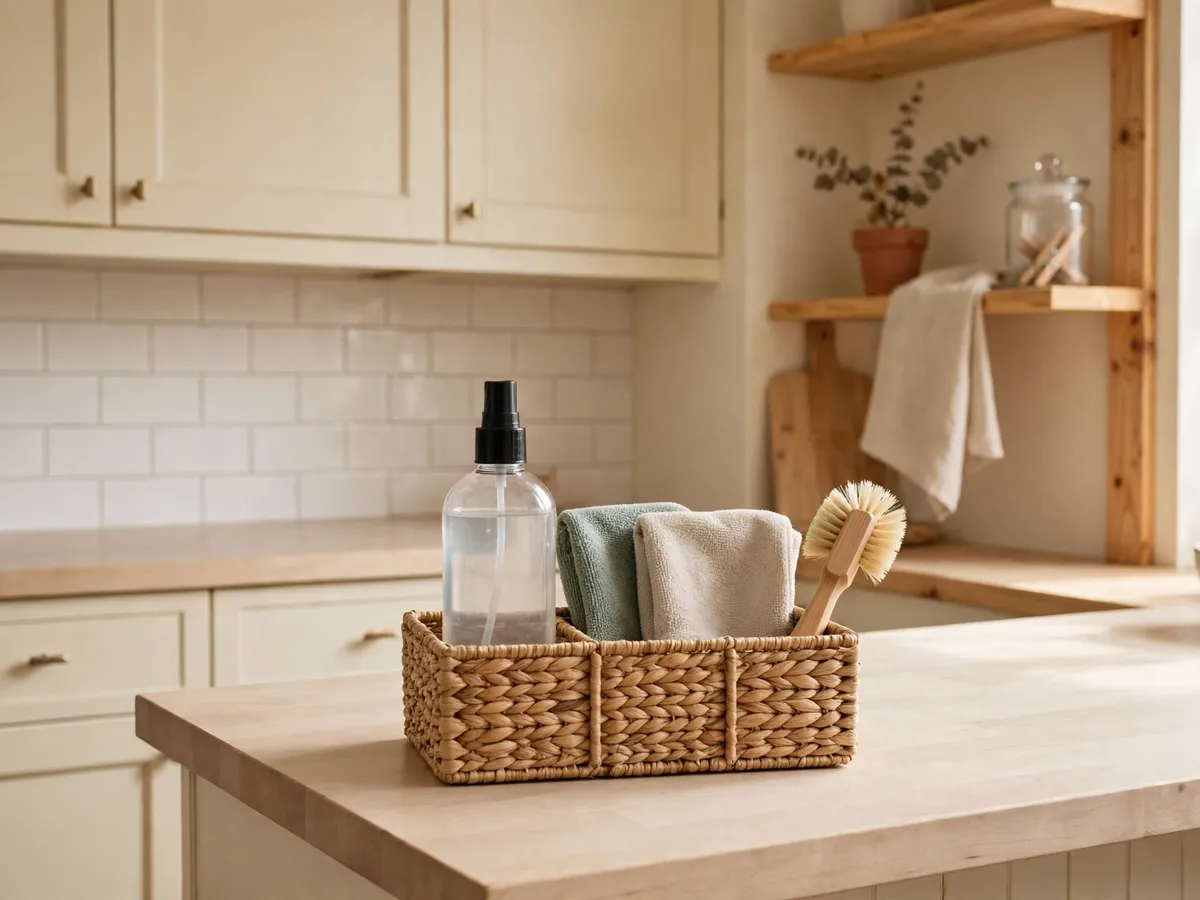
- One caddy, two cloths, a spray bottle, a timer and a bin bag.
- What it costs and takes
- $15–$35 for supplies, 20 minutes a day, one room a week on top.
Why 20 minutes beats a cleaning day
Mess compounds. A plate left in the sink on Monday is a stack by Wednesday, and a stack is a decision about whether to wash up or go to bed. A daily reset interrupts that compounding, which is the whole trick. The short loop holds the apartment at a baseline, so the weekly work stays small.
The arithmetic is honest: 20 minutes a day is about 2 hours 20 minutes a week. That is less than one deep-clean afternoon, spread over seven short sessions. Watch the failure mode instead: a routine that needs 90 minutes gets skipped on a Tuesday, and a routine that needs 20 gets done, even on a tired day.
Cost: $0. Time: 20 minutes a day.
The 20-minute daily reset
Run the reset in this order, and treat the clock as a guide.
1. Open a window and clear the sink, 3 minutes. Dishes into the rack, the basin wiped out, the window open so the room stops smelling like last night.
2. Wipe the counter and the stovetop while the kettle boils, 4 minutes. The kettle is your timer; you are only wiping surfaces you will use again within the hour.
3. One pass with a cloth over the bathroom sink and taps, 3 minutes. Sink, tap, the ledge beside it, and the mirror if it is spotted.
4. Pick up everything that is out of place and put it where it lives, 5 minutes. This is a return, not a declutter. Anything without a home goes into one basket, never onto the floor. If piles keep coming back, the room-by-room declutter checklist is the place to start.
5. A quick sweep, or a pass with a vacuum in the traffic lane, 4 minutes. The path from the door to the kitchen and from the kitchen to the bathroom — not the whole floor.
6. Take the bin bag out on the way past, 1 minute. It is last because it is the step you would otherwise postpone.
The point is not the six jobs. The reset follows the same order every day, so it stops being a decision and becomes a route, and 20 minutes stops stretching into 40.
Cost: $0. Time: 20 minutes.
The weekly rotation, room by room
One room per weekday, nothing on the weekend, and every room comes round once a week. It works because a weekday holds one job, and a missed day costs a week rather than a month.
| Day | Room or task | What it covers | Honest time |
|---|---|---|---|
| Monday | Bathroom | Sink, toilet, mirror, floor, towels changed | 25 minutes |
| Tuesday | Kitchen | Fridge shelf check, stovetop, floor, bin | 30 minutes |
| Wednesday | Bedroom | Sheets, dust the surfaces, floor, under the bed | 25 minutes |
| Thursday | Living room | Dust, vacuum, cushions, one surface cleared | 20 minutes |
| Friday | Entryway and laundry corner | Shoes out, floor, lint trap, one load through | 20 minutes |
Be honest about the limit: this is a maintenance rotation, not a spring clean. Two jobs are missing from those rows — the oven and the inside of the windows. Put both on a monthly slot instead of pretending the weekly list covers them. Wednesday also assumes you can see the bedroom floor; if the closet is a pile, start with our small closet organization guide.
Cost: $0. Time: 2 hours a week across five days.
The order that saves you the second pass
Three rules do most of the work. Dry before wet: dust, sweep and vacuum first, then wipe, because wiping a dusty shelf turns dust into paste, and sweeping after the counters puts it back on them.
Top before bottom: shelves, then the counter, then the floor, because gravity hands you the mess in that order. Furthest corner to the door: work away from your exit so you never walk over what you just cleaned, and so you leave the room instead of circling it.
The rule that surprises people is the cloth, not the surface. A cloth loaded with dust moves it around the room and leaves a grey film you notice in the light. Rinse or swap it before it is full.
In a bathroom, the order is mirror, then sink, then toilet, then floor, with a fresh cloth for the toilet. That cloth does not go back into the caddy for the sink, and the cloth that did the bin area does not go back to the kitchen counter.
Cost: $0. Time: 5 minutes to read once.
The caddy: five things, no more
Five things go in the caddy, and the limit is the point. Everything else lives in a cupboard, not in your hand at 9pm.
- One all-purpose spray for counters, sinks and the stovetop.
- One glass or mirror spray, because glass streaks with anything else.
- Two microfiber cloths: one for dry dust, one for wet work.
- One stiff brush for sink edges, the tap base and the grout line.
- One bin bag, kept in the caddy, so minute twenty is not a search.
Why the limit matters: a caddy with twelve bottles means you stand in the room deciding which one to use, and deciding is how 20 minutes becomes 50. Cleaning products are the one shopping list where the label matters. For safer cleaner choices, the EPA Safer Choice guide explains what to look for on the label. Read the directions on whatever you buy and follow them.
Cost: $15–$35 for the first caddy. Time: 15 minutes to assemble.
When the routine falls apart
Four things go wrong with this routine, and each fix costs less than quitting.
1. You skipped three days. Do not double the reset. Do the 20 minutes and start again, because catching up is what makes people quit.
2. The bathroom never feels clean. The cloth is the problem. Switch to a fresh one and dry the sink after the last wipe, so water spots stop reading as dirt.
3. The floor is gritty again by Thursday. You are sweeping before the counters are wiped. Swap the order and the grit stops landing behind you.
4. Thursday keeps getting skipped. Move the living room to Saturday morning and keep the other four days. A rotation with one weak day is still a rotation. If the kitchen is the room that keeps failing, the fault is often storage rather than cleaning — our kitchen storage guide covers the counter before you buy another bottle.
Cost: $0. Time: 10 minutes to fix.
What we would skip
Skip the printable planner you will not open after week two. Skip a separate product for every surface, a mop and bucket for a 40-square-foot kitchen floor, and a steam cleaner for a rental with no storage. Skip the deep clean every Sunday plan most of all, because that is the routine that collapses and takes the daily reset with it. The money is better spent on a second cloth than a fourth bottle.
Cost: $0. Time: 2 minutes.
The 15-minute reset for a bad week
Some weeks nothing gets done, and the plan needs a version for that. Clear the sink, wipe the bathroom sink, take the bin out. Three jobs, 15 minutes, and the apartment is not embarrassing if someone knocks.
It is not a lesser routine you graduate from; it is part of the plan that keeps a bad week from becoming a bad month. If the bathroom is the room that unravels first, our bathroom organization guide gives the counter and the cabinet a home.
Cost: $0. Time: 15 minutes.
Weekend checklist
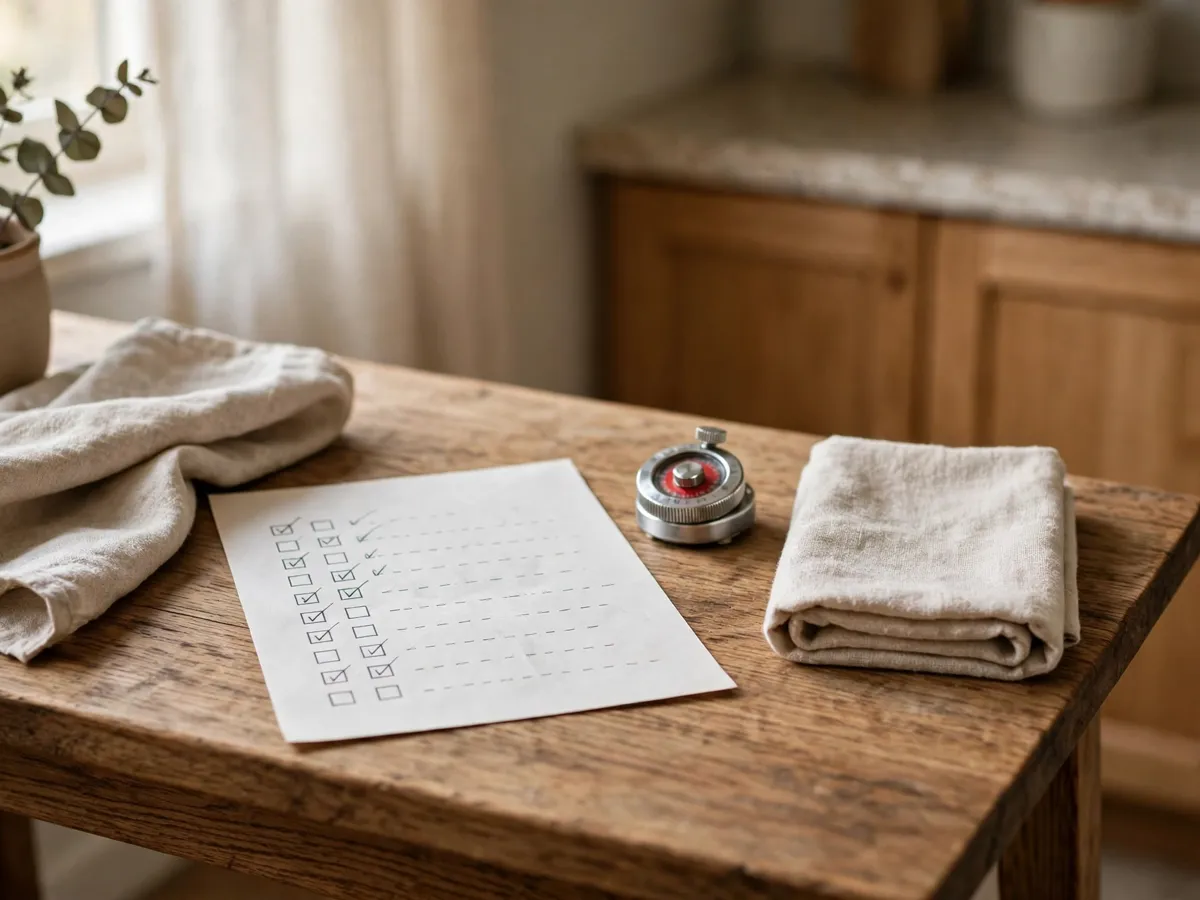
- Caddy assembled with five things and no more
- Timer set to 20 minutes and tested once
- The six reset beats written on one card
- Rotation days matched to your actual week
- One room done as a trial run
- Two cloths washed and dried
- The fallback reset written down too
- A monthly slot picked for the oven and the windows
Cost: $0. Time: one weekend afternoon to set up.
Questions beginners ask
Do I need a printable planner?
No. The rotation table above is the plan. Write the six reset beats on one card.
How long does the daily reset really take?
20 minutes, in the six beats above. Set a timer for the first week so you learn the pace instead of guessing it.
What if I live in a studio?
The rotation still works. Treat the sleeping corner and the kitchen corner as two rooms, and give the entryway its Friday slot. Smaller rooms done properly beat one open-plan space that never gets finished.
Can I clean with one product?
One all-purpose spray covers most surfaces, and a second bottle for glass saves the streaking. Keep a separate cloth for the bathroom and the toilet, and read the label on each one.
Save these on Pinterest
Pin the rotation table, because it is the part you will come back to on a Thursday when the week has gone sideways. The Home Organization & Storage collection holds the storage and decluttering checklists that keep the rooms clear.