 Plant As Deco
Home Organization & Storage
Off-Season Clothing Storage for Small Apartments: A Twice-a-Year Swap
By Plant As Deco · Updated 18 November 2026
Small apartments run out of room the moment last season's clothes refuse to leave the closet. The fix is not a bigger wardrobe or a rented unit an hour away: it is a twice-a-year swap that pulls the off-season out, cleans it, and parks it where it can sleep for six months without coming back musty or stretched out of shape. This guide owns that one job — the swap-day loop, what to wrap each fabric in, the five storage spots that fit a small apartment, where you should never store clothes, and a rotation calendar tuned to a US climate. Renter-safe throughout, because nothing here needs a drill or a permanent shelf.
Weekend-ready: $0–$70, one afternoon twice a year. No drill, no closet-system rebuild — renter-safe.
What this solves
The problem off-season clothing storage solves is not running out of clothes. It is running out of closet. When the winter coat, the four heavy sweaters, and the boots share the same hanging space and the same shelf as the shorts you actually wear in July, the closet stops working: the current season hides behind the past one, nothing gets put back, and the chair becomes the closet you were trying to fix. A small apartment only keeps a closet usable when each season lives somewhere else for the months it is off-duty.
The move is a swap, not a purge. Twice a year you pull last season's clothes out of the closet, sort them, clean them, and park them in one of five small-apartment storage spots. The current season moves back into prime hanging space, the off-season moves to the top shelf or a bin, and the closet holds only what you reach for this week. The full system your clothes hang on lives in the small closet reset; this guide handles what leaves the closet, not what stays inside it.
Scope: two swaps a year (one in late October, one in mid April), 90 minutes each. Costs run $0 if you reuse pillowcases and boxes you already own, up to $70 for vacuum bags, two lidded bins, and a set of cedar blocks.
The swap-day loop: pick the date, run four steps, set a timer
A swap is a ritual, which is the only reason it ever actually happens. Pick the date before the weather forces it: the first cold week in late October for the fall swap, the first warm week in mid April for the spring one. Tying the swap to the weather instead of the calendar means the closet changes the same week you change what you wear, so the off-season leaves before it becomes clutter.
The loop is four steps, and the order is what keeps it finite. Pull out everything that is about to go off-season, all of it, onto the bed. Sort each piece into one of three piles: keep for next year, repair before it goes back, and gone — donate, sell, or recycle. Clean the keep pile before it goes into storage, every piece, because storing dirty clothes is the single most common mistake in off-season storage and the one that ruins the most garments: skin oils and invisible food spots feed moth larvae and set yellow stains that never wash out six months later. Then place each clean piece into its storage spot, wrapped the way its fabric needs.
Set a 90-minute timer when you start pulling things out. Without a timer a swap drifts into a full closet reorganization, which is a different project and the one this guide deliberately hands off. Ninety minutes is enough because you are only sorting three piles and cleaning what you already own. If the timer goes off and the gone pile is not yet bagged, bag it first and finish the rest tomorrow; the donation bag is the one step that rots if it sits.
Cost: $0 for the loop itself. Time: 90 minutes, twice a year. The cleaning step reuses the laundry routine you already run; if you do not have one yet, the laundry room reset sets that up.
Vacuum bags, bins, and cotton pillowcases: what each protects against
Three containers cover every off-season fabric in a small apartment, and each protects against a different threat. A vacuum bag seals air out, so it wins against dust, damp, and most importantly moth access — a sealed bag is a physical barrier a moth cannot get through, which is why it is the first choice for wool sweaters and heavy coats. A lidded bin protects against crushing and physical damage but breathes slightly at the seal, so it suits cottons and linens that do not attract moths. A clean cotton pillowcase is the cheapest option and the right one for fabrics that must keep breathing: it keeps dust off while letting air move, and every apartment already has one.
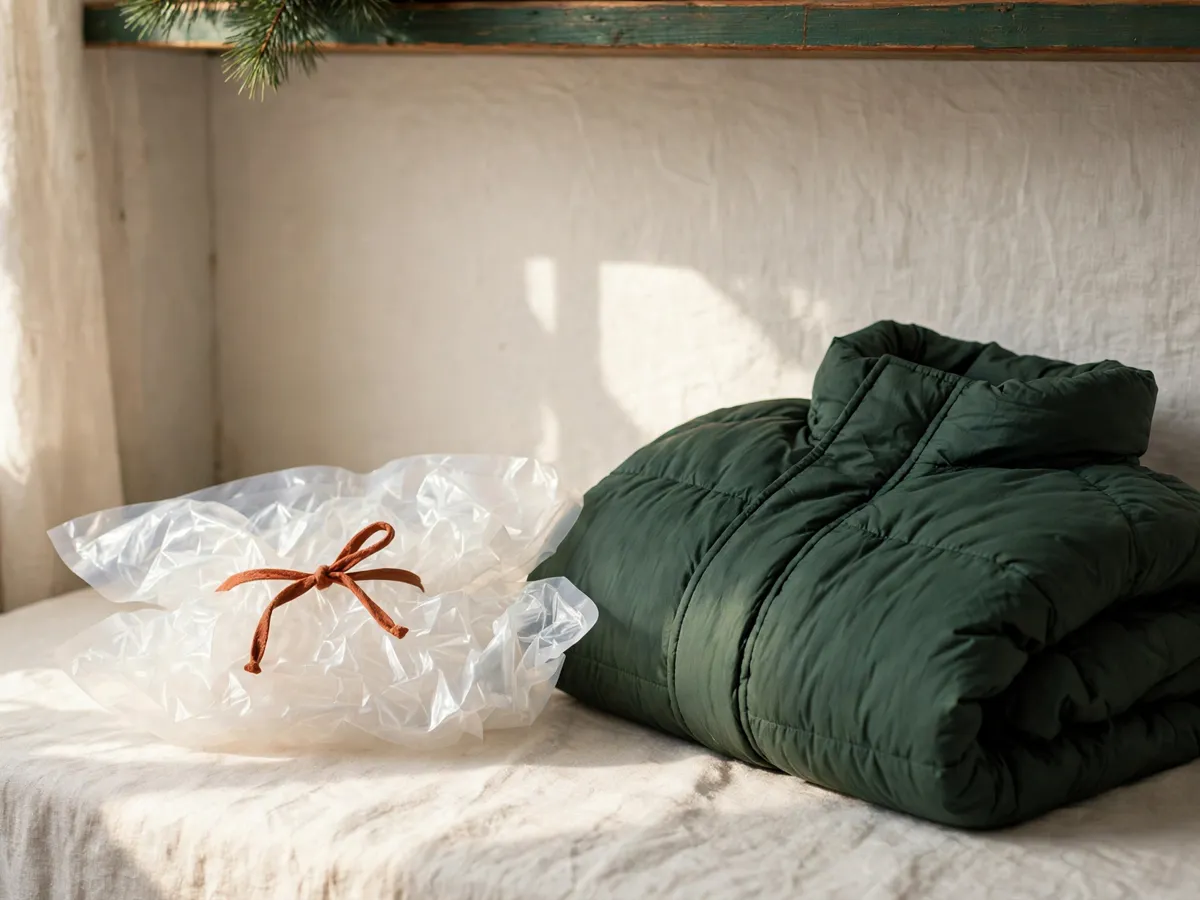
The honest cons matter as much as the pros. A vacuum bag creases delicates badly — anything with structure, like a blazer or a pleated skirt, comes out with fold lines that take a second pass to remove. The same bag compresses a down jacket unevenly and can flatten the loft if it sits fully sealed for six months, so a puffer does better in a bin with the lid cracked. And a single pinhole in a vacuum bag ruins the seal: the bag slowly reinflates, the protection is gone, and you will not notice until you open it in April and find dust inside. Press the bag once a month; if it gives, find the hole and reseal.
Some fabrics never go in a vacuum bag at all. Wool knits need airflow to stay springy, so a vacuum-sealed wool sweater can come out stiff and misshapen; a cotton pillowcase with a cedar block inside is the safer home. Leather and suede cannot be compressed — the finish cracks — so they hang in a breathable garment bag in a cool, dry spot instead. Anything damp, even slightly, stays out of every sealed container: trapped moisture grows mildew in under a week, which is why the cleaning step comes before the storage step.
Costs: vacuum bags $12–$25 for a set of four to six, lidded bins $8–$30 each, cedar blocks $8–$15 for a six-pack. Cotton pillowcases are free if you already own them.
Five out-of-closet spots that actually work in a small apartment
The five spots below are the ones that fit a small apartment without buying furniture. Each carries what it holds, what to wrap it in, and the honest weight limit — because a top shelf that bows is a problem you create, not one you solve.
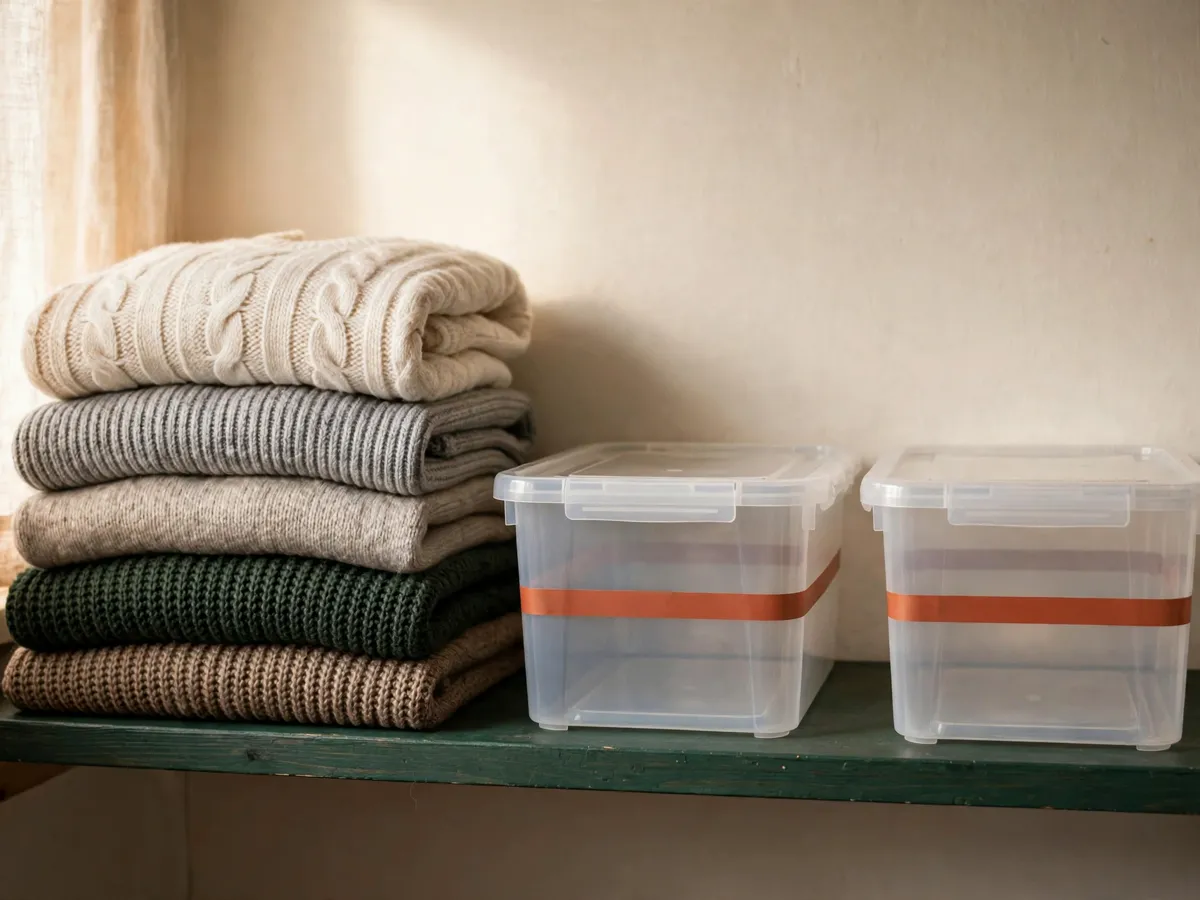
- The closet top shelf. The highest, hardest-to-reach shelf in the closet is the natural home for off-season clothes, because you reach it twice a year and not in between. Two lidded bins side by side hold most of a one-person wardrobe; label them by season so the next swap is a lift-and-swap, not a guess. Wrap woolens in a cotton pillowcase with a cedar block before they go in the bin, and keep the total weight under about 25 pounds per shelf — a wire shelf sags at 30, and a bowed shelf cracks at the bracket.
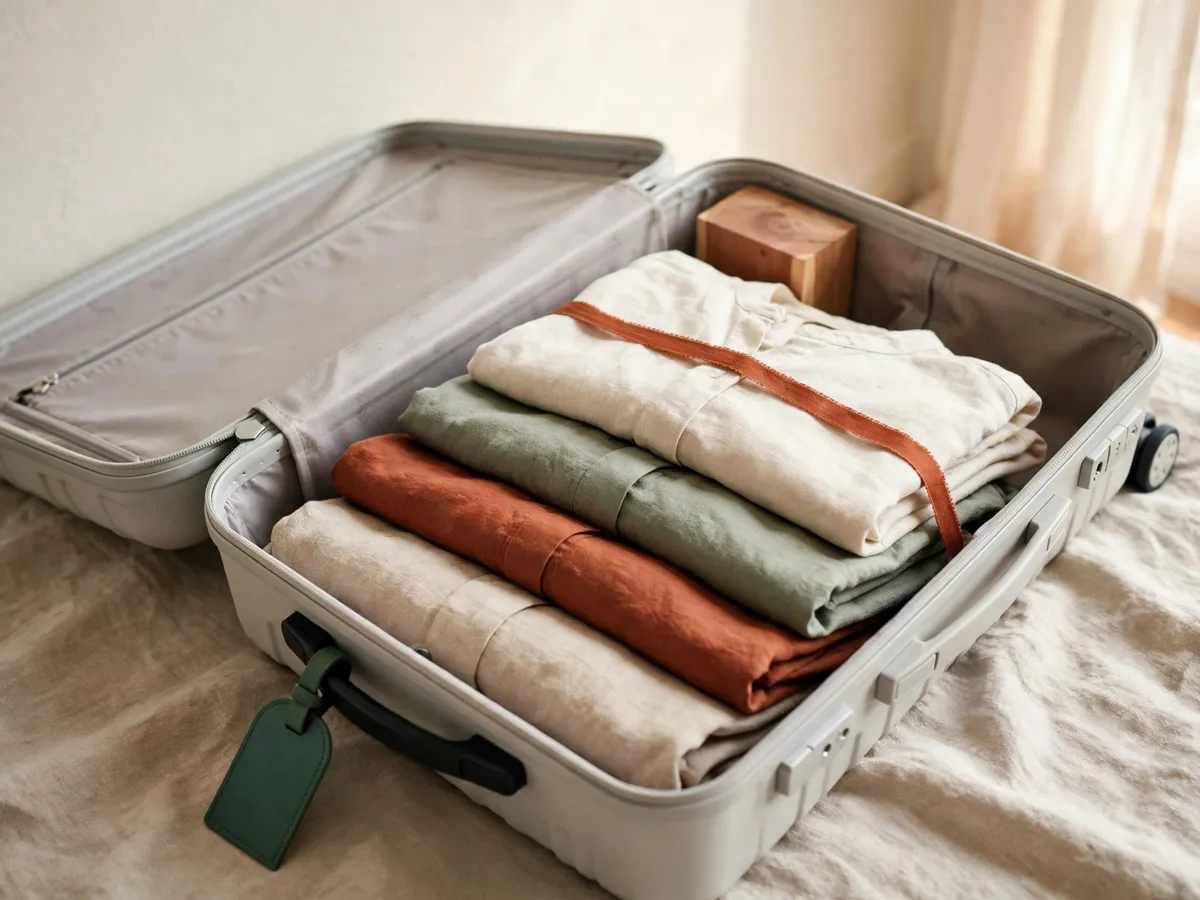
- The luggage you never use.A suitcase is a lidded, light-tight bin you already own, and an empty one in a corner is wasted storage. A hard-shell case protects against crushing better than any bin, and a soft-sided one breathes enough for cottons. Line the inside with a cotton pillowcase, stack folded clothes flat, and drop a cedar block in the corner. Keep it light enough to roll when full, because a heavy suitcase you cannot move becomes storage you live around.
- The space above the wardrobe.If the closet has a freestanding wardrobe or an overhead cabinet with dead air on top, that air is the second-best off-season spot after the top shelf. It stays dry, it stays dark, and it is out of the daily reach. Store flat, light items there — folded tees and linens in a cotton pillowcase, not heavy coats — because the cabinet top is usually MDF or particleboard and is not rated for more than about 15 pounds per square foot.
- A bench or ottoman with a hollow base. A storage ottoman does double duty as seating and as a bin, and it is the one spot on this list that lives in plain sight. It suits lighter off-season pieces — a stack of folded sweaters or a few tees — wrapped in a cotton pillowcase. Skip the vacuum bag here: a sealed bag inside a bench looks wrong if the cushion lifts. Keep the weight under what the hinge holds, usually about 20 pounds.
- The back of a deep drawer.A deep dresser drawer that sits at the back of a stack, the one you rarely open, is a free off-season bin for light cottons. Line it with a cotton pillowcase, stack folded tees and light layers, and leave a cedar block in the back corner. This is the spot for transitional pieces you might need early — a light cardigan in October that is not quite off-season yet.
The space beneath the bed is the one spot this guide does not own — it belongs to the studio apartment storage guide, which covers the flat bins and the layout that makes that space work in a room with no closet. If your only off-season spot is under the bed, that guide is the one to read first.
Cost: $0 for the top shelf, the luggage, the above-wardrobe space, and the back of a drawer — all reuse space you already have. A storage ottoman runs $30–$70 if you do not own one.
Where not to store off-season clothes
Five spots feel like storage and ruin clothes instead. Each fails for a specific reason, and the reason is what tells you when a spot is close enough to one of these to count as the same risk.
- A basement or garage fails on damp and pests. Concrete and bare floors wick moisture even in a dry climate, and a bin on a garage floor invites silverfish and the moth. If the only spot is a garage, put the bin on a shelf, not the floor, and add a cedar block.
- Against an exterior wall fails on condensation. The wall is cold in winter and warm in summer, and the temperature swing makes condensation form inside a bin pushed flush against it. Leave an inch of air between the bin and any exterior wall.
- Next to a radiator or a heat run dries fabrics out. A wool sweater stored near heat goes brittle and loses its shape in a season, and a leather jacket near a radiator cracks.
- In a bathroom fails on humidity. A bathroom closet cycles between dry and steamy several times a week, and a garment in that cycle picks up moisture it never fully loses — mildew within a month.
- In a clear bin on a sunny shelf fails by fading. Ultraviolet light through a clear bin fades the side that faces the window over six months, which is why opaque bins or a cotton pillowcase inside a clear bin are the safer picks.
Cost: $0 to avoid these. Time: five minutes to walk the apartment and rule the bad spots out before you fill the good ones.
A rotation calendar tuned to a US climate
Most of the continental US runs two swaps a year. The fall swap lands in late October, the week the overnight lows drop into the 40s and the winter layers come out for good. The spring swap lands in mid April, the week the daytime highs stay above 60 and the heavy coat goes back into the bin. Two swaps, six months apart, is the rhythm that keeps the closet in the current season year-round.
Hot climates run one swap, not two. Across the Sun Belt — southern Florida, the Gulf Coast, the low desert — a heavy winter is two weeks, not six months, so the rotation is one swap in early December that pulls the single light layer out and puts it back in February. A second swap in April in a place that never got cold is a ritual with no work to do.
Keep one transitional layer accessible through every shoulder season. October and April are the two months that fool a closet: a warm afternoon followed by a cold evening, and the layer you just packed away is the one you need. Leave one cardigan or one light jacket in the back of a deep drawer, not in the sealed bin, so the swap does not strand you in the wrong layer for a week. This is the one exception to the off-season rule.
When a bin comes back out at the next swap, check three things before anything goes into the closet. Look for moth damage first: small holes and a fine sandy dust at the bottom of the bin are the signature of a wool moth, and a cedar block that has gone dry stopped protecting the bin months ago. Smell for mustiness second: a sour, damp smell means moisture got in, and those pieces need a wash before they go back into rotation. Check sizing last — a sweater that fit last winter may not fit this one, and the swap is the moment to move it to the gone pile instead of the closet.
Cost: $0. Time: 15 minutes of checks at each swap, folded into the 90-minute loop above. Cedar blocks need a light sanding once a year to reopen the pores; a minute per block.
What we skip
This guide owns the swap, not the whole closet. A few adjacent projects look like they belong here and do not — each has its own guide, and the hand-off keeps this one to one afternoon twice a year.
- No closet-system rework. The small closet reset owns the hanging zones, the nightly hang-back, and the whole inside of the closet. The swap only decides what leaves it.
- No drawer-grid method. The drawer organization guide owns the drawer grids and the folding method. The back-of-drawer spot here only borrows a deep drawer that already exists.
- No purge marathon. The room-by-room declutter owns the keep-or-let-go rule and the donation run. The swap sorts three piles, it does not run a whole-home purge.
- No chemical mothproofing. Cedar blocks and a sealed bin do the work a small apartment needs, and this guide stays away from loose repellent products whose smell lingers in a living space and transfers onto knitwear.
- No "you need a storage unit." A small apartment with two swaps a year does not need a rented unit an hour away. The five spots above hold a full wardrobe; a storage unit is the move for a house move or a renovation, not for seasonal clothes.
The afternoon plan and the twice-a-year 15-minute check
The full swap is one afternoon, twice a year. The check is a 15-minute pass you run at the start of each off-season month — October and April — to catch the one thing that goes wrong while the bin sits: a seal that failed, a cedar block that went dry, a spot that turned damp.
- Pick the swap date the week the weather shifts, not the calendar
- Pull every off-season piece out onto the bed, all of it
- Sort three piles: keep, repair, gone — bag the gone pile same day
- Clean the keep pile before it goes into storage, every piece
- Wrap woolens in a cotton pillowcase with a cedar block, seal the rest
- Park each piece in one of the five spots, under the weight limit
- Leave one transitional layer accessible for the shoulder season
- Run the 15-minute check at the start of each off-season month
Cost: $0 to check. Time: 15 minutes, twice during each off-season stretch. Press each vacuum bag to confirm the seal, sand any cedar block that has gone smooth, and smell each bin for mustiness.
Off-season clothing storage questions, answered
Where do you store winter clothes in a small apartment?
In one of five spots that reuse space you already own: the closet top shelf, the luggage you never use, the space above the wardrobe, a storage ottoman, or the back of a deep drawer. Wool sweaters and heavy coats go in a vacuum bag or a cotton pillowcase with a cedar block on the top shelf; lighter layers go in a lidded bin or a suitcase. None of the five needs a drill or new furniture.
Do vacuum bags ruin clothes?
They crease delicates and can flatten a down jacket's loft if it sits fully sealed for six months, so blazers, pleats, and puffers are better in a lidded bin with the lid cracked. Wool knits, leather, and suede never go in a vacuum bag — they need airflow to stay springy and to keep their finish. For cottons and linens, a vacuum bag is safe and is the best defense against moths and dust.
Can clothes go in the basement?
No, not as a default. A basement wicks moisture from concrete and is the environment silverfish and the moth prefer, so a bin on a basement floor comes back damp or damaged. If the basement is the only option, put the bin on a shelf off the floor, use a vacuum bag or a sealed lidded bin, and add a cedar block — but a closet top shelf or an empty suitcase is almost always the better choice in a small apartment.
How often should you rotate seasonal clothes?
Twice a year in most of the US: a fall swap in late October and a spring swap in mid April, tied to the week the weather shifts. Hot climates that only get two weeks of winter run one swap in December. The rotation is what keeps the closet in the current season year-round, and it is also the moment to check for moth damage, mustiness, and sizing before anything goes back into the closet.
Do I need to wash clothes before storing them?
Yes, every piece. Storing dirty clothes is the single most common mistake in off-season storage: skin oils and invisible food spots feed moth larvae and set yellow stains that do not wash out six months later. Run the keep pile through a normal wash before it goes into the bin or the vacuum bag, and make sure each piece is fully dry — even slightly damp fabric grows mildew inside a sealed container in under a week.
Save these on Pinterest
Pin the swap-day loop first — it is the one step that keeps the closet in the current season all year. The rest of the Organization & Storage collection holds the closet reset, the drawer method, and the room-by-room declutter this guide hands off to.