 Plant As Deco
Small Room Decor
Small Living Room Furniture: Choosing Pieces That Fit the Room
By Plant As Deco · Updated 14 November 2026
The furniture mistake that costs the most in a small living room happens before any money moves: a sofa chosen by how it feels in a showroom, where the ceiling is high and the next sofa is fifteen feet away. At home, with a wall on one side and a walkway on the other, the same piece becomes a wall of upholstery you walk around every day. This page is about choosing furniture at the scale of the room — the measurements to take before shopping, the shapes that leave floor visible, and the pieces that come in narrow versions nobody advertises. Where every piece sits once it is home, the gaps and the walking lanes, is drawn in the layout guide; this page stops at the moment of choosing.
Weekend-ready: $150–$900 depending on the route, one weekend to measure, shop and place. Measure-first and freestanding — renter-safe throughout.
1. Measure first: three numbers to carry to the store
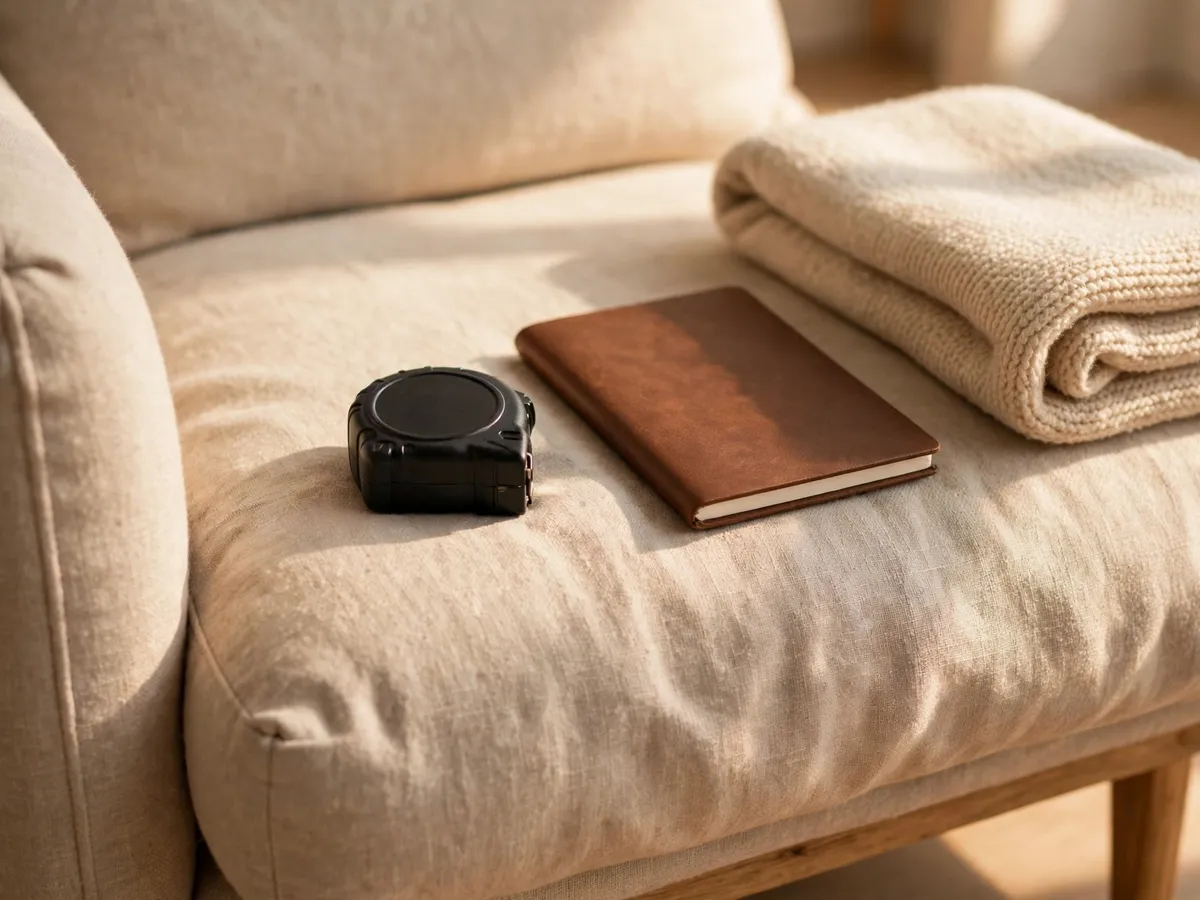
Three numbers decide almost every furniture purchase in a small room, and all three are known before you leave the house. The first is the width of the wall the sofa will sit against, measured corner to corner with the door swings subtracted — a door that opens into that wall owns its arc, and the sofa has to fit what is left. The second is the deepest sofa the room can hold: take the room's shorter wall and subtract a thirty-two to thirty-six inch walkway, and whatever remains is the depth budget for anything that sits across the room. The third is the distance from the sofa's front edge to the screen, which wants roughly twice the television's diagonal — every inch of sofa depth spends an inch of that distance, so a deeper couch either pushes the seating closer to the screen or the seating farther from the wall, and both make the room feel tighter than it is. Depth is the measurement that gets skipped, and it is the one that runs the room. A standard sofa sits thirty-two to thirty-six inches deep; the deep-seated styles run forty and beyond, and in a room where the walkway is already at the minimum, those extra inches come straight out of the floor you use every day. Sit on both in the store, for longer than a minute: the deep seat feels luxurious at first and reads, at home, as a room you navigate around rather than live in.
Cost: $0 and a tape measure. Time: twenty minutes, including checking how each door opens.
2. Sofa shapes that earn their floor space
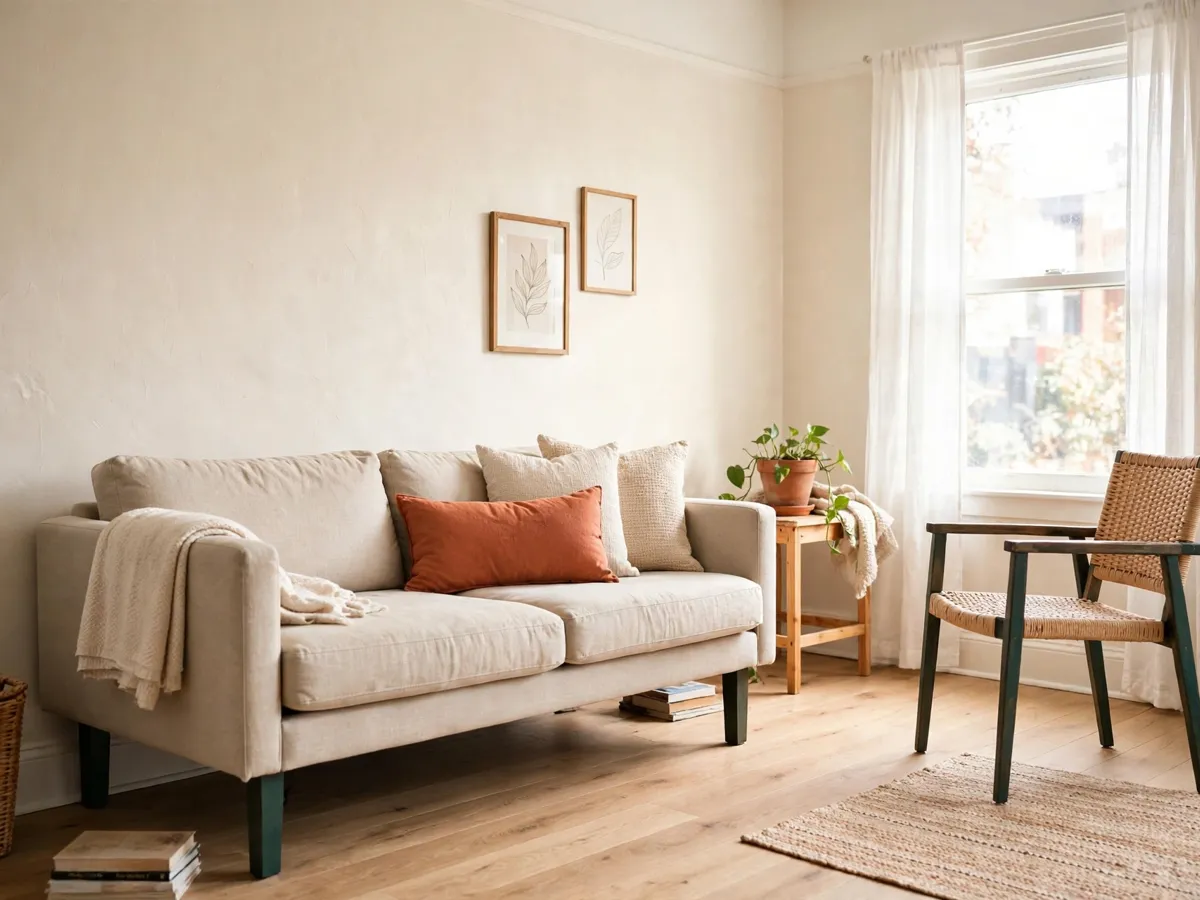
The shapes that suit a small room share one trait: they let you see the floor under and around them. A loveseat — sixty to sixty-eight inches of seat for two — paired with one armchair gives the room a conversation arrangement with a walking lane between the pieces, and it beats a single wide footprint because the chair can be angled toward whoever is talking, moved aside for guests, or pulled in as a footrest in winter. When three seats are non-negotiable, the apartment-size sofa exists for exactly this: seventy-two to eighty inches wide, usually an inch or two shallower than the same design full-size, and built to leave a real lane beside it. Arms are the quiet space-eater. A rolled arm can eat ten inches on each end of a sofa, so a piece listed at eighty inches wide may offer fifty-eight inches of actual seat; slim track arms and armless ends hand those inches back to the cushion and the room. Legs do the visual work: a sofa on six-inch exposed legs shows the floor beneath it, and visible floor is what makes a small room read calm rather than packed. The shape to walk past is the oversized U-shaped sectional. It seats six in a room built for three, it commits the entire floor plan in one purchase, and the chaise arm builds a wall you have to walk around every single day.
Cost: $500–$900 for a new apartment-size sofa, $150–$400 secondhand. Time: one afternoon of sit-tests, measurements in hand.
3. Every other piece has a narrow version
Once the sofa is settled, the rest of the room should go visually quiet, and nearly every category has a slim option that costs the same as the wide one. A console table at twelve to sixteen inches deep does the work of a sideboard on a dining or entry wall without claiming half the lane. Side tables come in twelve-inch rounds and C-shapes that slide over the sofa arm, which removes an entire footprint from the plan. A storage ottoman is the hardest-working shape in the room: footrest, spare seat and coffee table at once — a tray on top makes it a table, and the inside swallows the throws and remotes that otherwise pile on every surface. Armless chairs that stack or slide under a console live in a corner until the day they are needed. The rule that keeps all this from reading as a showroom of small things: one substantial piece and a family of slim ones around it. The sofa is the substantial piece; the console, the side tables and the chairs stay light and leggy. When the coffee table is the piece fighting the room, the tray-and-stool alternatives have their own coffee table guide.
Cost: $40–$300 across the small pieces, most of it optional. Time: a week of noticing what actually lands on surfaces.
4. Buy the big shapes secondhand
The sofa is the one purchase where secondhand wins on structure, because the frame is the part you cannot see and the part that fails first, and a twenty-year-old frame in honest condition outlasts a new budget sofa by years. The test takes one hand: grab a corner and lift the whole piece an inch off the floor. A solid frame lifts quietly; a loose one creaks, racks sideways, or feels like the joints are arguing with each other. Push an arm sideways too — arms that wobble have absorbed years of people levering themselves up, and re-gluing a frame is a workshop job rather than a Saturday one. Then the logistics, before the money: measure the piece, measure the car it has to ride in — the door opening and the diagonal, both — and confirm the seller will help carry, because a sofa that does not fit the car becomes a delivery fee that erases the deal. Wood and slipcovered pieces clean up well; a torn seat cushion on a solid frame is a forty-dollar replacement. The line where used stops being worth it is simple: when the used price creeps within about a hundred dollars of a new apartment-size sofa on sale, buy new — the return policy, the warranty and the delivery team are worth that much. Old wins when the frame passes the corner test and the price is half of new or less.
Cost: $150–$400 for a solid used sofa or a pair of good chairs. Time: one weekend including the pickup run.
What we would skip
Skip the floor-to-ceiling sectional. The tall-backed corner units read as a wall of upholstery, they leave one lane through the middle of the room, and they cannot be split when the next apartment is smaller. Skip the chaise that runs along the walkway: the chaise arm is the most expensive foot of floor in a small living room, because it sits in the lane you use every day. Skip the matching black leather sofa-bed sets — black reads as a dark block in the evening light, the matching set commits three pieces at once, and the bed mechanism adds weight nobody moves twice. And skip the oversized armchair trend: an oversized chair is a loveseat with room for one, and the room pays for the adjective. The one place worth overspending is the frame — everything above the frame is replaceable, and the frame is the part you live with for years.
Cost: $0 to skip. Time: the decisions that keep the floor walkable every day.
Honest costs: where the money actually goes
A solid secondhand sofa or a pair of good chairs runs $150–$400 when the frame passes the corner test, and that route leaves budget for the rug and the lamps. A new apartment-size sofa runs $500–$900, with the friendly numbers appearing on sale cycles at the big-box stores. Around the sofa, the honest add-ons: a storage ottoman at $80–$200, a console at $60–$250, side tables at $30–$100 each. The rug that grounds the whole arrangement has its own budget and its own sizing rules in the rug guide — the front sofa legs should sit on it, and the size is decided by the room rather than the sofa. When the living room shares its floor with the kitchen, the sofa carries the zoning job as well as the seating, and where it stands in an open plan is drawn out in the open-plan guide.
Cost: $150–$900 total depending on the route. Time: one weekend to shop, one to receive and place.
Before you open the first store tab: copy this
- Room width minus a thirty-two to thirty-six inch walkway, written down as the depth budget
- Sofa depth between thirty-two and thirty-six inches, measured with the cushions on
- Apartment size seventy-two to eighty inches wide — or a loveseat plus one armchair
- Slim arms, exposed legs, floor visible underneath
- One substantial piece and everything else narrow
Cost: $0 to check. Time: fifteen minutes, before the first tab opens.
Questions renters ask
How deep should a sofa be in a small living room?
Thirty-two to thirty-six inches works in most small rooms, and anything past forty is spending your walkway on cushion. The real limit is your own room: subtract a thirty-two to thirty-six inch lane from the room's short wall, and whatever remains is the deepest piece it can hold.
Is a loveseat smaller than a sofa?
Narrower, mostly. A loveseat saves width rather than depth: sixty to sixty-eight inches of width against seventy-two or more for a sofa, with the depth staying similar. In a small room the width saving is the point — a loveseat plus an armchair seats the same two to three people and leaves a walking lane between the pieces.
Does a sectional ever work in a small living room?
Occasionally, and only a compact L. If both arms can stay under about ninety inches, the chaise can sit against the short wall, and the walkway survives at thirty inches or more, a small sectional seats a lot of people in one footprint and earns its place. Below roughly twelve feet of room width, the sectional is the piece eating the room, and the loveseat-and-chair plan does the same job with air left over.
Is secondhand furniture worth it for a sofa?
Worth it when three things line up: the frame passes the corner-lift test, the price is around half of new or less, and you can transport it without paying for delivery. When the used price closes to within about a hundred dollars of a new sofa on sale, the new one wins on the return policy and the warranty alone.
Save these on Pinterest
Pin the three measurements before the next shopping trip — wall width, depth budget, screen distance — because they are the numbers that stop the expensive mistake. Where the sofa and the chairs go once they are yours, the lanes and the gaps, is drawn in the layout guide, and the pieces that make a small apartment cozy without a single hole in the wall are collected in the cozy renter guide.