 Plant As Deco
Small Room Decor
Small Living Room Rug Ideas: Get the Size Right First
By Plant As Deco · Updated 14 November 2026
The most common rug mistake in a small living room is buying the rug the room looks like it needs. The floor is small, so the rug gets small too, and the small rug floats in the middle of the floor touching nothing on any side. The room reads tighter than it is, because the rug draws a box in the center of the floor and everything outside that box reads as leftover space. The fix comes before color, before material, before pattern: get out the tape, subtract the border, and buy the bigger rug.
Weekend-ready: $80–$400, one afternoon of measuring and one order. Renter-safe throughout — nothing is attached to the floor.
1. Measure the room before you shop, then subtract the border
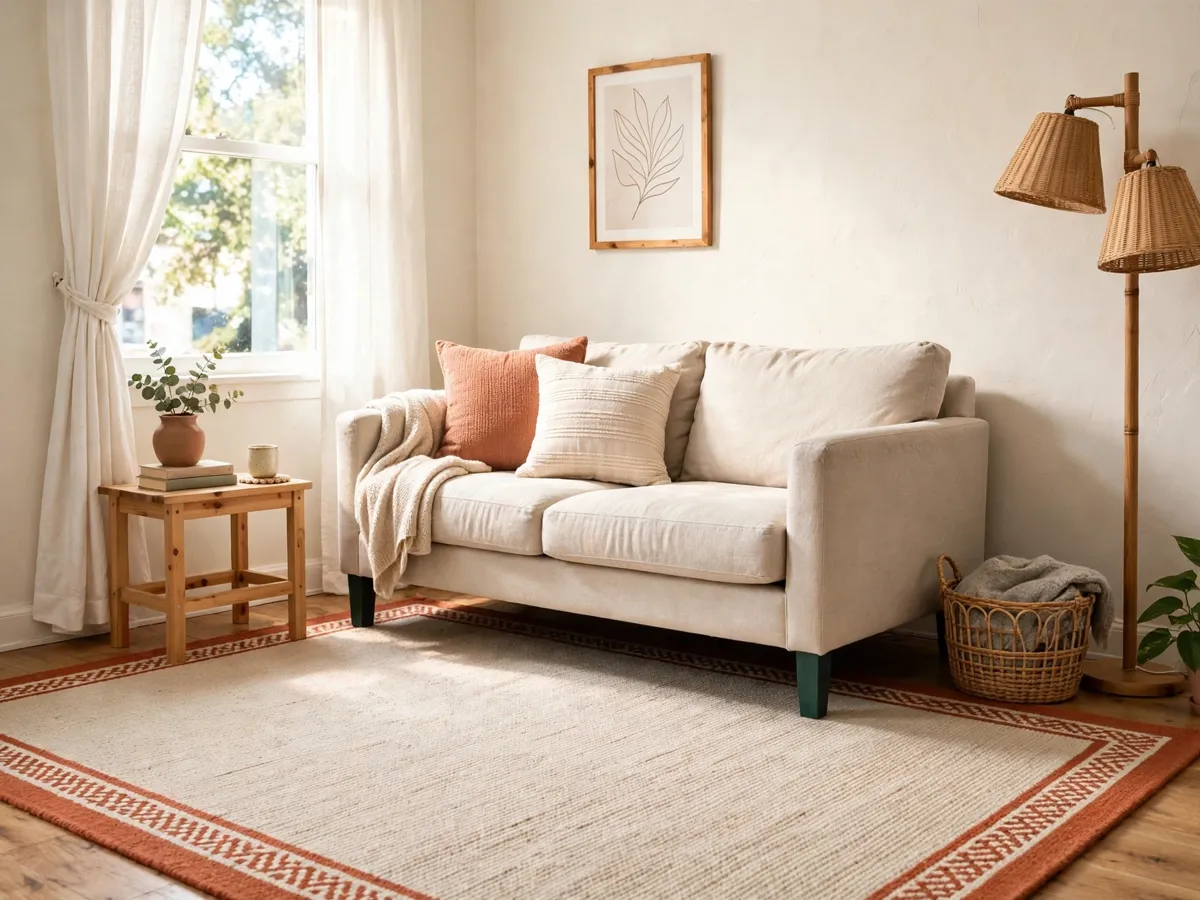
The number that decides your rug is the floor, not the furniture and not the photo on the listing. Measure the length and width of the room at its widest usable points, then subtract ten to eighteen inches from each direction — that is the border of bare floor you leave around the edges. The border is what stops the rug reading wall-to-wall carpet, and it leaves breathing room at the hearth, the door swing and the floor vent. A room of eleven by fourteen feet subtracts roughly a foot per side and lands on an eight-by-ten rug; a nine-by-eleven room subtracts the same way and lands on six-by-nine. The three sizes that cover almost every small living room are five by eight, six by nine and eight by ten, and the order you try them in is always biggest first, because the size down is the one that makes the room shrink. The eight-by-ten is the right call in any room under twelve feet on its short wall — the rug still stops short of the walls, but it reaches under every seat, and the eye reads the rug and the room as the same shape. The four-by-six that looks safe in the store is the one that ends up floating in the middle of the floor with the sofa entirely off it, and the room around it looks like the waiting area it is.
Cost: $0. Time: fifteen minutes with a tape, before a single tab is open.
2. Materials that work in a rental
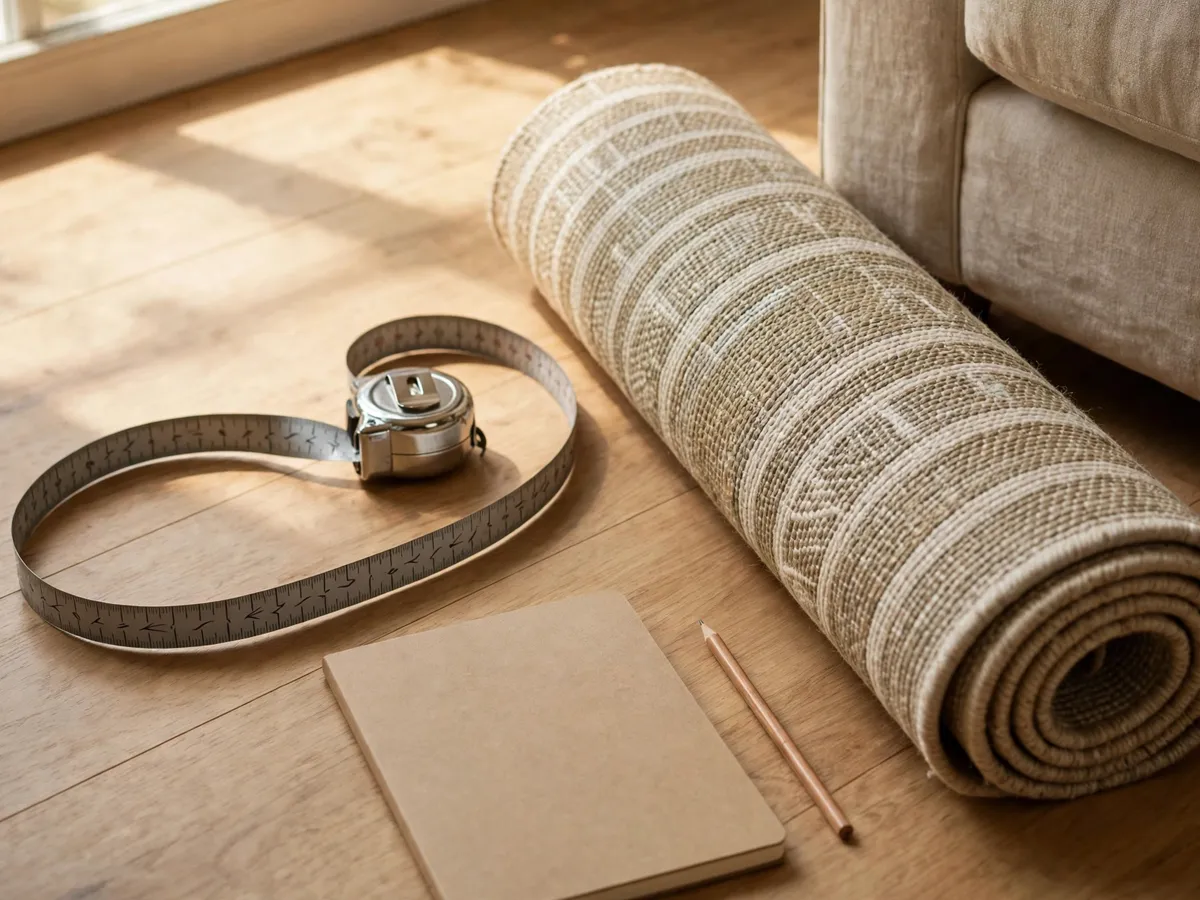
The material decides how the rug lives with you, and in a rental the short list is short. Flatweave and jute are the honest defaults: thin, light enough to carry up three flights alone, and happy under bare feet and under chair legs, which is the real test in a small room where everything sits on everything. Jute has texture that keeps a plain floor from looking flat, and it takes a beating at the door. A low-pile wool blend is the step up — soft enough to sit on the floor, thick enough to feel planted, and easy to vacuum, which matters more in a small room where the rug is half the floor you own. Shag is the trap: the deep pile catches crumbs, hides spills until they set, resists the vacuum, and takes days to dry when it gets washed. Whatever the material, the rug pad is the part that gets skipped and should not be. A non-slip pad cut two inches short of the rug on every side keeps a flatweave from sliding on hardwood, adds the half inch that makes a cheap rug feel planted underfoot, and protects the floor the landlord will inspect. The pad rules and the other layers you can take with you are in the renter flooring guide.
Cost: $80–$400 for the rug, $20–$40 for the pad. Time: one order, and the pad arrives with it — cutting it to size is ten minutes.
3. Color and pattern in a small room
The safe zone in a small room is small pattern and flat texture — a fine diamond, a thin stripe, a washed-out kilim motif, a plain weave with visible grain. The eye reads these as a soft field rather than a picture, so they fade behind the furniture instead of competing with it. Stripes are the one pattern that does something directional: run them the long way and they stretch the floor along the line you see most, which is usually the doorway to the window; run them across and they widen a narrow room. A rug with a busy ground hides the coffee spill and the boot prints a plain cream rug wears as a stain map, which is worth as much as the looks in a room that gets used daily. When the walls and the sofa are already quiet, the rug can carry the interest — one patterned rug over four plain things beats four competing patterns over a plain rug. The palette that keeps a small room open is the one in the neutral color scheme guide— the rug reads as the floor, the furniture reads as the room, and nothing argues.
Cost: $0 to decide. Time: an hour with samples on the actual floor, not a photo of it.
4. Placement when the layout fights you
Some rooms refuse the centered rug, and the answer is to stop forcing it. When the room is a tight box and the sofa sits square against the wall, angle the rug on the diagonal under the sofa's front corner and the coffee table — the diagonal line breaks the box and gives the floor a direction the straight layout does not have. When the layout is already off-center, a door that swings into the corner or a radiator eating one wall, let the rug sit off-center with it: line the rug up with the sofa rather than with the room, and the arrangement reads as deliberate. The one-line rule that covers everything is that the front legs of the sofa sit on the rug — the layering order on top of that lives in the fabric layers guide. In an open-plan space where the living area bleeds into the kitchen, two rugs are usually better than one heroic rectangle: a rug under the seating group and a flat runner along the kitchen walkway, with a gap of bare floor between them doing the dividing no wall does. The rules for drawing that line are in the open-plan guide, and the layout decisions that come before the rug — which wall the sofa backs onto, how far the coffee table sits — are in the layout guide, because the rug goes down after the furniture knows where it lives.
Cost: $0 to try. Time: twenty minutes of sliding furniture, with the door swings checked before anything is final.
What we would skip
Skip the big round rug in the middle of the room. A circle in the center of a box floor leaves four odd corners of bare floor and anchors nothing — it is the shape that photographs well and lives badly. Skip the scatter approach: a small square here, a mat there, a runner along the sofa. Each little rug reads as an island, and the floor reads as broken up rather than covered. Skip the outdoor plastic rug indoors. It is cheap, it is flat, and it looks like a porch — the plastic sheen flattens the whole room under the lighting. The money belongs in one correctly sized rug and the pad underneath it.
Cost: $0 to skip. Time: the decisions that keep the floor to one field.
Honest costs: where the money actually goes
The five-by-eight flatweave is the entry point at $80–$150, and in a genuinely tight room it is the right rug — it still reaches under the sofa front and the coffee table. The six-by-nine sits at $150–$300 and is the size most small living rooms actually want, because it takes the front legs of every seat in the arrangement. The eight-by-ten runs $250–$400 and is the buy-once choice for a room under twelve feet that wants the whole arrangement on one field. The pad is $20–$40 at any of those sizes and is not optional. The honest ceiling is around $400 for a rug you keep through two moves, and the honest floor is the knowledge that the bigger size at the same price is usually the better rug for the room.
Cost: $80–$400 all in. Time: one afternoon of measuring, one order, one afternoon of placement.
Before you order: copy this
- Room measured, ten to eighteen inches subtracted per side
- Biggest standard size that fits tried first: 5x8, 6x9, 8x10
- Front legs of the sofa and chairs on the rug
- Non-slip pad cut two inches short on every side
- Painter's tape on the floor marking the rug edge, lived with for a day
Cost: $0 to check. Time: fifteen minutes, before the order.
Questions renters ask
What size rug is most common in a small living room?
Six by nine feet. It fits a nine-by-eleven room with the border intact and takes the front legs of a sofa and two chairs. The five-by-eight is the fallback for tighter rooms; the eight-by-ten is the better buy when the room is under twelve feet and the budget stretches.
Does a big rug make a small room look smaller?
The opposite. The rug that stops short of everything draws a box in the middle of the floor, and the bare floor around it reads as leftover space. A rug that runs under the furniture reads as the room's floor, and the room reads as one shape instead of a rug plus a margin.
Is jute too rough for a living room?
Underfoot, yes, a little — jute is a fiber with bite, and it is the reason it survives chairs and boots. On a couch or a bed it is where bare skin lives, so the sofa stays a foot off it. A jute weave with a wool-blend mix or a low-pile rug beside the sofa is the comfortable middle.
Do I really need a rug pad in a rental?
Yes. On hardwood the flatweave without a pad slides within a week and the corner becomes the thing you trip on. The pad also keeps the backing from grinding dust into the floor finish — which is the damage a landlord notices. $20–$40, cut two inches short of the rug on all sides.
Save these on Pinterest
Pin the tape-and-subtract method first, because it is the step that decides every rug that follows. The layers that go on top of the rug are in the fabric layers guide, and the rest of the floor — the runner, the doormat, the take-it-with-you pieces — is in the renter flooring guide. Both sit in the Small Room Decor collection for the next floor that needs a plan.