 Plant As Deco
Organization & Storage
Reusable Kitchen Storage: The Honest Container Reset
By Plant As Deco · Updated 23 November 2026
The container drawer is the most honest object in a small kitchen. It holds every lid with no body, every takeout tub nobody wants to wash, and the good intentions from last January. Reusable storage does not fail at the store. It fails in that drawer, because a container that is harder to wash, harder to find a lid for, or harder to see inside gets skipped in favor of the bag. This page resets the drawer on purpose: which four materials actually get reused, the lid system that ends the mismatch chaos, a three-phase migration that costs $60 to $120, and an honest list of what single-use these replace.
Weekend-ready: $60–$120 across three phases, about 45 minutes each. Renter-safe: nothing mounts, nothing drills, and the whole system packs into two crates when the lease ends.
1. Why the Container Drawer Matters More Than It Looks
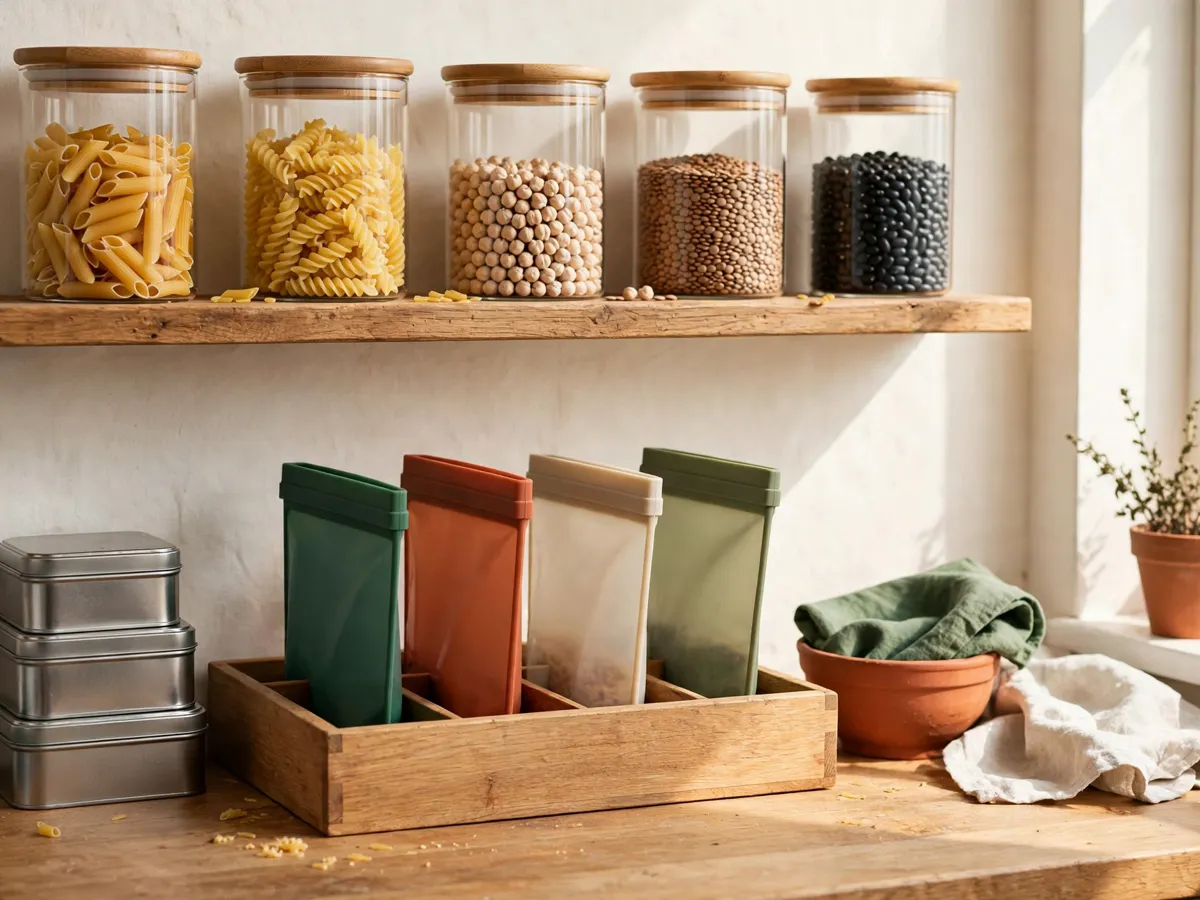
Reuse is a friction problem, not a virtue problem. The moment a leftover needs a container, the person cooking takes whichever option costs the fewest steps. A clean jar by the sink beats a bag that lives across the room, and a jar with no lid loses to that bag every time. This is why a drawer of beautiful mismatched jars does less than six matched ones standing where the food is handled.
The arithmetic is small and real. One jar refilled twice a week is about 100 refills a year, and twelve jars used that way is roughly 1,200 swaps. That is the whole case, and it only pays if the jars wash without ceremony, match to a lid, and sit visible where the food lives. For the whole-kitchen picture, start with small kitchen storage ideas.
Cost: $0–$5. Time: 10 minutes. Count the drawer before buying, or the new jars simply join the orphan pile.
2. The Four Materials: Glass, Silicone, Stainless and Fabric Covers
Glass is the workhorse and the one that gets reused most, because you can see the contents, it washes clean, and it reheats with the lid off. The limits are weight and breakage, and thin gaskets are where most glass frustration actually comes from. Tempered jars survive knocks that soda-lime glass does not.
Silicone earns its place in the freezer and the lunch bag: light, it will not shatter, and it lies flat when empty, needing a stand to sit upright. Stainless tins are tough and take a beating, but opaque, so everything inside needs a label, and none of them reheats. Fabric covers and lidded baskets suit dry goods on open shelving and are not airtight, so flour and oats stay out of them.
Ranked by what gets reused in a small kitchen, the order is glass, silicone, stainless, fabric. Buy in that order.
Cost: $4–$18 per piece. Time: 15 minutes. The material that wins washes easily and stays visible, not the one that photographs best.
3. Design for Reuse: Shapes, Lids and Sizes That Stack, Wash and Match
Shape decides whether a jar survives a real kitchen. Round jars rinse fast, because a sponge reaches the whole inside wall. Square and rectangular containers waste less shelf and stack without wobbling, which is why they win in the fridge and lose on the rinse clock. Straight sides beat deep tapers, which bury the bottom piece and fight the scoop.
The wide mouth outranks every other dimension: if a hand or a measuring cup fits inside, the jar gets washed, and if it does not, the jar gets skipped. Keep the size list to three, quart, pint and a snack size, and buy one family rather than four attractive ones, because cross-brand lids never interchange.
Cost: $0–$10. Time: 15 minutes. Three sizes from one family beats nine from four.
4. The Lid Problem: Four Systems That End Mismatched-Lid Chaos
Almost every failed container system dies at the lid. Four fixes work, in order of how little thought they need afterward.
The matched set is the simplest: buy lids and bodies together, and treat a lost lid as a reason to retire the pair, not hunt it. The one-lid design goes further, where a brand sells a single lid shape across three body sizes, so any lid fits its neighbors. The vertical lid rack, a file-style organizer, ends the drawer avalanche by standing lids on edge. And the clamp-lid jar, the four-point band with a gasket, removes the loose lid entirely, which is why it survives moves and pantry shelves.
Whichever you pick, buy two spare lids per size on day one. Spare lids are the cheapest insurance in the aisle and the item nobody adds to the cart.
Cost: $6–$24 for spares and a rack. Time: 20 minutes. A container with no lid is storage for nothing, so lids outrank bodies.
5. The Migration Plan: $60–$120, Three Phases, No Full-Drawer Buyout
Do not buy the drawer out in one weekend. A full replacement lands as a pile of unwashed new jars next to the old pile, and both sit there for a month. Three phases, roughly a month apart, work because each proves itself before the next spends money.
Phase one, $0 to $40, is the audit plus the fridge set: empty the drawer, keep only matched pairs, and buy six clear rectangular containers for leftovers, because the fridge is where daily reuse happens. Phase two, $40 to $80, is the pantry set: six to eight uniform jars with spares for the staples you refill, plus labels. Phase three, topping out near $120, is the lunch and freezer tier of silicone and stainless.
The gate between phases is 30 days. Anything bought in phase one that went unused for a month is the wrong shape for your kitchen, and phase two should not repeat the mistake.
Cost: $60–$120 across all three phases. Time: 45 minutes per phase. Skip the 30-day gate and you are just buying a prettier drawer.
6. Fridge, Freezer, Pantry and Lunch: Matching Container to Job
The fridge wants clear, shallow and rectangular. Shallow means a two-inch layer of soup cools faster than a deep one, rectangular means it stacks instead of rolling, and clear means nobody opens three containers to find Tuesday. Leave a finger of headspace for anything that expands.
The freezer wants rigid walls and room to expand. Freezer-safe glass works with headspace and a wide mouth, because a full narrow bottle splits. Silicone lies flat and stacks like books, the best use of a shallow drawer, and stainless needs a label since you cannot see the frost. The pantry wants airtight uniformity for flour, sugar, oats and pasta, where a clamp lid beats a snap lid for anything sitting six months. The lunch bag wants one leak-tested piece that fits, not six that do not.
The containers do their hardest work in the pantry, so pair this with pantry organization on a budget.
Cost: $25–$60 for the fridge and pantry tiers. Time: 30 minutes. A jar used for the wrong job is abandoned within a week.
7. Care: Dishwashing, Tomato Stains, Smells, Gasket Care and the 6-Month Check
A reusable system only exists if the pieces are clean when you need them. The highest-value habit is a rinse caddy by the sink: one bin where a container goes the moment it empties, rinsed rather than washed, ten seconds, so nothing crusts. The caddy runs through one dishwasher load at the end of the day.
Tomato stains glass lids orange and silicone grey within a week. A paste of baking soda and water, left fifteen minutes, or a stretch in sunlight, beats scrubbing. Grease smells live in silicone, and a soak in warm water with a splash of vinegar clears most of them; a smell that will not leave is the sign to retire the piece.
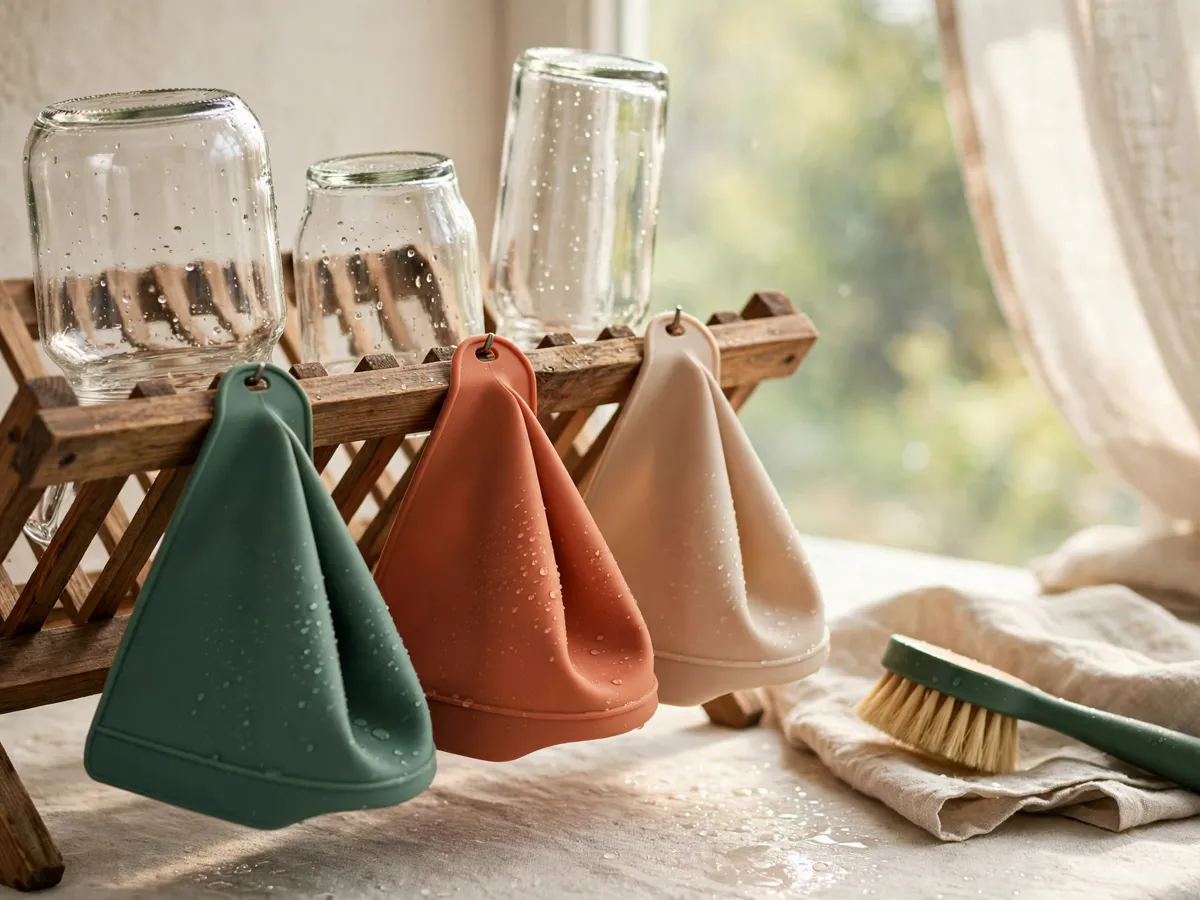
The gasket is both the leak and the mold line: pull it monthly, soak, dry fully, reseat. Then run the 6-month check for cracked glass, warped lids, cloudy plastic and gaskets that no longer spring back. Those pieces retire, and the drawer never grows past what you will wash.
Cost: $3–$12 for baking soda, vinegar and a gasket pack. Time: 10 minutes a week, 20 minutes twice a year. A sticky gasket ends more systems than a broken one.
8. Bulk Bins and Refills: The Honest Math on Savings
Bulk wins on staples you burn through fast, and the list is shorter than the store implies: oats, rice, dried pasta, beans, flour, coffee. It loses on anything that sits. Oat flour goes rancid in a couple of months, and a five-pound bag of a flour nobody bakes with is a $12 loss plus a jar to wash.
Do the math per ounce, not per bag. Five pounds of bulk oats at roughly $9 against an 18-ounce box at roughly $6 makes bulk near half the price per ounce, and a $14 jar amortized over 40 refills adds about 35 cents a use. That is a real saving and the whole saving, so check your own store before committing to a shelf of bins.
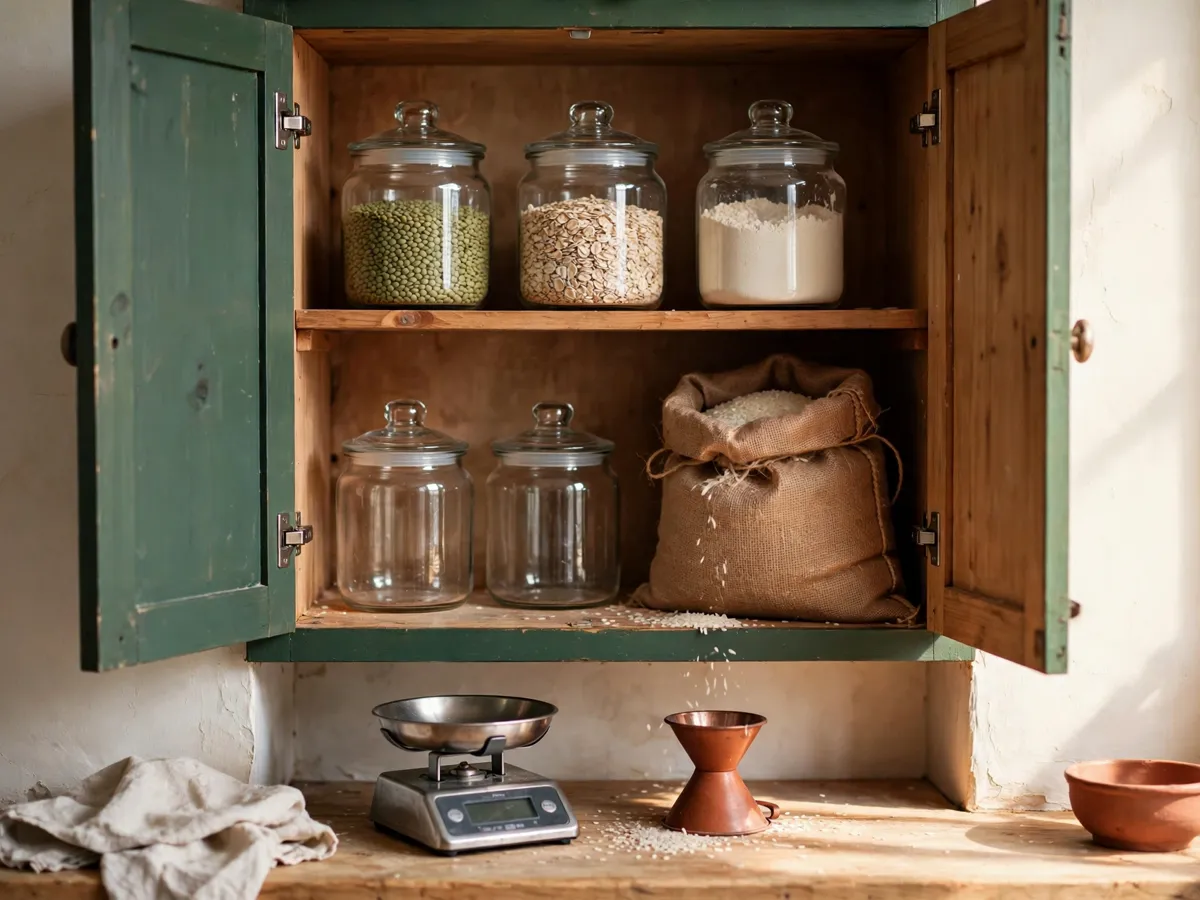
Refill stations fail for one reason: the empty jar stays in the cupboard because it is not near the staple shelf. Keep the empties where the bulk bin is, and give each staple its own zone, the layout in pantry organization ideas with zones.
Cost: $10–$28 for the first four bulk jars. Time: 20 minutes. Bulk that sits six months is a slower purchase, not a saving.
9. What Single-Use Each Type Genuinely Replaces (and What It Does Not)
Glass replaces the takeout tub and the cling film for fridge leftovers, the biggest honest win on this page, because leftovers are the most repeated container job in a home. Silicone replaces the snack bag and the freezer portion bag. Stainless replaces the foil-wrapped sandwich and the single-use dessert cup, and it survives being dropped.
Now the limits, plainly. None of this replaces the trash liner, the produce bag or the bag that held raw chicken, which should never be reused for anything. A cloth cover is not airtight and will not keep weevils out of flour. And a container a child takes to school is a container that comes home only some of the time, so school lunches are where this system honestly loses to a $3 box of bags. Buy for the kitchen, not the household economy.
Cost: $0–$16 for the one or two pieces that close a real gap. Time: 15 minutes. Anything you cannot name a swap for is decor.
10. Renting and Moving: A Kit That Fits in One Bin
A rented kitchen rewards things that pack. The test before any purchase: can the whole set live in one crate, lids and bodies, with nothing loose in a bag? A twelve-piece matched kit passes. A shelf of eleven different jars does not, and it is the first thing to break in a truck.
Moving day is where the system quietly pays rent. A half-filled jar is free packing for a lamp base, a jar of screws is a hardware bag with a lid, and a steel tin carries eggs better than the carton. Pack the lids in one bag taped to the crate, so nothing is hunted at 9 p.m. in an empty apartment. Nothing here needs a hole in the wall, and the look carries further with small kitchen decor ideas for renters.
Cost: $18–$45 for one crate, a lid bag and tape. Time: 25 minutes. If it needs two trips, it is too big a system.
11. Safety: Hot Food, Freezer Burn and Soup Transport
Hot food is where a good habit is wrong. Sealing boiling liquid traps steam, warps plastic, pops gaskets and can crack glass. Divide hot food into shallow containers, leave the lid off until it cools, then seal and refrigerate. A two-inch layer cools far faster than a full pot in one jar.
Microwave with the lid off or vented, never a steel tin or a clamp band, and let refrigerated glass warm a few minutes before it reheats. Freezer burn is a contact problem, not a temperature one: headspace for anything that expands, surface pressed flat for soups, and a use-by note within two to three months for quality. For soup transport, leak-test the lid with cold water before the first trip, and give a glass jar a sleeve. A thermos beats any container for food carried hot.
Cost: $0–$14 for a sleeve or a real thermos. Time: 10 minutes. Cooling comes before the lid, always.
12. Organizing the Containers: The Nesting Rule and the One-Bin Rule
Empty containers take up more room than full ones, the irony at the center of this aisle. The nesting rule fixes it: keep one shape family so a pint drops inside a quart, and store them nested rather than side by side. Mixed shapes never nest, and a mixed drawer is the drawer that stops closing.
The one-bin rule is the second half: bodies and lids live in the same bin, lids standing on edge against the bodies sorted by size, never in a second drawer across the kitchen, because that split creates a lid hunt every time. Cap the empties at one crate; when it fills, the oldest unmatched pair leaves. Once the containers are sorted, the drawer gets the same treatment in kitchen drawer organization ideas.
Cost: $12–$32 for a crate and a rack. Time: 25 minutes. The cap is the rule that holds; without it the drawer refills from takeout.
13. Where the Reuse Habit Breaks and How to Fix It
Five break points, in the order kitchens hit them. The container is dirty, so the bag wins: fix it with the rinse caddy and a set big enough that a clean one always exists. The lid is missing: fix it with matched sets, two spares per size, and the rule that a lidless body leaves the drawer that day. There is no shelf for them: claim one fridge shelf and one pantry row before buying, because containers without a home become the counter pile. The dish rack is full: fewer pieces, washed more often, or a second set that rotates. And the free takeout tub wins, because it is free and it is right there: give the tubs one bin, capped at five, emptied the same day every week.
The common thread is distance. Every habit that broke was one step further away than the disposable, and every fix moves the reusable option closer to the food.
Cost: $0–$18 for a caddy and a takeout bin. Time: 10 minutes. Buy fewer, better-fitting pieces before more.
14. The Two-Hour Weekend Reset: Drawer Chaos to System
The whole reset, timed. Fifteen minutes: pull everything onto the counter and sort it into matched pairs, orphaned bodies and orphaned lids. Twenty minutes: match lids, and any pair that cannot be matched in that window leaves by decision, not by drift.
Fifteen minutes: run one dishwasher load of everything left, hand-washing the glass that would cloud. Twenty minutes: assign homes by job, one fridge shelf, one pantry row, the lunch bag, the freezer drawer, and the crate for empties. Twenty minutes: write the gap list of the sizes you actually lost, and shop only from that list. Ten minutes: label the pantry jars with the staple name and the fill date.
The rule that makes it work: do not open a shopping tab during the reset. The gap list written at hour two is what the migration plan spends money on, and impulse buying is how the drawer filled up in the first place.
Cost: $0–$40 for the gap list, depending on what the reset exposed. Time: 120 minutes. The reset is the audit; the buying is a month later.
15. Cost Reality: Cheap vs Mid vs Premium, Where Money Goes Furthest
Three bands, priced the way the aisle sells them. The cheap band, $3 to $6 a jar, is big-box glass with a thin snap lid and a gasket that is really a printed ring. The glass is fine. The lid fails within a season, and the lid is the whole job.
The mid band, $8 to $14, is where money goes furthest: tempered glass, a real removable gasket, a lid that survives the dishwasher, and a family sold in three matched sizes. The premium band, $18 to $35, buys bamboo, finish and a name. Some of it is real, mostly in the clamp-lid jars, and the rest is a nicer photograph.
The honest allocation: spend on uniformity and on lids before anything else. Six matched mid-band jars with two spare lids per size outperform twelve cheap jars sharing three lids, at about the same money, and the full system lands at $60–$120 for a two-person kitchen.
Cost: $60–$120 all-in, or $25–$45 if phase one alone fixes the kitchen. Time: 30 minutes to compare gaskets in the store. A lid you cannot take apart is a lid you cannot keep clean.
Common questions
How many reusable containers does a small kitchen actually need?
Twelve to eighteen pieces, counted in matched pairs: six rectangular containers for the fridge, six uniform jars for pantry staples, and two to six lunch or freezer pieces. Beyond that the empties outgrow the shelf and the orphan cycle starts again.
Is glass or silicone better for the freezer?
Silicone for space, glass for anything liquid. Silicone lies flat and stacks like books, the best use of a shallow drawer. Glass needs a freezer-safe marking, a wide mouth and an inch of headspace, and it is better for soup, since you thaw and reheat in the same vessel.
Do silicone bags really replace single-use freezer bags?
For portions, herbs, marinades and dry snacks, yes, and they stand up while you fill them. For a family that freezes in bulk and does not wash the bag right after, honestly no. The swap only holds if the rinse caddy habit is already in place.
What should I do with the lids and jars I already own?
Match them first, on the twenty-minute clock in section 14. Keep every pair that closes fully, retire every body with no lid, and donate the intact extras. Jarred pantry staples can keep an old lid for a year while the new set earns its place.
Are reusable containers actually cheaper than single-use?
Over a year, in a kitchen that washes them, usually yes, and the margin is modest rather than dramatic. A $12 jar amortized over 40 refills is about 30 cents a use against a bag or a sheet of film. The saving is real on bulk staples and thin on school lunches, so buy for the fridge and pantry first.
Save these on Pinterest
Pin the three-phase migration plan with its $60 to $120 ceiling, the four lid systems, the nesting and one-bin rules, and the two-hour reset timeline. Those are the numbers and the order of work you will want when the drawer is standing open in front of you. This guide and the rest of the organization and storage collection live together there.