 Plant As Deco
Home Organization & Storage
Belt Organizer for Closet: Roll or Hang by Leather
By Plant As Deco · Updated 23 November 2026
Belts are the smallest category in the closet and the worst stored. A drawer of coiled leather, a nail in the door frame, the same black belt knotted around a hanger with no home of its own. The fix is a zone, chosen by leather type: stiff dress belts hang on a bar so the leather stays flat, casual woven and stretch belts roll into a tray, and the buckle never gets folded. Sort twenty belts into those two lanes and the whole collection reads at a glance.
Weekend-ready: $0–$35, fifteen minutes of sorting to a belt zone that stays. Renter-safe: freestanding, over-the-door or tension-mounted, nothing in the wall.
1. Why Belts Deserve Their Own Zone: The 10-Second Grab
The test of a belt setup is the ten-second grab: the belt that matches today has to be off its hook and through the loops before patience runs out. When belts live in a pile, that grab is a dig: coils pulled out one by one, the one wanted at the bottom, and the rest shoved back to become tomorrow morning's problem.
A dedicated zone also fixes quiet damage. Belts that lean in a pile bend around each other, and a stiff leather belt kept bent slowly keeps that shape. Hardware pressed against other hardware picks up scratches that never polish out.
Belts have neither the height of hats nor the bulk of bags, so they slot into gaps those categories cannot use: the short rod, the door back, the shallow drawer. The whole small closet plan: small closet organization.
Cost: $0–$12. Time: 15 minutes. The zone should make the morning grab faster, not prettier first.
2. Sort First: Stiff Leather, Casual Woven, Stretch, Formal
Before buying a single hook, dump every belt on the bed and sort into four lanes. Storage follows material, because material decides whether a belt hangs or rolls.
- Stiff leather: dress belts with a firm body and a metal buckle. These hang, because leather holds whatever shape it is kept in and a hanging belt stays flat.
- Casual woven: braided, canvas and fabric-webbing belts. Soft and forgiving, they roll happily and forgive being squashed.
- Stretch: elastic and knit belts. The smallest lane, usually two or three belts, and they roll tighter than anything else.
- Formal: grosgrain and satin evening belts with delicate finishes. They roll into their own small pouch or box, away from hardware that can snag the weave.
Cost: $0. Time: 15 minutes. Sort every belt on the bed before buying anything to hold them.
3. The Hang Rule: The Belt Bar, S-Hooks, Buckle Down
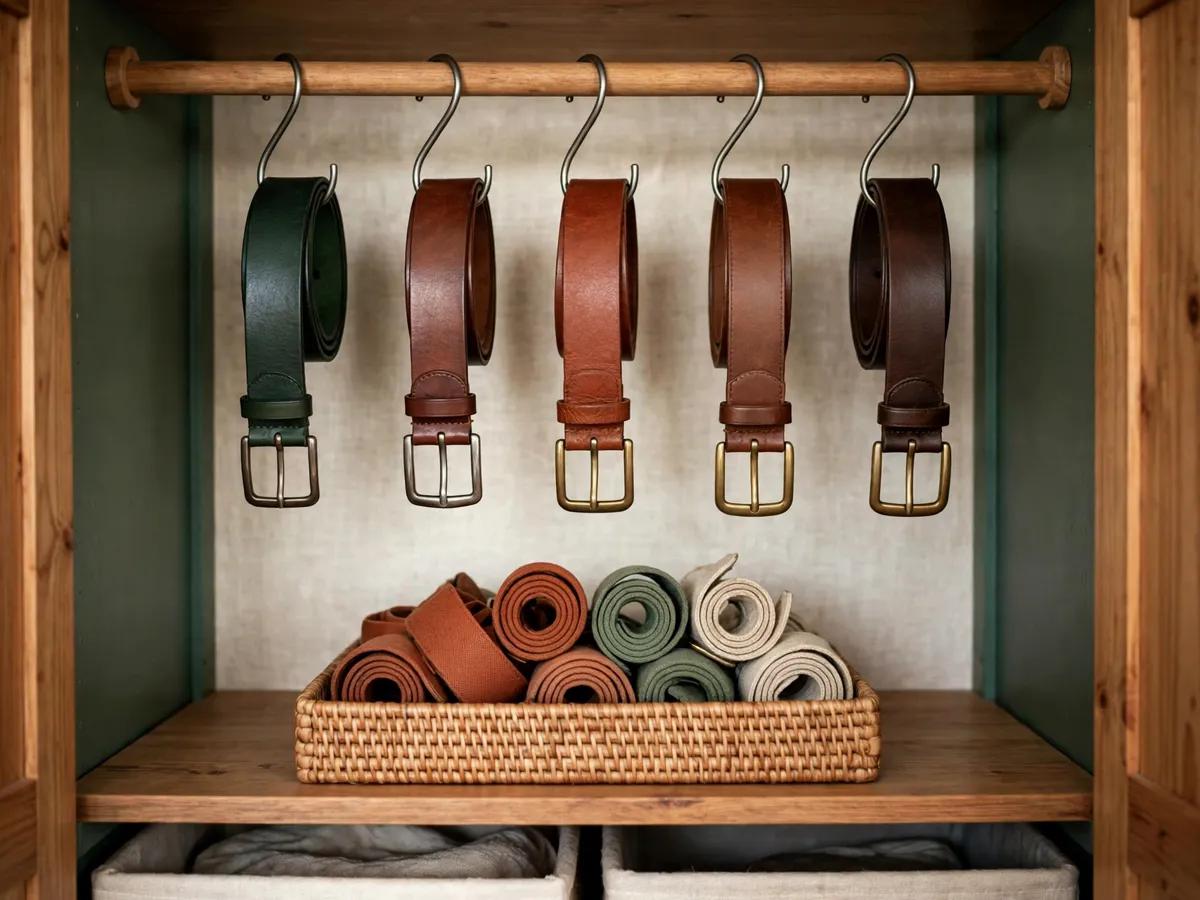
The belt bar is the classic. A wooden or metal dowel, mounted or hung in the closet, with each belt folded in half and draped over an S-hook: buckle ends down, fold on the hook. Twenty belts take a bar barely a foot wide, every buckle faces out, and the whole collection reads like a display instead of a pile.
The buckle hangs down for two reasons. Weight: a metal buckle is the heaviest part of the belt, and hanging heavy-end-down keeps the leather straight instead of bending at the fold. Looks: buckles at uniform height make the category scannable, so the eye finds the right belt in that ten-second grab.
Spacing matters more than the bar. Belts need about an inch and a half each, because pressure lines pressed into leather slowly become permanent, and a short bar with room for ten beats a long bar packed with twenty-five.
Cost: $8–$20 for a bar, hooks and mounting. Time: 30 minutes. Hang the buckle end down and give every belt its own hook.
4. The Roll Rule: Woven and Casual Belts in a Drawer Tray
Casual belts do not want to hang. A soft woven or elastic belt on a hook stretches slowly at the fold and ends up with a lazy bend where the hook held it. These belts want to roll: buckle at the outside, strap coiled around itself, sitting on its edge like a cinnamon roll in a tray.
The tray is what makes rolls work. Loose rolls unspool into each other within a week and the drawer returns to being a pile. A shallow tray, a cutlery organizer or a woven basket with compartments holds each roll upright, and the drawer becomes rows of tidy coils you can count at a glance. Roll width does the sorting: fat braided rolls in the wide slots, thin elastic in the narrow ones.
One habit keeps it honest: re-roll the belt the moment it comes off. The re-roll takes four seconds, and it is the difference between a tray that works for years and one that reverts to a pile.
Cost: $10–$25 for a tray or two. Time: 20 minutes. Roll with the buckle outside and stand each roll on edge.
5. The No-Crease Rule: Never Fold a Stiff Leather Belt
Leather remembers. A stiff dress belt folded in half and left in a drawer keeps a hard crease line at the fold, and creased leather cannot be ironed back flat. The mark sits across the front of the waist every time the belt is worn.
The rule that prevents it: a stiff belt either hangs straight or lies flat, full length. Hanging is the space-saver, lying flat is the fallback, and the drawer fold is what kills them. The fold that does work is the drape over a bar, where the bend is gentle and the leather curves rather than creases: a soft curve the leather forgets, a hard line it keeps.
The exception is the truly soft leather belt, the kind that flops when held up: soft leather tolerates rolling the way woven does, which is why the sort in section 2 comes first.
Cost: $0. Time: 5 minutes. Hold a belt up, and whatever it does on its own is what it wants in storage.
6. Over-Door Racks: The Renter's Best Belt Zone
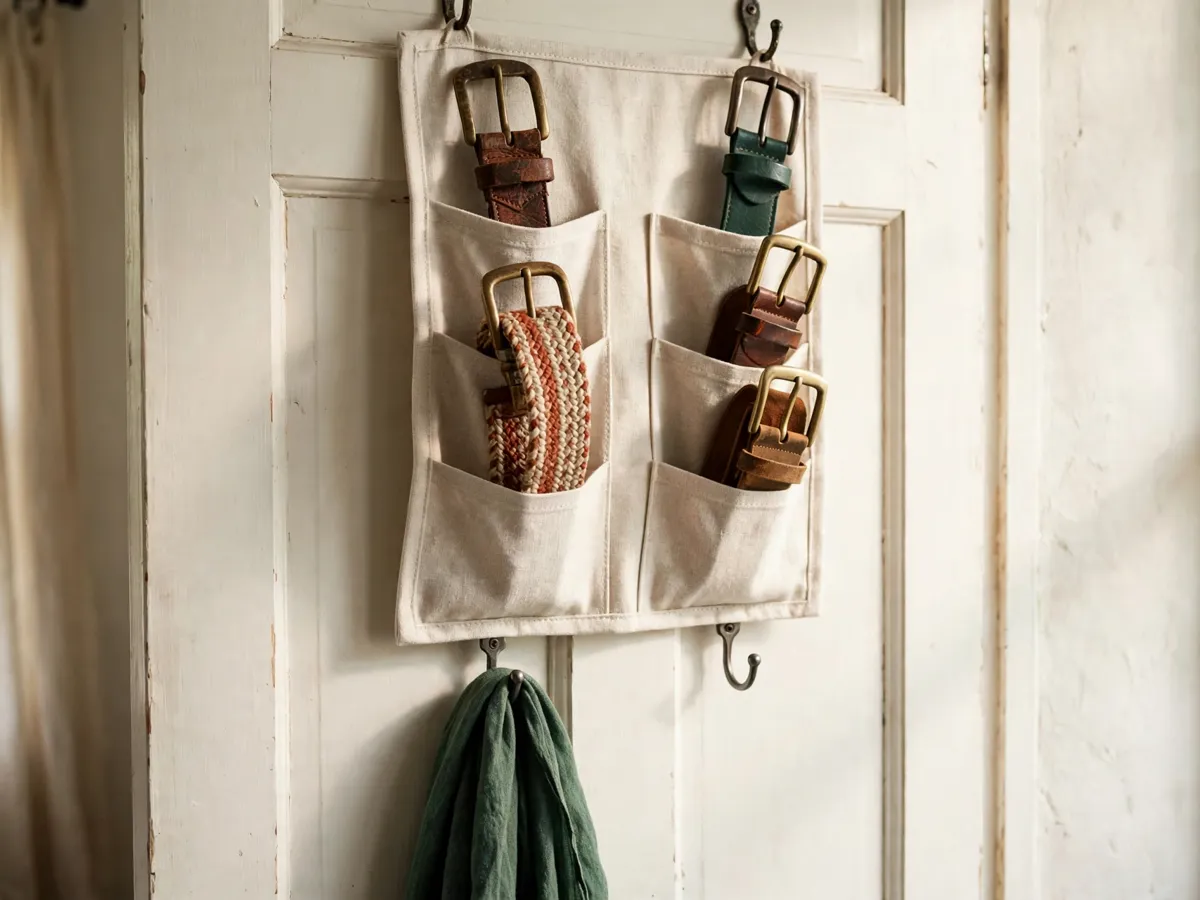
The back of the closet door is square footage no system is fighting over, and an over-door rack claims it with zero holes. A metal rack with a handful of hooks drops over the door top, holds a dozen hanging belts flat and visible, and leaves when the lease does.
Buy by hook count and hook depth: one hook per belt plus two spare, and hooks deep enough that a folded belt does not slide off every time the door moves. Check the door gap at the hinges too, because a thick rack over a tight door stops it closing cleanly.
The door is also the natural shared wall with the hat collection. Hats and belts share a door: hat organizer for closet covers the brim rules for the other side, and the two guides together turn one door into the accessories zone.
Cost: $12–$25. Time: 10 minutes. Check the door gap at the hinges before ordering.
7. Wall Hooks: A Vertical Belt Station in a Niche
A narrow wall strip beside the closet, inside a closet nook or at the end of a hallway, is belt territory nobody else wants. Three to five wall hooks in a vertical line makes a belt station: one belt per hook, buckles out, reading like a menswear display for almost nothing.
Arrange hooks in a column when the strip is narrow. A column lets each belt hang full length without touching its neighbors, which keeps the no-crease rule intact and makes the collection readable top to bottom. A row works when the strip is wide but shallow; keep hook spacing at least four inches so belts do not crowd.
The honest catch: hooks mean holes, so this option belongs to owners or to renters who accept patching and painting at move-out. Two adhesive hooks rated for a few pounds each carry a belt station on a smooth painted wall without a drill, with the honest expectation that adhesive ages and gives up on a heavy belt.
Cost: $6–$18. Time: 20 minutes. One belt per hook and leave gaps, because crowding is what creases leather.
8. The Drawer Divider Grid: Rows of Rolls
The shallow drawer is where rolled belts live long term, and dividers are what keep it a system instead of a pit. A grid of compartments, from an adjustable divider set or a spring-loaded set of rods, turns one drawer into eight or twelve cells with one rolled belt standing in each.
Depth is the buying number. Belt rolls stand about two and a half inches tall, so a drawer four inches deep holds them without sticking. Width between dividers should run three to four inches so a fat braided roll sits without squeezing. Measure the drawer interior before ordering, because listed sizes describe the outer box, not the usable inside.
Order the grid by color after building it, dark to light left to right. It looks deliberate, and it halves the search: the wanted belt sits in a predictable cell.
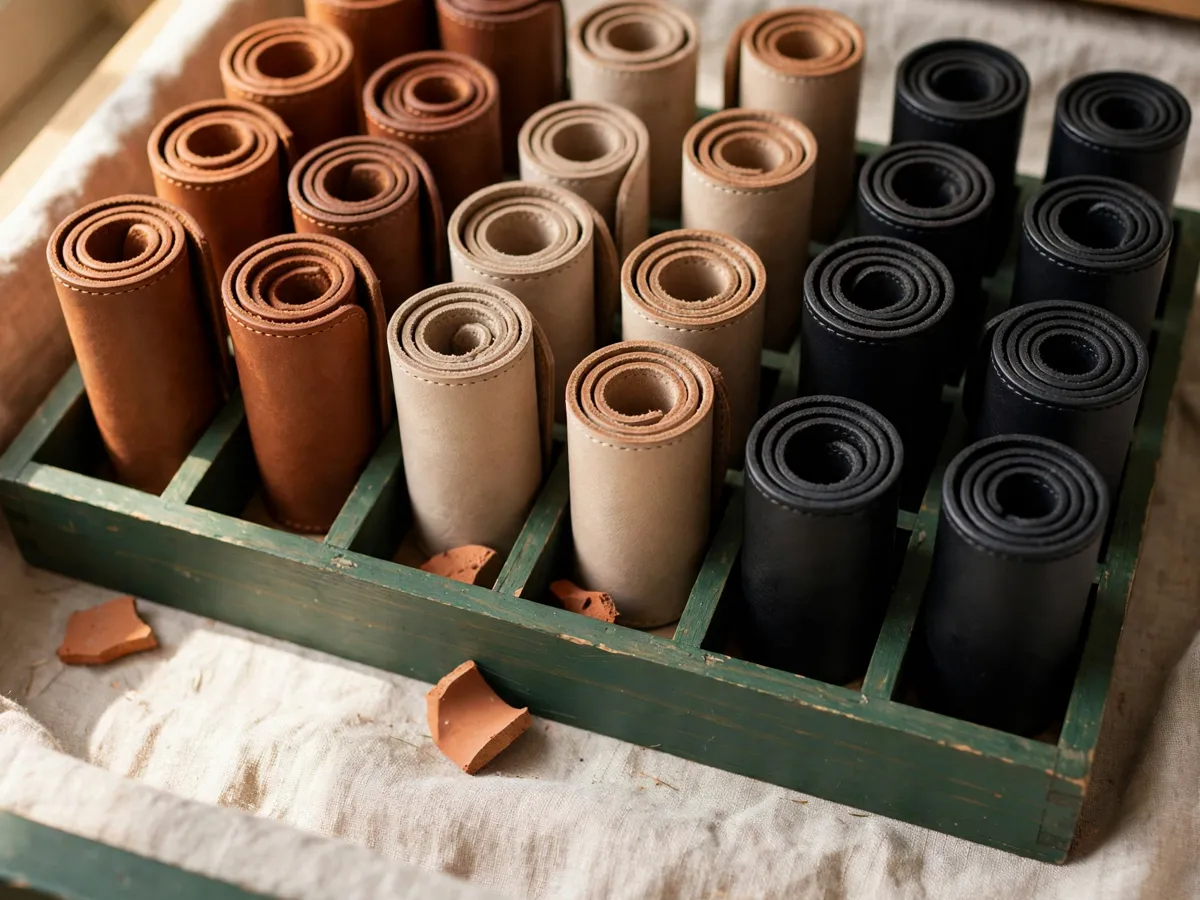
Cost: $10–$22 for dividers. Time: 25 minutes. One roll per cell, or the grid is just a pile with walls.
9. The Hanger Hack: A Standard Hanger Plus Rings (The $0 Option)
The cheapest belt organizer is already in the closet. Take a sturdy hanger, the kind with a bottom bar, and slide shower-curtain rings or binder rings along it. Each ring holds one belt folded over, buckle hanging down, and the hanger joins the others on the rod as if it were a shirt.
The honest limit is count and weight. Twelve rings make a full hanger, and more crowds the leather until the no-crease rule breaks. A dozen leather belts on one hanger also asks the rod to carry several pounds, so use the sturdiest hanger available and stop at one full row.
This option proves the point of the page: organization is a decision, not a purchase. The hanger hack holds every rule here, one belt per ring, buckles down, room to breathe, and a dedicated bar can replace it later.
Cost: $0–$5. Time: 10 minutes. One belt per ring, and stop at twelve.
10. Inside the Shoe Box: The See-Through Belt Box on the Top Shelf
The formal belts and the rarely worn deserve the top shelf: rolled, standing on edge, inside a clear shoe box. The see-through part is the feature: the seasonal and evening belts stay findable without dragging the box down, and rolled belts standing inside it behave like the drawer grid, relocated to storage nobody reaches daily.
A shoe box fits the category almost exactly: about a dozen rolls on edge, one layer deep, nothing stacked. Keep it to one layer, because a second layer of rolls resting on buckle hardware is how scratches happen to the finishes least able to hide them. A soft cloth square on the base cushions the buckles.
When the top shelf is the seasonal zone, the belts that only appear in certain months join the rotation. The seasonal belts: off season clothing storage covers the swap-day rhythm that moves them out and back without a rediscovery hunt.
Cost: $0–$12 for a clear box. Time: 15 minutes. One layer of rolls only, or the buckles mark each other.
11. Buckle Care: Polishing and the Storage Scratch Rule
The buckle is half the look of a belt and the part storage damages most. Brass and plated buckles pick up fine scratches whenever they rest against other hardware, and a drawer of loose belts is a box of buckles grinding each other every time it moves.
The storage scratch rule: metal never rests on metal. The systems on this page already follow it, one belt per hook, one roll per cell, buckles facing out. For delicate finishes, a soft cloth square between the buckle and the rest of the box is the whole trick, and a flannel square from an old shirt does the job.
Polishing is a twice-a-year habit. A soft cloth and a small amount of metal polish, worked in circles on solid brass, brings back most of the shine. Plated buckles get the dry cloth only, because polish can wear through a thin plating. Leather conditioner on the strap once a year keeps the leather from drying and cracking in a closet that runs dry in winter.
Cost: $5–$10 for polish and conditioner. Time: 20 minutes twice a year. Metal never rests on metal, and dry cloth only on plating.
12. How Many Belts Do You Actually Wear? The 2-Week Audit
Storage size follows usage, and usage is a number, not a feeling. The audit: hang every belt on its own hook or ring, then for two weeks just note which belts come off. The belts still untouched after fourteen honest days are the answer.
The pattern the audit usually reveals: two or three belts carry almost all the wear, a black one, a brown one and something casual. The long tail of rarely worn belts, impulse buys and gifts and old sizes, is what makes the storage problem look bigger than the category is. The audit turns that pile into a decision: donate, or keep in the top-shelf box.
Size the system to the two-week answer, not to the drawer count. Ten worn belts fit a short bar, five fit a hanger of rings, three fit a column of hooks.
Cost: $0. Time: 5 minutes to set up. Two weeks of honest ticks decides it: store what gets worn, not what got bought.
13. Renter-Safe Options: No Drill, No Damage
Every lane on this page has a version that leaves the walls untouched. The over-door rack in section 6 hooks the door top. The hanger hack in section 9 rides the existing rod. The drawer grid and the shoe box live on shelf space nobody is arguing about. A tension rod inside the closet frame carries a row of S-hooks as a belt bar that puts no hole anywhere.
The tension rod is the one that scales. Rod length adjusts to the closet width, and a rod at eye height inside the frame holds two dozen belts with the buckle-down rule intact. Tighten it snug, test with a downward pull, and retighten once after the first month when the mechanism settles.
The one damage risk left is the floor, not the wall: a dropped rack can mark vinyl, so a felt pad under anything that stands and a door rack checked for a clean close keep the deposit argument from starting. The whole small closet plan for renters: small closet organization is built around the same no-holes rule.
Cost: $0–$20. Time: 15 minutes. Retighten a tension rod once after the first month.
14. Common Mistakes: The Belt Pile, the Knotted Hang, Sun on Leather
Three habits undo most belt storage, and none of them is about the gear.
The belt pile is the default state, every belt coiled on top of the last, and it fails because a pile cannot be searched without being unmade. The fix is a system that returns the belt to a one-motion home: one hook, one cell, one ring.
The knotted hang is the belt thrown over a hanger and looped through itself so it cannot slide. It feels clever, and it creases the leather at the knot under the weight of the buckle, the exact damage the no-crease rule exists to stop. A hook or a ring costs a dollar and fixes it.
Direct sun on leather is the quiet one. A belt station on a wall that catches afternoon sun slowly bleaches and dries the leather, fading the color unevenly. The hook column wants a shaded wall.
Cost: $0–$25 to fix all three. Time: 30 minutes. A system you can use in one motion is the fix for the pile.
15. Cost Reality: $0–$35
The whole category organizes inside a grocery budget, and most of the range is optional.
- $0–$5, the free lane: the hanger hack with rings you already own, a shoe box on the top shelf, the two-week audit that shrinks the problem. This lane holds every rule in the guide.
- $8–$20, the buy lane: a wooden belt bar with S-hooks, an over-door rack, a tension rod, a set of drawer dividers. One purchase from this list is usually the whole job.
- $20–$35, the settle lane: a hardwood belt bar or a woven tray set, the version that looks like it belongs in the room and will still be there in ten years.
The honest order of spending: sort and audit first, because those are free and they shrink everything after. Then buy the single piece that fits the lane the collection lives in. The everyday belt lives with the coats, and coat closet organization shows where the grab-and-go belt wants to hang. Bags next door: purse and handbag closet organization is the next zone over.
Cost: $0–$35 all-in. Time: 45 minutes to sort and install. The free lane follows every rule on this page.
Common questions
Is it better to hang belts or roll them?
By leather type. Stiff leather belts hang, because hanging keeps the strap flat and the buckle weight pulls the leather straight. Woven, canvas and stretch belts roll, because a hook slowly stretches a soft strap at the fold. The sort in section 2 tells you which lane each belt belongs in.
How do you store belts without creasing them?
Never fold a stiff belt into a drawer. Hang it straight over a bar or S-hook with the buckle end down, or lay it flat full length on a shelf. The gentle curve of a drape is fine; the hard line of a fold is the crease that stays.
What is the cheapest way to organize belts?
A standard hanger and a row of rings. Slide the rings along the bottom bar, fold one belt over each ring with the buckle down, and hang it with the rest of the closet. It costs nothing, holds about twelve belts, and follows the same one-belt-per-hook rule as a bought bar.
How much space do you need for a belt organizer?
Very little. A dozen hanging belts need about a foot of bar. Twenty rolled belts need one shallow drawer or half a shelf. The over-door rack uses the door back, which no other category is competing for.
Can you hang belts in a rental without drilling?
Yes. An over-door rack hooks the door top, a tension rod mounts inside the closet frame without holes, and the hanger hack rides the rod that is already there. Retighten the tension rod once after the first month and the setup leaves the walls untouched.
Save these on Pinterest
Pin the hang-or-roll sort, the belt bar setup, the no-crease rule and the renter-safe options, plus the $0 hanger hack. This guide and the rest of the organization and storage collection live together there.