 Plant As Deco
Organization & Storage
Coat Closet Organization: A Small-Space System That Works
By Plant As Deco · Updated 20 November 2026
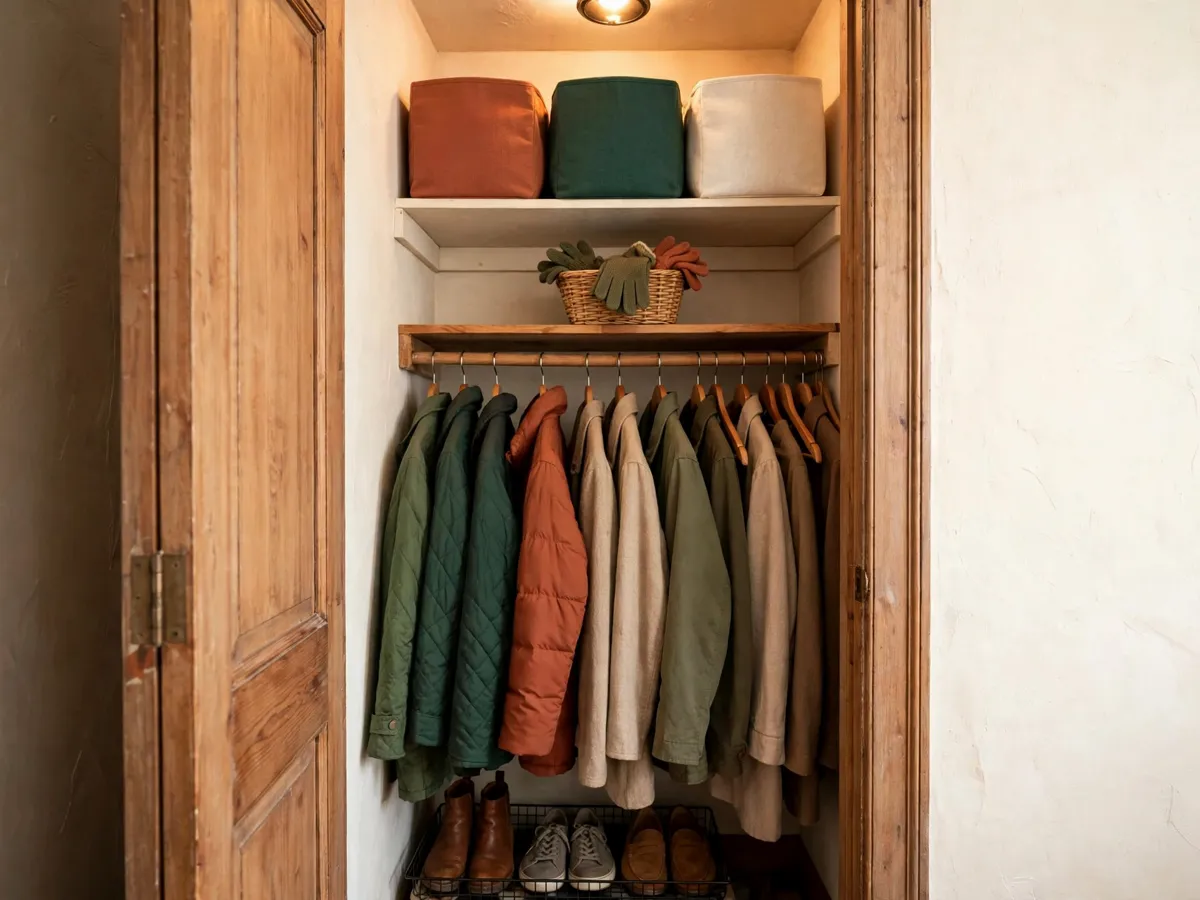
The coat closet is the hardest-working square foot in a cold-climate home and the one nobody ever planned. It takes every jacket, hat, bag and leash that crosses the threshold, four times a day, and it does it behind a door that stops closing by December. This page fixes that with the closet you already have: a narrow reach-in with one rod and one shelf. You will measure the door, add a second hanging row, split the space into three zones, give every kid a hook they can reach, and end with a seasonal swap that keeps the coats under the rod instead of on the floor.
Weekend-ready: $25–$90, one afternoon. Renter-safe: door hooks, tension rods and hanging racks need nothing in the wall.
1. What a Coat Closet Actually Has to Do
Most entry closets were framed at 30 to 36 inches wide with a single rod at 66 inches and a shelf above it. That is room for about ten coats and nothing else. Add four backpacks, two leashes and a stack of beanies, and the door stops clearing the hangers. The closet did not shrink; the job grew past the one row of hang space it was given.
Organizing one well starts with three questions, asked before you spend a dollar. What has to hang? Coats, jackets, rain shells, the school puffer — anything that folds badly or comes back wet. What can fold? Scarves, gloves, beanies, earmuffs, the dog leash. What lives on the floor? Shoes, boots, the umbrella pot, the bag that goes to the car. Sort everything out of the closet into those three piles on the floor first. The pile that will not fit is the one you relocate, and that decision is worth more than any bin you could buy.
One more distinction matters. A coat closet holds what people wear on the way out; it is not a hall, a mudroom, or a linen shelf. If your entry has wall space for hooks and a seat, that is a bigger project and the mudroom guide covers it. This page stays behind the one door with the rod in it.
Cost: $0. Time: 15 minutes to empty the closet and sort it into three piles.
2. Measure the Closet Before You Buy Anything
Every failed coat closet starts in a store aisle. You buy bins that look right, bring them home, and the door will not shut over them. Ten minutes with a tape measure prevents it. You need five numbers, and you need them from the inside of the closet, not the frame.
First, the inside width, wall face to wall face, measured at the top, the middle and the bottom. Old frames are rarely square; a 32 inch reading up high can be 30 inches lower down, and the smaller number is the one that decides what fits. Second, the depth from the back wall to the closed door. Twenty-four inches is the comfortable standard; at 22 inches a coat on a wide hanger presses the door open, and you switch to slim hangers or fold the long coats. Third, the height from the floor to the ceiling, which tells you how much room sits above the rod.
Fourth, the rod height itself, and fifth, the clear gap between the rod and the shelf above it. Under 12 inches up there, nothing stackable fits, so the upper zone is for flat things only. Write all five on your phone before you leave the house. If the closet is deeper than it is wide, or narrower than 28 inches, the layout changes more than the shopping list does — the small closet organization guide walks through the very tight versions of this room.
Cost: $0. Time: 5 minutes. Photograph the empty closet from the doorway so you can check the numbers standing in the aisle.
3. The Double Rod That Doubles Your Hang Space
A coat on a flocked hanger takes about 2½ to 3 inches of rod, so a 30-inch closet holds 10 to 12 coats in one row. That is the whole budget. The fix is a second hanging row, and there are two ways to get it depending on how deep your closet measures.
In a closet 24 inches deep or more, run the second rod front to back, offset lower than the first, so the back row hangs between the fronts. A cascading rack that hooks over the existing rod does the same job with no hardware at all — it hangs from the rod you already have and adds eight to ten more coats. This is the cheapest win on the whole page: $12 to $24, twenty minutes, and it works in a rental because nothing goes into a wall.
In a shallow closet, keep one row and slim it down. Swap plastic or wooden hangers for velvet ones — 25 of them run $12 to $20 and cut each coat down to about 1½ inches, which turns ten hooks into sixteen. Fold the sleeves in on long coats so the hem clears the door. Same trick, more coats: the rod is fixed, the hangers are not.
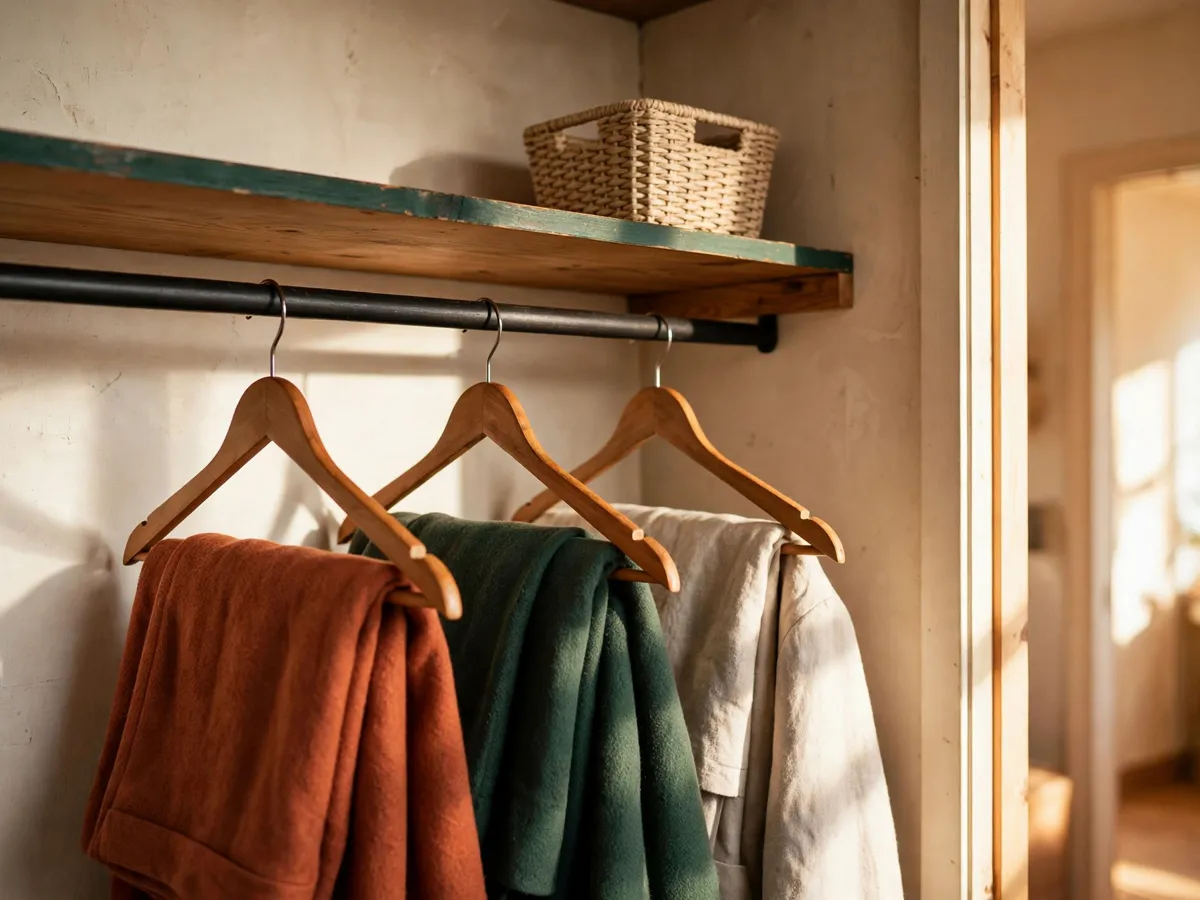
Cost: $12–$24 for a cascade rack, $12–$20 for a 25-pack of slim hangers. Time: 20 minutes.
4. Shelves, Bins and the Upper Zone
The shelf above the rod is the upper zone, and it follows one rule: nothing taller than the gap, measured with the door closed. If the clear space is 14 inches, a 12-inch bin is the largest you can use, because every bin needs an inch of air or the door rides on it. Shallow is the word here — 10 to 12 inches deep beats 15 every time in an entry closet.
Fill it with bins rather than loose stacks. Three fabric bins, one per category, keep beanies, sun hats and the tote-fold bags from merging into a single lump. Bins run $6 to $12 each, and the soft ones squash a little when the door swings, which is exactly what you want in a tight closet. Wire baskets suit a shelf with 16 inches or more of clearance; they hold shape and let air move through wet things. Hard plastic works up here only if the lid is flat.
Label each bin on the front, facing out, so a person loading the closet at 7 p.m. does not have to open it. A strip of painter's tape and a marker is enough, and the name on the front is not decoration — it is the reason the bin survives past week two. Mark the bins before you fill them, and the sorting does itself. If your household keeps towels and sheets in a nearby cabinet, that is a different closet with a different job, and the linen closet guide handles the folded-stack version of the same shelf math.
Cost: $18–$36 for three bins, $0 for tape markers. Time: 20 minutes to sort the upper zone and fill.
5. Shoes, Boots and the Floor Zone
The floor takes the most abuse and gets the least planning. Snow melt, slush and road grit all end up in the bottom six inches of the closet, so the first move is a tray, not a rack. A low plastic boot tray with a lip of an inch or two catches the water and lifts leather off the wet base. Two trays side by side, one for wet winter boots and one for the everyday pairs, cost $10 to $18 each and keep the floor readable.
Tall boots flop at the shaft and crease at the same fold every week. Roll a pair of socks into the shaft, or slide a cardboard tube down it, and the boot stands on its own sole. That single habit frees more floor inches than a new shoe rack would, because a slumped boot takes twice the width of an upright one. Leave three inches between a wet pair and the wall so the leather dries instead of sitting in its own damp.
Keep the daily pairs down low and the rest up in the upper zone or out of the entry entirely. A coat closet holds the shoes in rotation — six to eight pairs for a family of four is the honest ceiling. Overflow belongs in a bedroom closet or a hall seat with cubbies. If the shoes spill past the door into the passage, the shoe storage guide covers the setup outside the closet, where the row lives year-round.
Cost: $20–$36 for two trays. Time: 15 minutes to line the floor and stand every pair up.
6. Gloves, Scarves, Hats and the Small Things
The small things are what spill. Gloves, scarves, beanies, earmuffs, the dog leash, three umbrellas and the tote you use for groceries add up to a pile that no rod can hold. They need one of two homes: a basket on the middle shelf, or a hook on the door.
For the basket, use one bin per person in a family with kids. A child who can open a bin and find their own gloves will do it; a child facing one shared lump of mittens will not. A woven or fabric basket around 10 inches deep sits on the shelf beside the rod and breathes, so damp wool dries overnight instead of smelling by Thursday. Fold scarves in half rather than rolling them tight — the roll stretches the knit at the centre.
For the door, the inside face is free real estate nobody counts. Three or four hooks along the top of the inside panel hold bags, leashes and the umbrella, and each one takes a thing off the floor. Keep the weight light: a hook rated for a tote of groceries will not hold a wet winter parka all winter. Pair the door hooks with the hanging rack below so the two rows do not fight when the door swings.
Cost: $6–$12 for one basket per person. Time: 10 minutes, and about two minutes each Sunday to dump and re-sort.
7. Kid Heights and the Family Rule
A rod at 66 inches is useless to a four-year-old, and a coat a kid cannot hang becomes a coat on the floor. The second row fixes this twice over: run a low tension rod or a hanging rack at 30 to 34 inches, which is shoulder height for most kids between three and seven, and give it only their jackets and backpacks. Adults reach the top row; kids reach theirs. Nobody needs a stool, and a stool in a 30-inch closet is a trip hazard in the dark.
Then set the family rule, which is the part that actually keeps the closet organized. One hook per person, one bin per person, and the coat lives on its hook between outings — not on a chair, not on the rod of whoever got there first. Write it down once and enforce it for two weeks; after that it is just how the house works. The pile by the door is a symptom of a closet with no assigned spots, and no amount of shelving fixes an unassigned one.
If you have the wall beside the closet, a small bench with cubbies under it gives each kid a square of floor and a seat to pull boots off from. The entryway bench plans with a cut list cover that build for a weekend, and it pairs well with a closet that has already run out of room.
Cost: $8–$18 for a low rod or an extra hanging rack. Time: 20 minutes, plus two weeks of nagging.
8. Renter-Safe Hooks and No-Drill Options
Renters get four pieces of real estate in an entry closet, and none of them need a hole in the wall. The door top, for hooks that hang over the panel. The rod itself, for racks that clip on. The shelf, for bins. The floor, for trays and a slim freestanding unit. Every recommendation on this page sits in one of those four spots.
Over-door hooks are the workhorse: a set of four runs $8 to $14, slips over the top of the door in seconds, and comes off clean at move-out. Check the lip first — a closet door with a 1-inch gap above it lets the hook ride down when something heavy hangs. A tension rod across the opening adds a row for scarves and the kids' jackets at any height you like, and adhesive strips hold a lightweight hook strip on the inside of the door where the finish is smooth. Read the weight rating on the packet and stay under half of it; a coat pulled on in a hurry is a bigger force than the tag suggests.
Owners have one more option: a hook fixed into a stud, or a shelf bracket fastened to the side wall. If the closet is a walk-in rather than a reach-in, that changes the layout again and the wall becomes the cheapest space. For everyone else, the door and the rod are enough, and the entryway ideas for renters page carries the same thinking out into the hall.
Cost: $8–$14 for a door-hook set, $8–$15 for a tension rod. Time: 5 minutes each, and zero damage at move-out.
9. The Seasonal Swap and the Donation Bag
A coat closet overflows twice a year, and both times for the same reason: the outgoing layer never left. Autumn brings the heavy parkas in and the light shells out; spring reverses it. Do each swap once, on a fixed weekend, and the closet stays inside its budget of hang space for the other six months.
Wash or dry-clean everything before it goes into storage — a hem with last winter's salt on it stains the lining permanently, and a food spot on a hood is how moths find a wool coat. Store the off-season layer in a breathable cotton bag on the upper shelf or under a bed. Skip airtight plastic for wool and down; it traps the damp the fabric still holds and flattens the loft you paid for. Label the bag with the season, not the person, so next October you reach for the right one.
Then run the donation bag. Clip a paper or mesh bag to the rod, and every time a coat comes off that nobody has worn this season, it goes in rather than back on. The rule that makes it work is one-in-one-out: a new jacket enters the closet only when another leaves it. Fill the bag, take it to the drop-off point the same week, and the closet never carries a pile of things waiting for a trip you will not make. Decluttering an entry closet is mostly this habit, repeated twice a year, and the off-season clothing storage guide covers where the swapped-out layers live when the closet is small.
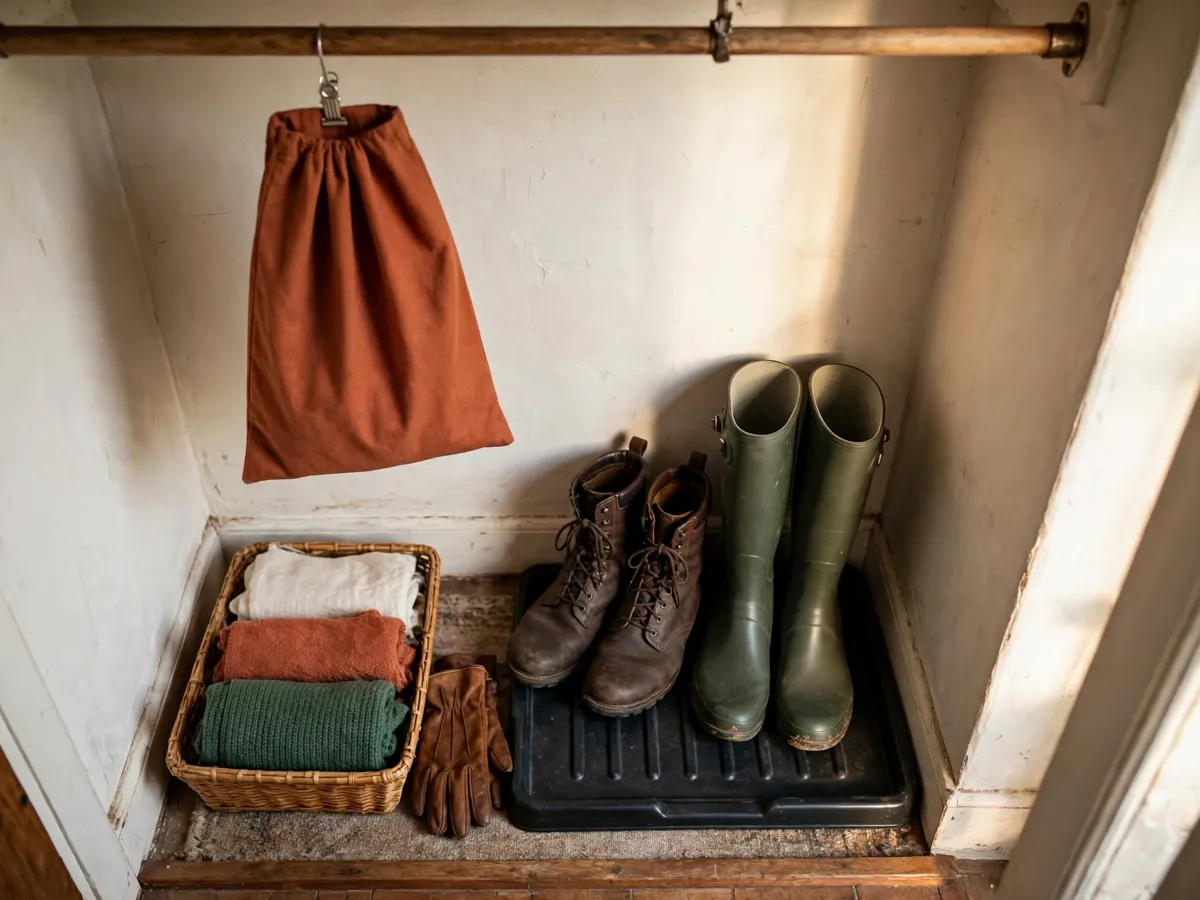
Cost: $0 if you reuse a bag, $6–$14 for cotton garment bags. Time: 45 minutes per swap, twice a year.
10. What It Costs and How Long It Takes
Here is the honest budget for a 30-inch reach-in, priced the way the storage aisle actually sells it. Pick the lines that match your closet; most homes need three or four of them, not all six.
- Cascade or over-rod hanging rack, for a second row of coats: $12–$24, 10 minutes.
- Velvet hangers, 25-pack, to slim the row you already have: $12–$20, 20 minutes to re-hang everything.
- Three fabric shelf bins for the upper zone: $18–$36, 20 minutes.
- Two boot trays for the floor: $20–$36, 15 minutes.
- A hook set that hangs over the door: $8–$14, 2 minutes.
- A low tension rod for the kid row: $8–$15, 5 minutes.
The full list is $78–$185, and almost nobody buys all of it. The realistic spend for one afternoon is $25 to $90: a second hanging row, three bins, one tray, and a set of hooks. Add the hangers if the door still rides on the coats. Tape and a marker cost nothing if you already own both.
Time breaks down like this: 15 minutes to empty and sort, 5 to measure, 20 to hang the second row, 20 to fill the bins, 15 for the floor, and 30 to re-hang the coats and put the kids' row at their height. About two and a half hours, which is one afternoon with a break in it.
Cost: $25–$90 for the afternoon, $78–$185 if you buy the whole list. Time: 2 to 2½ hours.
11. Your One-Afternoon Closet Plan
- Empty the coat closet and sort everything into hang, fold and floor piles.
- Measure inside width at three heights, depth to the closed door, ceiling height, rod height and the gap above the rod.
- Relocate whatever will not fit back in — the closet holds the outerwear layer, not the household.
- Add the second hanging row: a cascade rack for depth, slim hangers for a shallow closet.
- Set the kid row at 30–34 inches, or clip a low rack under the main rod.
- Fill the upper shelf with three shallow bins, nothing taller than the clearance minus an inch.
- Label every bin on the front, facing out, with painter's tape.
- Line the floor with trays and stand every boot upright.
- Move bags, leashes and the umbrella onto hooks on the inside of the door.
- Assign one hook and one bin per person, and keep the coats on them.
- Clip the donation bag to the rod and start one-in-one-out.
- Book the two swap dates — autumn and spring — in the same week you finish.
Cost: $25–$90. Time: one afternoon. Renter-safe throughout — the door, the rod, the shelf and the floor do all the work.
Common questions
How many coats fit in a 30-inch closet?
Ten to twelve on one rod at 2½ to 3 inches each, and sixteen if you swap to slim velvet hangers. A second row — a cascade rack that hooks over the existing rod — adds another eight to ten in a closet that is 24 inches deep. Beyond that the door stops clearing, and the honest answer is to move the off-season layer into storage rather than packing the rod harder.
What depth does a coat closet need?
Twenty-four inches is the comfortable number, measured from the back wall to the closed door. A coat on a hanger is about 21 inches wide across the shoulders, so anything shallower and the door rides on the sleeves. At 22 inches, fold the sleeves in or switch to slim hangers and the door closes again. Under 20, keep one row only and move the bulk of the coats elsewhere.
Can I organize a coat closet in a rental?
Yes, and this is the most rental-friendly closet in the house. Everything runs off the door, the rod, the shelf and the floor: door hooks, a tension rod, a rack that clips to the existing rod, bins and trays. Nothing goes into the wall, and the whole setup comes down in fifteen minutes on moving day. Adhesive strips are the only thing to test first — they lift textured finishes, so keep them on the inside of the door where nobody sees them.
How high should the coat rod be?
Sixty-six inches is the standard, which clears a knee-length coat and stays reachable for most adults. Long coats need 72 inches or they fold at the hem, and a fold in a wet wool hem sets a crease that stays. For the kids' row, 30 to 34 inches puts it at shoulder height for a three- to seven-year-old, so the school jacket hangs itself.
What should not live in a coat closet?
Cleaning chemicals, pet food, and anything that smells strongly, because the fabrics hang close and hold the odor. Also keep out the household overflow — the sports gear, the holiday boxes, the umbrella army. Each item you leave in is a coat hook you do not have. The closet holds outerwear and the small things that go with it, and nothing else.
How often should the coat closet be swapped?
Twice a year, on two fixed weekends: late autumn when the heavy layer comes in, and early spring when it goes back out. Wash or dry-clean each coat before it is stored, and bag it in cotton rather than sealed plastic. Run the donation bag during both swaps, since that is when you can see which jacket you have not reached for in months.
Save these on Pinterest
Pin the five measurements and the rod heights — 66 inches for the adults, 30 to 34 for the kids, and 24 inches of depth before a second row works. Those are the numbers you will forget standing in the storage aisle with a bin in your hands. This guide and the rest of the organization and storage collection live together there.