 Plant As Deco
Small Room Decor
Sage Green Bedroom Ideas: The Color That Calms a Small Room
By Plant As Deco · Updated 14 November 2026
Sage green earned its place in small bedrooms for a reason that has nothing to do with trends: it is a neutral with a temperature. Gray reads cold, beige reads flat, and sage sits between them — green enough to feel like something grew there, muted enough to sit behind a bed the way a warm gray would. In a small room that works twice over: the color is soft enough that the walls recede instead of shouting, and it is green enough that the room feels like an evening rather than a hallway. This guide is about the version of sage that makes a small bedroom feel settled — which shade, which walls, and the route that needs no paint at all.
Weekend-ready: $0–$120, one afternoon to a full weekend. Renter route uses bedding and textiles only — nothing attached.
1. Why sage works in a small room
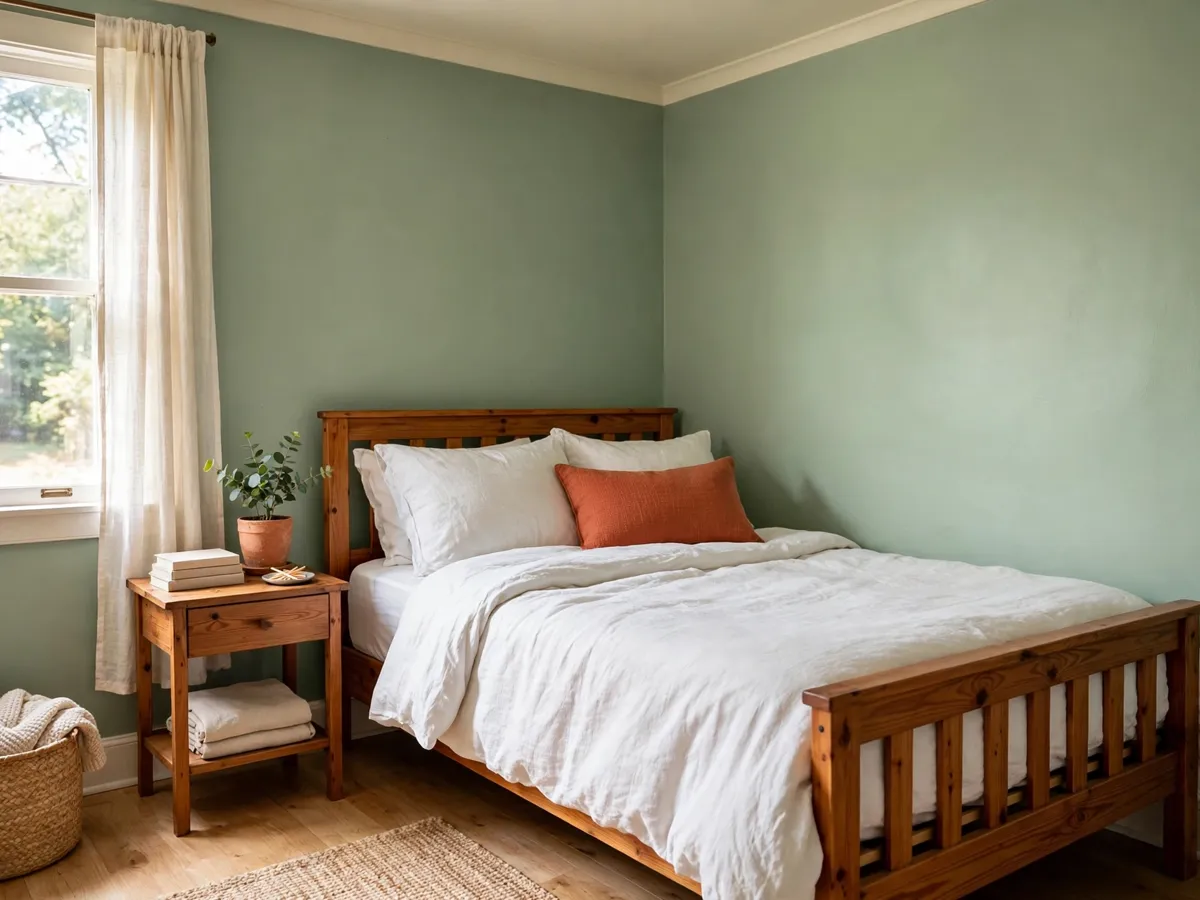
A color that behaves like a neutral but carries warmth is rare, and sage is it. The base is gray, the influence is green, and the result is a shade that people who hate green agree with — the same people who get along with warm whites and taupes, because sage is that family with a leaf in it. It pairs with almost every wood a small bedroom actually owns: walnut goes rich against it, oak goes golden, and raw pine goes deliberate. Linen in warm white sits on a sage wall the way cream sits on oatmeal, which is why sage bedrooms always look half-finished in a good way. The shade range matters more than the name on the can: light sage is the soft, almost-gray version that works on all four walls of a small room; deep sage is the saturated, forest-leaning version that belongs on one wall or a headboard; gray-sage is the cool version, the one to check twice before committing, because it is the shade that tips clinical. Whatever the shade, the balance is the classic split: roughly sixty percent of the room in the sage and the wall color, thirty percent in the furniture and the bigger textiles, ten percent in one accent — terracotta, rust, or aged brass. Sage sits in the same family as the rest of the cozy paint colors, with the same rule: test before the room is committed.
Cost: $0. Time: an evening of sample pots taped to the wall.
2. Sage walls, cream ceiling
The paint plan that works in a small bedroom is three walls in a light sage and the ceiling — plus the fourth wall if the room is tight — in a warm white. The cream ceiling is what keeps sage from closing the room in: the light bounces warm off the top instead of dropping green into the shadows, and the walls read as color rather than as an encloser. The stronger version of the same idea is sage on the headboard wall only, with the other three walls in warm white and the bedding carrying a lighter echo of the same shade — the room gets the color where the bed already draws the eye, and the corners stay airy. Deep sage suits that single-wall role best, because a full room of it eats the light a small bedroom does not have to spare. Whatever the plan, the sample pot is the part people skip and should not: sage shifts more than most colors between the store chip and the bedroom wall, it reads one way in morning light and another under a warm bulb at ten at night, and a two-dollar sample lived with for three days answers a question no photo can. The headboard-wall version and its proportions live in the accent wall guide.
Cost: $40–$120 in paint and supplies. Time: one weekend — two coats, with the sample pot tested three days before any of it.
3. The no-paint route for renters
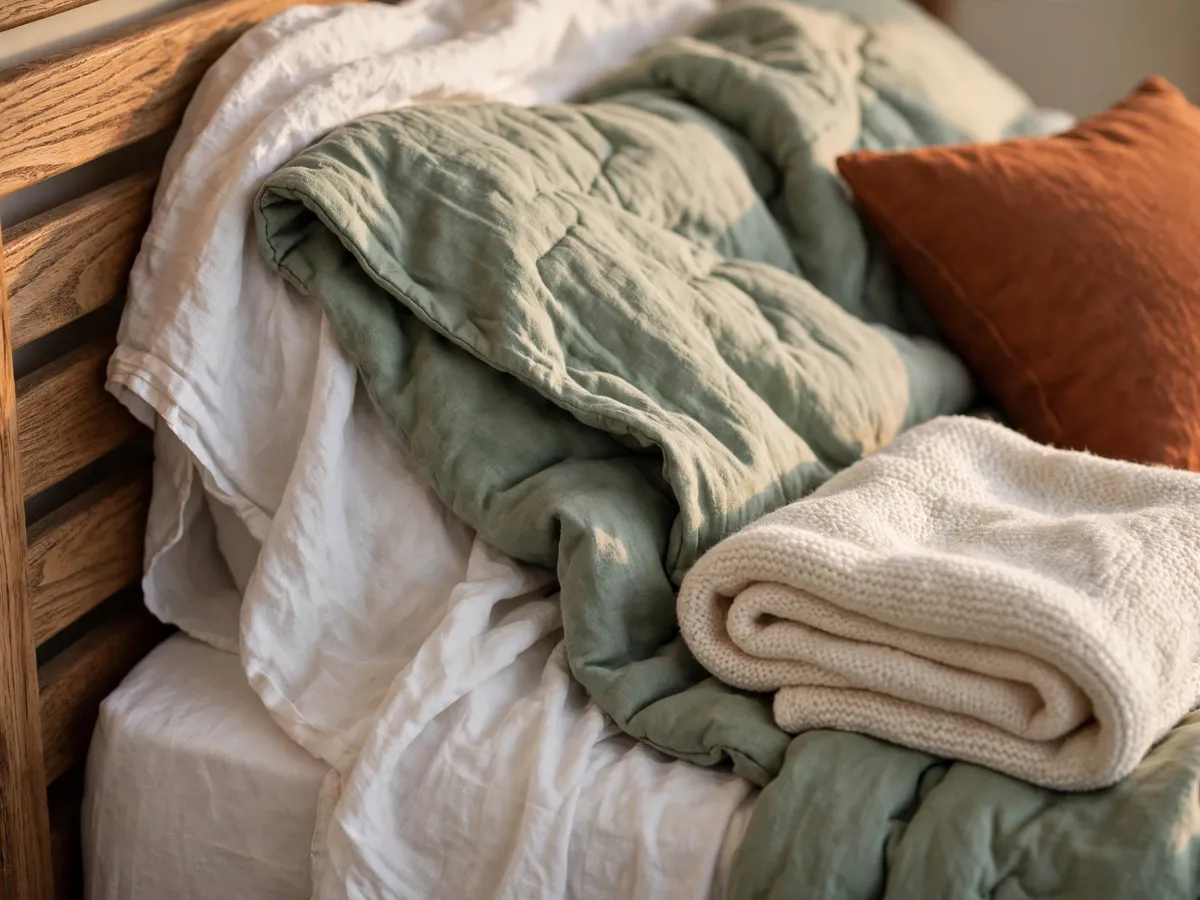
The bedroom can go sage without a drop of paint, and the no-paint version is often the better one. The core move: a sage duvet cover or quilt with white linen sheets underneath, a sage or deep-green rug beside the bed, and two accent pillows in terracotta or rust to give the green something warm to lean against. Sage bedding carries the room because the bed is the biggest surface in it — in a ten-by-eleven bedroom the duvet is a third of what you see from the door, and a sage duvet against a warm white wall does most of what a sage wall does. The layering order — which pieces sit where, how many textures before it reads busy — is in the fabric layers guide. A sage throw folded at the foot of the bed, a sage cushion behind the white ones, a small sage runner on the dresser: the color arrives as material, which means it leaves as material too — the whole scheme moves to the next apartment in two laundry bags, and the walls stay exactly as the landlord left them.
Cost: $0 if the bedding exists, $60–$150 for the sage duvet route. Time: one afternoon of dressing the bed, no tools.
4. Avoiding the clinical version
There is a version of the sage bedroom that looks like a waiting room, and it always comes from the same three ingredients: a gray-sage that leans cold, walls and ceiling in the same flat tone, and a white light bulb overhead. Gray-green plus flat plus cool light is the combination that strips the warmth out of the color and leaves the green looking like a decision a hospital made. The defenses are simple and none of them cost much. Keep the ceiling and the linen in warm whites rather than pure white, so the sage has something warm to sit against. Put the overhead bulb at 2700K and add a bedside lamp — a warm bulb at eye level changes the whole room at night, which is the hour the bedroom actually belongs to, and the full plan is in the warm lighting guide. Keep wood in the frame: a walnut headboard, oak nightstand, or a bamboo blind gives the green its natural partner, and a room of sage plus metal plus white is the room that reads clinical. The full neutral palette that sage sits inside — the whites, the woods, the one accent — is in the neutral color scheme guide.
Cost: $10 for the right bulb. Time: ten minutes to swap the light, one decision on the wood.
What we would skip
Skip sage on all four walls and the ceiling. The ceiling is what keeps a small bedroom open, and painting it the same green drops the lid on the room — the corners darken, the ceiling feels lower, and the calm reads as heavy. Skip the cool gray-sage against black metal furniture: gray-green plus black iron plus cool light is the waiting-room formula from the last section, and the fix is the warmer shade or the warmer frame. Skip the matched sage set — duvet, shams, curtains, rug, lampshade, all one tone. Three sage pieces read like a palette; five read like a themed set, and the room looks decorated rather than lived in. Warm white linen and one wood tone do the rest.
Cost: $0 to skip. Time: the decisions that keep the green warm.
Honest costs: where the money actually goes
The $0 version is real: if the bedroom already owns white sheets and any wood furniture, one sage throw or a pair of sage cushions pulled from another room is enough to change the feel, and the whole thing is an afternoon. The bedding route runs $60–$150 for the sage duvet cover that anchors the no-paint scheme, with the rug and the terracotta pillows as later additions at $30–$60 each. The paint route runs $40–$120 — one gallon of sage, one of warm white if the ceiling needs it, a roller and the tape — and a weekend of two coats. Sample pots at $5 each are the cheapest part and the one that saves the repaint. Beyond $150 the money is going into furniture, not color, and the sage has already done its job.
Cost: $0–$120. Time: an afternoon for the textiles route, a weekend for the paint.
Before you buy: copy this
- Sample pot on the actual wall, looked at for three days
- Light sage on three walls, warm white on the ceiling
- Deep sage kept to the headboard wall only
- White linen bedding with terracotta or rust as the accent
- Bulbs at 2700K and one piece of wood in the room
Cost: $5 for the sample pot that decides it. Time: fifteen minutes, before any paint.
Questions renters ask
What wood goes with sage green walls?
Almost all of it — that is the strength of the color. Walnut goes rich and dark against light sage, oak goes golden and casual, and raw pine reads deliberate rather than budget. The pairing to watch is black metal, which pulls the cool out of a gray-sage; warm woods keep the green on the warm side.
Will sage green make a small bedroom dark?
Light sage, no — it sits close to a warm gray in depth and behaves the same way on the walls. Deep sage, only on one wall: the headboard wall in a saturated green reads as depth behind the bed, while the same color on all four walls eats the light a small room needs. The ceiling stays warm white either way.
What colors pair with sage green?
Warm white and cream for the big surfaces, terracotta or rust for the ten percent accent, and one wood tone for the frame. Aged brass and linen belong to the same family. What sage does not want is a second saturated color — the room reads calm because the green is the only voice in it.
I can't paint my rental. Can I still do a sage bedroom?
Yes, and the no-paint route is often the better one: a sage duvet over white linen sheets, a sage rug beside the bed, and two terracotta pillows. The bed is the biggest surface a small bedroom has, so sage bedding carries the scheme against warm white walls — and every piece of it moves with you.
Save these on Pinterest
Pin the three-walls-and-cream-ceiling plan first, because it is the split that makes sage work in a small room. The rest of the cozy palette is in the cozy paint colors guide, and the single-wall version with its proportions is in the accent wall guide. Both sit in the Small Room Decor collection for the next bedroom that needs a color.