 Plant As Deco
Gardening & Planting Tips
Container Garden Layout Ideas: 4 Plans That Fit a Small Balcony
By Plant As Deco · Updated 17 November 2026
Every container garden is two projects: growing the plants, and arranging the pots so the space still works as a balcony. This page owns the second half — how many pots a small balcony takes, which sizes to buy first, where each one goes, and what the whole thing costs. Light, drainage, and the watering routine are the first half, and they live in the balcony garden guide. Read this one before you buy a single pot.
Weekend-ready: $40–$115, one afternoon. Renter-safe, with no-drill options for the rail.
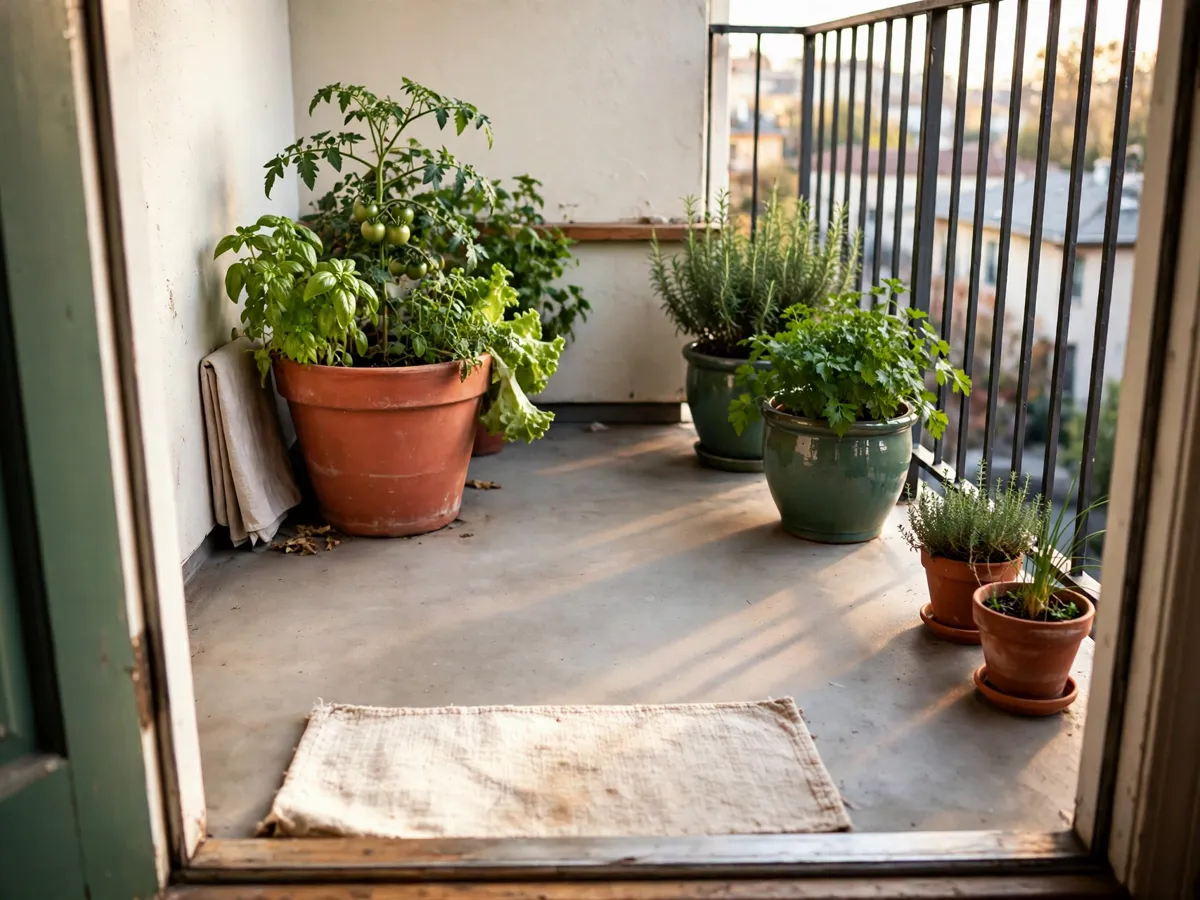
1. Start with five pots, not twelve
On a 4-by-6-foot balcony floor — the size a lot of apartment balconies actually are — five pots is where a container garden stops being a shopping pile and starts being a garden. Fewer than five and the corner reads as thin; more than five and you begin stepping over saucers to reach the door. The starter layout is one 16-inch anchor pot, two 12-inch mid pots, and two 8-inch edge fillers.
Five works for three reasons. It is an odd number, and odd groups read as deliberate where an even row reads as storage. One big pot gives the eye a single place to land, which is what makes five pots look composed instead of crowded — the anchor carries the corner and the four smaller pots support it rather than compete with it. And five leaves the walkway open: anchor in the back corner, the two 12s along the long wall, the two 8s at the outer edge, and the path from the door stays clear.
What goes inside the anchor is a separate decision — a compact cherry tomato in the 16-inch pot is the classic pick, and the pot-depth numbers for tomatoes and other vegetables live in the vegetables guide. What matters here is the count: five, and the way to grow past five is up the wall and along the rail, not across the floor.
Cost: $55–$105 for the starter five with plants — $18–$30 for the 16-inch pot, $8–$15 each for the 12s, $4–$8 each for the 8s, and $3–$6 per plant. Time: 30 minutes to shop the list. Buy the anchor pot first, because the whole layout is built around it.
2. The three-height rule, arranged from the door
Stand at the door before you place anything — that sight line is what the layout protects. The rule is three heights, and the arrangement never changes: the tallest pot goes farthest from the door, the mid pots hold the middle of the frame, and the trailing plants sit at the outer edge where their vines can hang over the rail instead of across the floor.
Tallest at the back corner, against the wall, is the whole trick. From the door you look over and past it, so the big plant frames the view instead of blocking it — reverse the order and the tallest pot stands between you and everything else you bought. The two 12s step forward from it, a hand-width off the wall, close enough to read as one group. The two 8s go at the outer edge near the rail, where a trailing vine or a low, wide plant softens the rail line without putting anything at knee height in the walkway.
This is also why the layout starts with pot sizes instead of plant names: a 16-inch pot under something tall, a 12-inch under something bushy, an 8-inch under something that trails. The heights come from the containers, so the composition survives every plant swap you make in June.
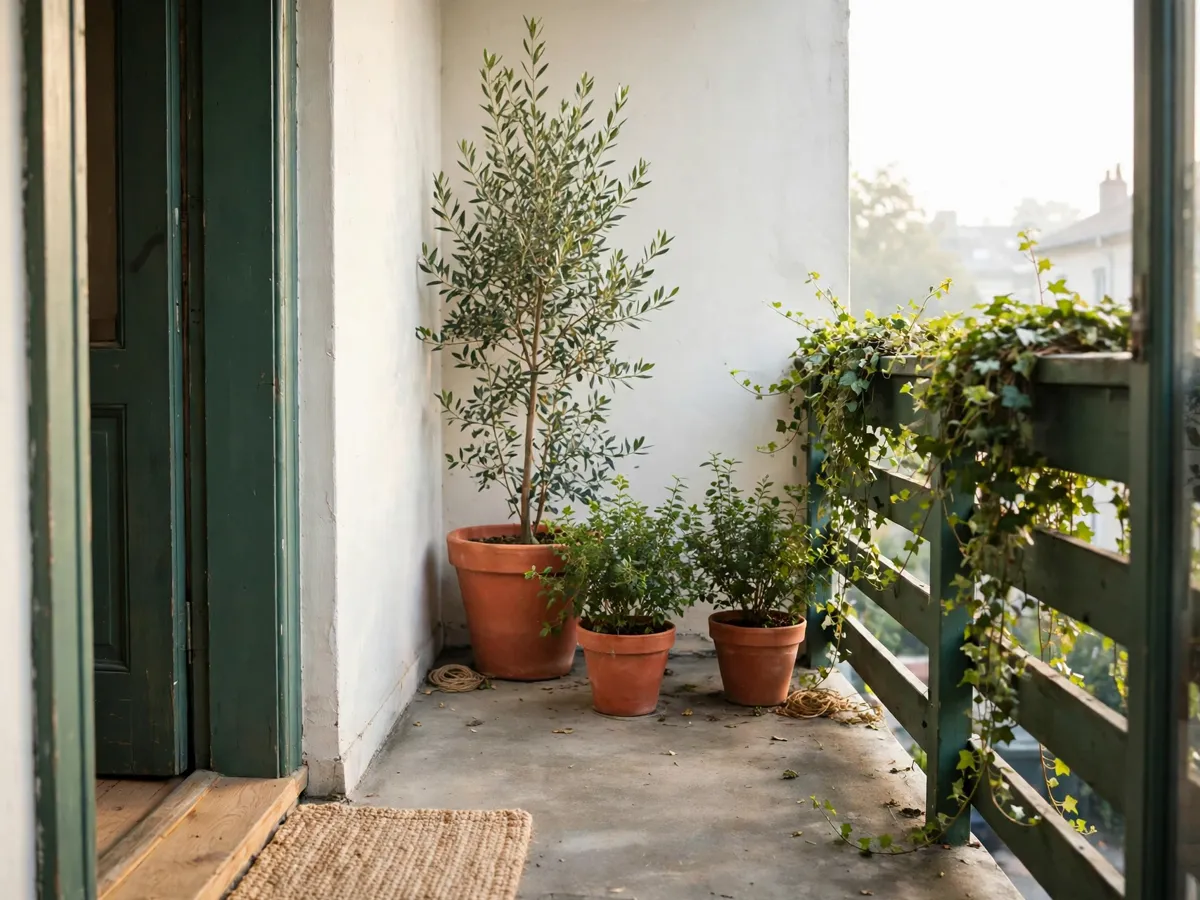
Cost: $0 — this is placement, not purchases; the three heights are already in the starter five. Time: 10 minutes sliding empty pots before anything is filled. Decide before you plant — a filled 16-inch pot does not get moved twice.
3. The floor-footprint math
Pot footprints are the honest way to price a layout, because floor is the thing a balcony does not have extra of. A 16-inch pot covers 1.4 square feet, a 12-inch covers 0.8, and an 8-inch covers about a third. Add the starter five up and the whole garden occupies about 3.7 square feet — on a 24-square-foot floor, that leaves more than twenty square feet doing their real job: standing, sweeping, the chair, the door swing. If your floor is an odd shape, the one-page measuring method in the garden planning guide takes five minutes.
| Pot size | Floor footprint | Role in the layout | How many |
|---|---|---|---|
| 16 inches | 1.4 sq ft | The anchor, back corner | One |
| 12 inches | 0.8 sq ft | Mid-frame along the wall | Two |
| 8 inches | 0.35 sq ft | Edge fillers near the rail | Two |
| The starter five | about 3.7 sq ft | The whole layout | Five |
The wall and the rail are the free land. A rail planter clamps to the top of the railing and a wall pot hangs from two small screws or a hook-over bracket, and neither costs a single floor inch — on the narrowest balconies, where a floor pot would sit in the door swing, the rail and the wall carry the entire garden. That is the rail-only layout below.
One weight note belongs next to the footprint math: a 16-inch pot with wet soil weighs 40–60 pounds. Keep the heavy pots against the wall and off the outer edge of a cantilevered balcony, spread the load along the wall rather than clustering it in one corner, and if you do not know what the slab is rated to carry, ask the landlord before the anchor goes down. Placement solves it — this is a where-to-stand-them problem, not a reason to skip the garden.
Cost: $0 — arithmetic, not shopping. Time: 5 minutes with a tape measure. Measure the real floor first; the math only works if the 4-by-6 number is yours and not a guess.
4. Four layouts that repeat anywhere
Four layouts cover nearly every small outdoor floor. Each is a named recipe with a count, a place it fits, and a cost — pick one, not a blend of two.
- The 5-pot corner (the classic). One 16-inch anchor in the back corner, two 12s mid-frame along the long wall, two 8s at the rail edge. Fits the standard 4-by-6 balcony with the door on the short wall. $55–$105 with plants.
- The rail-only layout. Four rail boxes along the railing plus two wall pots above them, and nothing on the floor at all — zero floor inches. Fits the narrow balcony, 18 to 24 inches deep, where any floor pot lives in the door swing. Rail boxes clamp on; wall pots hang from two small screws or hook over the top — pick the one your lease allows. $60–$115 with plants.
- The step cascade. Three pots stepped down a set of exterior stairs or across a wide landing, tallest at the bottom, smaller ones above. Fits studio entries and shared stair landings. Tallest at the bottom keeps the sight line up the stairs open and keeps the heaviest pot out of the trip zone at the top. $40–$75, or close to $0 with pots you already own.
- The 2x2 grid. Four equal 12-inch pots in a square. Fits a 3-by-3 landing or a stub of a balcony where an anchor plus a crowd would look jammed. This is the one exception to the odd-number rule — a square grid reads as intentional order, not as storage. $45–$85 with plants.
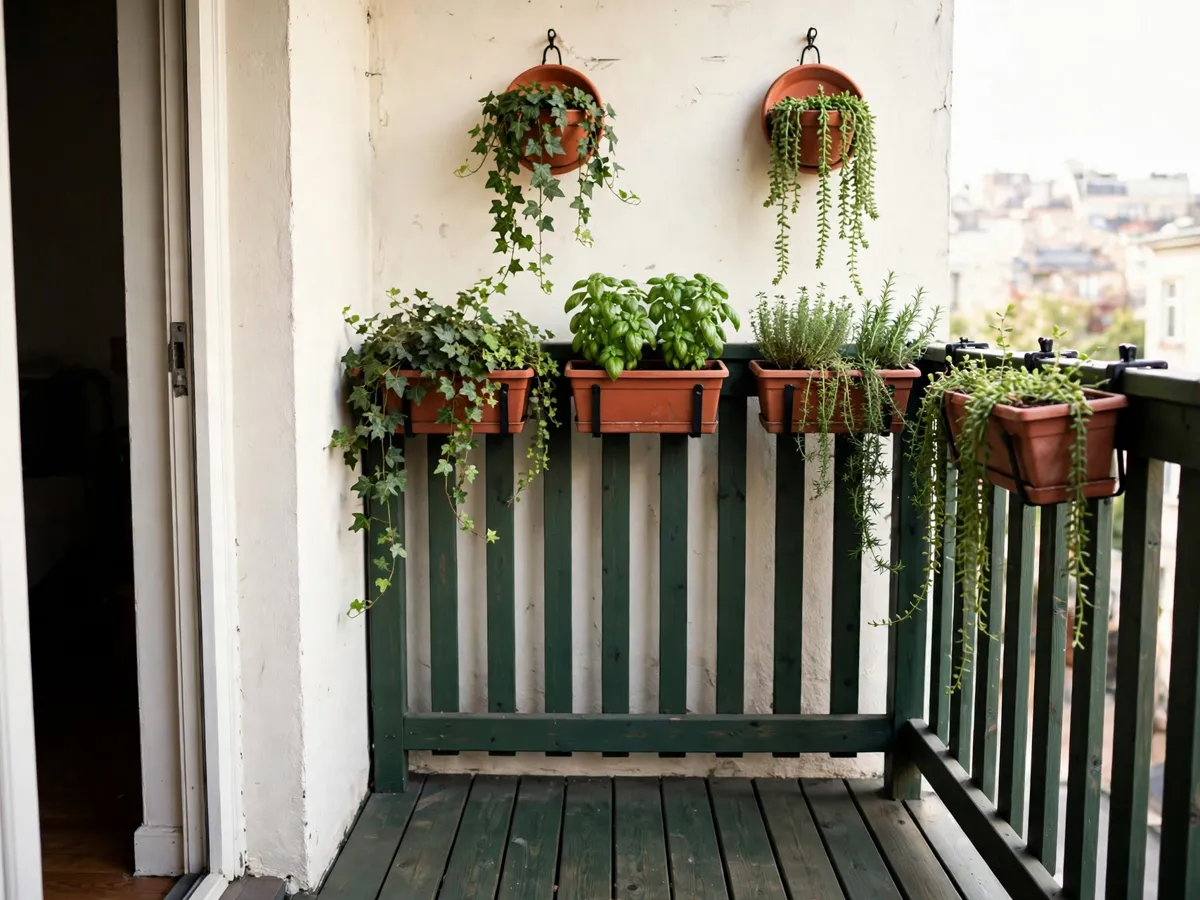
Cost: $40–$115 across the four, plants included. Time: 5 minutes to pick, one afternoon to set up. One layout per balcony — mixing two is how the obstacle course comes back.
5. Set it up in one afternoon
The order matters more than the work. Place everything empty, check it from the door, and only then plant.
- Measure the floor and tape the walkway. Run a tape across the floor, note the depth and width, and lay painter’s tape where the path from the door will run — the walkway is drawn before the pots are placed, not negotiated after.
- Place the empty anchor pot in the back corner, flat against the wall.
- Set the two 12-inch pots mid-frame along the long wall, a hand-width off it, close enough to the anchor to read as one group.
- Put the two 8-inch pots at the outer edge near the rail, one on each side of the walkway.
- Step back inside and check from the door: tallest pot farthest away, walkway clear, door swing untouched, nothing wobbly near the edge. Rearrange now, while everything is empty.
- Plant, water in, and put a saucer under every floor pot. The care side — mix, watering, what to feed — is the balcony garden guide’s job.
Cost: $0 beyond the pots and plants above. Time: about two hours all in. Place every pot empty first — the checked-from-the-door step is the one that makes the layout look designed.
What we would skip
- A second anchor pot. Two 16-inch pots on one small floor fight each other for the eye and the walkway; one anchor is the full stop, and everything else supports it.
- Pots under 8 inches outdoors. A pot that small holds a couple of quarts of mix and dries out in hours on a warm, windy balcony — you water it twice a day or you watch it wilt. Indoors, small pots are fine; outside, they are a chore.
- Anything in the door swing or the walkway. The layout exists so the balcony still works; a pot you step around on every trip is the first thing you will move and the last thing you will miss.
- Tall, top-heavy pots at the outer edge. The edge is for trailers and low, wide pots; the tall one lives against the wall, where the wind and the weight both have less to say.
The one-afternoon checklist
- Floor measured and the walkway taped before anything is placed
- One anchor pot only, in the back corner, against the wall
- Two mid pots a hand-width off the wall, close enough to read as a group
- Two edge pots at the rail, clear of the walkway
- Tallest pot farthest from the door
- Door swing and walkway clear — checked from inside, not standing in the middle
- Heaviest pot against the wall, off the outer edge
- Saucer under every floor pot
- Rail and wall planters considered before any extra floor pot was added
- Everything placed empty, checked, then planted
Questions renters ask
How many pots fit on a small balcony?
On a 4-by-6-foot floor, five: one 16-inch anchor, two 12s, two 8s. That is about 3.7 square feet of footprint and leaves the walkway open. Past five, grow up the rail and the wall rather than across the floor.
Where does the tallest pot go?
The back corner, against the wall, farthest from the door. From the doorway you look over and past it; reverse the order and the tallest pot blocks everything behind it.
How much floor does a five-pot layout actually take?
About 3.7 square feet: 1.4 for the 16-inch, 0.8 for each 12-inch, about a third for each 8-inch. On a 24-square-foot balcony, more than twenty square feet stay clear.
Can I have a container garden with no floor space at all?
Yes — the rail-only layout: four rail boxes and two wall pots carry a full garden at zero floor inches. It is the standard answer for a balcony 18 to 24 inches deep.
How heavy is too heavy for a rental balcony?
A 16-inch pot with wet soil weighs 40–60 pounds, so keep the heavy ones against the wall, spread them along it, and keep them off the outer edge of a cantilevered slab. If the rating is unknown, ask the landlord before placing the anchor.
Save these on Pinterest
Pin the footprint table — it is the piece that survives every pot purchase after this one. The rest of the planting plans, the care calendar, and the watering routine live in the Gardening & Planting Tips collection.