 Plant As Deco
Home Organization & Storage
Corner Closet Organizer: Three Fixes for the Dead Corner
By Plant As Deco · Updated 23 November 2026
The corner is where a small closet stops working. One straight rod leaves the two back corners out of reach, so anything pushed there stays there, invisible and permanent. This guide measures that dead space honestly, then fixes it one of three ways: a corner rod, a corner shelf tower, or a rod pulled back so the corner becomes shelf space. Written for renters and small apartments.
Weekend-ready: $40–$80 for the corner fix, one afternoon, renter-safe version first.
1. Why the Corner Eats a Small Closet
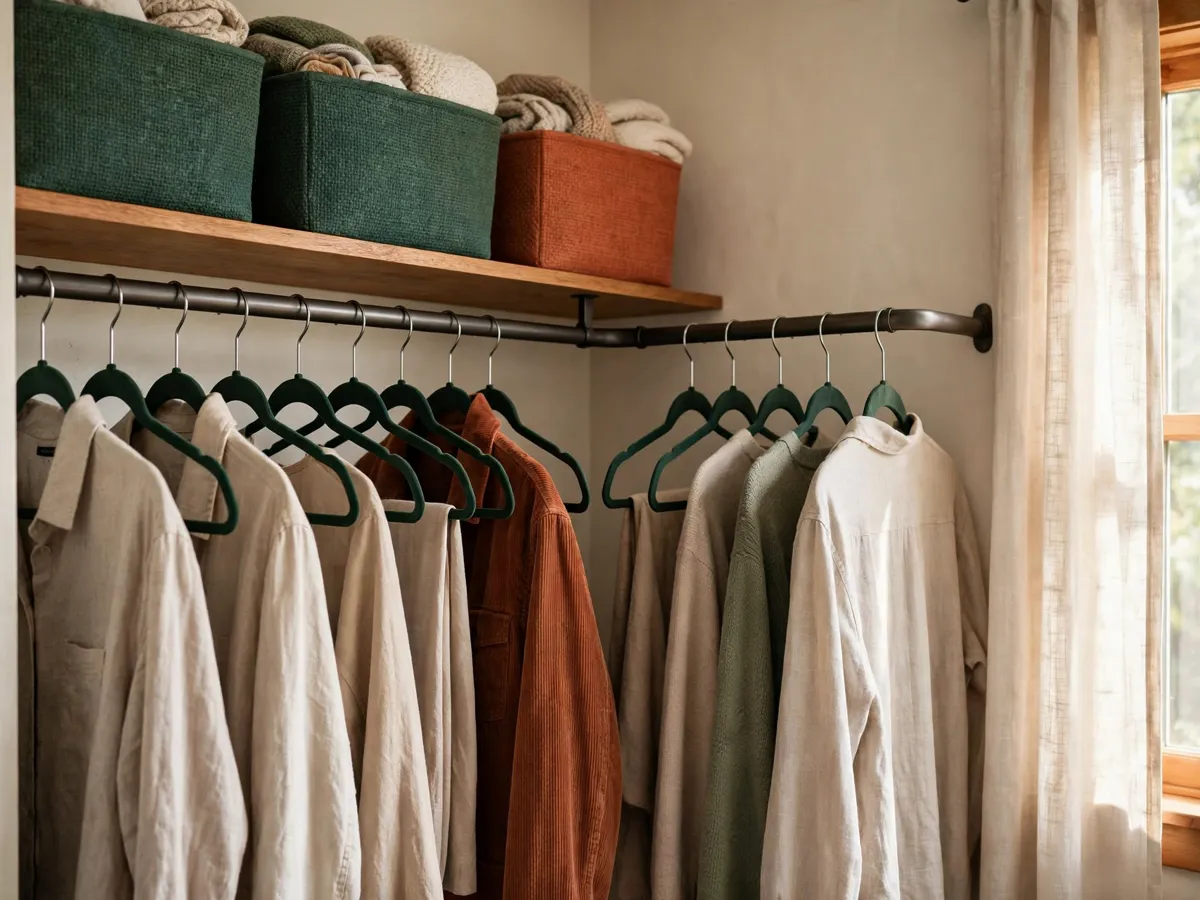
Stand in front of a reach-in closet and watch what the rod actually does. On paper it runs wall to wall. In practice the clothes slide along the middle and stop, because a hanger pushed toward either back corner collides with the next hanger, twists sideways, and jams. That is the hanger trap, and it is the reason a corner closet feels smaller than its measurements say it is.
The trap does damage out of proportion to its size. A closet you call six feet wide rarely gives you six feet of hanging. In most reach-ins, the last foot or so at each end is where hangers stop sliding, which puts the usable rod closer to four feet. The corner also collects whatever falls into it. Anything pushed there sits out of sight behind the door frame and past your own shoulder, so it stays for years.
That is the frame for everything below. A corner closet has two lengths, the wall length and the usable rod run, and only one of them matters when you organize. Measure the dead corner honestly, then pick one of three fixes: a corner rod that bends the hanging run around the corner, a corner shelf tower that fills the dead floor with folded storage, or a pulled-back rod that gives up on the corner as hanging space and turns it into shelves. One of the three fits your closet, and the next section is how you know which.
Cost: $0. Time: 10 minutes of honest looking. The dead corner is the part of the closet you keep pretending is already storage.
2. The Four Measurements That Pick the Fix
Ten minutes with a tape measure decides the whole project. Four numbers, taken from inside the closet, and the choice of fix makes itself before any store aisle gets a vote.
First, the wall-to-wall length of each wall the closet uses, measured face to face at rod height. Second, the usable rod run, which is the number people skip. Slide a single hanger from one end of the rod until its hook stops or collides at the corner, and mark the spot. Do the same from the other end. The stretch between the two marks is your real hanging length, and in a corner closet it is the honest one.
Third, the corner depth in both directions. Measure from the corner point out along each wall and write both numbers down. An L-shaped corner in a reach-in usually runs about 24 to 28 inches deep each way, which makes the dead zone roughly two feet by two feet of floor plus all the air above it. A 24-inch corner and a 28-inch corner lead to different purchases, so this is the last measurement to round.
Fourth, ceiling height and door swing together. The ceiling decides how many shelf levels can stack in the corner or above the rod. The door swing decides whether corner storage may stick forward past the rod line or has to live behind it. A door that swings into the closet kills more corner plans than the other three numbers combined, so swing it slowly and watch where it lands.
Cost: $0. Time: 10 minutes. Keep the four numbers on your phone, because the storage aisle will talk you out of them.
3. Fix A: The Corner Rod
The corner rod is the capacity answer. It is sold as a corner rod kit, an L-shaped pair of rods meeting at a bracket in the corner, or you build the same shape yourself from two straight rods and a corner bracket. Either way, the hanging run bends around the corner instead of stopping at it, and hangers keep moving through space that used to be a wall.
The budget version is the diagonal rod, and it is the best money on this page. Detach both straight rods and run one long rod diagonally across the corner, from the far end of one wall to the far end of the other. Hangers slide the full diagonal, and the dead zone stops existing as a concept. The parts list is one rod and two brackets. The honest trade is small: clothes on a slanted rod hang at an angle into the corner, so each hanger claims a little more width than it would on a straight run, and some hanging length is lost to the slant.
Now the cons, stated plainly. A corner rod maximizes hanging capacity, and it is the right pick when the wardrobe is mostly things that must hang. The outermost hanger in the corner still sits at an awkward reach, half turned away from the door, and in a narrow closet you feel that every morning. Corner rods work best in closets about five feet or wider per wall. In anything narrower, the bend crowds the whole run and the door starts catching on coat shoulders.
Cost: $25–$60 for a corner rod kit, $12–$30 for the diagonal build with basic parts. Time: 45 minutes to an hour. The hanger in the corner stays the hardest one to reach.
4. Fix B: The Corner Shelf Tower
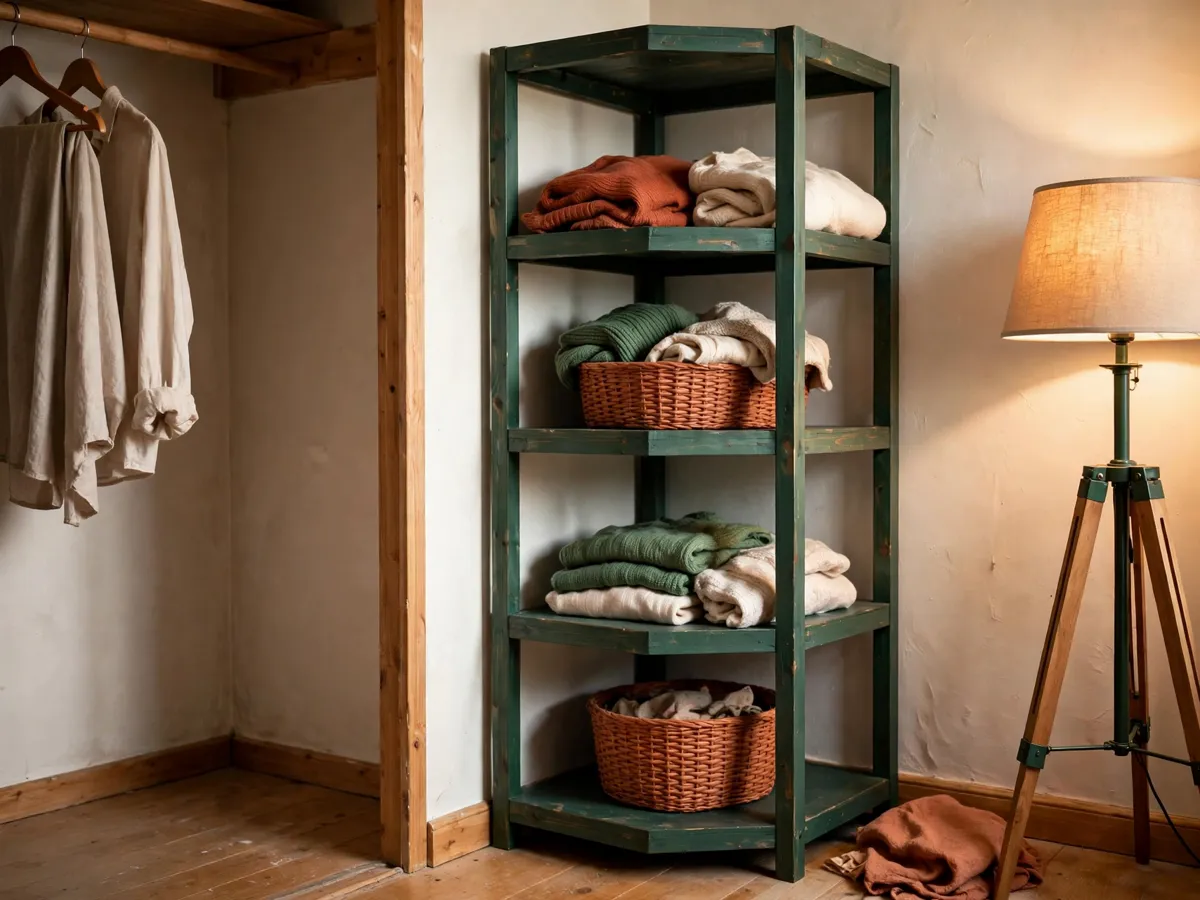
The corner shelf tower is the folded-things answer. Take a freestanding cube unit, or a stack of wire shelves, and turn it into the corner. Rotated 45 degrees, it faces the room like a display and every cube stays reachable. Squared in against both walls, it uses every square inch of the dead floor. Either orientation turns floor that held nothing into folded-item storage.
The numbers are honest and modest. A nine-cube unit holds roughly four to six fabric bins of folded clothes or off-season items, or the same volume in loose stacks. The trade is real: squared into the corner, a tower eats about 24 inches of rod on each wall that meets there, which is about two feet of hanging per side. You are trading rod for bins, and the measurements from section two tell you exactly how much.
Two situations make that trade right. First, the closet has more hanging space than the wardrobe needs, which happens more often than rod-focused advice admits. Second, the wardrobe is mostly folded things, around 60 percent knits, tees and jeans. If either is true, the tower wins outright, because those clothes belonged on shelves anyway, and the corner is the only spot where a tower fits without stealing the main run.
Cost: $30–$60 for a cube unit, $20–$45 for stackable wire shelving. Time: 30 minutes. Squared-in holds more, rotated reaches better, pick one.
5. Fix C: The Pulled-Back Rod
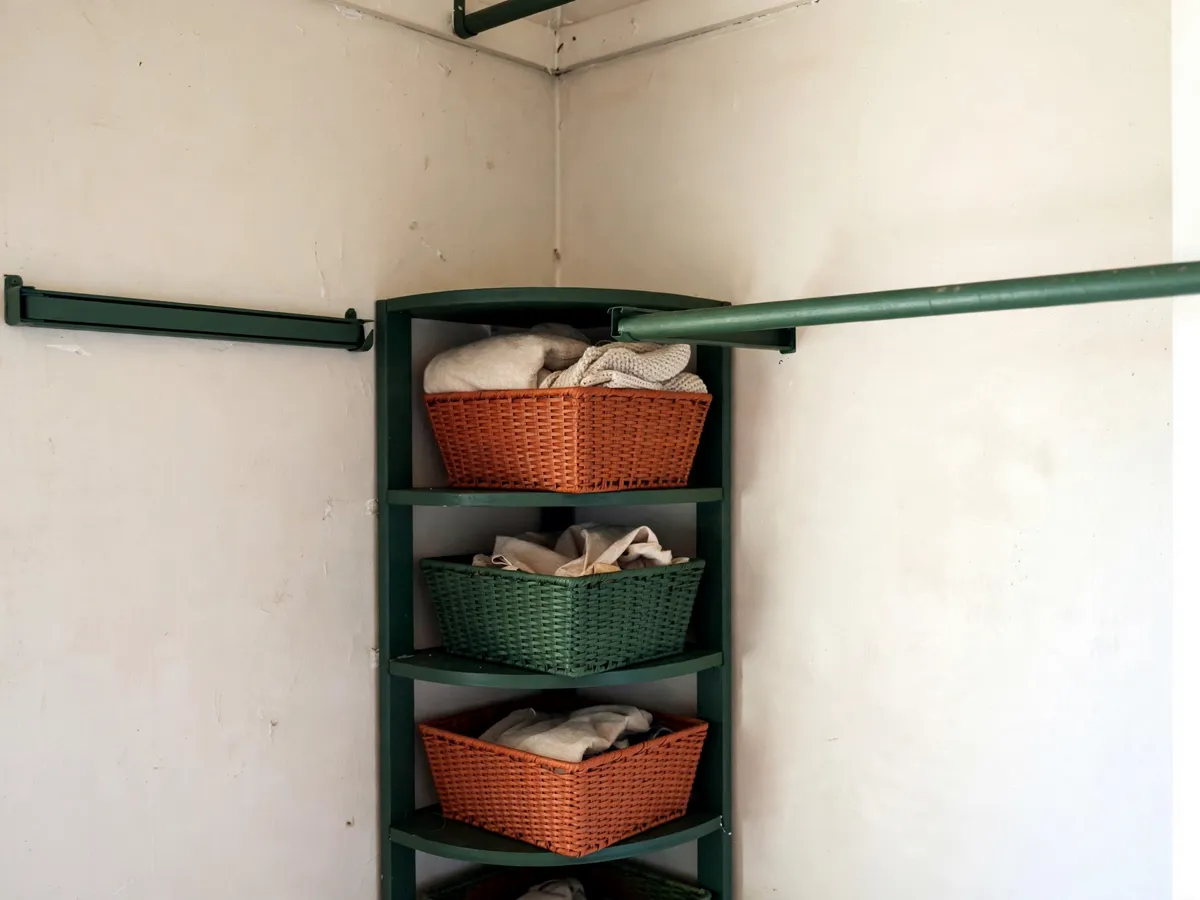
The pulled-back rod is the minimalist fix, and the first one to try in a rental. Shorten the straight rod so it stops a comfortable reach from the corner, and fill the corner behind it with shelf stacks, boxes, or a small dresser turned to face the room.
Visibility is the point, and capacity is the honest trade. Everything you own shows itself in one glance from the doorway: the rod run ends where your arm ends, and the shelves in the corner sit at eye level and below. Nothing can be pushed into a dark corner anymore, because the closet no longer has one. You lose hanging length to the shortened rod, and you gain a closet you can reset in two minutes.
This fix suits the wardrobe that hangs less than it thinks. If half your clothes live on a chair rather than the rod, the pulled-back layout is honest about that. It gives the chair clothes a shelf home in the corner and keeps the rod for the things that actually hang.
Cost: $0–$40, since shortening the rod costs nothing and shelf stacks may already be in the house. Time: 30 minutes. You trade rod length for sightlines.
6. The Double-Rod Upgrade That Beats Them All
Whichever fix you pick, one upgrade often adds more capacity than the corner fix itself: a second rod at about 40 inches. In a corner closet, the vertical space above and below the single rod is the largest unclaimed storage in the room, and a two-tier hang claims it without touching the floor.
The split is simple. Shirts and blouses hang on the upper rod, pants and skirts fold over hangers on the lower one, and the floor stays clear below both. In a kid's room the setup is even better, because both rods sit at child height and the top shelf takes the out-of-season sizes. The kids closet guide walks the low-rod version step by step, including the heights that match ages.
Here is why it beats the corner fixes on pure capacity. A rod at 40 inches under an existing rod at 80 adds a full second run along the entire usable length, while a corner fix recovers about two feet of corner. Pair the double rod with any of the three fixes and the closet gains twice, once vertically and once at the corner. A hanging doubler rack that hooks over the existing rod builds the same tier with no hardware at all, which is the renter version.
Cost: $12–$25 for a doubler rack, $15–$35 for a fixed second rod. Time: 20 minutes for the rack, about an hour for the fixed rod.
7. What Lives in the Corner Once It Works
A fixed corner still needs the right assignment, because a deep corner is where things go to be forgotten. The rule is one sentence, and it is the most useful sentence on this page: the corner is for things you touch twice a year, and the front run is for things you touch every week.
In practice that means off-season storage up high in labeled bins, shoes low where the door opens, and everyday items on the visible front run of the rod and shelves. Holiday decor, spare bedding, the gift-wrap box, the suitcase of winter wool, all corner citizens. Work shirts, daily jeans, the gym bag, front-run citizens. The corner quietly buries whatever you give it, so give it only what you already intend to bury.
Off-season clothes deserve their own plan rather than a shove into the dark, and the off-season clothing storage guide covers where the swapped-out wardrobe lives when the closet is small, from under-bed bins to top-shelf garment bags.
Cost: $0. Time: 10 minutes to assign. Anything weekly that lands in the corner gets forgotten and bought again.
8. Lighting the Darkest Spot in the Room
There is a visibility half to this project, and it costs less than every fix above. A closet corner is the darkest spot in the room, shaded by the door frame and by your own shoulder as you lean in. Light it and the corner stops being dead: you can see the bins, read the labels, and put things back without the blind one-arm sweep.
Two no-wiring options cover it. Stick-on battery puck lights, about ten dollars for a three-pack, press onto the underside of a shelf or the wall above the corner. A rechargeable motion-sensing light bar, fifteen to twenty dollars, mounts with adhesive or a magnet and wakes when the door opens. Both install in minutes, both come off clean at move-out, and neither needs an electrician.
Honest expectation: puck batteries last months on closet duty, not years, because the light runs a few seconds a day. Pick the rechargeable bar if you will actually plug it in now and then, and pucks for the high shelves you check rarely.
Cost: $10–$20. Time: 10 minutes. This line item does more for a corner than any organizer bin at the same price.
9. The Renter-Safe Version of Every Fix
Every fix on this page has a no-drill version, so a lease never blocks the project. The landlord-check list is short. What needs a screw: corner rod brackets, a fixed second rod, and shelf standards, the vertical rails a wire system hangs from. What does not: tension rods, freestanding towers, over-the-door organizers, and leaning shelf units that stand on the floor and rest against the wall.
For Fix A, the renter version of the diagonal is a tension rod run corner to corner. It holds hangers, not heavy winter coats, and it comes down with one twist. That load note matters: tension rods are for shirts and folded pants, and a closet full of parkas on one is a morning you will remember. Fixed brackets carry the real weight, if you own the place or your landlord permits screws.
Fix B is renter-safe by nature, since a cube tower is furniture that moves with you. Fix C is mostly free. For hooks anywhere in the closet, the coat closet guide covers the door-back and over-door options that carry weight without a hole in the wall, and the small closet guide for beginners carries the full no-drill reset that this corner project rides on.
Cost: $8–$20 for tension rods, $0 for the planning. Time: 15 minutes. Check the weight rating on the packet and stay well under it.
10. Bins, Labels and the Reset Habit
The corner stays organized only if putting things back is easier than dropping them. Open bins beat lidded boxes in a corner, because a lid is one more motion at the worst angle in the room, and the corner does not forgive extra motions. One bin per category, sized to the tower cube or the shelf, and nothing stacked more than two high, since the third item in a corner stack is the one that never comes back out.
Label every bin on the face that points at the door. Painter's tape and a marker are enough, and the label is what lets another person in the house load the corner correctly. Labels work harder in a corner than anywhere else in the closet, because nobody opens a dark corner bin to check what is inside before throwing something at it.
Then the habit. Two minutes at the end of the day, everything back on the rod or in its bin, no exceptions for the first two weeks. The fixes above made the corner reachable and visible, and the nightly reset is what keeps it that way. Skip the habit and the corner refills within a month, whichever fix you bought.
Cost: $10–$30 for bins, $0 for tape and marker. Time: 2 minutes nightly. The habit is the part that makes the hardware worth it.
11. The Full Kit Question, and When It Is Worth It
Walk the storage aisle of any big-box store and you will pass the modular closet kits: wire shelving, rods, brackets and standards sold as one box that promises to organize the whole wall. For a reach-in, a kit runs $100 to $400 depending on width and tier count. It is the one-time-buy path, and for some homes it is the right one.
What the box leaves off the label: it needs a stud finder and a drill, it is a real half-day install with a level, a tape measure and several trips up a ladder, and it is not renter-safe by default. Standards screwed into studs are exactly the hardware a deposit dispute is made of. If you own the place and this closet is the long-term one, the kit is a fair spend, and it solves the corner as a side effect of rebuilding the wall.
Run the honest-budget line before that spend. The $40–$80 corner fix, a diagonal rod or a tower or a pulled-back rod, solves about 80 percent of the problem, because the unreachable corner is what made the closet feel broken, and it is fixed with parts that fit in one shopping bag. Buy the kit when the whole wall needs rebuilding. Buy the corner fix when the corner needs reaching.
Cost: $40–$80 for the corner fix that comes first, $100–$400 for the kit when the wall justifies it. Time: one afternoon versus half a day.
12. Your One-Afternoon Corner Plan
- Measure wall to wall, the usable rod run, corner depth in both directions, ceiling height and the door swing.
- Slide a hanger from each end of the rod and mark where it stops, so the real hanging length is on paper.
- Pick the fix the numbers choose: corner rod for capacity, tower for folded things, pulled-back rod for visibility.
- Add the second rod at about 40 inches if the vertical space is sitting empty.
- Light the corner before anything goes back in, with puck lights or a motion bar.
- Fill the corner with twice-a-year things, in bins labeled on the side that faces the door.
- Keep the weekly things on the visible front run of the rod.
- Run the two-minute nightly reset for two weeks to set the habit.
Cost: $40–$80. Time: one afternoon. Every step has a renter-safe version, so the plan clears a lease.
Common questions
What is a corner closet organizer?
It is any hardware that makes the back corner of a reach-in closet usable: a corner rod kit that bends the hanging run around the corner, a freestanding shelf tower that fills the dead floor, or a shortened rod with shelves behind it. The right one comes from your four measurements, not from the aisle display.
How do I organize a closet corner with no money?
Pull the rod back so it ends where your arm ends, and stack boxes or bins you already own into the corner, labeled on the side that faces the door. If the corner has to keep hanging clothes, run a tension rod diagonally across it. The cheapest version of every fix is rearrangement, and it works because reach was the underlying problem.
Do corner closet rods actually work?
They work, with two honest catches. A corner rod or a diagonal rod lets hangers slide past the corner, which restores the full run, but the outermost hanger sits at an awkward angle and stays the hardest one to reach. And in closets narrower than about five feet per wall, the bend crowds the rest of the run. Narrow closets do better with the tower or the pulled-back rod.
Is a closet kit worth it in a rental?
Usually not. A kit needs screws in studs, a drill and a real half-day, and none of it is deposit-safe by default. The renter path is a tension-rod diagonal, a freestanding tower, a pulled-back rod and a motion light, all of which come down clean at move-out, for a fraction of the kit price.
What should live in a closet corner?
Things you touch twice a year: holiday decor, spare bedding, off-season clothes in labeled bins, the suitcase of winter wool. Weekly things belong on the visible front run. A corner buries whatever you hand it, so hand it only what you mean to store rather than reach.
How much light does a closet corner need?
Enough to read a bin label from the doorway, which is a low bar. One stick-on puck light or a rechargeable motion bar, ten to twenty dollars, covers it with no wiring and no electrician. Skip anything that needs a switch or a circuit, because the corner needs visibility, not brightness.
Save these on Pinterest
Pin the four measurements and the three fixes, because those are the numbers that vanish by the next closet. The wall-to-wall length, the usable rod run, the corner depth both ways, the door swing, and whether your answer is a corner rod, a tower, or a pulled-back rod. This guide and the rest of the organization and storage collection live together there.