 Plant As Deco
Small Room Decor
Low-VOC Paint Explained: Labels, Tint and Real Ventilation
By Plant As Deco · Updated 22 November 2026
This is a guide for the renter standing in the paint aisle, holding a $70 "non-toxic" can in one hand and a $35 can that says low-VOC in the other, and wondering which one a small bedroom actually needs. The honest answer: the label on the base can is real and regulated, the marketing around it is not, and the fan in the window does more for the air in the room than the upcharge does. Read what the words cover, what the tint adds, and the weekend plan that keeps the air clear.
Weekend-ready: $35–$70 for a gallon, the tint and a box fan, one room a weekend. The premium eco line is a choice, not a requirement, and the numbers below show the difference it buys.

1. What VOC means, in one paragraph
VOC stands for volatile organic compounds. They are the solvents and other ingredients in paint that evaporate into the air as the paint dries, and the evaporation is the point: the paint needs to lose them to form a film. That is what the wet-paint period is. The number on the label counts grams per liter, and the rule it is checked against is a real regulatory limit, not a marketing one.
The part almost nobody says out loud: water-based latex paint has spent the last twenty years getting genuinely low in VOCs, and most standard interior latex on any shelf now clears the limit without calling itself an eco product. The oil-based enamels are the ones that still carry a heavy solvent load, the ones that smell like a workshop for days and are the reason "paint fumes" had its reputation. Interior latex and a premium green line are usually much closer to each other than either is to the oil-based can.
Cost: $0 to understand this. Time: two minutes, and it is the paragraph the whole rest of the guide stands on.
2. What the labels promise, and what they do not
Five words get used on paint cans, and they are not the same promise. "VOC compliant" means the can meets the regulatory limit for where it is sold, which is the floor, not a badge. "Low VOC" means the number is under a stated limit, and the honest cans print the grams-per-liter number somewhere on the can or the sheet. "Zero VOC" means under a small trace threshold, not literally nothing, and it describes the base before tint (more on that in a second).
Then the softer two. "Low odor" is a claim about your nose, and your nose is not a measuring device. "Natural" and "eco" are vibes: a can with a leaf illustration and the word natural on it can still carry a higher number than a plain contractor gallon. The grams-per-liter figure beats every adjective on the can, and if it is not printed, the data sheet is one search away.
Cost: $0 to read the can. Time: one minute in the aisle, and it is worth more than any badge on the shelf.
3. The tint trap: the color can be the VOC
Here is the part the label does not explain. The base can and the color are two different products. The store starts from a base (a flat white, or a deeper "medium base" or "deep base" made to accept more color) and pumps colorant into it at the counter. A base can be zero-VOC while the colorant pumped into it is not, and in a deep saturated color the tint can be the highest-VOC part of the whole can.
The darker the color, the more colorant it takes, so a deep pine or navy accent carries more of it than a warm cream. Two moves protect you: ask for the data sheet on the colorant, which any store can print or look up, or ask which pre-tinted bases the line carries, the ones the factory colors before they ship. A deep base with factory color in it sidesteps the counter pump entirely. If the store shrugs at both questions, that is information too.
Cost: $0 to ask. Time: two minutes at the counter, and it is the question the "non-toxic" shelf copy never brings up.

4. The smell is not the safety number
The wet-paint smell and the VOC number are two different things, and neither one predicts the other. A can that claims near-zero VOC can still smell while it dries, because a water-based latex can carry other ingredients, biocides and amines among them, that have an odor but are not counted in the VOC figure. And a low-odor product has not told you anything about its VOCs. The nose cannot measure this in either direction.
The smell that lingers fades on its own curve: strong while wet, weaker when dry to the touch, faint for days or a few weeks while the film finishes curing. That is the smell curve, and it is normal. The number on the sheet is what the label legally covers; treat "fragrance-free" and "low odor" as comfort claims and the grams-per-liter as the actual answer. Read the label, not your nose, in both directions.
Cost: $0. Time: the time it takes to stop trusting the sniff test, which is one sentence of retraining.
5. When low-VOC genuinely matters
Four situations raise the stakes, and it is worth being precise about them. The first is a small room with poor airflow, because concentration is the game: the same can in a big open room and in a closed box bedroom are two different air stories. The second is a room someone has to sleep in during the same week as the repaint. The third is asthma or chemical sensitivity in the household, where the lower the number, the kinder the weekend. The fourth is pregnancy and infants, and here the honest framing matters.
The concern people carry comes from studies of people exposed to solvents at work, day after day, for years. One weekend of repainting a bedroom with the window open is not that exposure. That is the plain reading, and it is the honest one. The cautious pick is still the low-VOC can plus real ventilation, for one reason: it costs nothing extra in effort. Letting someone else do the painting and staying out until it is dry and aired is the same cautious pick with even less effort.
Cost: $0–$35 difference between the standard and the premium can. Time: none added, the can is opened either way.
6. The ventilation playbook that matters more than the can
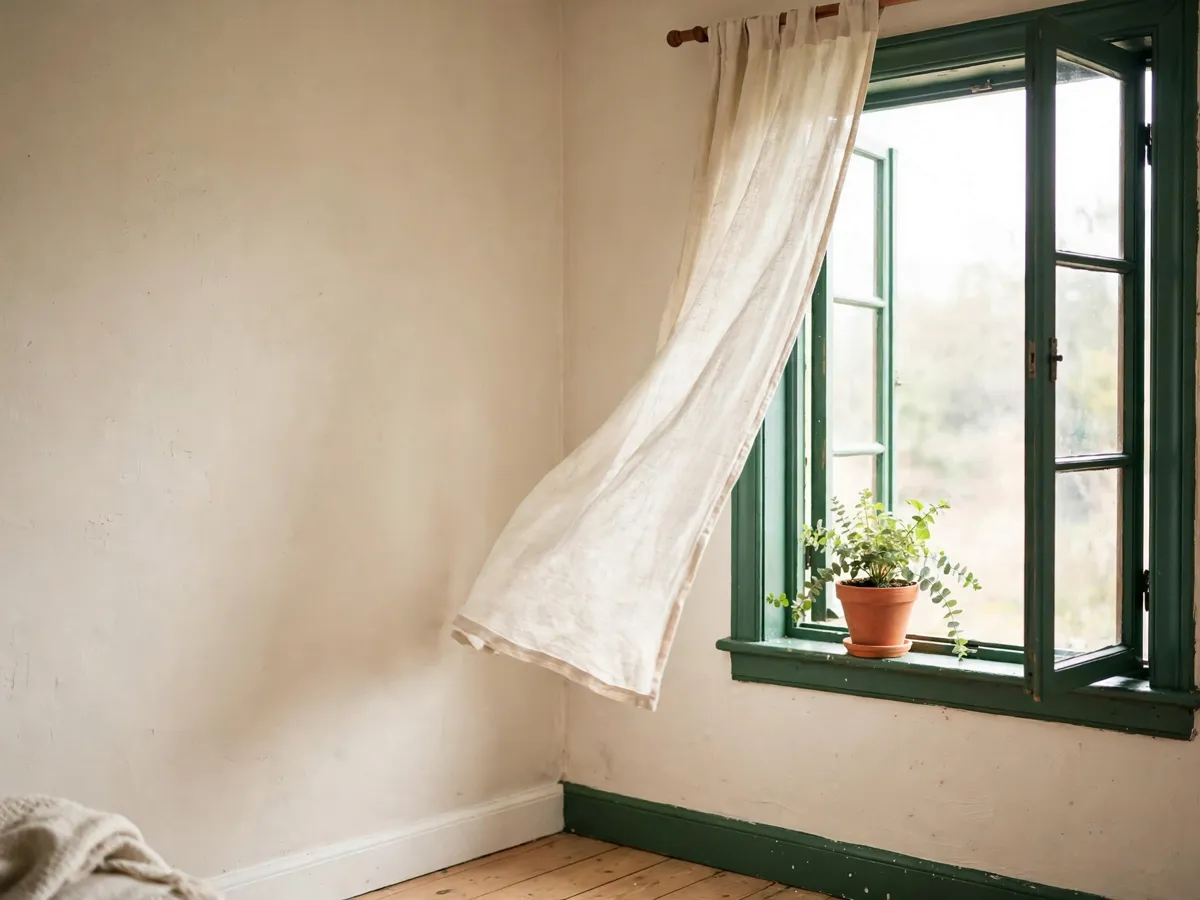
If this guide has one move, it is this one, because it does more for the air in the room than any can upgrade. Cross-ventilate: open the window, put a box fan in it facing OUT, and open a door or another window elsewhere so air has a path through the room. The fan blowing out pulls the air from the room and pushes it outside instead of stirring it around. A ceiling fan pointed nowhere is a mixer, not an exhaust.
Run the fan while you paint, while the coats dry, and through the first night if the room is small. Crack the window even when it is cold; a drafty weekend beats a closed-room cure. This is the $20 line item that does the work a $70 can implies it is doing, and it is the reason a standard latex in a ventilated room can beat a premium line in a sealed one.
Cost: $20–$40 for the fan. Time: zero, it runs while you work and after you stop.
7. Paint one room, not the apartment
In a small apartment the whole home can become one air volume, so the sequencing matters. One room per weekend, door closed while it dries, fan in the window of that room. Sleeping quarters get the strictest rule: paint it the weekend you can sleep elsewhere or at least the day before you need it back, and keep it ventilated until the smell has dropped to a trace. In a studio the honest version is one wall, on a day you can be out and leave the windows open.
The timeline to plan around: dry to the touch is not cured. A film can feel dry in an hour or two and keep releasing trace amounts into the air for days to a few weeks while it finishes hardening. That is the smell curve again, and it is why the sleeping-room rule is "dry, aired, and the smell down to a trace" rather than "dry to the touch." If you are choosing the color, the warm neutral route is in the cozy paint colors guide, and it pairs well with this one.
Cost: $0 for the discipline. Time: a weekend per room, and the pacing is the point.
8. The bathroom with no window
The windowless bathroom is the hardest room in a small apartment, and the bath fan is not enough for a full repaint: it moves a small amount of air and most people switch it off with the light. The plan: pick the driest day on the forecast (dry air pulls moisture out of the room faster), paint the fewest coats the surface honestly needs, run the bath fan continuously plus a box fan in the doorway blowing out into the hall with a window open at the end of the hall.
A satin finish on walls that get steam tends to want two coats, and one careful coat plus a touch-up pass on the patchy spots is a legitimate lower-exposure route when the room cannot ventilate well. If the bathroom is truly airless, a weekend when you can be out all day is worth more than any can choice. The steam and the paint both clear on the same schedule, the schedule belongs to the room, not the label.
Cost: $0–$30 for the extra quart. Time: an afternoon, and the room stays out of service overnight.
9. Renters: the accent wall is the exposure plan
A renter repainting a studio does not need four walls of new paint to change the room, and four walls is four times the wet-paint hours in one air volume. The one accent wall (the one the bed or the sofa frames) gives most of the visual change for a quarter of the paint, a quarter of the drying time, and a much shorter airing window. That is the whole trade.
The sequence that works: paint it in the morning on a day you can be out, fan in the window all day, sleep at the far end of the studio with a door or curtain between if there is one. And a warm neutral is the renter-safe color decision, because it is the shade that reads as intentional at move-out inspection. The wall decor you hang afterward can stay no-drill; the strips and ratings are covered in the renter wall decor guide.
Cost: $20–$40 for a gallon and the fan. Time: an afternoon, and the room is back to normal by the next evening.
10. Coats, primer, and honest paint craft
Two thin coats beat one thick one, and not only for the finish: a thick coat dries slowly from the outside in, which means more hours of wet paint in the room. Thin coats dry faster, and two of them build the same film with less time in the smell zone. Cut in the edges with a brush, roll the field, keep the wet edge moving so the coat blends into itself.
The primer question: on a previously painted wall in decent shape, a good water-based latex self-primes, and skipping the primer is one less wet product in the room. The exceptions are the honest ones: a repair patch, a color change from something dark, or a wall that has never been painted. The paint-and-primer-in-one cans are the same idea packaged for you, and the label means "covers in fewer steps," nothing deeper than that.
Cost: $0 extra for two thin coats. Time: an afternoon plus a second short session, and the air thanks you.
11. Storing and disposing of the leftovers
Leftover latex keeps for touch-ups if it is sealed: hammer the lid down, keep the can somewhere that does not freeze, and it is a friend at move-out for the scuffs, and it earns its shelf space for the touch-ups. Half-cans you will not use have a second life, and paint drop-off events and donation programs take them in most US cities.
The one rule that does not bend: paint does not go down the drain, sink or storm drain, ever. Leftover latex counts as household waste in most US municipalities, and the standard route for a can that is nearly empty is to let it dry out first (open lid, or mix in an absorbent like cat litter) so the can goes out solid, then follow your local program for the rest. The waste page for your city is the last word, since programs differ.
Cost: $0. Time: ten minutes, and the touch-up can earns its shelf space.
12. The honest bottom line on the premium shelf
For a healthy adult repainting a bedroom that has a window, a standard low-VOC water-based latex from any shelf plus a $20 box fan is the whole answer. That is the plain version, and it is worth saying just as plainly as the eco aisle says its version. Most interior latex now clears the regulatory bar on its own, so the premium "non-toxic" lines are selling the last sliver of a number that standard paint already got low.
The premium lines are real products, honestly made, and there are reasons to buy them: the lowest trace numbers, a comfort choice for a sensitive household, a deep base with factory color already in it. What the math says is that they are often two to three times the price of a standard can for a marginal gain, and none of that gain survives a closed room with no fan. Spend the difference on the fan and the afternoon of open windows first. The can is a detail; the weekend is the product.
Cost: $35–$70 for the standard route, $90–$150 for the premium route, same room. Time: the same weekend either way.
Questions renters ask
Is low-VOC paint actually better for you?
Lower VOCs mean less solvent evaporating into the room while the paint dries, and that is a real, measurable difference. But most standard water-based interior latex already sits low, so the bigger lever is how the room airs out: fan in the window blowing out, one room at a time, and time before you sleep in it.
Can zero-VOC paint still smell?
Yes. A water-based latex can carry ingredients that are not counted in the VOC figure but still have an odor, and the base can be zero-VOC before the tint is added. Treat the smell as a comfort signal and the grams-per-liter number as the actual answer, in both directions.
Does the color I pick change the VOCs?
It can. The colorant mixed in at the counter is a separate product from the base can, and a deep saturated color needs more of it. Ask for the data sheet on the colorant or pick a deep base that comes pre-tinted from the factory, and the cream wall carries less of it than the deep pine accent.
When can I sleep in a freshly painted room?
When it is dry, aired, and the smell is down to a trace, not merely dry to the touch. A film feels dry in an hour or two and keeps curing for days to a few weeks. If you can sleep elsewhere for the first night and keep the window cracked, that is the cautious pick, and it is free.
Is low VOC the same as low odor?
No, they are different claims. Low VOC is a number about evaporating solvents; low odor is a claim about your nose. They often travel together but neither one promises the other, and "fragrance-free" is a third thing again. The number on the data sheet beats all three words.
Save these on Pinterest
Pin the fan-in-the-window setup first, because it is the step that actually clears the air and the one people skip. The color side of the decision (which warm neutral, which wall) is in the cozy paint colors guide, and the no-drill art for the wall afterward is in the renter wall decor guide. The neutral palette that keeps the whole room calm is in the neutral color scheme guide. All of it lives in the Small Room Decor collection.