 Plant As Deco
Small Room Decor
Studio Apartment Decor Ideas That Read as One Room
By Plant As Deco · Updated 16 November 2026
A studio reads wrong when it reads as four rooms: the bed corner in hotel whites, the sofa corner in a sale-rack grey, the kitchen in whatever came with the lease, and a rug that matches none of it. This page is the look layer for renters who have the pieces or the budget for them: one three-color palette repeated in every zone, a sightline from the door kept low and open, one zone — only one — allowed to be loud, and five anchors that make a single-room home feel settled. Where the bed and the furniture physically go is its own planning job, and where everything is stored is a second one; both have their own guides, linked once below.
Weekend-ready: $80–$350, one weekend. No drilling into studs, renter-safe — curtains, rugs, lamps and art only.
1. One palette, three zones
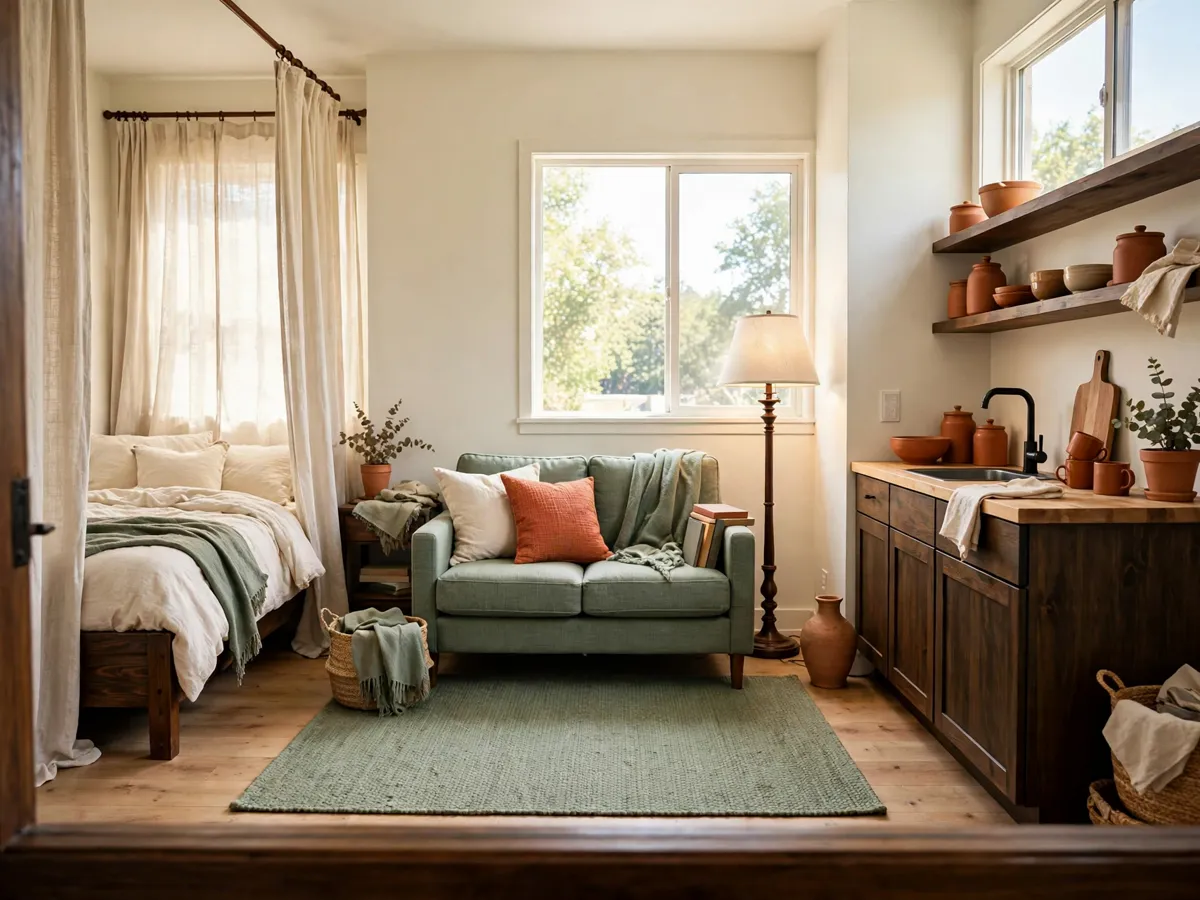
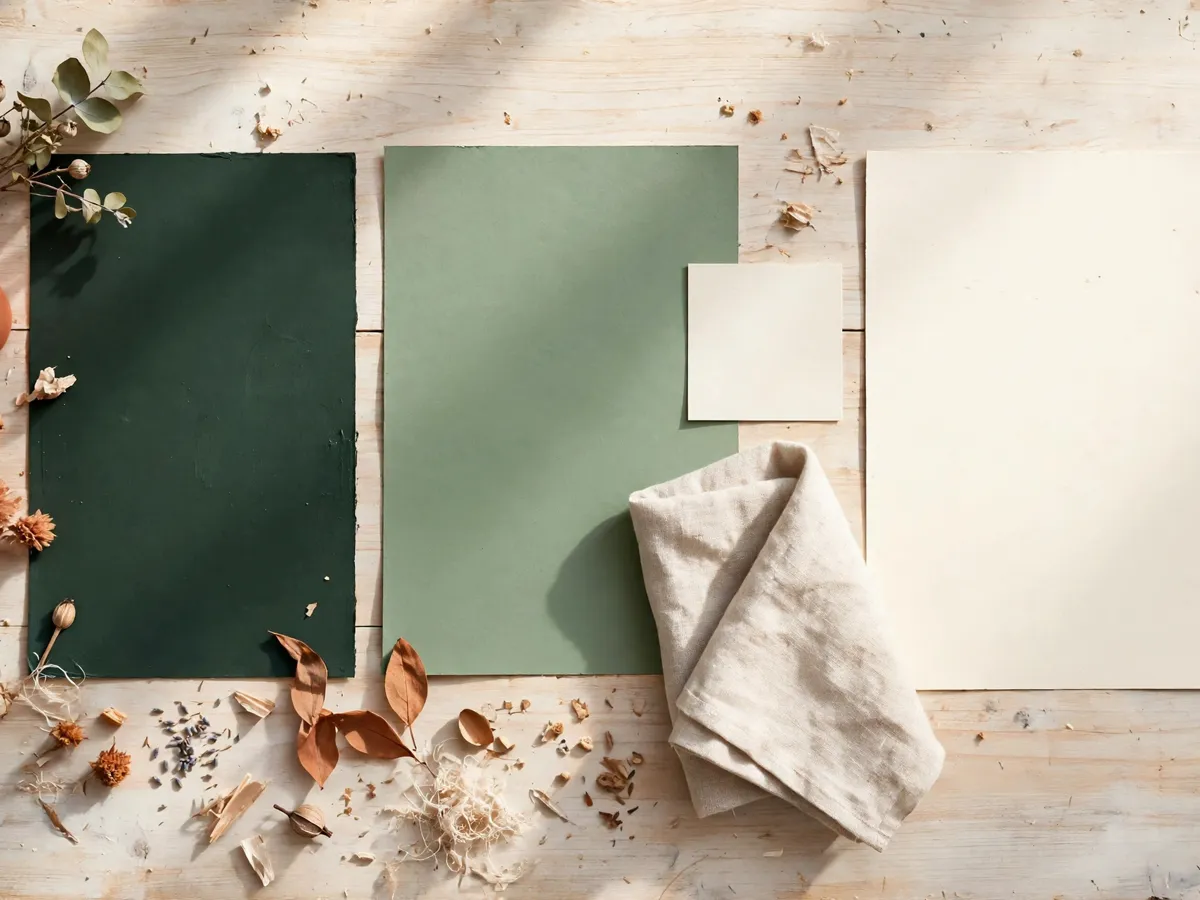
The palette is the single decision that holds a studio together, and it is smaller than most rooms can afford: exactly three colors, no more. One dark anchor color, one mid color, one light color. The dark anchor lands on the largest single objects you own — the bed frame or a bookcase, in deep pine green or a dark walnut. The mid color is the soft layer: rugs, curtains, the duvet cover — sage, rust, oat, whichever family you actually like. The light color carries the big quiet surfaces: walls, bedding sheets, lamp shades, in warm off-whites like linen or cream.
Now the part that makes it work in a studio rather than a one-bedroom: every zone uses all three colors, in roughly the same ratio — about 60 percent light, 30 percent mid, 10 percent dark. The bed zone does it with a cream duvet, a sage throw folded across the foot and a dark headboard. The living zone does it with a cream sofa throw, rust cushions and a dark frame leaning above. The kitchenette gets the same three through a linen runner on the counter, one dark bowl left out and cream dish towels. The eye travels from zone to zone and reads one continuous room, not three unrelated corners — that is the entire reason a studio photograph looks composed and yours does not yet.
Practical screening: pick the mid color from something you already own and love — a piece of art, a ceramic bowl, a scarf — and pull the other two to match its warmth. Warm mids pair with cream lights and warm darks; cool mids want off-whites that lean grey. Then test in the room's own light, not the store's: tape candidates to the wall and look at them in the morning and again with the evening lamp on. A swatch that reads soft sage in a shop window can read flat grey in a north-facing studio, and bedding is not returnable once that lesson lands.
If nothing you own is pulling a direction yet, three starter palettes hold up in a small rented room:
- Pine, sage, cream. Deep pine green on the bed frame or bookcase, sage on rugs and throws, warm cream on walls and bedding. The calmest read and the safest first palette.
- Walnut, rust, oat. Dark walnut anchor, terracotta mids, oatmeal lights. The warmest of the three under evening lamp light — the rust cushions and the art can carry the same tone family.
- Charcoal, dusty rose, putty. A near-black anchor, muted rose mids, warm putty lights. The most modern read; hold the dark strictly to the 10 percent share or a small studio tips dim.
Cost: $0 to choose — paint swatches and things you own. Time: 30 minutes with what is already in the room. Add a fourth color and the studio starts reading as two apartments sharing a door.
2. Start from the entry sightline
Every studio has one view that matters more than the rest: the view from the front door, open, standing where a guest — or you, at the end of a shift — first stands. Whatever that view lands on first is what the room will read as. Walk to the door, turn around and look. The corner your eye hits first is the main zone, and it earns the best rug, the art and the most care. The corners your eye skips are support corners — they stay quiet.
Two rules keep that sightline feeling deep. First, the tallest decorative element in the main zone — a bookcase, a floor lamp, a large leaning frame — stays lower than the top of the window frame. A dark tall thing rising past the window line reads as a wall; below it, the eye keeps moving to the light. Second, keep the floor visible for at least 60 percent of the sightline: legs on the sofa and the coffee table rather than a skirted base, rugs that stop before the walking path, nothing parked in the middle distance. A studio where you can see the floor running away from the door reads bigger than the same square footage fully carpeted with a sofa skirt.
The door swing and the entry corner have their own job: the door is where the eye starts, so the first 18 inches inside it stay clear — no shoe pile, no dumped coat on the sightline itself. The drop zone that catches keys and mail is the last thing to build and its own topic; a console or a pair of hooks sized to the space solves it in an afternoon.
One more sightline rule for studios with the door opening straight onto the bed: let the curtains do the softening. A floor-length light-filtering panel between the door and the bed corner breaks the straight line without a wall — the eye lands on fabric and moves around it rather than traveling bumper-to-bumper from door to headboard. The curtain-on-a-ceiling-track version of this, and the low open-shelf version, are laid out step by step in the small apartment room divider guide — worth reading before buying anything tall to block with.
Cost: $0. Time: 10 minutes standing at your own front door with a critical eye. If the tallest thing in the room is a pile of laundry, the sightline has already spoken.
3. Give each zone one job
A studio settles when its zones are ranked by noise, and the ranking has a fixed order. The bedroom zone is the quietest thing in the room: bed against the wall farthest from the door, headboard turned away from the kitchen so that lying in bed you are not looking at the stove and last night's pan. Bedding plain — the light color, one mid-colored throw, no pattern you have to live with at 2 a.m. Decor around the bed should be finishable in one glance, because this corner's job is sleep.
The kitchen zone runs on hard surfaces — counter, stool seats, metal — and it wants to stay visually hard: one linen runner, one dark bowl left out, everything else put away. The living zone is the only zone allowed to be loud: the one patterned cushion, the art wall, the plant with presence, the terracotta lamp. One loud zone is variety; two is a mess; three is a showroom nobody lives in. Walk your room and count the zones currently shouting — most studios have two, and the fix is not buying more, it is quieting one down.
If the bed refuses to hide — door opposite the kitchen, nowhere quiet for it — that is a planning problem rather than a decorating one, and the studio layout guide solves it with tape on the floor before anything is bought. The quick version for decor purposes: the bed belongs to the corner your sightline hits last, not first, and anything under 12 inches tall between the zones — a runner rug, a low bench at the foot of the bed — marks the boundary without building anything.
Zone boundaries get drawn with three renter-safe tools, in this order: a rug (the strongest marker — each zone sits on its own), a curtain (for the bed corner only, when the door sees too much of it), and a low open bookcase turned backward as a spine between living and sleeping. What never works in a small studio is the tall closed divider: it trades one open room for two narrow ones and eats the light the back corner needs. Keep the boundary under window height and the two zones still borrow each other's daylight.
Cost: $0–$60, mostly moving what you own and one plain duvet. Time: 45 minutes to a weekend. The headboard facing the stove is the one placement people live with for years and never name.
4. The five anchors that settle a studio
A studio with no anchors — bare floor, bare window, one ceiling light — reads temporary no matter how much furniture is in it. The anchors are five specific placements that flip that read, and together they are the whole shopping list of this page.
- Two rugs from one color family, not one big rug. One rug under the bed zone, one under the sofa, same mid-tone family so they read as a pair. One big rug spanning both zones glues them back into one undifferentiated floor — the opposite of what a studio needs.
- Curtains mounted at the ceiling, hanging light. Ceiling-track or a rail set 4–6 inches above the window frame, floor-length, light-filtering not blackout for the main window. Ceiling mounting draws the eye up the full wall height; the room gains height it physically does not have. Blackout needs stay for the bed corner only.
- One art wall. Three to five pieces in two frame colors — light wood and one dark — grouped above the sofa or on the wall the bed faces. This is the one loud decor statement the living zone is allowed to make.
- Three light sources at three heights. A floor lamp beside the sofa, a small task lamp on the nightstand or shelf, and one ambient source in the middle of the room — a paper lantern or pendant plug over the central floor area. The ceiling fixture becomes the third of three, not the whole story.
- One or two plants. One floor plant with height in the quietest corner, or one small plant on the kitchen counter. Not a collection — the plant is a shape anchor, softening the hard kitchen zone or filling a dead corner.
All five in place is what makes the room feel settled rather than staged: the floor is zoned, the window has height, the walls speak once, the light has layers and something is alive in the corner. Four out of five and the room still reads unfinished — the missing one is usually the middle light or the second rug. Storage for everything you just decluttered is deliberately not on this list; the studio storage guide owns that job so this page can stay about the look.
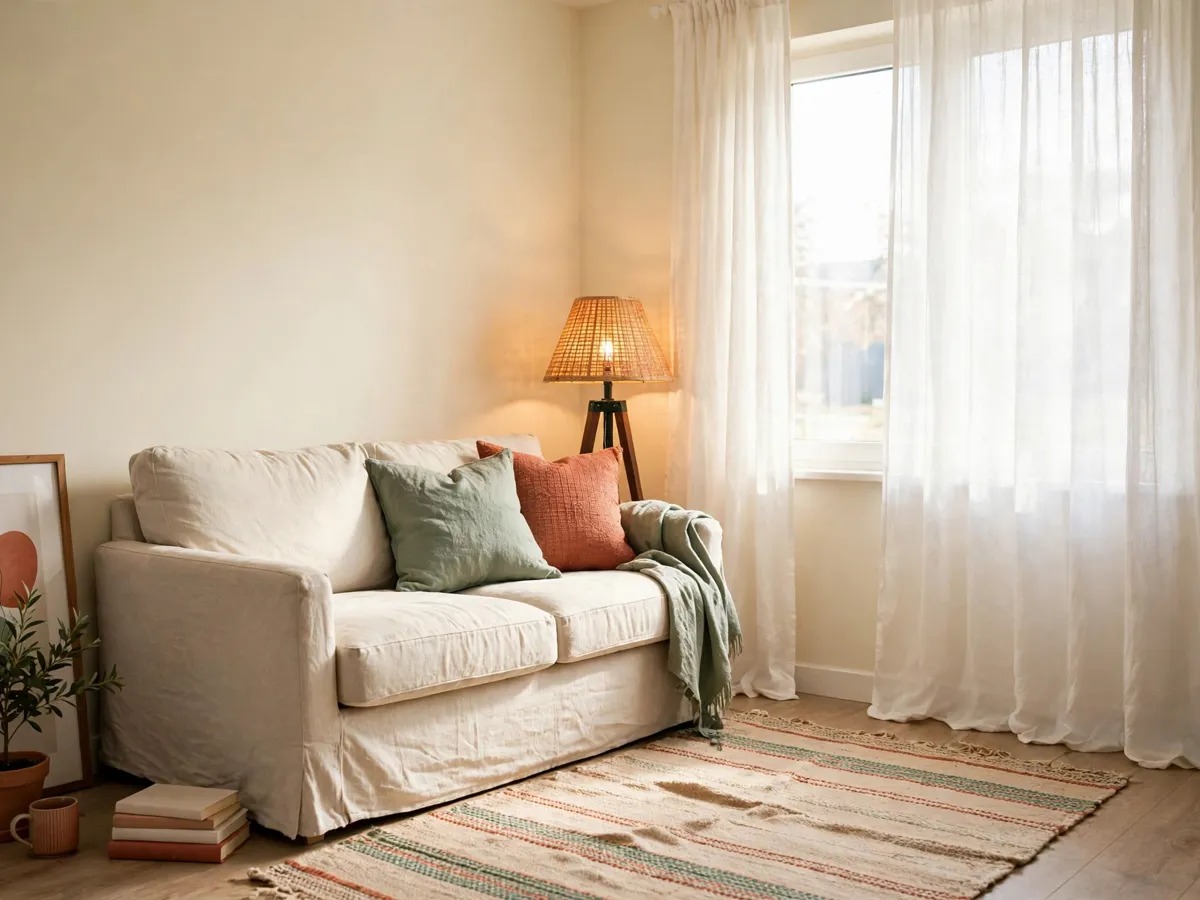
Cost: $80–$350 depending on rug and curtain choices. Time: one weekend, half of it hanging the curtain rail. Curtains hung at the window frame instead of the ceiling cut the height gain this anchor exists to give.
There is a buying order to the five, because most studio budgets do not cover all of them in one weekend. Rugs first — they make the biggest change to how the floor zones read and cost the least per effect. The curtain rail second, because it is an hour of work with the biggest height payoff. The floor lamp third: a room with one warm lamp at sofa height changes more at night than any cushion. Art and the task lamp can wait a month; the plant is optional — a branch in a tall vase is the same shape anchor for nothing. Sequence beats budget here — a studio with two rugs, ceiling curtains and one good lamp reads further along than one with ten cushions and bare windows.
The apartment-level version of this plan — how the same anchors work across a whole one-bedroom rental, not just a single room — is in the cozy apartment decor guide, which covers the same rug-lamp-art trio at unit scale.
What we would skip
Skip one big rug under both the bed and the sofa — it erases the zones this page exists to draw. Skip the second loud zone: if the bed corner has a patterned duvet and the sofa has three printed cushions, one of them goes quiet. Skip floor-to-ceiling bookcases on the main sightline; a dark 71-inch shelf rising past the window line reads as a wall and kills the depth you are trying to keep. Skip skirted sofa covers for the same reason — the visible floor is doing the spaciousness work. And skip the full matching furniture set: three matching dark pieces in a small room is one dark mass, while the same three pieces separated across zones repeat the anchor color the way the palette asks.
Cost: $0 to skip. Time: two minutes of reading that saves the two most common studio mistakes before they ship.
The before-you-shop checklist
- Three colors named and written down — one dark anchor, one mid, one light — with the mid pulled from something you already own
- Every zone planned at roughly 60 percent light, 30 percent mid, 10 percent dark
- The main zone identified by standing at the door and looking — it gets the best rug and the art wall
- Tallest decorative element in the main zone staying below the top of the window frame
- Floor visible along at least 60 percent of the entry sightline — furniture on legs, nothing parked mid-view
- Bed in the quietest corner, headboard turned away from the kitchen; only the living zone allowed loud
- Two same-family rugs budgeted — one for the bed, one for the sofa — never one large shared rug
- Curtain rail set 4–6 inches above the window frame, at the ceiling line, light-filtering fabric, floor length
- Three light sources at three heights listed by name — floor lamp, task lamp, ambient middle
- One or two plants, not a collection
Cost: $0 to check. Time: 10 minutes with this list and the room, before anything is ordered.
Common questions
How do you decorate a studio apartment so it looks like one room?
Use one three-color palette — a dark anchor, a mid color and a light color — and repeat it in every zone at roughly 60 percent light, 30 percent mid and 10 percent dark. The bed, sofa and kitchen corners then read as parts of the same room instead of three unrelated corners, which is what makes a single space look composed.
Where should the bed go in a studio when decorating?
In the quietest corner: the wall farthest from the door, with the headboard turned away from the kitchen so you are not looking at the stove from the pillow. Keep the bedding plain in the light palette color with one mid-tone throw — the bedroom zone is the one that stays quiet.
Should I use one big rug in a studio apartment?
No — use two rugs from the same color family, one under the bed zone and one under the sofa. One large shared rug glues the two zones back onto a single floor and undoes the separation the rest of the decor is building.
How high should curtains hang in a studio?
From the ceiling line, with the rail set 4–6 inches above the window frame and the fabric running to the floor. Hanging at the frame itself hides wall height; ceiling mounting carries the eye up the full wall and the room reads taller. Light-filtering fabric for the main window, blackout only at the bed corner.
Save these on Pinterest
Pin the three numbers that hold the look together — one palette in three colors, one loud zone, five anchors — so the next free weekend starts with a plan instead of another sale browse. These rules survive a move to any single-room space, and the rest of our renter-friendly room ideas live in the small room decor collection.