 Plant As Deco
Small Room Decor
Paint Colors by Room: Picks for Small Spaces
By Plant As Deco · Updated 16 November 2026
Paint is the one upgrade that touches every wall at once, and a small apartment paints it one room at a time. This page gives each room its own three-color combo at a sixty-thirty-ten split, reads the window direction before any swatch card, and pairs wall color with dark wood floors — with honest costs for painting each room yourself.
Weekend-ready: $50–$180 per room, one weekend for two. Renter-safe where the lease allows repaint.
1. Match the family to the room's job
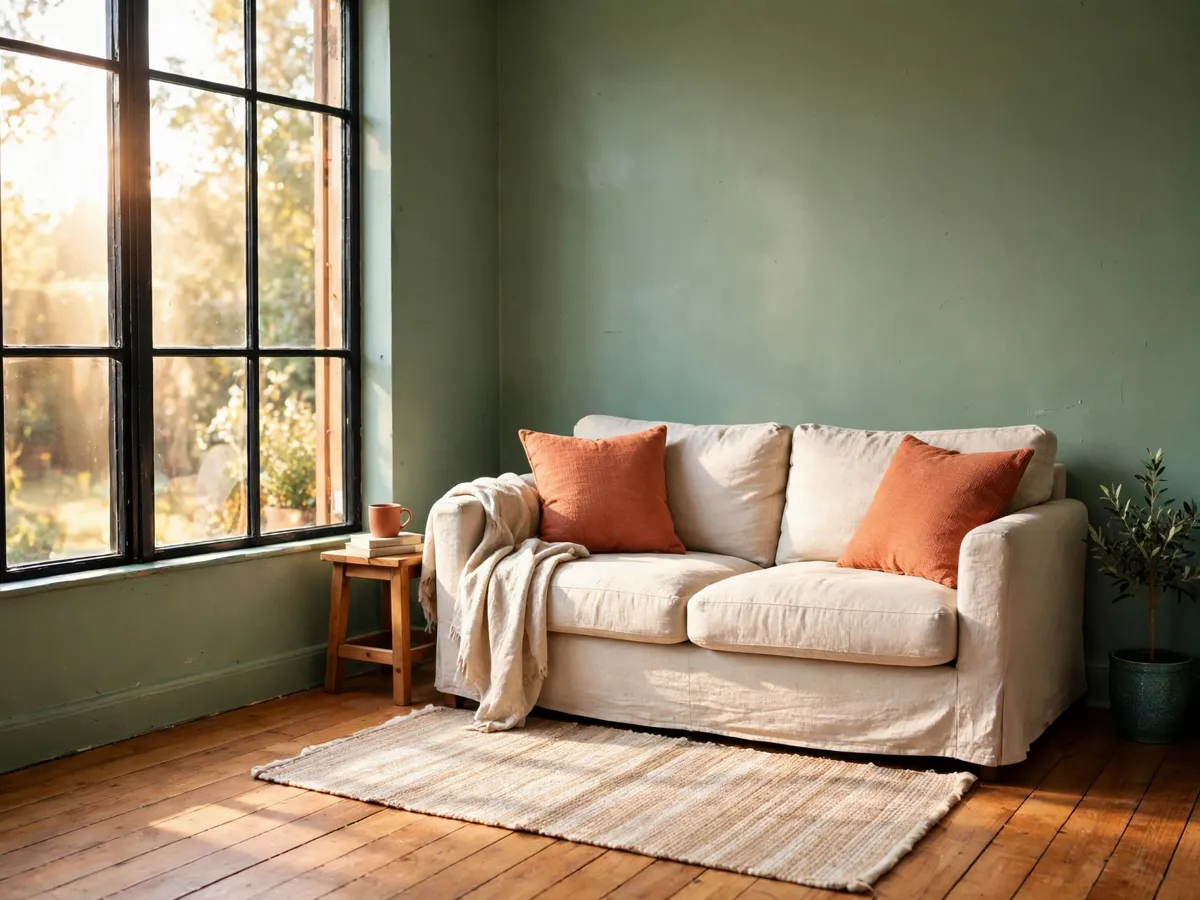
The color family follows the job. A bedroom wall holds evening light and needs to sit quiet at night. A living room wall carries daylight, guests and the biggest furniture in the apartment. A bathroom wall lives close to a mirror, steam and one hard bulb. The sage that calms a bedroom at nine p.m. reads flat in a bathroom at seven a.m., and the deep green that makes a living room feel layered makes a five-by-eight bathroom feel like a cave. So each room gets three colors, not the apartment: sixty percent the walls, thirty percent the second surface, ten percent the accent.
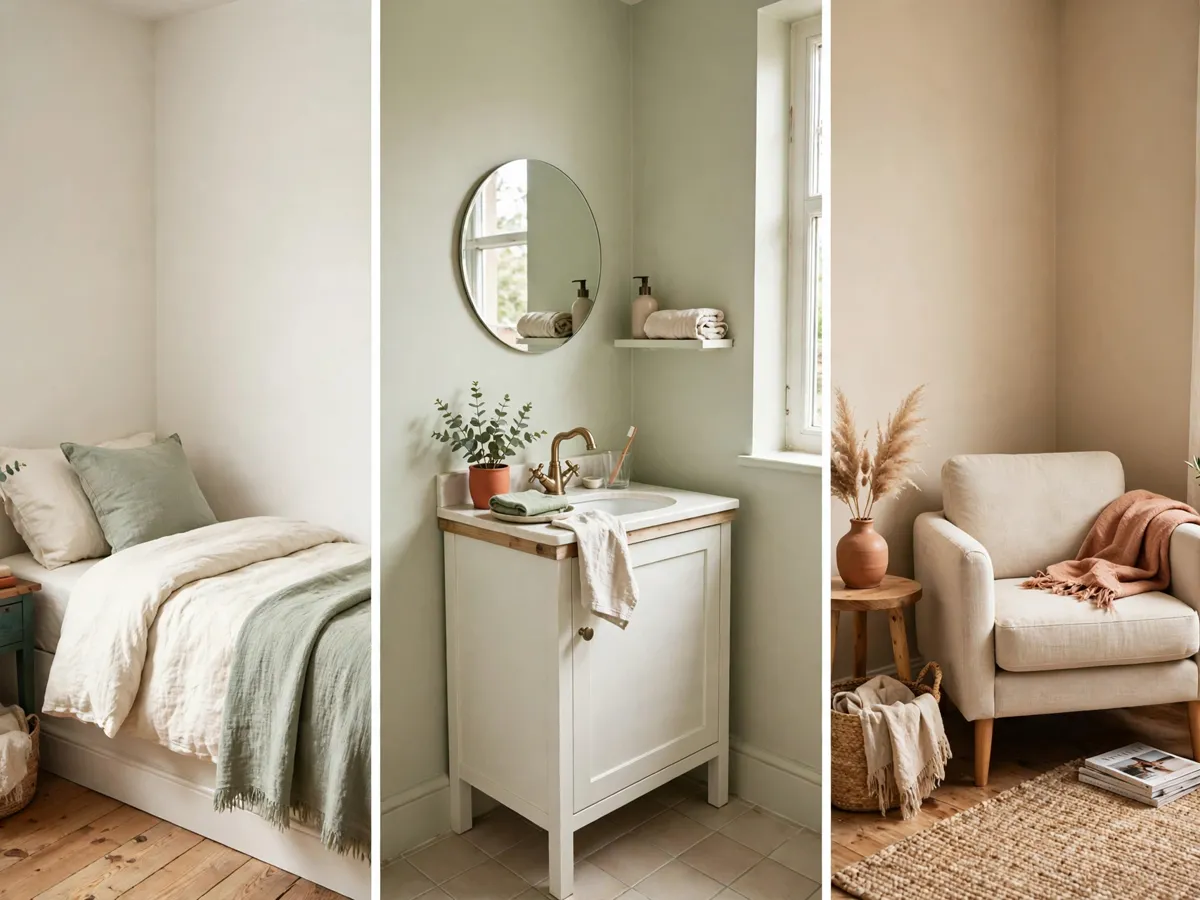
- Small bedroom — creamy white, sage, muted clay. Sixty percent creamy white on the walls, ceiling counted with them. Thirty percent sage: the wall behind the bed plus the bedding, mid rather than pale so it holds under lamplight. Ten percent muted clay in the terracotta family — one cushion, the throw, one framed piece. This is also the cottage-core combo in paint form: creamy base, herbal mid, earth accent, and it reads vintage without going costume. The sage tones that sit warm rather than minty are picked through in the sage green bedroom guide.
- Small living room — warm white, oat, deep pine. Sixty percent warm white on three walls. Thirty percent oat and beige in the textiles — sofa, rug, curtains — the layer the eye actually rests on between walls. Ten percent a deep jewel green on one wall: the wall the sofa faces, not the wall the door opens past. One deep wall makes a small living room read layered; four deep walls make it read small. Which wall earns the deep tone is the same one-wall call walked through in the accent wall guide.
- Small bathroom — soft white, pale sage, muted teal. Sixty percent soft white on walls and ceiling together — counting the ceiling in the sixty is what keeps a small bathroom from closing in. Thirty percent pale sage: the shower wall, a lower half, or just towels and bath mat where the lease keeps the walls stock. Ten percent muted teal only when the room has a window; a windowless bathroom keeps the ten percent in the towels, because mirror light at night flattens a deep accent into a shadow.
The ceiling belongs to the sixty in every room on this page. Painting a small room's ceiling a second color is a look for rooms with height to spare; in a rental with an eight-foot ceiling, a colored lid reads as a lower lid. Creamy white, soft white and warm white all take the ceiling along with the walls, and the room reads as one volume instead of a box with a border.
Why not one color for the whole flat? The paint-one-color-everywhere advice exists because it saves decisions, not because it flatters rooms. The north bedroom and the south living room in the same apartment sit under different light, and the bathroom sits under a bulb. Writing three families per room takes twenty minutes with a pen, and the whole apartment still reads as one home while the sixty percent stays warm in every room. How a sixty-thirty-ten split holds a small room together — and why ten percent really means ten — is laid out step by step in the neutral color scheme guide.
Cost: $0 to write the three families down. Time: 20 minutes with the three rooms in front of you. One cushion is the ten percent — three cushions is the thirty, and the split only works while it stays ten.
2. Read the window before the swatch
Before any card, chip or saved photo, stand in the room and look at the window. Which way it faces decides which family survives on the wall. This is a practical choosing rule from painting small rooms, not a claim about light science — and two directions cover most apartments. Not sure which way the glass faces? The compass app on a phone answers it in ten seconds, standing where the bed or the sofa will sit.
A north-facing window brings cool, flat light that barely changes through the day. Warm families hold it: creamy white, oat, muted clay — the walls keep the room reading warm at four in the afternoon in winter. A cool gray or an icy pale in the same room reads gray by afternoon and institutional by evening, and no lamp fixes it, because the wall is the thing the lamp lights. East windows behave the same after noon: warm base, and let the mid tone arrive through the bedding instead.
South and west windows pour strong warm sun at peak hours, and that light does the opposite damage: it blows pale colors out and turns a chalky creamy wall into glare. Mid tones with a gray undertone sit through it — sage, muted clay and muted teal keep their character under direct sun where a stark pale chip washes out. Strong sun is also the only small-room light that earns a deep jewel accent wall: a west living room wall in deep pine reads rich at sunset instead of heavy, which is the same wall that would swamp a north room.
The honest check costs nothing: three looks at the existing wall — morning, afternoon, lamp-on evening — before buying anything. The family chosen in that light is the family that holds. The warm-base logic and the two-foot test square that back this up are covered once in the cozy paint colors guide; from here this page takes the family as chosen and gets on with the rooms.
Cost: $0. Time: 10 minutes across one day — three looks at the bare wall. Pick the family in the light the room actually sits in, not the store's.
3. Pair walls with dark wood floors
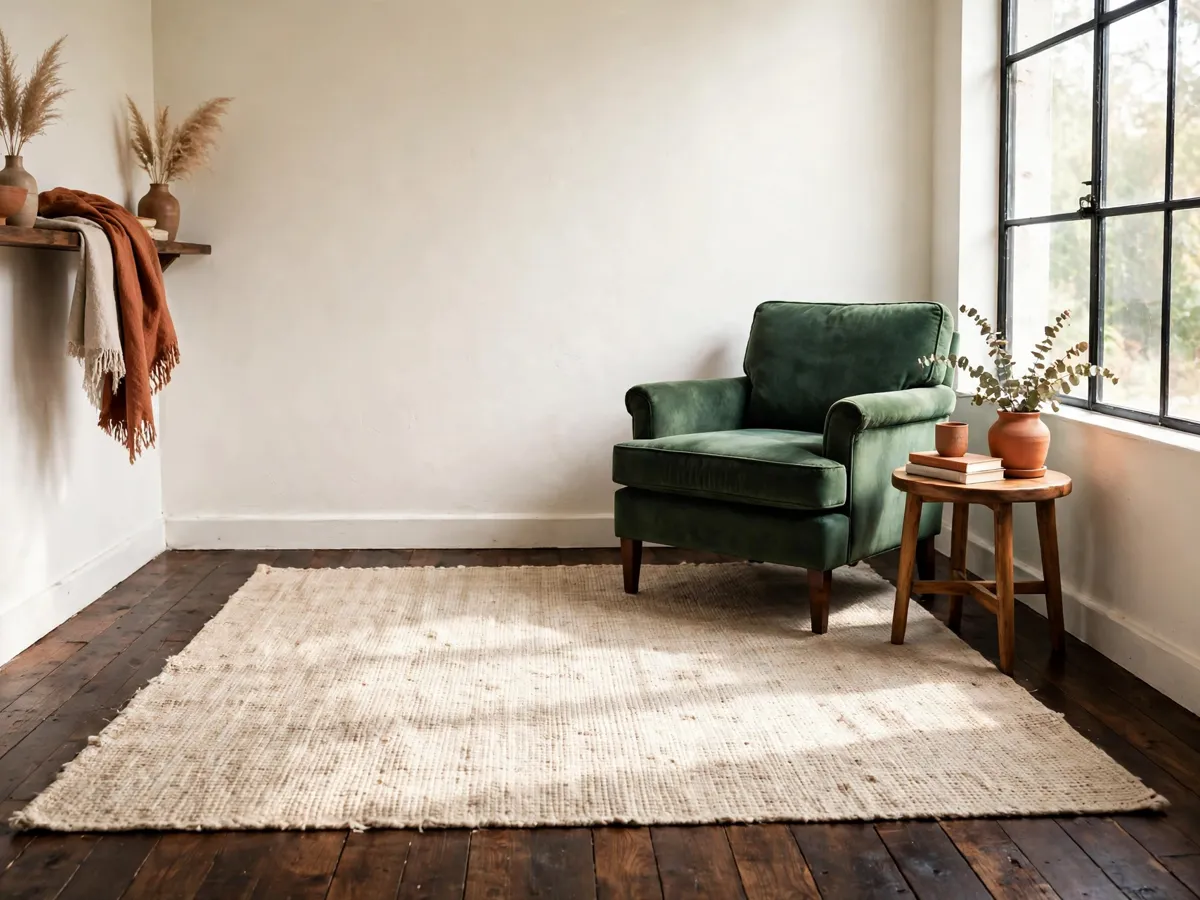
Dark wood floors run through small apartments — 1970s complexes and flipped condos both ship them — and they set one hard rule: the wall reads level with the floor in lightness, or one step lighter. Say it in words — light, medium, dark — and skip the numbers. Hold the paint chip against the floorboards in daylight; if the chip reads clearly darker than the boards, step it up one shade. A wall darker than a dark floor makes a small room read hollow — the eye finds the lit floor first and the walls close in around it like a hole.
The safe pairs sit one step lighter than the boards. Warm white walls over dark walnut in the bedroom. Mid sage over dark oak in a bedroom with good daylight. Oat in a south-facing living room where the sun carries it. Deep pine stays on the table too — as the ten percent, on one wall, with the other three in warm white. What dark floors cannot carry in a small room is mid-dark on all four walls: the room reads as a box with a lit lid.
Two moves rescue a room you want deeper than the rule allows. A light woven rug over most of the dark floor raises the floor plane a step — now mid walls sit one step lighter than what the eye reads as the floor, and the room opens back up. And trim: over dark floors, keep the trim the lightest surface in the room. Soft white trim under a sage wall, over dark boards, gives the eye two bright lines to travel, and it costs the same quart as matching the trim to a mid wall — the choice that makes the room heavier for no reason.
For renters the rule is good news: it shrinks the shortlist instead of growing it. Warm white or sage, one step lighter than the boards, and the room works. The floor is already the darkest thing the room needs — nothing on the walls has to compete with it.
Cost: $0 to compare. Time: 10 minutes holding chips against the boards in daylight. Dark floors cut the options down — that is the feature, not the limit.
4. What each small room actually costs
Honest numbers for painting it yourself — interior paint and supplies only, two coats on the walls and the ceiling counted in, no contractor:
- Small bedroom, about 10 by 10 feet: $80–$150. Two gallons — one for the base on three walls and the ceiling, one for the sage wall — plus a roller and two sleeves, a tray, a two-inch brush, painter's tape and a drop cloth.
- Small living room: $100–$180. Two to three gallons: more wall area, the deep pine accent wall and the ceiling. A longer room or one past twelve feet on a side takes the third gallon.
- Small bathroom: $50–$100. One gallon covers it — the room is small — and the money moves to prep: tape, a small roller sleeve for texture, and caulk where the tub line needs it.
The budgets assume two coats over an existing light or mid color. Going over a dark or saturated old color adds a primer coat and one more can per room — that is the real cost of covering a previous tenant's dark red. Bath-grade paint in the bathroom runs a few dollars more a gallon and earns it against steam. And where the lease wants the original color back at move-out, that repaint is its own future cost — weigh it before choosing a mid tone over the builder white.
The order of the weekend matters as much as the cans. Ceiling first — cut in the ceiling line, roll it, let it dry while you open the wall can. Walls second, second coat before anything else. Trim last, after the walls have dried a night, because taping a wall that is still soft peels fresh paint off with the tape. The bathroom slots in wherever there is dead drying time, since its one gallon and four walls finish inside two hours. Reverse the order and every step fixes the last one's mistakes.
Sheen is the last line on the can and it is not decoration. Flat or matte on bedroom and living room walls hides roller texture and the bumps of an old rental wall; eggshell in the bathroom stands up to wiping. One sheen per room, and the color above reads the way it was chosen.
One weekend for two rooms is the realistic pace. Saturday is prep and first coats; Sunday is second coats and cutting in the trim; both rooms are usable Monday night. Two rooms fit because the bathroom gallon finishes early — start it while the bedroom first coat dries.
Cost: $50–$180 per room, honest budgets. Time: one day per room including dry time. The budgets hold for two coats over a light existing color — dark paint underneath adds primer and a can.
What we would skip
Skip painting the whole apartment one color — the north bedroom and the south living room do not share a light, and the bathroom does not share a bulb. Skip cool gray and icy pales in any north-facing small room; they read gray by afternoon and no lamp fixes that. Skip walls darker than the dark floor — the hollow read arrives before anything else in the room gets noticed. Skip the deep accent wall in a windowless bathroom; keep the ten percent in towels and a bath mat. And skip the fourth deep wall in a small living room — three warm white walls plus one jewel wall reads layered, four reads small.
Cost: $0 to skip. Time: two minutes of reading that saves the most expensive repaint on this page.
The before-you-buy checklist
- Room's job named for every room you are painting — sleep, gather, wash
- Window direction checked: north and east rooms take the warm families, south and west can carry mids and one deep wall
- Three families per room written at sixty-thirty-ten — walls sixty, second surface thirty, accent ten
- Chip held against the floorboards in daylight: level with the floor or one step lighter — light, medium, dark, in words
- Bathroom accent only if the room has a window
- Budget set for two coats on walls and ceiling — bedroom $80–$150, living room $100–$180, bathroom $50–$100
- Trim kept the lightest surface in any room over dark floors
Cost: $0 to check. Time: 15 minutes with this list before the store run.
Common questions
What paint colors work in a small bedroom?
Sixty percent creamy white on the walls and ceiling, thirty percent sage on the wall behind the bed and in the bedding, ten percent muted clay in the cushion, throw and framed piece. Mid sage rather than pale, so it holds under lamplight.
Which paint colors go with dark wood floors?
Warm white or mid sage, sitting level with the floor in lightness or one step lighter — hold the chip against the boards in daylight and step it up if it reads darker. A light woven rug over most of the floor lets mid walls work anyway by raising the floor plane a step.
What paint colors warm up a north-facing room?
The warm families: creamy white, oat, muted clay. North light is cool and flat, and cool gray or icy pale walls in a north room read gray by afternoon — the warm base is what holds the room through winter.
How much does it cost to paint a small room?
About $80–$150 for a 10 by 10 bedroom, $100–$180 for a small living room and $50–$100 for a small bathroom, painting it yourself with two coats on the walls and ceiling. Dark paint underneath adds a primer coat and one more can.
Save these on Pinterest
Pin the room table — the three families per room at sixty-thirty-ten, the window rule, the dark-floor step — so the next free weekend starts with a pen and a plan instead of a scroll. Every pick on this page sits in the small room decor collection.