 Plant As Deco
Small Room Decor
Warm Lighting Living Room Ideas: Three Corners, One Glow
By Plant As Deco · Updated 16 November 2026
Warm lighting living room ideas work best as a plan, not a shopping list. This guide places three warm sources around one seating area: a floor lamp at the sofa arm, a task light at the reading chair, and a soft glow at the TV wall. It covers heights, one steady warm tone, and a renter-safe setup.
Weekend-ready: $85–$195, one afternoon. Renter-safe, no wiring needed.
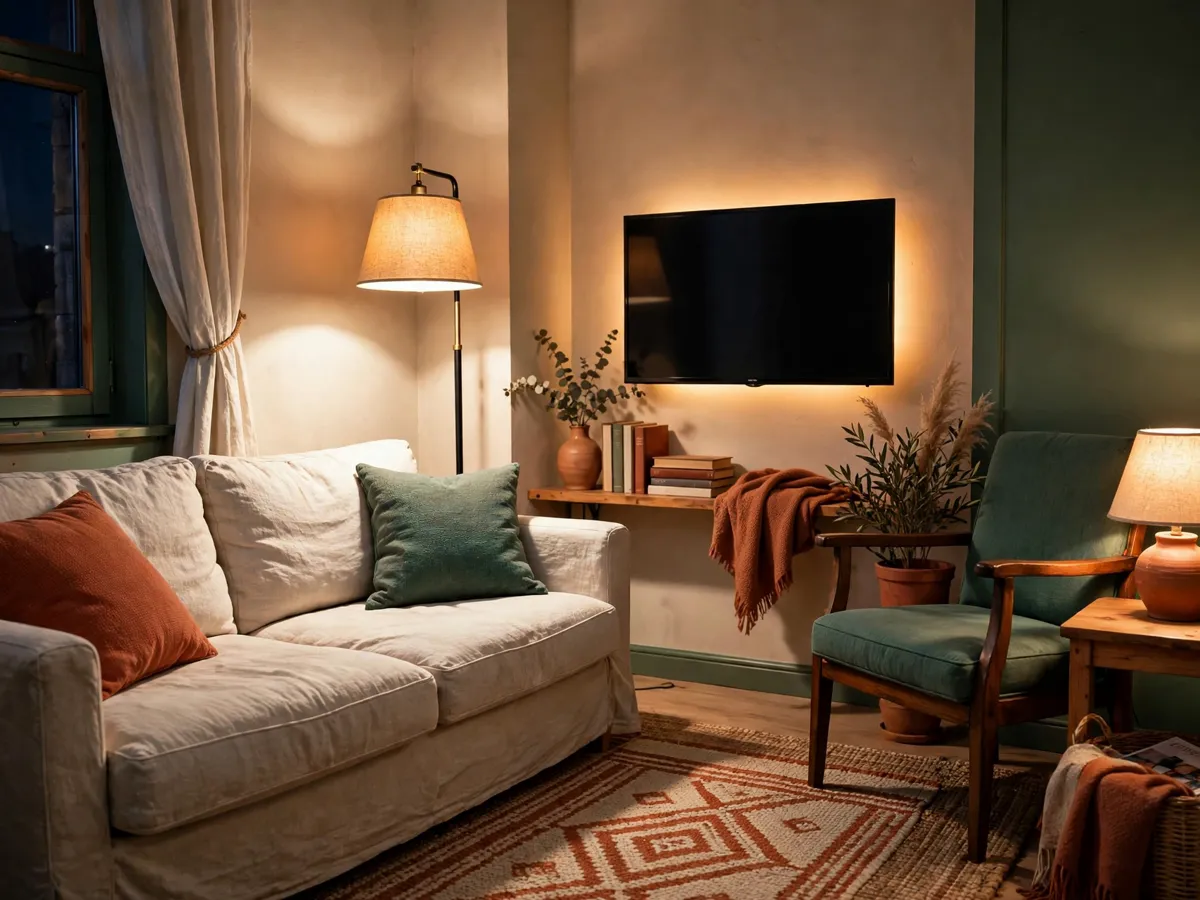
1. Three corners, one triangle
The small living room usually has one seat that matters — the sofa where people talk, read and watch. Plan the light around that seat with three points, each in its own spot: the sofa corner, the reading side, and the far side of the seating area. When the TV wall sits across from the sofa, its soft backlight can serve as the far point. When the TV sits beside the sofa instead, use a plug-in or battery wall light on the opposite side so the third point keeps its own place.
These three points form a triangle around the seating, and the triangle should be as wide as the room allows. A wider spread puts a pool of light on more than one patch of wall, so the room reads even from the main seat. Cluster all three lamps along one console and the room gets a single bright strip with dark ends instead of three separate pockets. Treat this as a practical arranging rule for laying out lamps, not a statement about vision science.
The three sources do not need matching fixtures. A tall floor lamp, a small table lamp and a hidden TV-wall glow can look different and still serve one seating zone. What matters is that light reaches the seat from more than one direction: one source near the sofa arm, one off toward the reading chair, and one across the area. From the main seat, each source should make its own corner feel usable without pushing the screen into the brightest object in the room.
Map the triangle before buying anything. Sit where the evening is usually spent and name the three spots: the sofa arm with floor space beside it, the chair or side table used for reading, and the far wall or TV edge that can carry the soft source. In a narrow room the triangle gets long instead of wide — push the third point toward the far end rather than crowding all three beside the sofa. Keep the walkway clear, and keep every lamp out of the swing of doors, curtains and reclining seats.
Test the layout from two places before anything is ordered. Stand in the doorway first — the view guests get — and check that the three spots read as separate pockets rather than a row. Then sit in the main seat and look around the room slowly. If any single source is clearly the brightest thing in view, that corner is carrying too much and the others need a step up or a shade turned further out. If one side of the room sits entirely dark from the seat, the triangle is leaning and the far point wants to move wider.
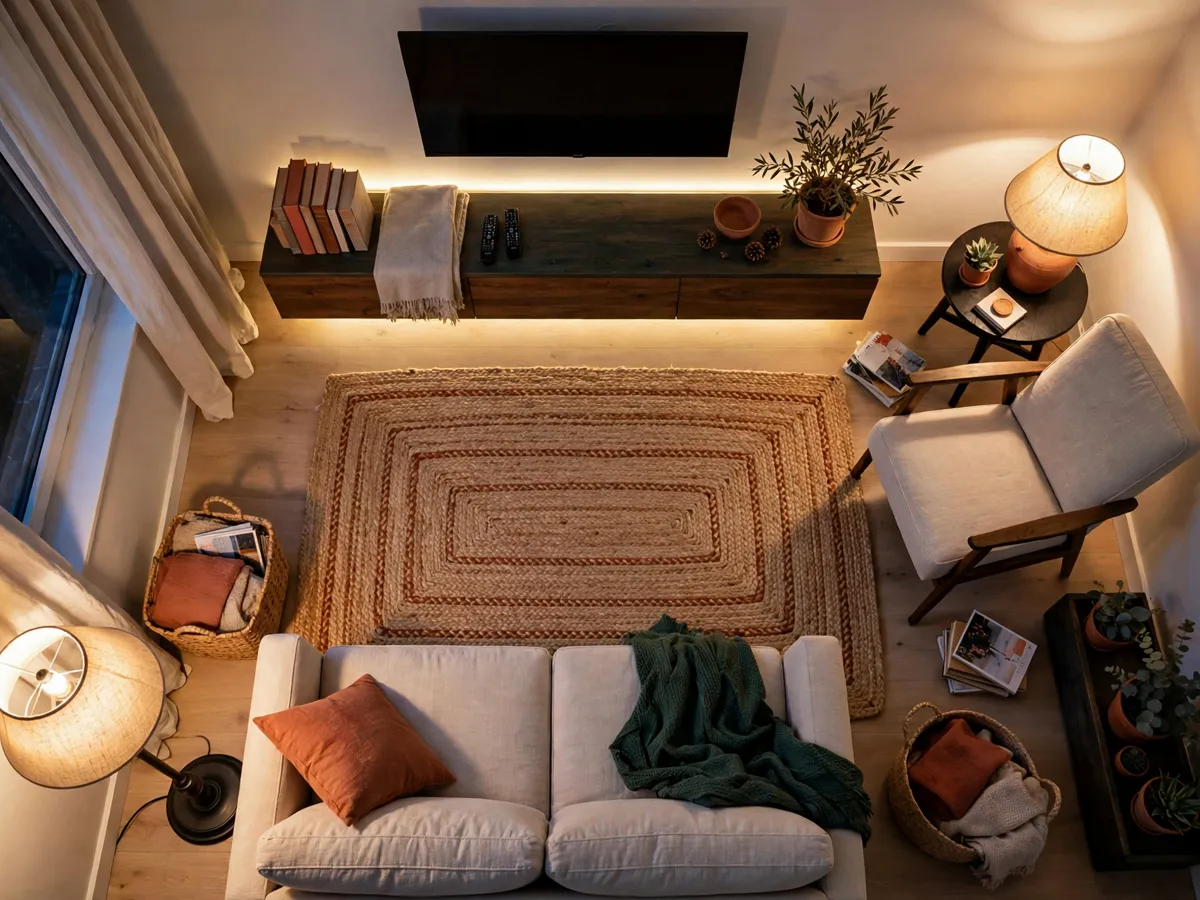
Once the three spots are named, the rest of the plan is heights and one steady tone, covered next. If the sofa itself still needs a place first, the cozy living room guide handles the seating side of the same room while this page handles the light.
Cost: $0 to map. Time: 20 minutes with the evening seat test. Name the spots before buying a single lamp — the spots set the heights.
2. What each corner needs
Each corner has one job and one measurement. Buy to these numbers and the three sources land at three heights, which is what keeps the room from flattening into one line of light.
The sofa side — the tall one. This corner gets a floor lamp, 58 to 64 inches tall overall, standing 2 to 4 inches clear of the sofa arm. The shade should throw its light out into the room and slightly down, never straight into the eyes of someone seated. A drum shade at this height puts the bulb above seated eye level while keeping the pool of light on the cushions and the floor nearby. Place the base where feet will not kick it on the way past — the 2-to-4-inch gap is about clearance, not about hugging the arm. Budget $40–$90 for this floor-lamp corner; it is worth the biggest fixture share because it lights the seat the whole room uses.
The reading corner — the aimed one. The reading chair gets the task light: a table lamp beside the chair or a short floor lamp with an adjustable head. Set the shade so its lower edge sits at about the seated reader's eye height — 38 to 42 inches from the floor — and aim the opening at the book or magazine, not at the chair opposite. This is the brightest of the three sources because it does close work; the other two stay softer. If the chair already has a side table, the lamp earns that table. If not, a narrow plant stand or small stool can hold it. The reading nook guide covers the chair-and-light pairing for a dedicated corner, and the same shade heights apply here.
The TV wall — the quiet one. The TV-wall source sits behind or beside the screen, never on the wall opposite it. A low-output LED strip or one small warm bulb fixed behind the TV or along the back edge of the low console throws a soft halo onto the wall around the screen. Set the strip back 6 to 8 inches from the front edge of the stand so the diodes themselves stay hidden and only the halo shows. This is the dimmest of the three — a background glow that keeps the screen from being the lone bright rectangle, not a second lamp competing with it. For screen size and seating distance, the TV wall guide sizes that wall while this page lights it.
Every corner here is plug-in. The floor and table lamps need only an outlet, and the TV strip runs off the same power strip as the screen. Where no outlet sits near the third point, a battery wall light with a warm bulb and a timer takes the spot with no drilling and no cable across the floor. Keep cords along the baseboard and behind furniture legs, taped flat where feet pass.
Route each cord before the lamp goes in its final place. Run the floor lamp's cord along the wall behind the sofa rather than across the seating side, and tape it down where the walkway crosses. The table lamp cord drops behind the side table and joins the same strip if the outlets are close. The TV strip plugs into the screen's power strip, so one switch still turns the wall on and off together. The strip or small bulb runs $15–$30; if the only outlet sits on the far wall, a slim extension along the baseboard is the whole job — no cable should cross open floor.
Count what you already own before the store run. A floor lamp in another room, a table lamp from the bedroom, a spare bulb from the kitchen drawer — each one covers a corner if it meets the height for the job. A sofa-side lamp that is too short can sometimes move to the reading chair, where the lower shade is the correct height anyway. The swap costs nothing and shrinks the shopping list to the corners that are actually missing.
Cost: $80–$180 for fixtures; bulbs add $5–$15. Time: one afternoon to place and aim. Buy the shade height before the style — the numbers do the work.
3. Pick one warm tone and stay
Use 2700K bulbs in all three sources as this room's chosen warm tone. Keep the bulbs in the seating zone consistent so one corner does not read noticeably cooler than the others. Treat 2700K as the plan for this layout, not a universal bulb rule.
One tone does not mean one brightness. A dimmer plug lets the triangle run brighter for cleaning and lower in the evening. Set the evening level first, then check that the reading chair still gets enough light for a book. For bulb-choice detail, the warm lighting bulb-choice guide covers the options while this page focuses on placing lamps.
Cost: $5–$15 for bulbs across all three corners. Time: 10 minutes to swap and check at night. Keep brightness flexible, tone steady.
4. The glow behind the TV, without glare
The TV wall earns its glow from behind the screen, not from lamps aimed at it. Fix the LED strip or small bulb behind the TV or along the back edge of the low console, set back 6 to 8 inches from the front edge so the source itself never shows. What reaches the room is a soft halo on the wall around the screen — wide, dim and even — instead of a visible line of dots or a bulb glaring past the frame.
Keep every other source off the screen's face. No lamp should sit on the wall opposite the TV at screen height, and no shade should aim across the room straight into the glass. Check from the main seat with the screen off first: if a bulb reflects in the dark glass, move that lamp a step sideways or angle its shade down until the reflection leaves. Then check again with a bright scene playing, because a moving picture hides small reflections that a dark screen shows.
Run the TV glow as the dimmest of the three corners. It should lift the wall around the screen just enough that the room beyond the picture stays visible, not bright enough to read by. If the strip has levels, start at the lowest and step up once — most small rooms settle on the first or second step. A strip with a remote or timer earns its place here, since the glow should switch with the screen rather than staying on all night.
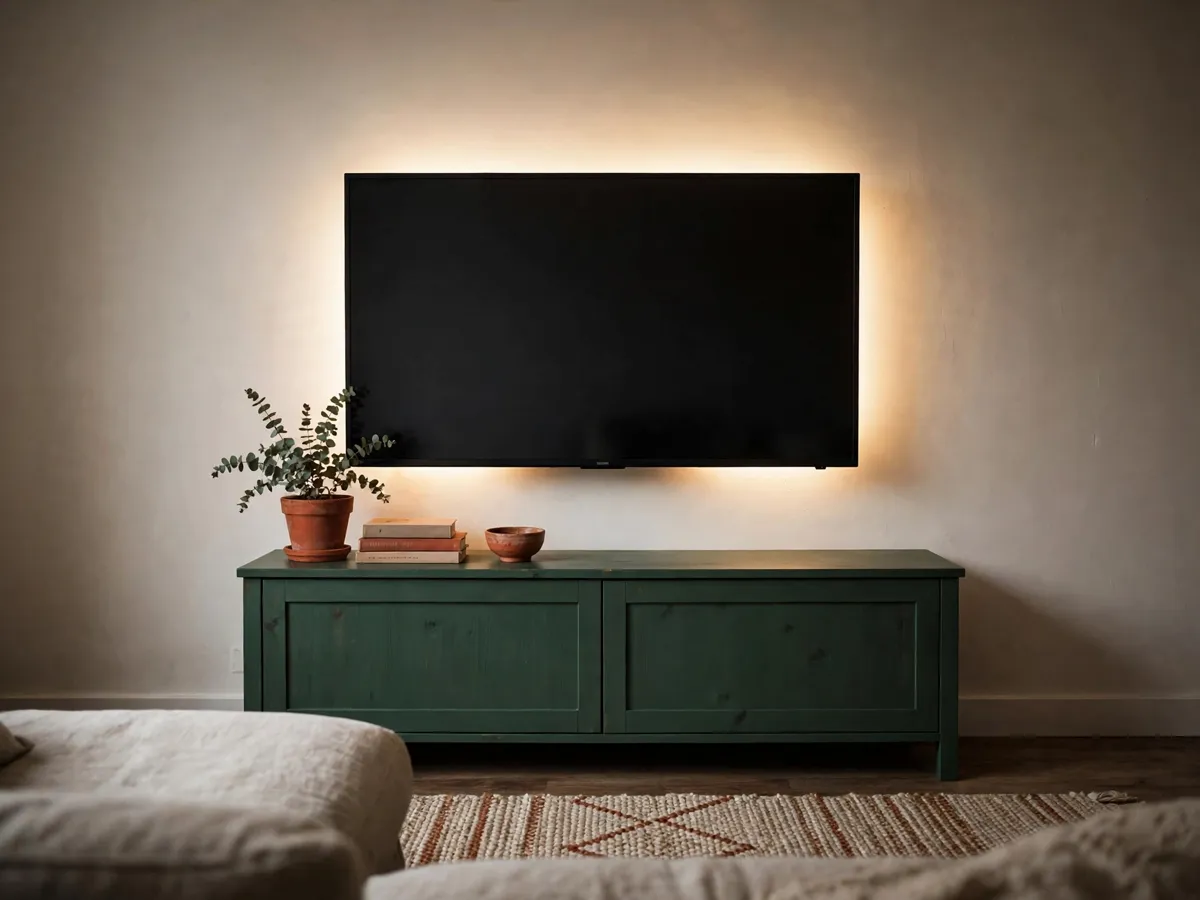
Daylight changes the job. In the evening the triangle does everything; by day the windows do most of it and the lamps rest. Leave the TV glow off while daylight fills the room, and judge every aiming decision after sunset, when the room actually runs on lamps. The screen stays readable either way because no source ever shines on its face.
The cost lands light for what it changes. A warm LED strip or small bulb for behind the screen runs $15 to $30 — the cheapest corner of the three and the one that changes the wall most at night. Add the floor lamp at $40 to $90 and the table lamp at $25 to $60, and the full three-corner setup with bulbs comes to $85 to $195. Renter route: the strip sticks behind the console or TV edge, and a battery wall light with a pin-style mount takes any far point without a drill.
Cost: $15–$30 for the strip or bulb behind the screen. Time: 20 minutes to mount and check from the seat. Hide the source, show only the halo.
What we would skip
- The matching three-lamp set in one finish — three identical lamps at one height flatten the triangle the plan is built on. Buy to the heights, not to the set.
- A cooler bulb in any one of the three — a noticeably different color in one corner breaks the single tone the whole page holds.
- A strip or bulb facing the screen or the seat — the glow lives behind the TV edge, 6 to 8 inches back. Anything visible or aimed outward is glare, not halo.
- The fourth lamp before the triangle works — place three, live with them for a week, then decide if a corner is still dark.
- Rewiring or a ceiling fixture change — every corner here is plug-in or battery, and a lease-friendly plan should stay that way.
Cost: $0 to skip. Time: 5 minutes to rule out mismatched sets and glare-prone strips.
The before-you-buy checklist
- Three spots named from the evening seat: sofa arm, reading side, far point
- Floor lamp 58–64 in tall, 2–4 in clear of the sofa arm, shade aimed into the room
- Reading shade at 38–42 in from the floor, aimed at the book
- TV glow behind or beside the screen, set back 6–8 in, dimmest of the three
- 2700K in every source of the seating zone
- Battery wall light planned wherever the third point has no outlet
- Budget written before ordering: floor lamp $40–$90, table lamp $25–$60, TV strip $15–$30 — $80–$180, plus $5–$15 for bulbs
Cost: $0 to check. Time: 15 minutes before the first order.
Common questions
Where do the three lamps go?
One at the sofa arm, one at the reading chair, and one across the seating area — the TV-wall glow can take that far point. Keep the three in genuinely different positions, as wide as the room allows, never three in a row on one console.
How tall should the floor lamp be?
58 to 64 inches overall, standing 2 to 4 inches clear of the sofa arm, with the shade throwing light into the room rather than into seated eyes. The reading shade sits lower, at 38 to 42 inches from the floor.
Which bulb tone should I buy?
Use 2700K in all three sources and keep the color consistent across the seating zone. Adjust brightness separately if the reading chair needs more light; keep the warm tone steady.
How do I light the TV wall without glare?
Put the glow behind or beside the screen, set back 6 to 8 inches from the console edge, and run it as the dimmest of the three. Check for reflections from the main seat with the screen off first, then with a bright scene playing.
Cost: $0 to use these answers. Time: 2 minutes to check the plan against your room.
Save these on Pinterest
Pin the triangle map first — the three spots decide every buy that follows — then the corner heights and the TV-wall offset. This guide sits in the Small Room Decor collection with the rest of the room guides.
Cost: $0 to save. Time: 1 minute to pin the three views you want to keep handy.