 Plant As Deco
Gardening & Planting Tips
Chrysanthemums Indoors: The Short Show, Stretched
By Plant As Deco · Updated 22 November 2026
A mum bought covered in blooms is a seasonal show with a schedule, roughly three to six weeks of color and then a decision. This guide is for the person holding one in a grocery-store foil pot: how to read the plant before you buy it, how to stretch the show to its long end, and what to do, honestly, once the blooms fade.
Weekend-ready: $8–$25 for the plant and a cachepot, weeks of blooms.
1. What a florist mum actually is
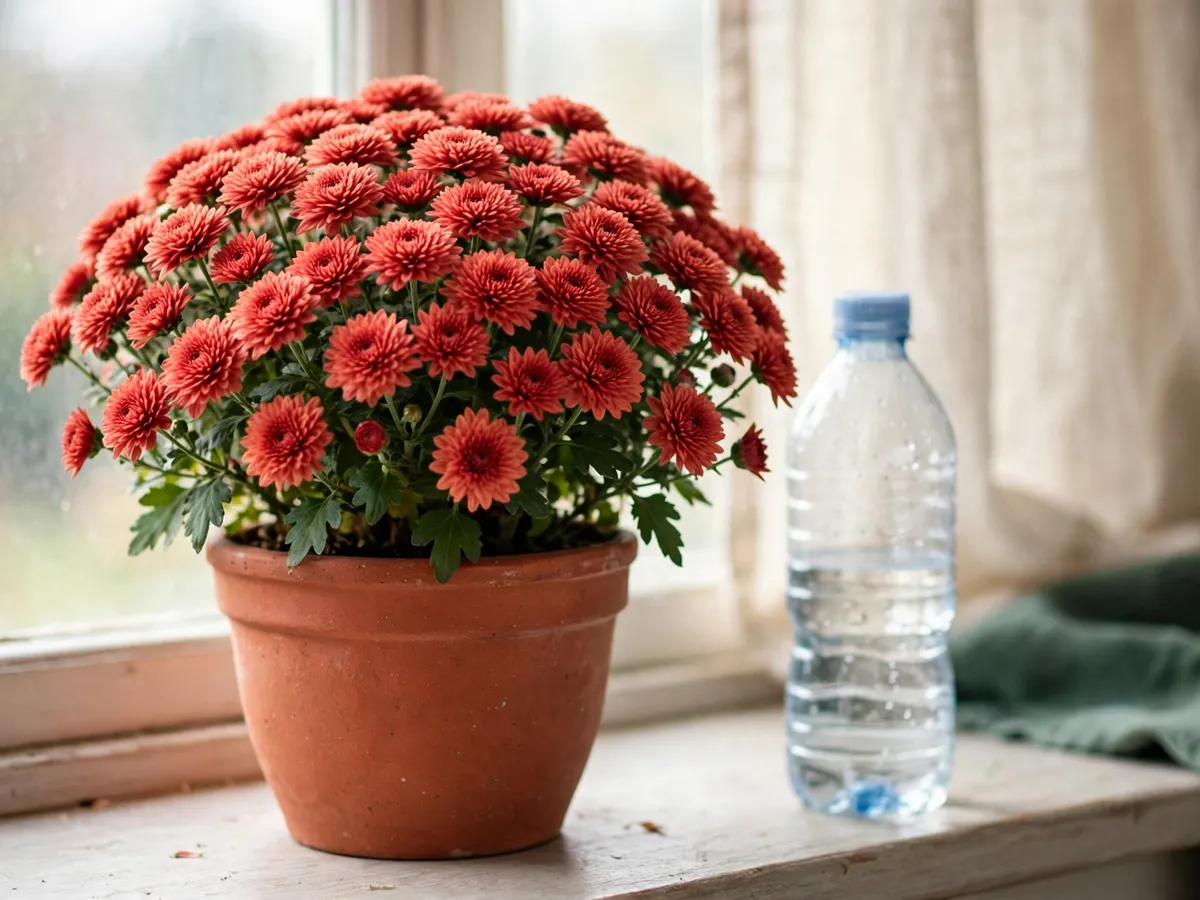
The chrysanthemum sold in full bloom at the grocery store is a florist mum. It was raised as a greenhouse crop, kept warm and fed on a professional schedule, and timed so a dense dome of buds and blooms hits the shelf right as fall begins. It is closer to a cut-flower crop with roots attached than to a plant built for living rooms, and almost none of them rebloom indoors. That is not your fault. It is how the crop works.
The plant itself is dense and root-packed in a small pot, because a tight rootball holds that heavy dome of blooms upright through shipping. It has never met a cold night or a dry apartment. It arrives carrying every bloom it will ever give you at once, so the show is already close to its peak the day you buy it.
One thing to fix immediately, the same silent killer that takes gift hydrangeas: the foil wrap around the pot is a bathtub. Every watering pools in its bottom, the nursery pot sits in that hidden puddle, and the roots rot within a week or two while the blooms still look fine above it. Remove the wrap or poke holes in its bottom on day one, water at the sink, let it drain fully, then put it back on display. The foil logic is explained in the hydrangea indoors guide, and it applies here exactly.
Cost: $0. Time: 2 minutes, once. The water that ends the show early usually hides under the pot where nobody looks.
2. The bud-count buying read
The single best predictor of a long show is the bud count. Pick the plant with more tight, unopened buds than open blooms. A dome that is half closed has weeks of opening left, and the show is ahead of you. A fully open dome, the one that photographs best on the shelf, has already peaked, and every day after purchase is the aging side of its curve.
Read the leaves too. You want foliage that is firm and dark green, a plant that was watered properly on the way to the shelf. Pass on soft or yellowing leaves, and pass on black spotting, which usually means the plant sat wet in transit and is already carrying trouble.
The pot tells you one more thing. Roots crowding the surface is normal for this crop and not a problem. Water sloshing inside the wrap is a dealbreaker, because that plant has been sitting in a puddle for days already.
Cost: $8–$15 for the plant. Time: 2 minutes of inspection. More tight buds than open blooms buys you the extra weeks.
3. The show-extenders: cool and bright
Two conditions stretch the show, and neither costs anything: a cool room and a bright window. A room holding in the low 60s Fahrenheit, near a bright window, keeps the flowers opening slowly and evenly for three to six weeks. The same plant in a warm room, the kind that sits at 72 or 75 with the heat running, fades in roughly half that time. A bloom is a one-way countdown, and warmth speeds it up.
Keep the pot away from radiators and heating vents, which combine warmth with drying air, and out of the hot afternoon sun streaming through glass. An unheated spare room, a bright hallway, or a bedroom windowsill outdoes the living room every time. This is the one care decision that changes the calendar more than anything else you do.
Cost: $0. Time: one move. A hot room is the fastest way to cut the show in half.
4. Light indoors, and the quarter-turn
Indoors, a blooming mum wants bright indirect light with some gentle direct morning sun. An east window that catches the first few soft hours is close to ideal, and a few feet back from a bright south or west window works too. A dim room shortens the show, and tight buds stall without opening, because the plant cannot pay for a full dome of blooms in the dark.
Give the pot a quarter-turn every week. The whole dome leans toward the glass over time, and one side ends up facing the room while the other faces the window. A weekly quarter-turn keeps the lean even and the shape round instead of lopsided. It takes five seconds and it is the difference between a dome and a half-dome.
Cost: $0. Time: 5 seconds a week. Buds that stall usually mean the room is too dim, not that the plant needs anything else.
5. Water before it wilts, not after
A blooming mum is genuinely thirsty. Dozens of flowers and a dense crown of foliage pull water fast, and the small, root-packed pot holds very little of it. The honest version of the top-inch rule: push a finger into the soil, and water when the top inch feels dry. In fall, in a heated room, that check happens daily, and the answer is often yes. This is the one houseplant situation where daily attention is not overwatering, it is the job.
The reason to stay ahead of it is unforgiving. A mum that wilts badly once tends to drop its unopened buds within days, and it never fully recovers its shape or its remaining schedule. The plant may rehydrate and stand back up, but the buds it shed do not come back. Watering after the wilt is cleaning up, not fixing it.
The same finger-test discipline behind ordinary houseplant care applies here, just on a faster clock. Check the soil, not the calendar, and in a cool room the clock slows down on its own.
Cost: $0. Time: 30 seconds a day while it blooms. One bad wilt costs the buds, and the buds are the show.
6. Water the soil, not the dome
Where you pour matters as much as when. Wet petals and a wet crown rot in hours, and a dome this dense holds water in its center where air cannot dry it. Never mist the blooms, never shower the plant from above, and do not pour across the foliage. The blooms get their water through the plant, not on top of it.
Use a bottle with a narrow spout and aim at the soil surface around the edge of the pot, under the leaf canopy. Or use the sink-dunk: carry the pot to the sink, water the soil until it runs from the drainage holes, let it drip out fully, then return it to the cachepot. A pot that goes back into a ceramic cachepot while still dripping recreates the foil-wrap problem one layer up.
Cost: $0–$12 for a narrow-spout watering bottle. Time: 2 minutes per watering. Drainage finished before display, every time.
7. Deadheading as the rhythm
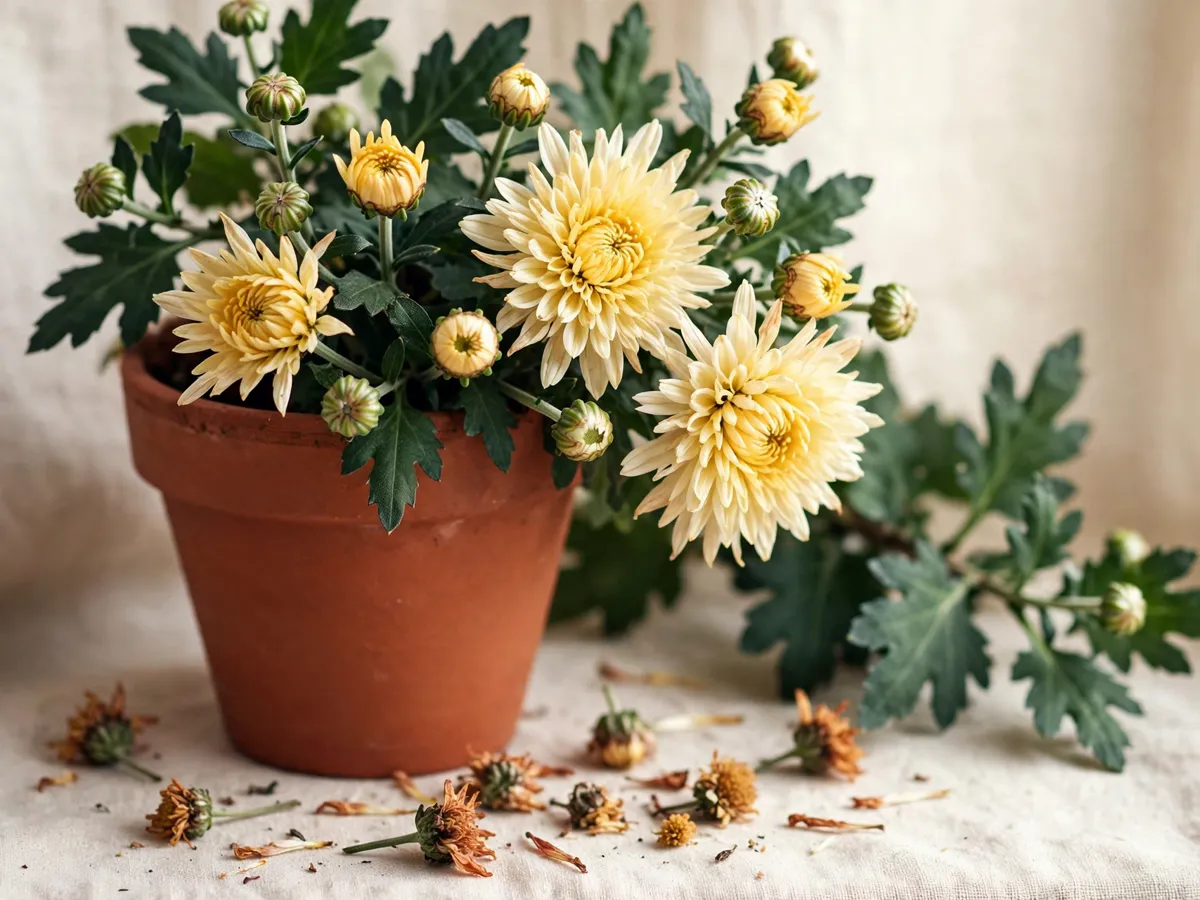
Deadheading is the quiet trick that keeps the show running. A mum pushes new buds at the edges of the dome while the finished clusters in the center go brown and papery. If you keep clipping the spent clusters off, the plant keeps opening the ones behind them. If you leave the dead heads on, the show reads as over weeks before it actually is.
The technique is simple. Pinch or snip the whole spent flower head off with a short piece of stem, rather than pulling petals loose one at a time. Work through the dome once a week while you check the water, and drop the clippings straight into the compost or the trash. Clean hands or scissors, five minutes, no tools required beyond fingertips.
Cost: $0. Time: 5 minutes weekly. Clipped clusters keep the plant spending its water on the buds still left.
8. No feeding during the bloom
Skip the fertilizer entirely while the plant is in bloom. Every bud you can see was already set back in the greenhouse, weeks before you owned the plant. Feeding now does nothing for blooms that exist and nothing for buds that have not formed, because no new buds will form on your windowsill. What a feed does do is add salts to a small, temporary pot that gets watered heavily and often.
The honest reading of the label on a blooming mum is that it is a finished product, not a project. Water, light, temperature and deadheading are the entire care list. Feeding is a spring decision, and only for one of the three paths in the sections below.
Cost: $0. Time: 0 minutes. Fertilizer on a blooming mum is money and salts spent on nothing.
9. Why it almost never reblooms indoors
Here is the mechanism, stated once, because it is the fact that frees you. Mums set their buds in response to long, dark nights and cool temperatures, the signals of early fall. A living room with evening lamps, a thermostat and steady warmth never sends those signals. The plant reads an endless mild late summer, and a mum that believes summer never ends has no reason to prepare flowers.
This single fact answers the question most owners quietly carry for a year. If you keep watering a spent mum through winter and spring hoping for a second flush, you are not doing anything wrong. The room is. An indoor keeper can grow into a decent green shrub, and that is its honest ceiling in almost every home.
Cost: $0. Time: 2 minutes of reading. Knowing this saves a year of watering a green nothing.
10. After the show: the three honest forks
When the last blooms fade, the plant hands you a decision, and there are exactly three real paths. Choosing one on purpose, on the day the show ends, is the whole skill of owning a florist mum.
- Compost it. A florist mum is sold as a weeks-long living arrangement, and treating it exactly that way is a legitimate, waste-free choice, said out loud. You enjoyed the show, the plant did its job, and the compost bin finishes the cycle. In a warm apartment or a dim home this is the honest winner, and nothing about it is failure.
- Keep it green. Cut the spent stems back by about half, give it the brightest cool spot you have, and water on the dry side. It becomes a scraggly green shrub over the following months, one that might give a small second flush if it spends summer outdoors, and almost never does indoors. Keep it because you like the experiment, not because you expect blooms.
- Plant it out. Move it into a garden bed or a large outdoor pot in spring, with the hardiness caveat in the next section understood before you dig. This is the only path that leads toward future flowers, and it carries real odds rather than a promise.
What there is not is a fourth path where the dome re-blooms on the windowsill. An owner chasing that outcome spends a year watering a plant that thins out instead. Pick early, pick deliberately, and the plant either serves its weeks cleanly or gets a genuine chance.
Cost: $0. Time: one decision. Make it the week the blooms fade, not three months later.
11. Planting out, and the hardiness truth
The caveat first, because it decides whether this fork exists for you. Garden mums and florist mums are different selections bred for different jobs. The florist types you buy in fall are often a zone or two less hardy than the garden mums sold at the nursery in spring. Planted in the ground in a warm zone, a florist mum may overwinter and return the following year. In a cold zone it usually dies over winter even after you plant it out. Planting out is a bet with real odds, not a second life.
If you take the bet, spring is the door. Wait until frost risk has passed, then move the pot outside into shade or a covered porch for a week or two, then into gentle morning sun for another week or two. That stepped transition is the same hardening-off logic behind starting a balcony garden, and skipping it scorches a greenhouse-raised plant in days.
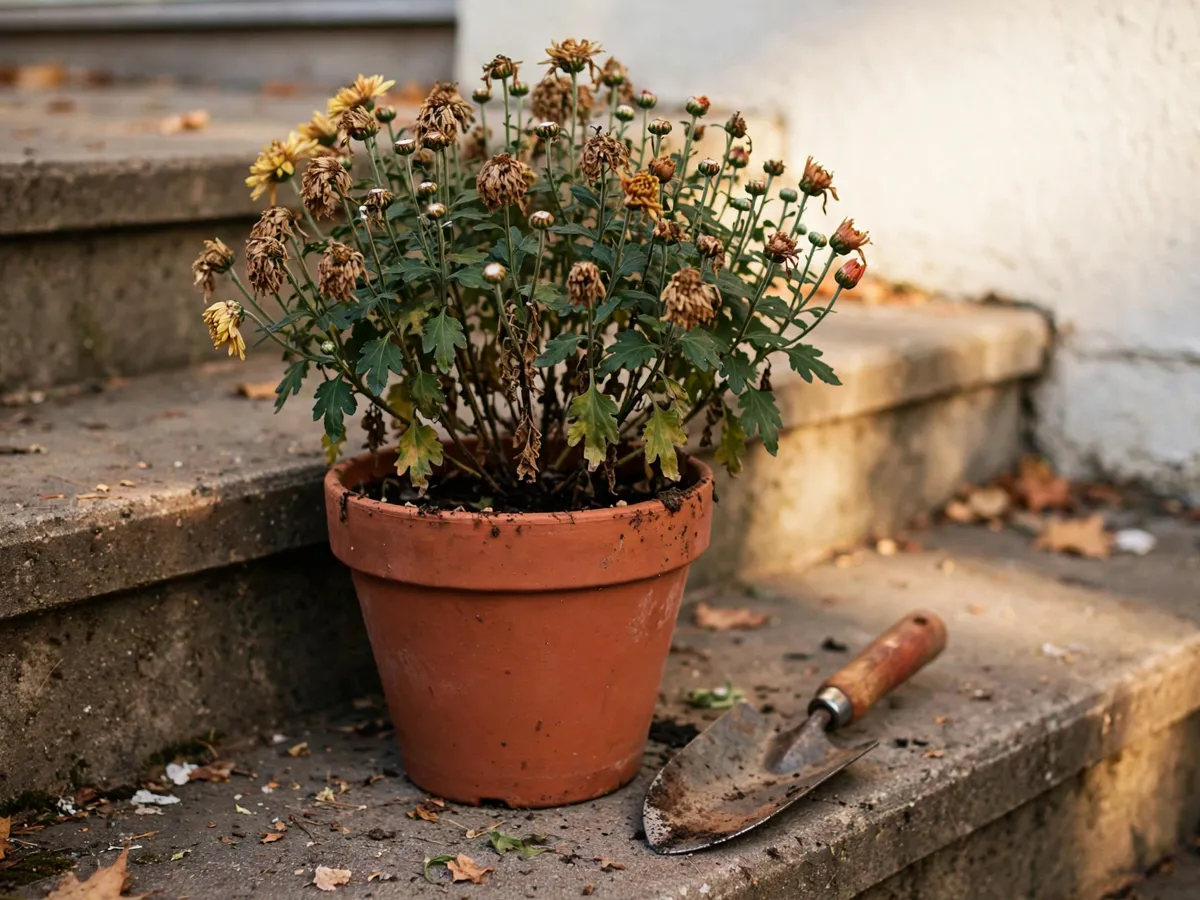
Plant at the same depth it grew in the pot, in a spot with morning sun and some afternoon shade, and water it deeply and weekly through the first summer. A mulch layer over the roots heading into winter helps in the marginal zones. Then wait, and let the spring answer the hardiness question for your yard.
Cost: $0–$20 for compost and mulch. Time: an afternoon to plant, weekly water the first summer. Cold-winter yards are where this bet usually loses.
12. Keeping it green, and pinching
For the keep-it-green path, the haircut comes first. Once the blooms are fully spent, cut the stems back by about half with clean scissors, which removes the dead dome and pushes the plant toward compact new growth. Give it the brightest cool window you have, water on the dry side rather than the bloom-time schedule, and expect a plain, slightly scraggly green shrub. Light feeding through the growing months, at half strength, keeps that shrub healthy.
Pinching is the one shaping skill worth knowing. Once the new stems stretch a few inches, pinch the growing tip out of each one with your fingertips. Two stems become four, four become eight, and the plant fills into a denser, rounder shape instead of a few long shoots. If the plant spends summer outdoors and you want fall buds, stop pinching by midsummer so the season of shortening days can do its work on the growth you built.
The honest note: that timeline belongs to outdoor-summer plants. An indoor keeper gets a tidier shrub out of pinching and nothing more, because the dark-night signal never arrives in a lit living room. Pinch it for shape, enjoy the green, and hold no expectations of a dome.
Cost: $0. Time: 10 minutes a week through the growing months. Indoors this path grows leaves, not blooms.
13. Where it lives in a house with pets
Mums are toxic to cats and dogs. Chewing the leaves or blooms typically causes gastrointestinal upset, drooling and vomiting, and a determined eater who takes a large amount is a genuine veterinary concern. The dense, domed shape of a blooming mum is exactly the kind of object a curious cat wants to test, so the risk is real and not theoretical.
This is a placement rule. A mum on a dining table, a high shelf or a windowsill a cat cannot reach is a low-risk decoration for its weeks. On a coffee table beside the couch, with a puppy in the house, it is an invitation. If a pet eats a serious quantity, call a veterinarian.
If your home includes a committed leaf-chewer, a genuinely pet-safe plant is the better decoration, and the pet-safe houseplants guide lists the ones that carry no toxicity concern.
Cost: $0. Time: one placement decision. Out of reach is the whole rule, and a vet call if it is ignored.
14. The seasonal cycle, guilt-free
A florist mum is a fall-color purchase, the same category as a pumpkin. You buy it because the season asks for warm color on a table, it delivers its weeks, and then it goes to the compost while the next season rolls in. That is the normal, honest cycle of the plant, not a defeat at the hands of your thumb.
The guilt-free version of this hobby is the one where nothing gets hoarded past its purpose. Enjoy the dome at its peak, deadhead it through its long tail, and let the fork you chose, compost, green shrub or outdoor bet, be a decision you made on purpose. A plant that served its season cleanly has been used well.
Cost: $0. Time: none. Composting a finished mum is the plan working, not the plan failing.
Common questions
How long do chrysanthemums last indoors?
Roughly three to six weeks of color, with the long end coming from a cool room in the low 60s, a bright window, water before wilting and weekly deadheading. The same plant in a warm room fades in about half that time. Buds that never open usually mean the room is dim or the plant went dry once.
Will my potted mum bloom again indoors?
Almost never. Mums set buds in response to long dark nights and cool temperatures, and a living room with evening lamps and steady warmth sends neither signal. A kept plant grows into a green shrub, which is a fine outcome, and a stray indoor bloom is the rare exception rather than something to plan around.
How often should I water an indoor mum?
Check daily while it blooms, and water when the top inch of soil feels dry. In a warm fall room that can mean every day or two, because a dense, root-packed pot holding a full dome of blooms dries fast. Water the soil at the base, never the blooms or the leaf dome, and let the pot drain fully before it goes back into a cachepot or foil wrap.
Why is my mum dropping its buds?
Bud drop almost always traces back to one bad wilt. A mum that dries out badly once sheds unopened buds within days, and those buds do not return. The other common causes are a hot room near a vent, a dim room where the plant cannot sustain the dome, and water trapped in the foil wrap rotting the roots quietly underneath.
Can I plant my indoor mum outside?
Yes, in spring, after a stepped transition of shade then gentle morning sun. Understand the odds first: florist mums are often a zone or two less hardy than the garden mums sold in spring, so in a warm zone a planted-out mum may overwinter and return, while in a cold zone it usually dies over winter anyway. It is a reasonable bet, not a second life.
Are chrysanthemums safe for cats and dogs?
No. Mums are toxic to both, and chewing the foliage or blooms typically causes stomach upset, drooling and vomiting. Keep the pot on a surface pets cannot reach for the weeks it is in the house, and call a veterinarian if a pet eats a large amount. For homes with determined chewers, a genuinely pet-safe plant is the better choice.
Save these on Pinterest
Pin the bud-count buying read and the three forks after the show, the two decisions that decide what a grocery-store mum is worth in your home. This guide and the rest of the gardening tips live together there.