 Plant As Deco
Gardening & Planting Tips
Azalea Indoors: Cool Rooms, Acid Water, Bud Drop
By Plant As Deco · Updated 22 November 2026
A grocery azalea in full bloom is a greenhouse crop, forced into flower so it looks perfect on the shelf, and it arrives with three specific ways to fail at home: a warm dry room that crisps the buds, alkaline tap water that slowly starves an acid-lover, and a peat root ball that repels water once it dries completely. This guide keeps the bloom alive for its full month and maps the honest choices after the flowers fade.
Weekend-ready: $15–$45 for the plant, a wide cachepot and a saucer, a month of blooms if kept cool. Five minutes of attention every day or two.
1. What the gift azalea actually is
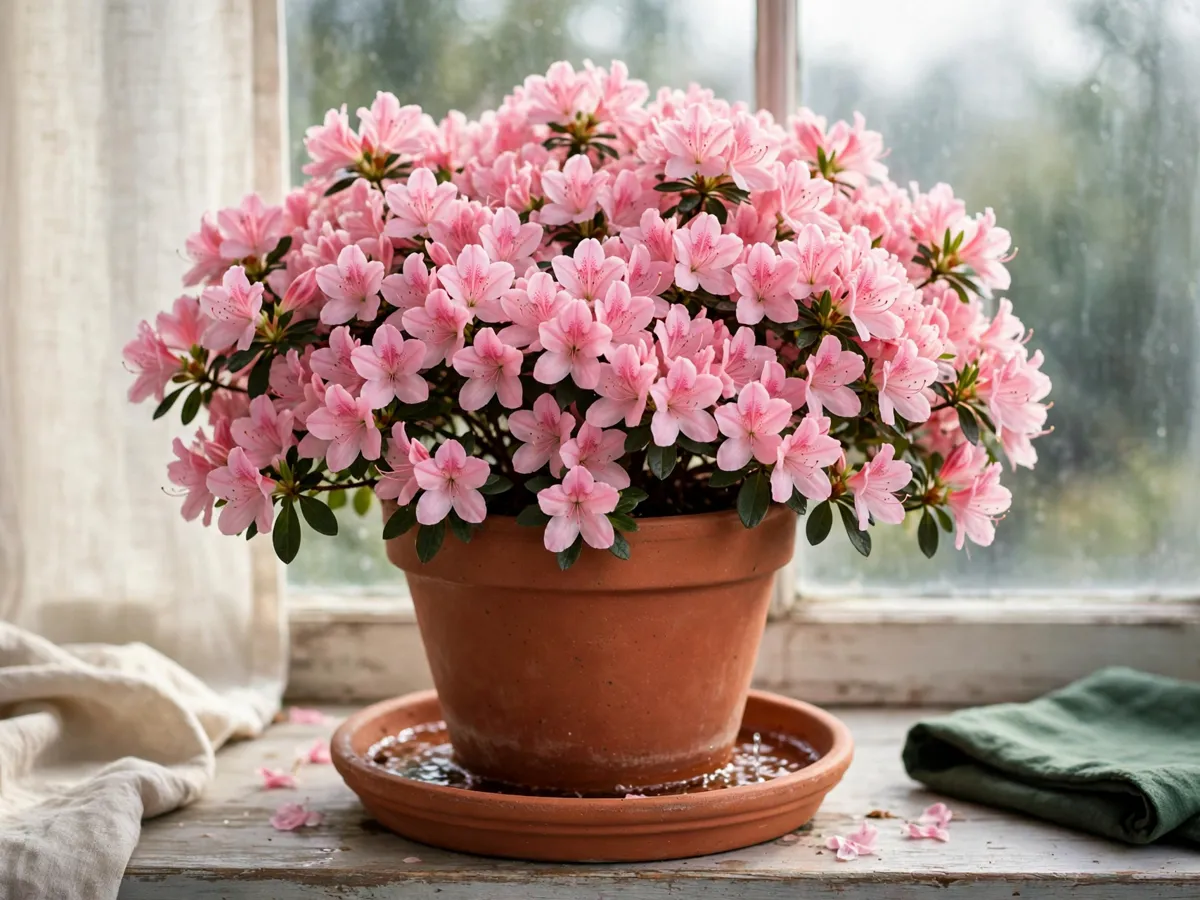
The azalea sold in bloom at the grocery store or florist is a greenhouse crop, forced into flower on a schedule and shipped in the smallest pot that fits, usually a thin plastic nursery pot wrapped in decorative foil. The root ball inside is nearly pure peat, packed tight to survive weeks of retail handling. It was raised cool, bright and evenly watered, a very different climate from a heated living room.
A blooming azalea behaves closer to a living bouquet than to a settled foliage plant: the show is already paid for, and your job is to slow the spending. Kept cool and watered before it dries, the show runs for weeks. Treated like an ordinary houseplant on a warm shelf, it can fold in ten days, and the buds go first. Most carry a tag reading indoor azalea or gift azalea, which separates them from the hardy garden types sold for planting outside, a distinction that matters at the fork later.
Cost: $0. Time: 5 minutes of reading. The plant runs on a greenhouse calendar, and your rooms run on a heating calendar.
2. The three ways an indoor azalea fails
Nearly every gift azalea that dies early indoors loses to one of three things, and all three are fixable if you can name them.
- A warm, dry room. Heated indoor air is the opposite of the cool, humid greenhouse the plant came from. Buds crisp, brown at the edges and fall, and open flowers fade papery.
- Alkaline tap water, over months. Azaleas are acid-lovers. Months of hard tap water slowly lock nutrients away from the roots, and the newest leaves turn pale yellow between green veins while the plant quietly weakens.
- A bone-dry root ball. The peat mix it is potted in holds water well, but once it dries completely it shrinks away from the pot wall and starts to repel water. A hurried top-water then runs down the gap without wetting anything.
A reader who knows these three can keep a gift azalea in bloom for a month on a windowsill. The sections below handle each one, starting with the one that matters while flowers are open.
Cost: $0. Time: 10 minutes to read and look at your room. Two of the three are fixed by placement, not by buying anything.
3. The bloom-extending core: cool and bright
While the plant is in bloom, the whole job is temperature, water and light, in that order. Find the brightest cool window in the home and put the azalea there. A north or east sill in a room that runs cool is the classic fit: bright enough to hold the flowers, cool enough to slow them down. The worst spots are near a radiator, above a heating vent, or in the warm centre of a room far from the glass. Every degree of warmth trades bloom days.
Light, second: bright indirect light to gentle morning sun while blooming. A dim room shortens the show and nudges the plant toward dropping buds it cannot support, while hot afternoon sun through glass scorches the flowers. Give the pot a quarter turn each week so the bloom stays even, because the side facing the glass always develops faster.
Water is the third leg, and the rule is earlier than for most plants: water before the surface dries fully. A blooming azalea wants evenly moist, never soggy. Check the surface every day or two and water the moment it starts to feel dry. An azalea that wilts from dryness can drop every remaining bud within a day, so a wilt that recovers after watering is a near miss worth acting on.
One thing to skip during bloom: fertilizer. The plant is spending stored energy on flowers, and feeding adds salts to a small pot without extending the show. Feed later, in the growing season, if you keep the plant. The daily rhythm is the same short check the care of houseplants routine builds, with one change: check moisture daily, not weekly, while flowers are open.
Cost: $0. Time: 5 minutes a day to check the surface and turn the pot. A warm room undoes every other part of this section.
4. The peat-pot watering trap and the dunk fix
This trap is worth understanding before it happens. When the peat root ball dries completely, it shrinks. A gap opens between the root ball and the pot wall, and water poured from above runs straight down that gap, out the drainage holes and into the saucer, wetting almost nothing. The plant is still thirsty while the saucer fills.
The fix is a bottom-dunk. Take the foil or cachepot off, sit the nursery pot in a bowl of room-temperature water deep enough to reach partway up the sides, and leave it for fifteen minutes or more. Air bubbles rise while the peat drinks, and when the bubbling stops the ball is saturated. Lift the pot, let it drain until water stops dripping, and return it to its cachepot. Then confirm it actually drank: a finger pressed into the top of the root ball should feel cool and damp, not just darker on the surface, and the pot should feel noticeably heavier. If the top is still dry after the first soak, the peat is badly hydrophobic and a second dunk is the honest answer.
The plain truth about rescue timing: by the time an azalea is visibly wilting from dryness, a pour from the top is already too slow, because the water takes the gap route around the shrunken root ball. The dunk is the technique that reaches the roots when it matters, and the better habit is watering before the surface dries so the ball never shrinks. While the pot is out, deal with the foil: keep it and poke drainage holes in the bottom, or take it off entirely, because water trapped in foil is the fastest route to sour, rotting roots.
Cost: $0. Time: about 20 minutes, mostly waiting. An azalea rescued this way may still shed a few opened flowers from the stress.
5. Acid water, the long game
Azaleas evolved in woodland soil built from years of leaf litter, which sits on the acid side, and their roots take up nutrients best there. Most US tap water sits on the alkaline side, especially in hard-water regions. Nothing collapses in a week from this. What happens instead is slower: months of alkaline water gradually lock nutrients away from the roots, even when nutrients are present in the pot. The read is in the newest leaves, which come in pale yellow between the veins while the veins stay green. The oldest leaves yellowing and dropping is a different problem, usually watering.
The practical answers, honestly tiered. Rainwater is the free answer where you can collect it, and a jug of rainwater kept by the watering spot is the whole investment. Filtered water beats hard tap water for a plant you keep past the bloom. A feed labeled for acid-loving plants, used occasionally during the growing season, covers the nutrient side. What a gift plant does not need is a chemistry set: test kits and pH adjustment regimens are real gardening for garden beds, and overkill for a foil-pot azalea.
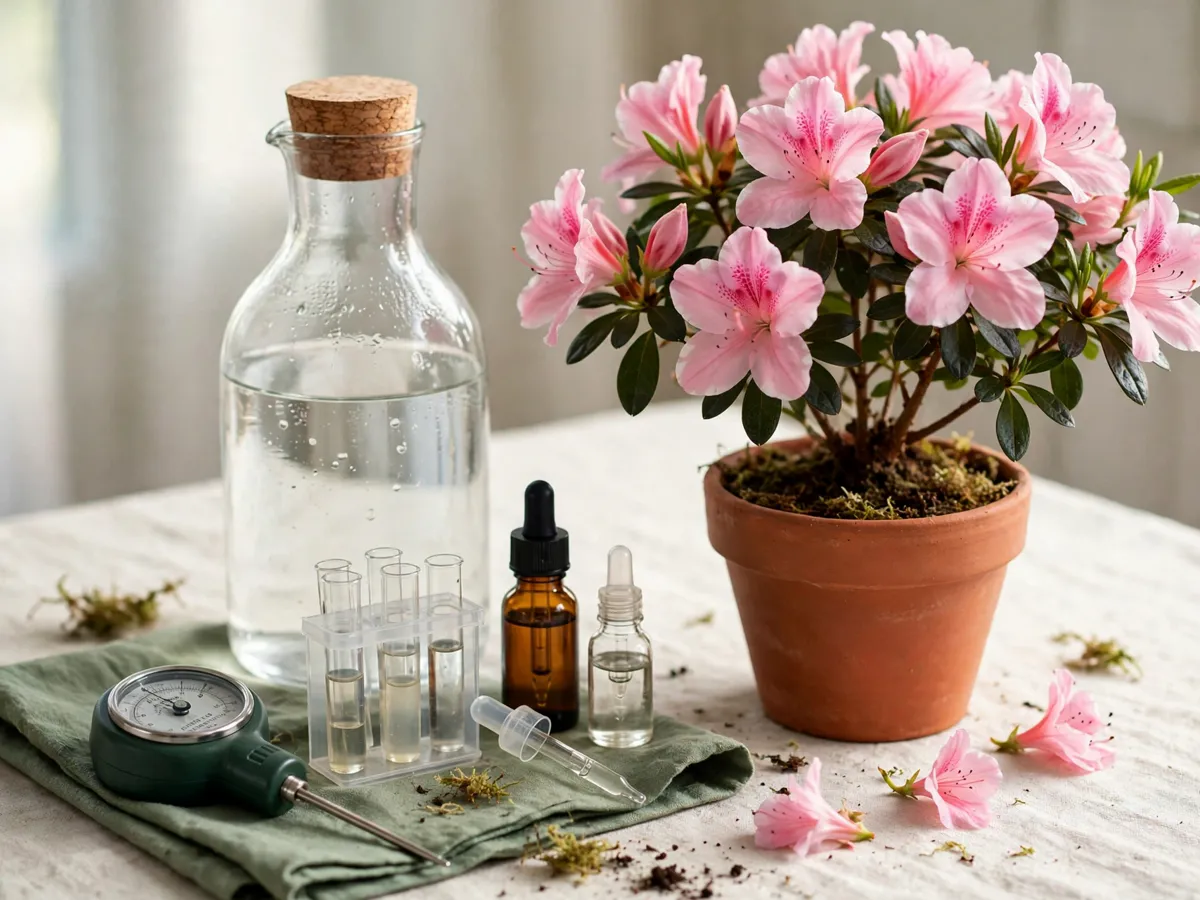
Cost: $0 for rainwater, $10–$20 for a filter jug or a small bottle of acid-loving plant feed. Time: the usual weekly watering. This tier matters over months, so it will not rescue a bloom already open.
6. Reading the bud drop
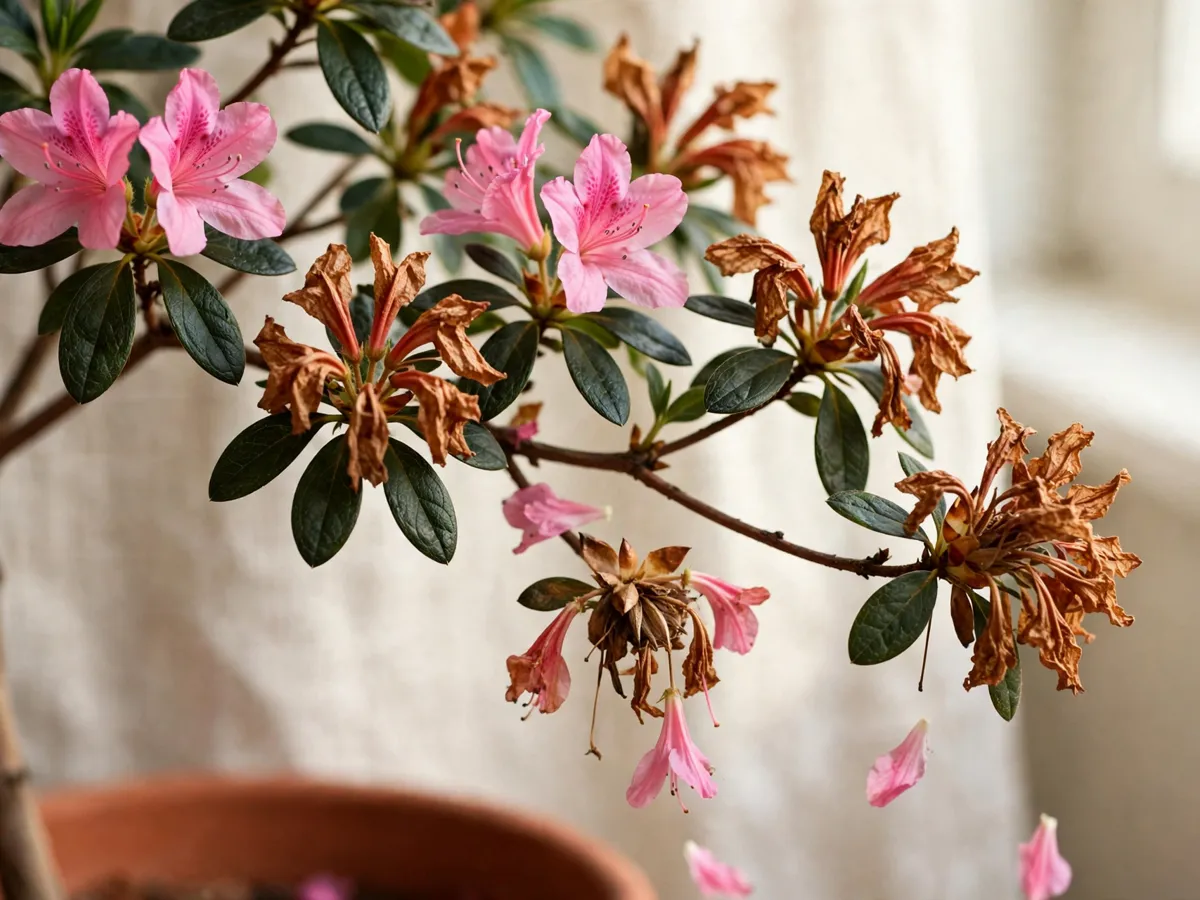
Bud drop is the problem that brings people to search for this plant, and the drop tells you which failure you are looking at. Read what the buds looked like when they let go.
- Buds crisping brown, then falling. Warm, dry air or underwatering. The buds dry and shrivel before they drop. Answer: a cooler room, a daily surface check, and the dunk from section 4 if the root ball has gone hard.
- Buds dropping green and still closed. A sudden change: the trip from the store cooler to a hot car to a dim room, a draft, or a big temperature swing. Answer: one stable, cool, bright spot, and no more moves.
- Open flowers fading fast and turning papery.The room is too warm, and the flowers age quickly the way cut flowers do. Answer: the coolest bright window you have, away from any heat source.
A dropped bud does not grow back, so the read exists to protect the buds still attached. A few lost in the first week home is normal transport shock. A steady drip of bud loss after that is the plant reporting a real problem, and the reads above are the diagnosis.
Cost: $0. Time: 2 minutes of diagnosis. The fix is almost always placement or water, not a product.
7. After the bloom: the honest fork
When the flowers finish, you stand at a three-way fork, and every branch of it is legitimate. Pick deliberately rather than by drift.
- Treat it as a living bouquet. Enjoy the bloom, then compost the plant when the show ends. This is a waste-free, honest ending: the greenhouse grew it as a decoration, it performed its month, and the compost bin finishes the loop.
- Keep it green. Right after bloom, prune the spent flowering stems back by about a third, cutting just above a leaf joint. Move the pot to a bright, cool spot, water before the surface dries using the acid tier above, and feed occasionally through the growing season. Expect a dense, leafy shrub, with foliage rather than flowers on a windowsill schedule.
- Send it outside for summer. A shaded porch or balcony through the warm months rebuilds a forced plant, and it is the only route that makes another bloom genuinely possible. The next section covers it.
The hydrangea indoors guide walks this same fork for its plant, because every greenhouse-forced gift plant arrives with the same three honest endings.
Cost: $0 for the bouquet path, $10–$18 for feed and a pot if you keep it. Time: 10 minutes of pruning. Decide before summer, because a plant kept indoors through the heat carries a debt into autumn.
8. The summer outdoors
Outdoor summer is where a kept azalea rebuilds itself. Real daylight, cooler nights and rain are what a forced plant has been missing, and a shaded spot through the warm months restores the strength the greenhouse spent forcing the bloom. Aim for morning sun and afternoon shade: an east-facing porch, the bright shade under a tree or awning, or a spot with gentle early light and protection from noon onward. Hot afternoon sun scorches azalea leaves, so the shade half is the important half. Care outside is simpler in one way and stricter in another: a pot in summer heat dries fast, so water daily in hot spells, checking the surface each morning and emptying the tray after rain. Bring the pot back inside before the first frost. Renters do not need a yard: a balcony or shared stoop with morning light does the same job, and the balcony garden ideas for beginners guide covers arranging a small outdoor space around a few pots.
Cost: $0. Time: one move, plus a daily glance in hot weather. Afternoon shade is the single non-negotiable part.
9. The rebloom mechanism, honestly
Here is the mechanism behind every windowsill azalea story, stated once and plainly. An azalea sets the buds for next year during autumn, and the signal it needs is a stretch of cool nights, roughly in the fifties Fahrenheit, along with shortening days. Most living rooms never deliver that signal, so a plant held at a steady seventy through autumn keeps growing leaves and almost never blooms again.
A plant that spent summer outdoors, then comes inside to a cool, bright, unheated room in early autumn has a real chance at setting buds. The usual candidates are a spare bedroom with a good window, an enclosed porch that stays safely above freezing, or a bright stairwell that runs cool. Keep watering through this stretch, because a dry plant sheds the buds it just set.
This is where the honesty frees you. Indoor azaleas can bloom again, and people who give the plant a real outdoor summer and a real cool autumn sometimes get a second show in late winter or spring. A plant that lives year-round in a warm room is a foliage shrub, and a handsome one, and that is a fine outcome as long as you chose it. The seasonal rhythm that carries a cool-room plant through the dark months is covered in the winter houseplant care guide.
Cost: $0. Time: one move in early autumn. The cool bright room is the scarce resource, and it decides the outcome more than any product.
10. Planting out and the odds
Some people want to give a finished gift azalea a spot in the ground. The honest odds first: greenhouse gift azaleas are mostly selected for pot life, for compact size and bud count, rather than for garden hardiness. They are not the same plants as the hardy garden azaleas bred for outdoor borders.
In mild-winter regions, some gift azaleas do take to a sheltered spot: morning sun and afternoon shade, out of drying wind, in soil worked with plenty of organic matter so it runs acid and drains well. Planted at the depth it grew in the pot and watered regularly through the first summer, a plant in a favorable mild spot can settle in and grow.
In cold-winter zones, the honest report is that a planted-out gift azalea usually dies in its first winter. Roots that lived in a warm peat ball have no hardiness training, and a hard freeze takes them. If you want an azalea in the garden somewhere with real winters, buy a hardy garden type on purpose. Treat the planted-out gift plant as an experiment you were willing to lose.
Cost: $8–$25 for organic matter and mulch. Time: one afternoon to plant. Mild spot, real chance; cold zone, expect to lose it.
11. Repotting, if you keep it
A gift azalea you are keeping past the season earns one repot, timed after the bloom or in spring, and only one size up. The dense peat root ball is packed into the smallest pot that shipped it, and a slightly larger home with fresh mix buys a summer of saner watering intervals. Going two sizes up is a mistake: a large volume of fresh mix around a small root ball stays wet too long, and azalea roots rot in place.
Use a mix labeled for acid-loving plants, which in practice means a peat-heavy, airy blend that holds moisture but still drains freely, and a pot with real drainage holes. Azaleas root finely and shallowly, near the surface, so the depth rule matters more than usual: keep the soil line exactly where it was, do not bury the stem, and settle the new mix around the root ball at the same level. Water after the move, and hold off on feed until you see new growth. The general technique is the same for every houseplant, and the repotting a houseplant one size up guide covers it step by step.
Cost: $10–$18 for a pot and a bag of mix. Time: 20 minutes. One size up only, and only when the plant is headed somewhere it can grow.
12. Where it lives: seriously toxic to pets
This deserves plain words. Azaleas are seriously toxic to cats and dogs. The toxins sit throughout the rhododendron family, in the leaves and the flowers, and chewing even a modest amount can cause significant illness: drooling, vomiting, digestive upset and weakness that can become worse. Among common gift plants, azalea sits toward the dangerous end, not the mild stomach-upset tier, so it warrants the same respect as a bottle of pills left on a counter.
The placement rule follows from that. Either the plant lives genuinely out of reach, on a high shelf or in a room a pet never enters, or it does not live in a chewer's home at all. A curious cat can reach a surprising number of surfaces, and fallen petals on the floor are within reach of every pet in the house, so sweep them up during the weeks of bloom. If a pet chews any part of an azalea, call a veterinarian promptly. If you share the home with a cat or dog and still want flowers for the cool windowsill, the pet-safe houseplants guide lists plants that carry none of this risk.
Cost: $0. Time: one placement decision, plus a moment with the dustpan during bloom. Out of reach means truly out of reach.
13. The buying read
Pick buds over open blooms. A plant covered in tight, plump buds has its whole show ahead of it, while a plant in full flower is already at the peak, and the difference at home is often a week or more of bloom. Buds should look firm and full, with none browned or shriveled. Read the foliage the same way you would read any houseplant: firm, deep-green leaves, branches that stand up rather than wilting at the tips, and no limp stems. A wilted branch on the shelf usually means the root ball has already dried hard in transit or in the store.
Buy the type that matches your goal. For the windowsill show, the plant tagged as an indoor or gift azalea is the right one, because it was bred and scheduled for exactly that life. A hardy garden azalea is a different purchase for a different place. Check the foil pot before you leave: either poke drainage holes in the bottom when you get home or take the foil off entirely.
Cost: $10–$25 for the plant. Time: 2 minutes of inspection. The prettiest fully open plant is the one closest to the end of its show.
Common questions
How long will an indoor azalea stay in bloom?
In a cool, bright room, watered before the surface dries, expect several weeks of flowers, often the better part of a month. In a warm room near a heat source, the same plant can finish in a week or two.
Why is my azalea dropping its buds?
Read the buds. Brown, crisped buds point to warm, dry air or underwatering. Green, closed buds falling point to a sudden change, such as the trip home or a draft, so the fix is one stable, cool, bright spot. A few buds lost in the first week home is ordinary transport shock.
Can I water my indoor azalea with tap water?
While the plant is in bloom, room-temperature tap water is fine. The trouble builds over months, because hard tap water runs alkaline and slowly locks nutrients away from an acid-loving plant. Keep the azalea past the bloom and the answer becomes rainwater, filtered water, or an occasional acid-loving plant feed in the growing season.
Will my indoor azalea bloom again next year?
It can, but only with a cool, bright autumn, because azaleas set next year's buds in response to weeks of cool nights and shortening days. A plant that summers outdoors and spends autumn in a cool, bright, unheated room has a real chance. A plant that lives year-round at seventy grows leaves and almost never flowers again.
Are azaleas safe to keep around cats and dogs?
No, they are seriously toxic, in the leaves and the flowers, and they belong on the genuinely-out-of-reach list or out of a chewer's home entirely. Chewing part of the plant can cause significant illness, so call a veterinarian promptly, and sweep fallen petals off the floor during bloom.
What should I do with the plant after it finishes blooming?
Choose one of three endings, all legitimate: compost it as a finished living bouquet, keep it as a green pruned shrub on a cool bright sill, or give it a shaded summer outdoors and a cool autumn for a real shot at another bloom.
Save these on Pinterest
Pin the bud-drop read and the dunk-water fix, the two pages of this guide that decide whether the bloom lasts a week or a month. This guide and the rest of the gardening tips collection live together there.